Painters, exhibitions and galleries

Part 3: Prague's Expat Art Scene in the '90s

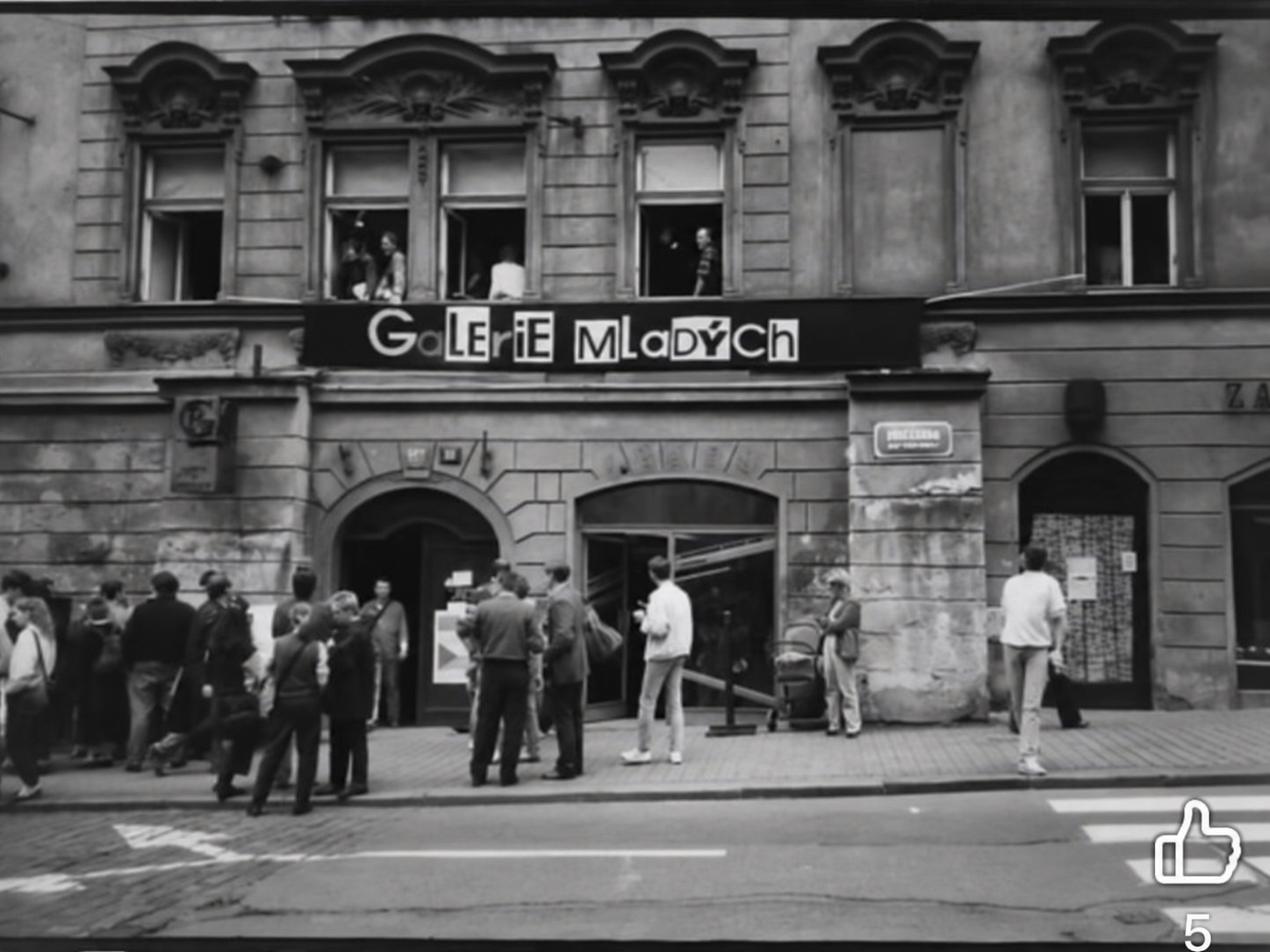
From the exhibition Dialogue/Prague/Los Angeles, Galerie mladých (“U Řečických”), Prague, summer 1989. Co-organized by American artist Barbara Benish and Czech curator Zdenka Gabalová, this group exhibition helped lay the groundwork for Prague’s post-revolutionary expatriate art scene. Galerie mladých would remain an important venue for international artistic exchange throughout the 1990s. Image credit: Barbara Benish.
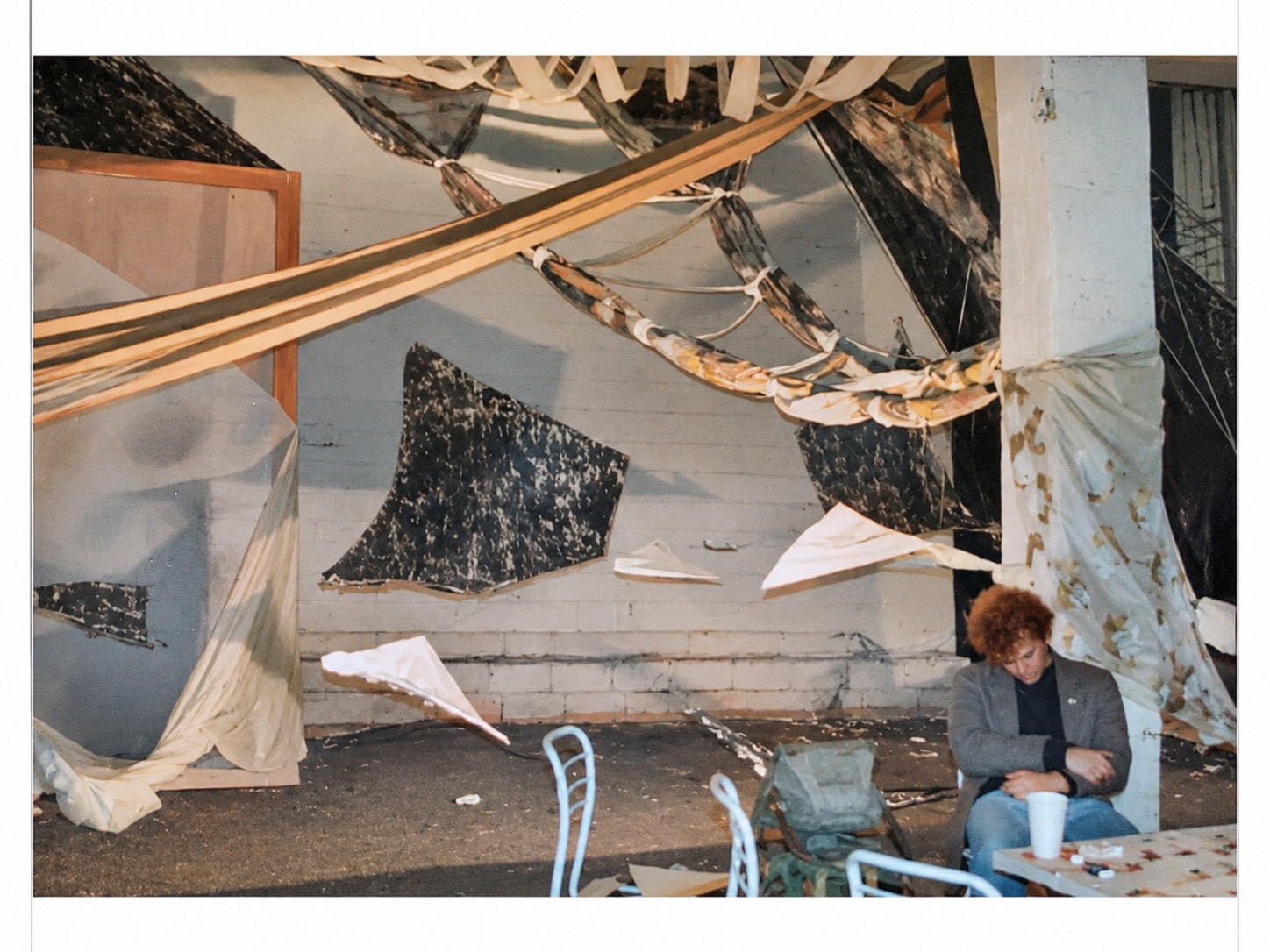
Gail Sagman, three-dimensional painting at "Totalitní zóna," Prague, October 1990. Created for the Linhart Foundation's international art festival in the underground chambers beneath the former Stalin monument on Letná. Image courtesy of Gail Sagman.
Gail Sagman, Kobylisi 2 (left) and Kobylisi 1 (right), mid-1990s. Two vibrant abstract paintings from the Scottish artist's Prague years, combining geometric forms and sweeping curves. Images courtesy of Gail Sagman.
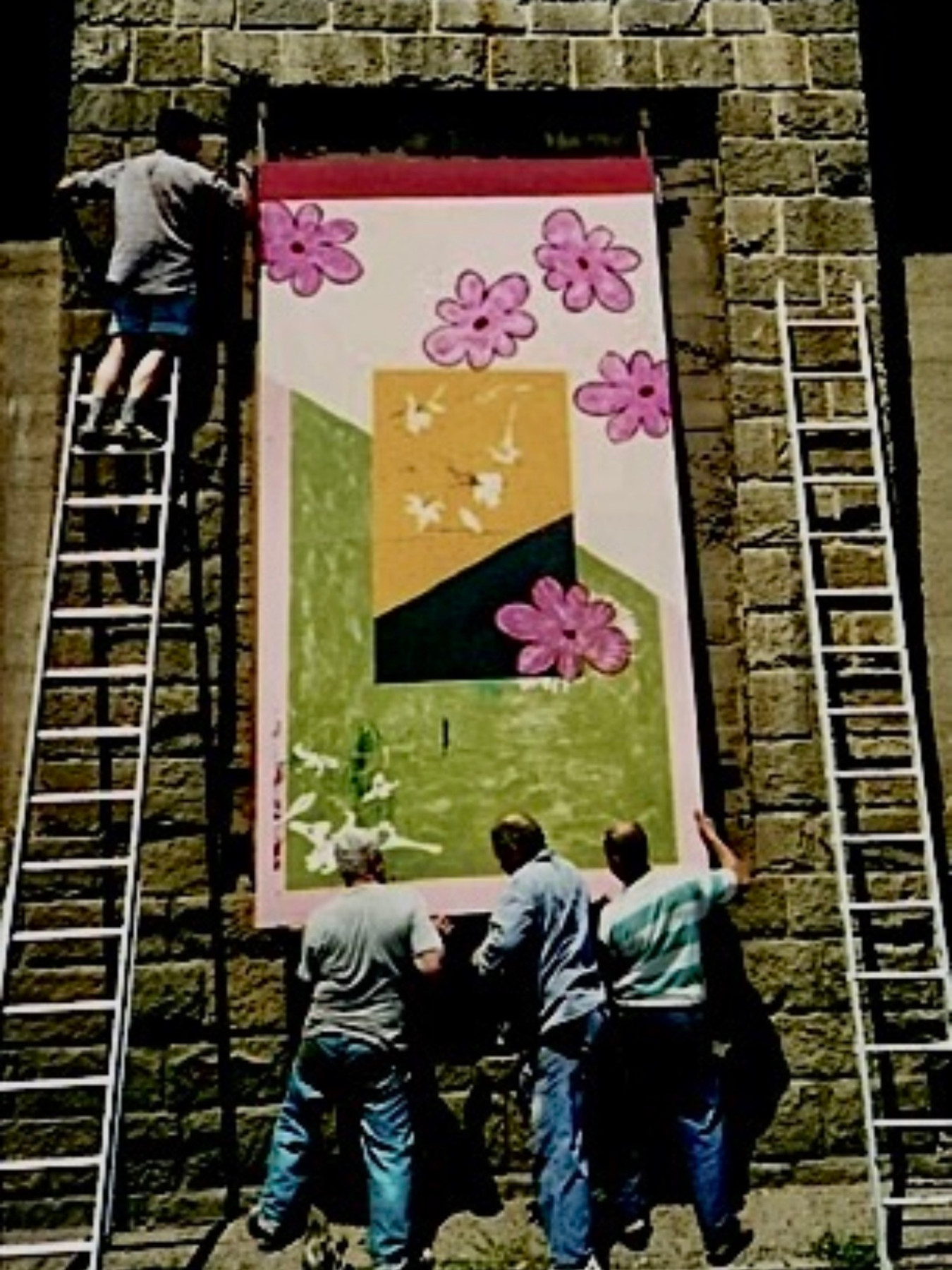
Barbara Benish, Flower Power (2000). The artist's monumental painting being installed on Prague's first ArtWall, an early example of bringing contemporary art into the city's public spaces. Photo courtesy of the artist.

Art in the Shadow of Stalin

In October 1990, less than a year after the Velvet Revolution, artists from around the world descended on an unlikely exhibition space: the underground vaults beneath the former Stalin monument on Letná hill. The statue had been demolished in 1962, but its pedestal and cavernous foundations remained. The setting lent a delicious irony to an event intended to kick off the country’s new aesthetic future.

The festival, Totalitní zóna (Totalitarian Zone), was organized by the Linhart Foundation, whose roots stretched back to Czechoslovakia’s pre-revolutionary cultural underground. The group would later help establish Prague’s Roxy club and the NoD experimental arts space, among many other highly visible projects.

Writing at the time in The New Yorker, journalist Barry Paris described a chaotic, smoke-filled scene of heavy-metal bands, thousands of revelers and some 50 artworks, including a giant skull and crossbones and a checkerboard decorated with tanks, mangled books and bronze boots.

Among the participants was Scottish artist Gail Sagman, who had been visiting Czechoslovakia since the mid-1980s and had worked with Czech artists associated with Linhart. Influenced by Cubism and Constructivism, she combined acrylic painting with experimental mixed-media work. Sagman moved to Prague in 1990 and stayed for much of the decade.

Other artistic connections predated the revolution. In summer 1989, American artist Barbara Benish and Czech curator Zdenka Gabalová organized Dialogue/Prague/Los Angeles, bringing contemporary American art to Galerie mladých (Young Artists’ Gallery) at U Řečických (Vodičkova 10) in Prague’s New Town. Benish remained active in Prague’s art scene throughout the 1990s and beyond.

Following on from this impressive start, two overlapping strands emerged in the arts over the course of the decade. One was the development of an institutional scene supported by established galleries and cultural organizations. The other was the growth of a more informal world of independent artists who worked in their own flats and created paintings, murals and decorations for Prague’s expat bars and cafés. Several artists moved between the two.
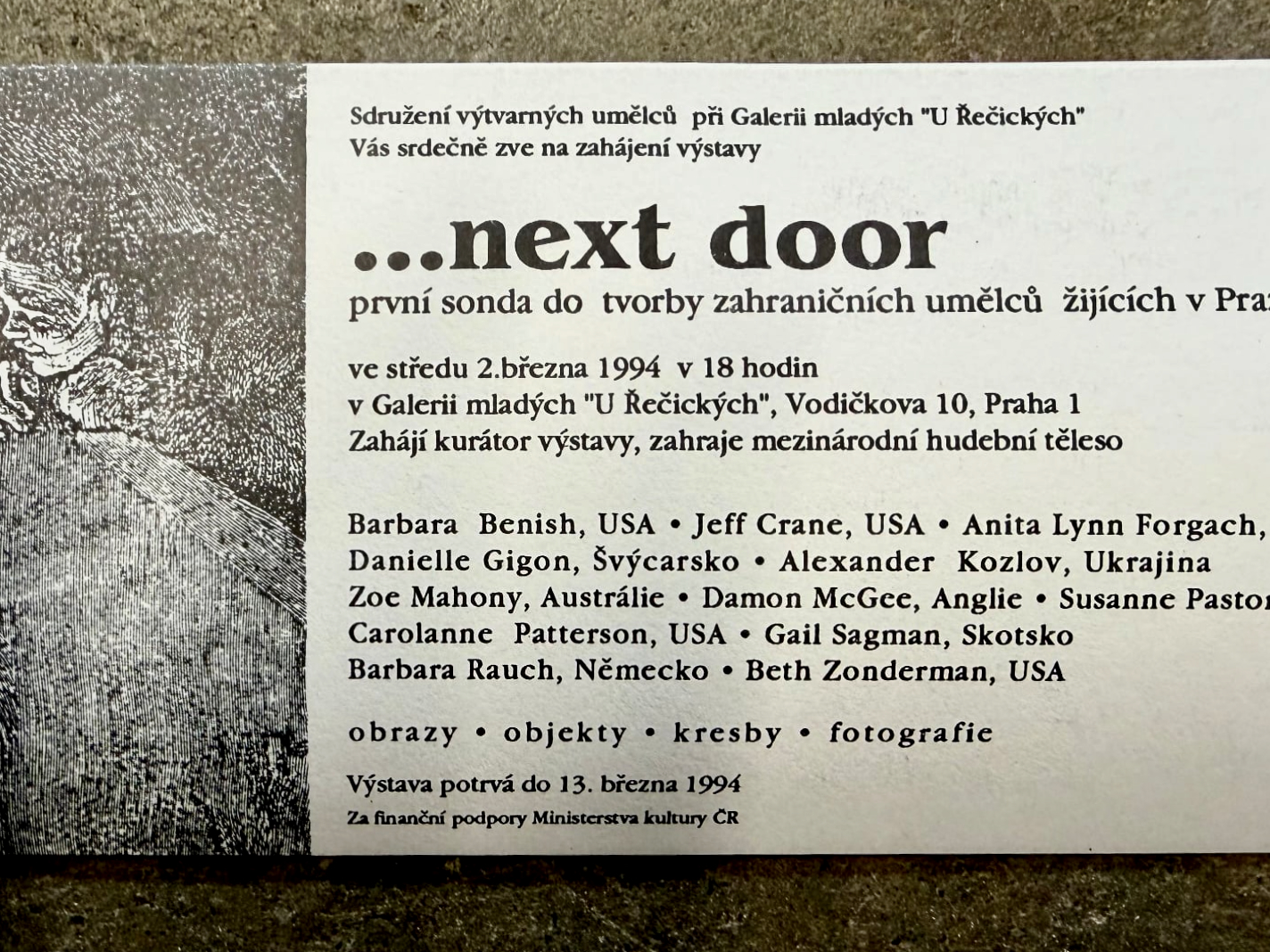
Invitation to "…next door," Galerie mladých “U Řečických,” Prague, March 2–13, 1994. The exhibition brought together 12 foreign artists living in Prague, offering an early showcase of the city's emerging international art scene. Image courtesy of Beth Zonderman.
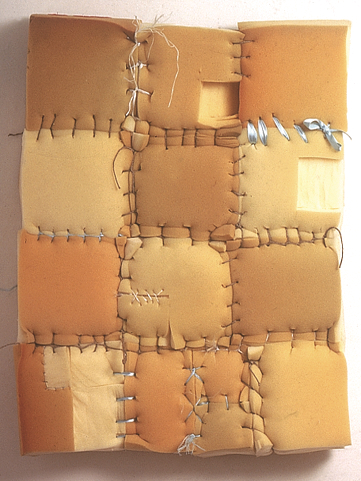
Beth Zonderman, Graft, mid-1990s. A mixed-media work of stitched and bound materials, combining soft surfaces with exposed seams and metallic fastenings. Image courtesy of the artist.
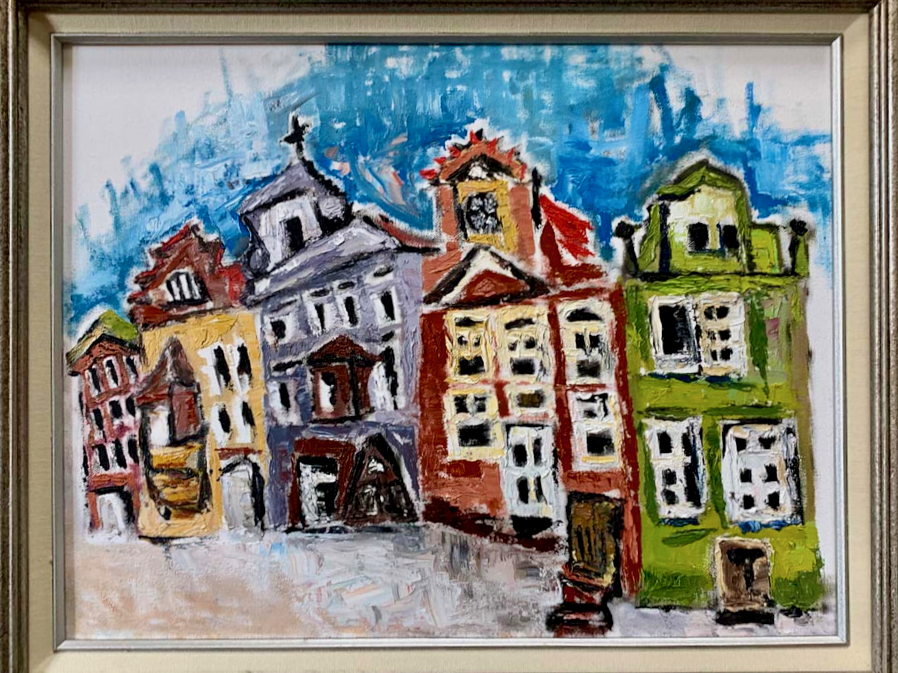
Holly Spruck, Old Town, 1990s. A colorful, loosely rendered portrait of Prague's historic architecture, capturing the city's irregular rooflines and playful facades. Image from the artist's website.
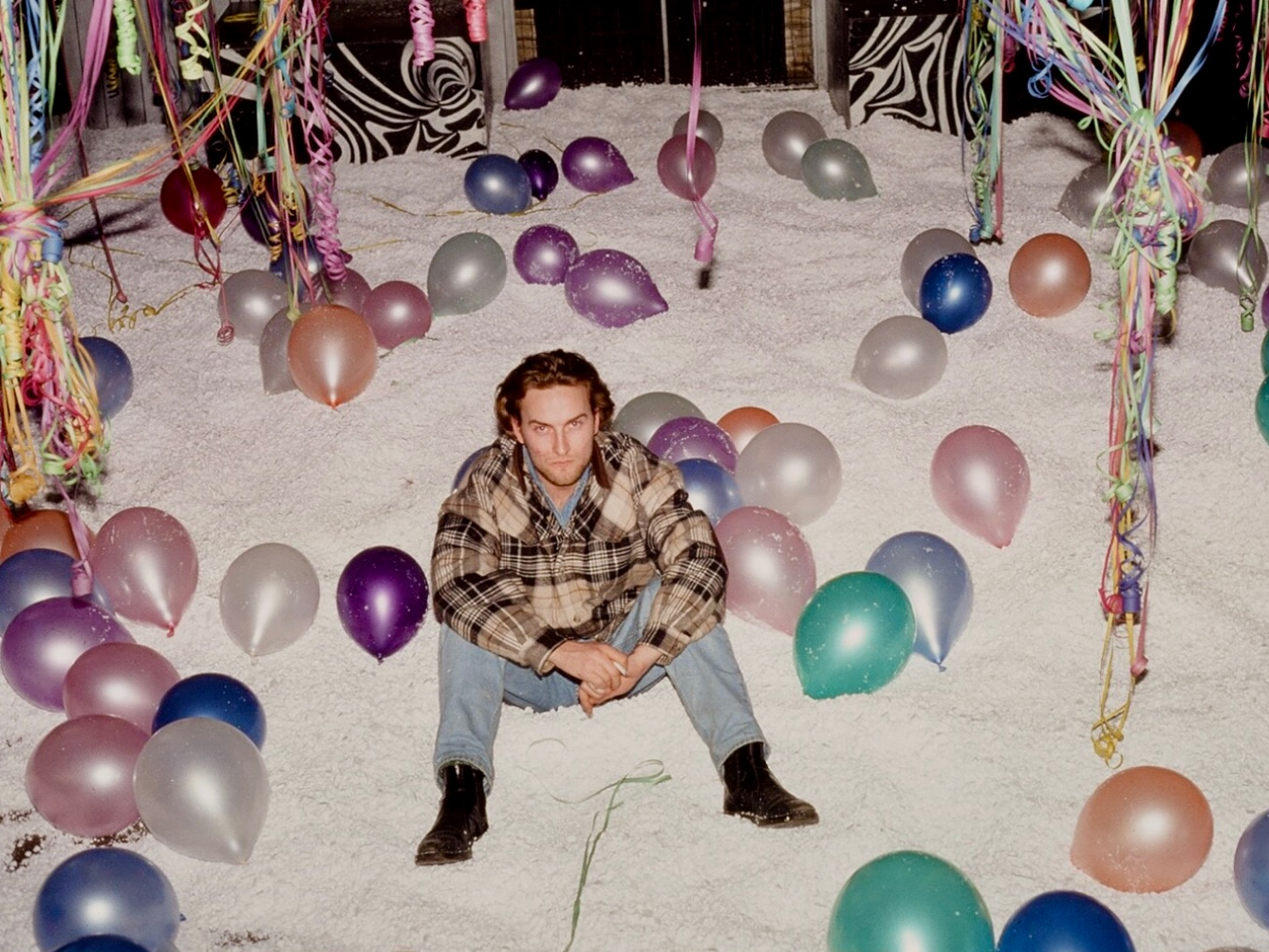
Artist Damon McGee at Radost FX, Prague, early 1990s. Surrounded by balloons and colorful streamers, McGee sits amid the experimental atmosphere of one of Prague's pioneering cultural venues. Photo courtesy of Robert Carrithers.

Galleries and Gatekeepers

The year 1994 marked a high point in the visibility of Prague’s emerging international art scene. In March, Galerie mladých hosted the show “…next door,” supported by the Czech Ministry of Culture and billed as the first exploration of work by foreign artists living in Prague. Participants included Benish and Sagman, as well as new names like Beth Zonderman, Anita Lynn Forgach, Damon McGee and Zoe Mahony.

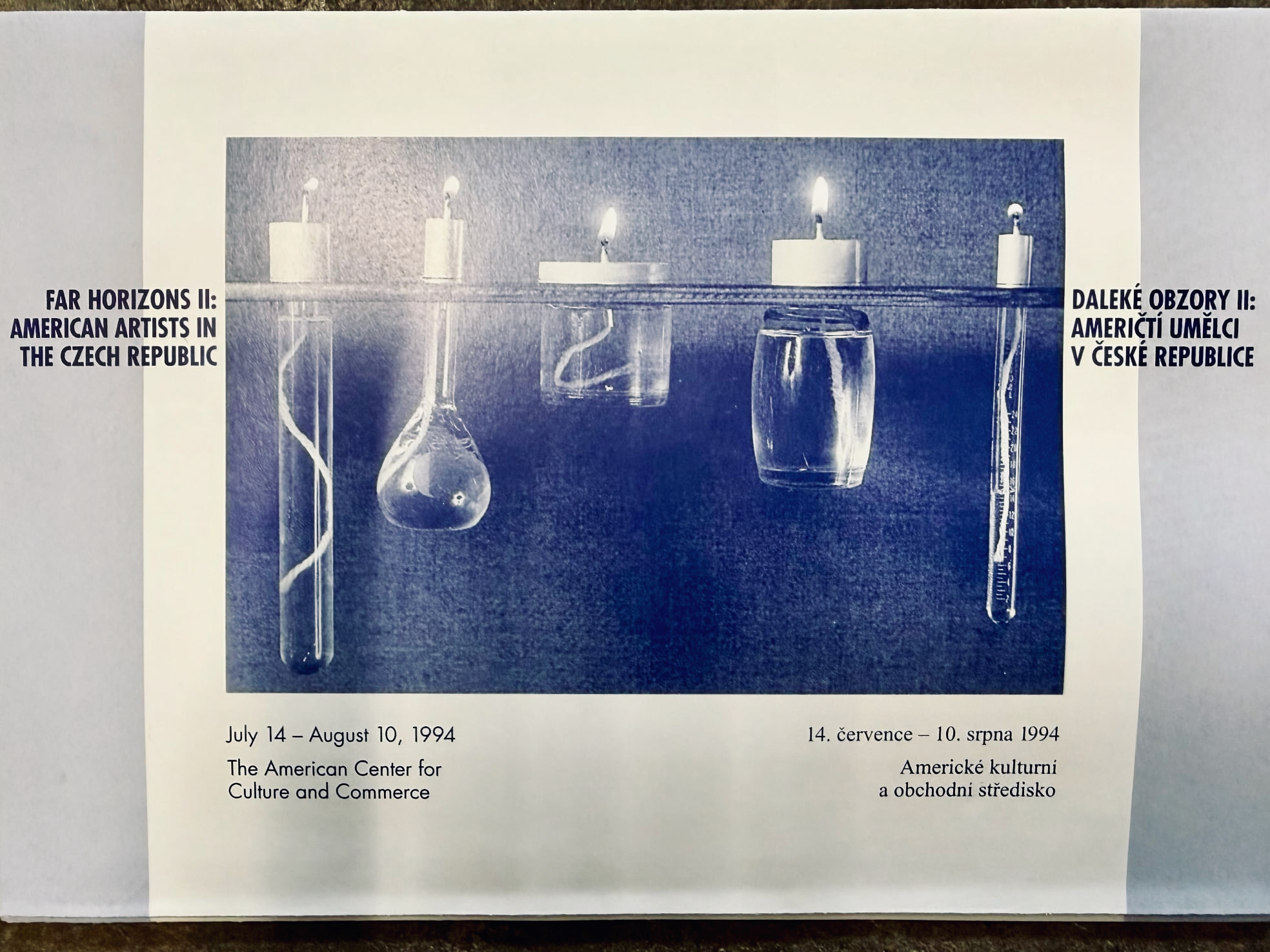
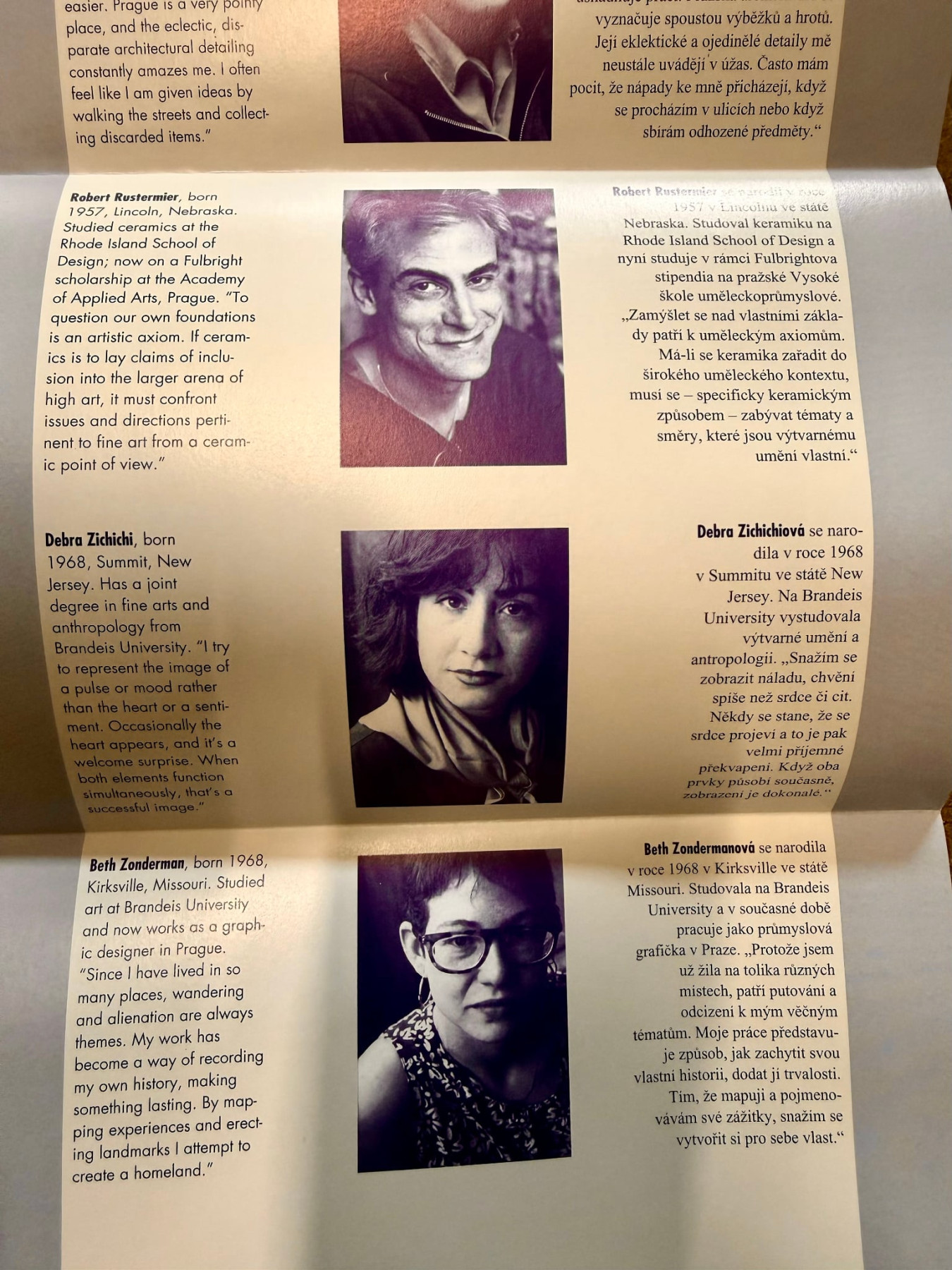
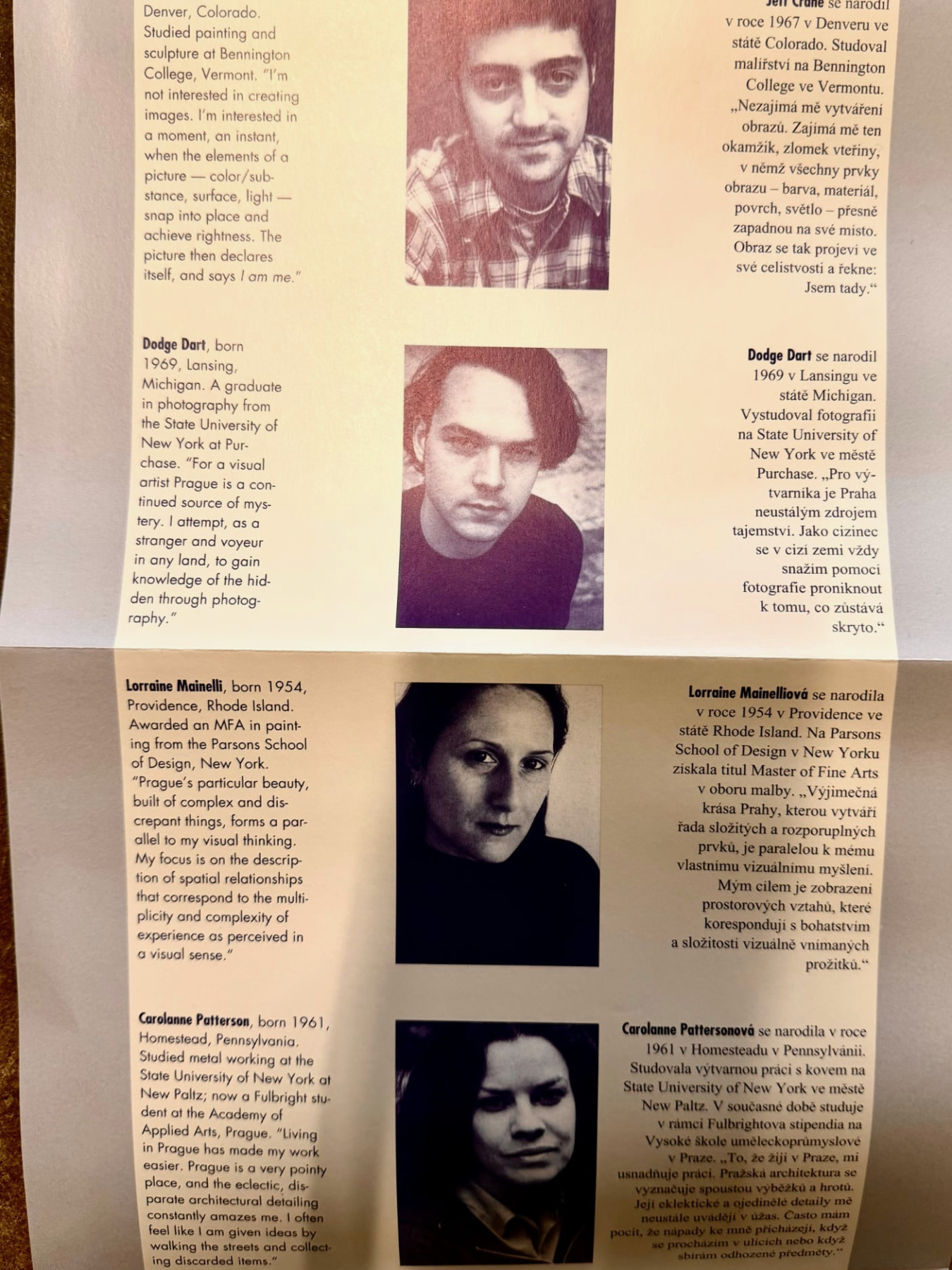
That same month, the show Ženské domovy (Women’s Residences) at Štencův dům brought together women artists from the Czech Republic and several other European countries. The project recalled a 1992 art venue in the women’s residence in the Prague district of Smíchov. The U.S.-funded American Center for Culture and Commerce followed with two big shows in spring and summer, both called Far Horizons: American Artists in the Czech Republic. Participants included Zonderman and Forgach, alongside emerging names like Dodge Dart, Amy Dolin, Andrew Herscher, Jeff Crane, Lorraine Mainelli and Carolanne Patterson.

Other initiatives encouraged more personal contact between artists and the public. D-Salon at Club Lávka, organized by American Bruce Damer and Czech artist Kateřina Stencelová in 1994, aimed to bring artists together and promote private patronage.

Together, these initiatives helped Prague’s emerging artists establish legitimacy and build professional relationships. They also helped establish Prague as a promising destination for foreign artists. In some ways, this excitement around the art scene paralleled the much-ballyhooed “Left Bank of the ’90s” for aspiring writers, though perhaps without the same grandiose expectations.

Access to established galleries, however, wasn’t always straightforward. American painter Lawrence Wells, who lived in Prague in 1992–93 and later moved back, recalled unsuccessfully proposing an exhibition of American artists at Galerie mladých, only to see the gallery later organize a similar show without him.

After this initial flurry of sponsored activity, the buzz around foreign art seems to have faded somewhat as the decade wore on. Some expats found official gallery opportunities harder to come by, while others moved on or became more integrated into Czech artistic life. Benish, for example, kept close ties with Czech institutions, exhibiting at Mánes in 1995 and at Prague Castle in 1997.

Some significant opportunities nevertheless continued. American artist Robert Horvitz, who returned to drawing in the late 1990s after years in journalism, mounted a retrospective of 135 drawings at Mánes in December 1999, curated by Vlasta Čiháková-Noshiro, the head of the art critics association. American painter Holly Spruck, who arrived in 1996, exhibited at Radost FX Gallery in 1997 and went on to hold shows at Hairline Salon, Café Duša and Malá Šárka Gallery, among other venues.
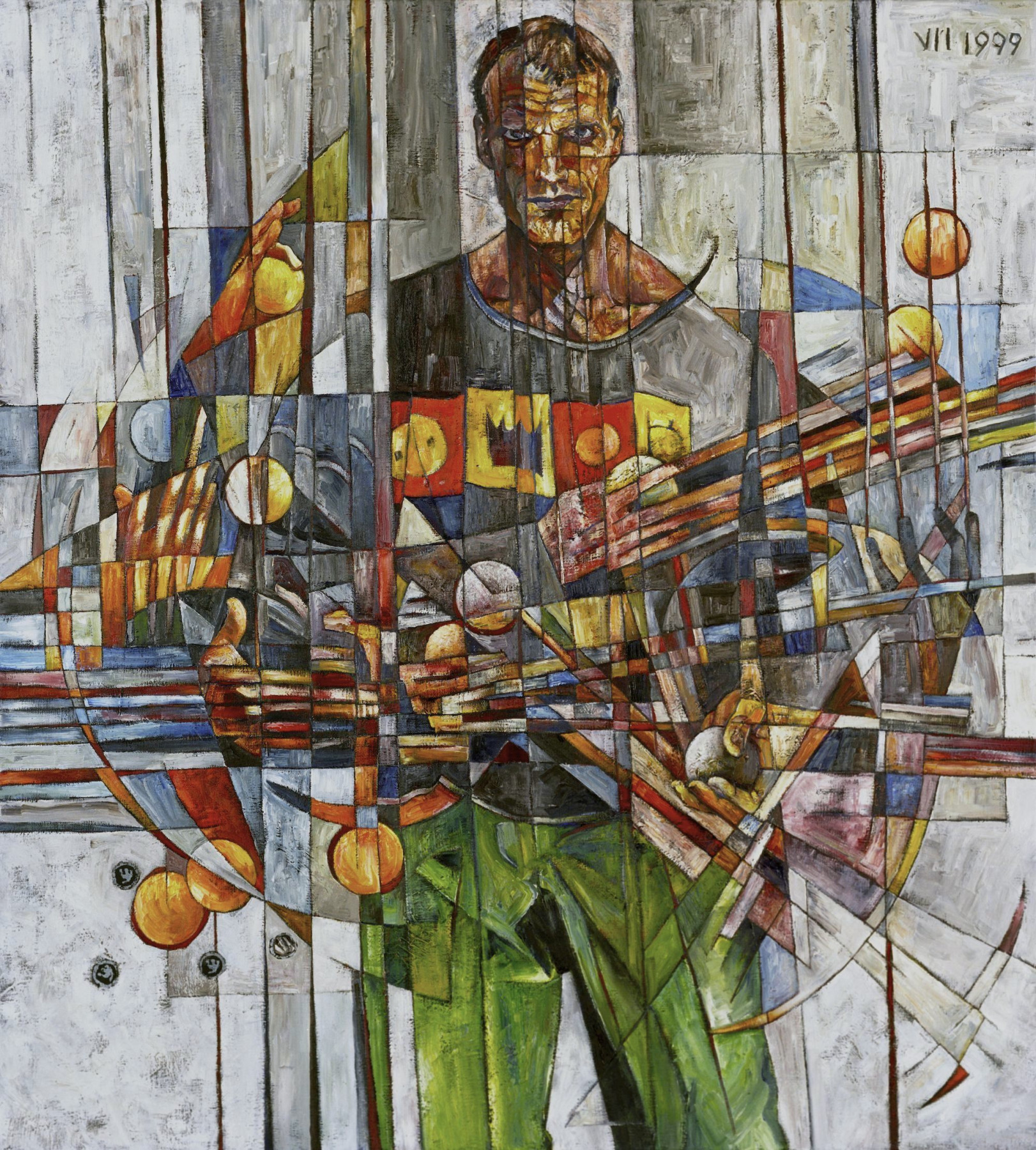
Jesse Littell, Circus, July 1999. A striking figurative painting in which a solitary figure emerges from a complex arrangement of intersecting lines, geometric shapes and vivid colors. Image from the artist's website.
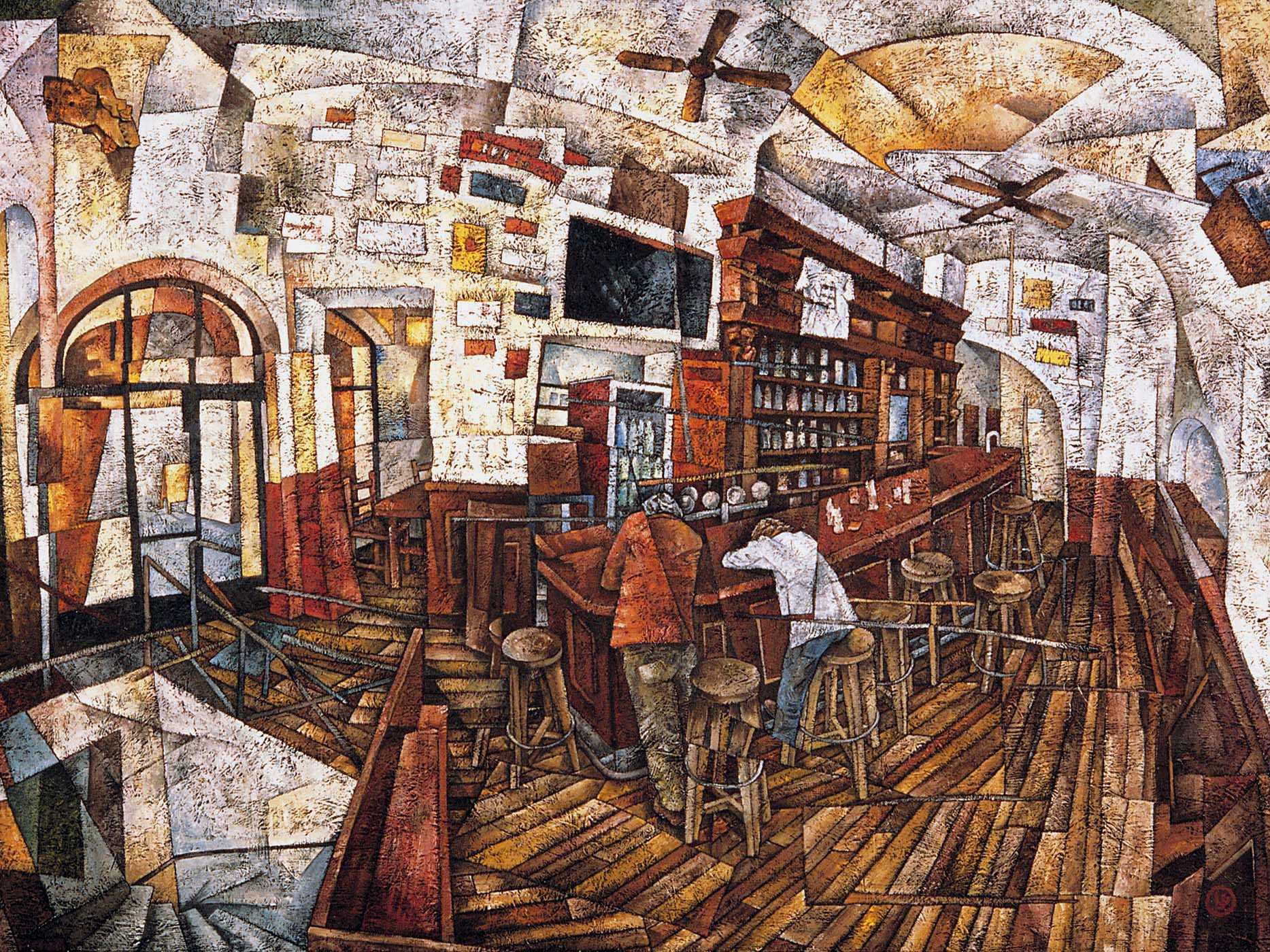
Jesse Littell, Endgame, mid-1990s. A richly detailed, Cubist-inspired depiction of a Prague bar, with vaulted ceilings, wooden furnishings and patrons rendered through overlapping perspectives. Image from the artist's website.
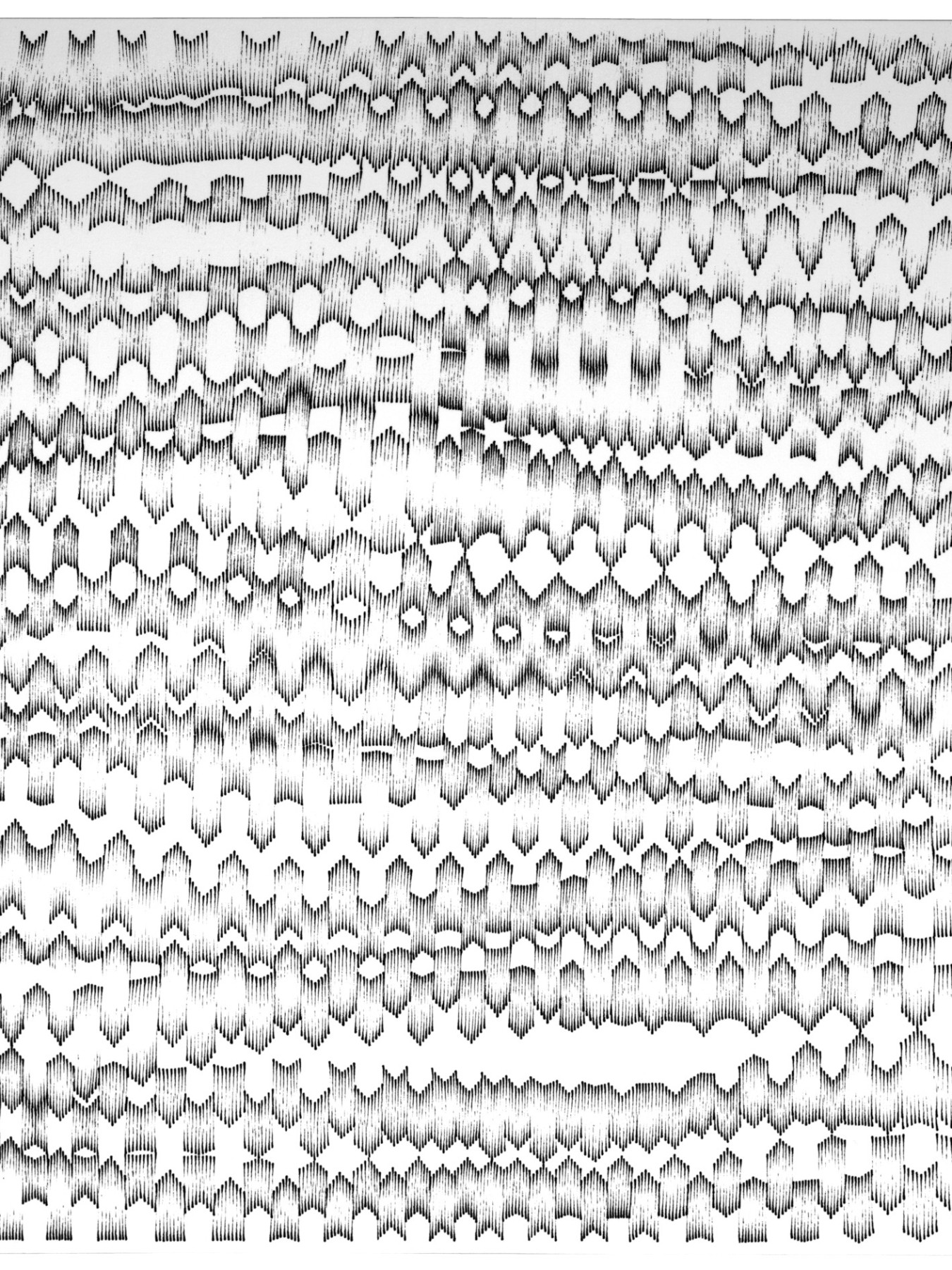
Robert Horvitz, from A History of Ideas, 1997. Intricate, repeating geometric patterns create a hypnotic interplay of light, shadow and movement. Image courtesy of the artist.
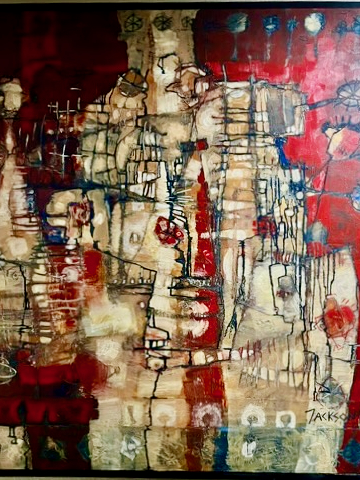
Stuart Jackson, abstract painting, 1990s. Layers of red, ocher and cream, punctuated by dark, expressive lines, create a densely textured composition. Image courtesy of Cecilia Hall.

Unofficial “Galleries”

Outside these more formal channels, Prague’s expat art scene flourished in less orthodox venues. Bars, cafés and clubs offered exhibition spaces where foreign artists could show and sell their work and build local reputations. Some proprietors evolved into de facto art patrons, commissioning paintings and murals and sometimes paying in drinks or favors.

The Globe Bookstore & Coffeehouse in Holešovice, which I co-founded, was among the most active of these more informal galleries, hosting monthly rotating shows from 1993 onward. Anne Hars exhibited at our opening party in July 1993, and Jonathan Feldschuh showed there in 1994. American painter Peter Bill exhibited his colorful, playfully distorted Prague cityscapes there, including a show in 1995. Bill also set up his easel around the city, wearing a tuxedo, and painted for passers-by. “I sold many pieces this way,” he recalled. Bill shared a Žižkov attic apartment with artist Stephen Evonuk, who also showed work at the Globe. Later, Jay Meany displayed his layered mixed-media paintings there.

At Asylum, the unconventional café and arts space on Betlémská street in the Old Town, American artists Ken Nash and Lawrence Wells took part in life-drawing sessions and impromptu exhibitions. These included the Tape Show (which I described in Part 1). Such events offered scruffier alternatives to established galleries.

At Radost FX, Kirsten Kempfer and Anne Hars helped create the nightclub’s ever-changing painted interiors, most memorably an extravagant room covered in giant pink bubbles. They also organized installations and exhibitions. Damon McGee, who had shown in “…next door,” was another artist associated with the venue, though I haven’t been able to trace what became of him.

At Jo’s Bar, Georgia Schaller captured expat social life in vivid paintings with elongated figures and unconventional perspectives. Australian painter Rachael Robb’s often hyper-realist figurative paintings hung at the short-lived Fetisch Klub on Pařížská street and other venues around town. American artists Stuart Jackson and Jesse Littell were associated with Glenn Spicker's music club, U Malého Glena. UK artist Adrian Bell and Schaller created art for the walls at the Old Town restaurant Red Hot & Blues. Russian painter Valerij Narbekov painted a risqué mural at Jáma that was later covered over.

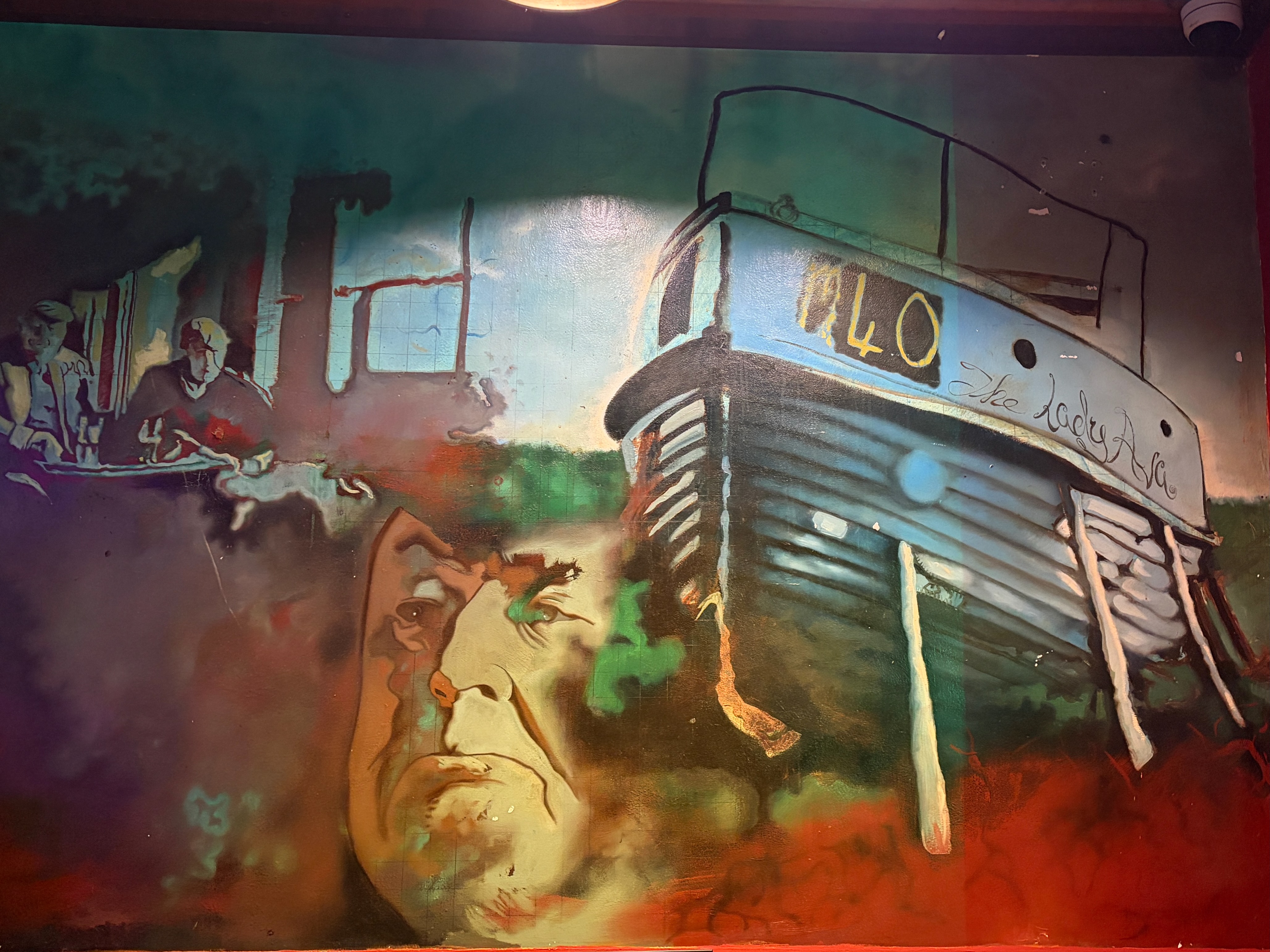
Scottish artist Stewart K. Moore found a patron in Irish pub entrepreneur Frank Haughton, who commissioned artwork for several of his establishments. These included an ambitious homage to Ulysses on the walls of the original James Joyce pub on Liliová street in Prague’s Old Town.

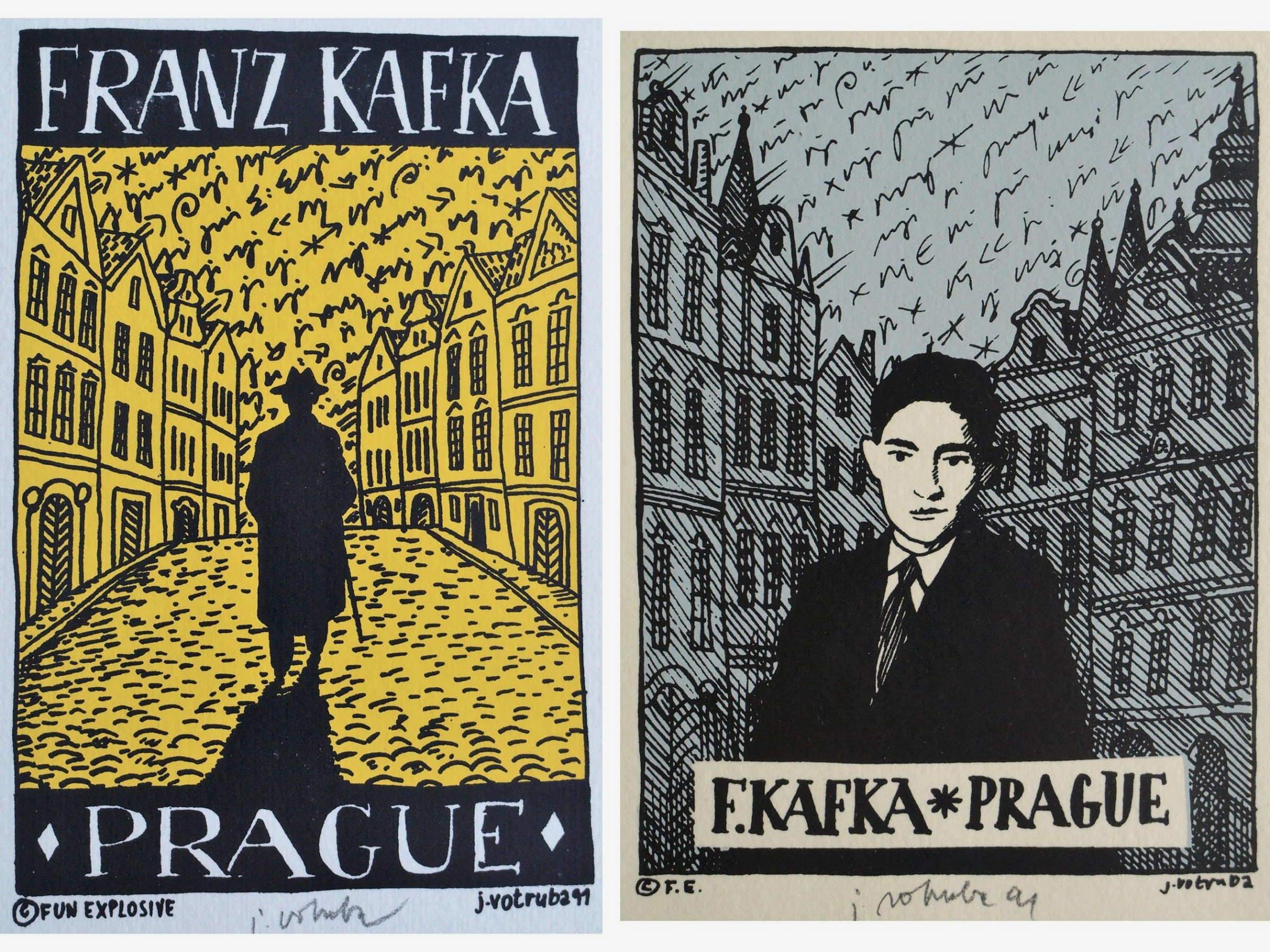
The artists' styles varied enormously, from Bill’s architectural cityscapes and Schaller’s expressive social scenes to Moore’s realistic pub murals and Meany’s layered abstractions. Yet a loosely shared sensibility emerged. Many artists took a playful, deliberately naive approach to depicting Prague, treating familiar landmarks and everyday scenes with humor and exaggeration. There were Czech precedents for this, notably Jiří Votruba’s ubiquitous cartoonish takes on Prague Castle and Franz Kafka, which decorated thousands of T-shirts and coffee cups at the time. The approach perhaps also reflected a shared, childlike wonderment at a beautiful, unfamiliar city discovering a new identity after decades of communism. Not every artist worked in this vein, but it became a recognizable visual signature of the period.
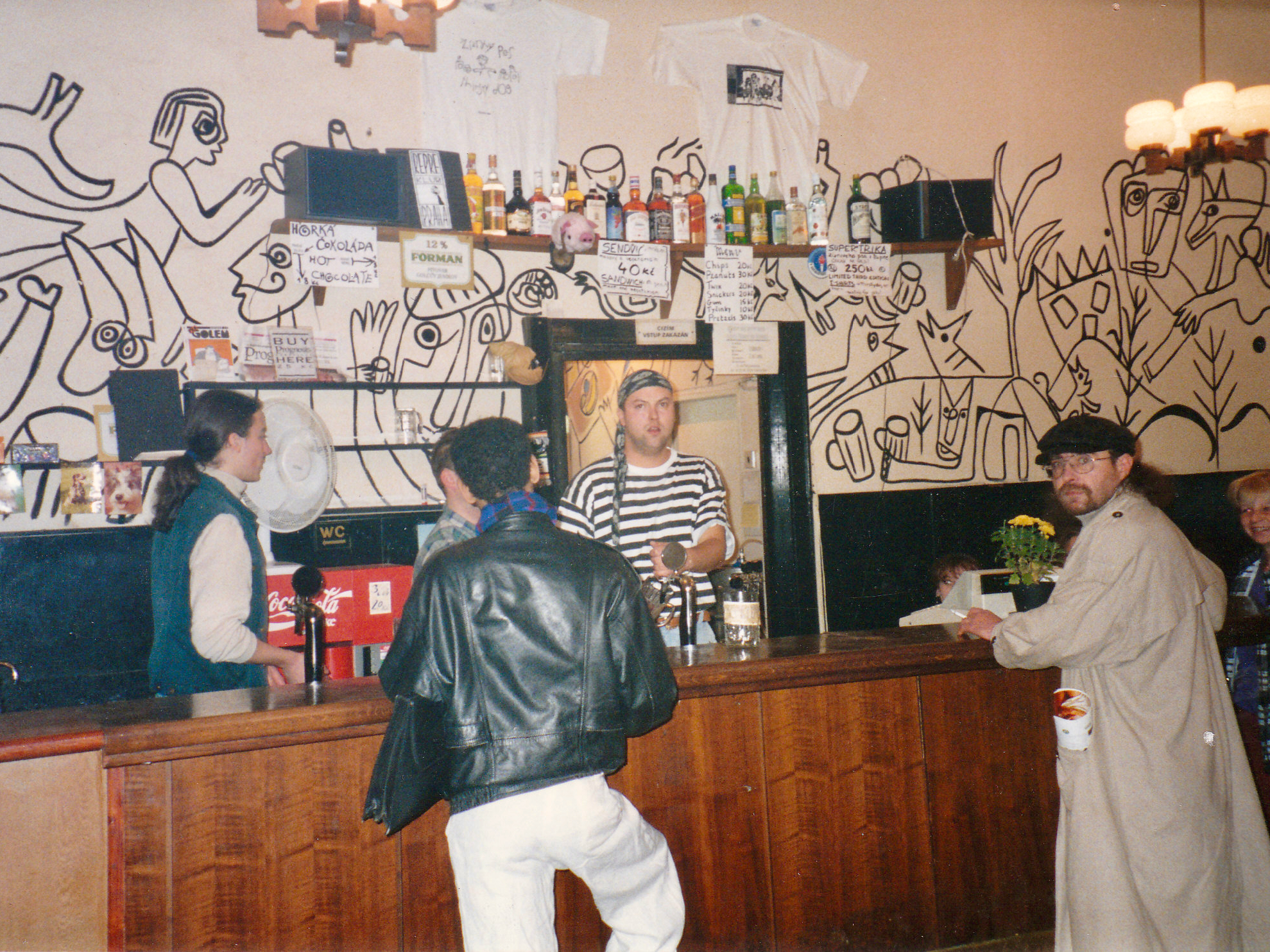
A typical evening at the Thirsty Dog, Municipal House, Prague, 1994. Patrons gather beneath the playful wall drawings of Georgia Schaller, an example of how expatriate artists transformed Prague's bars into informal galleries. Image courtesy of Jo-Anne Emery.
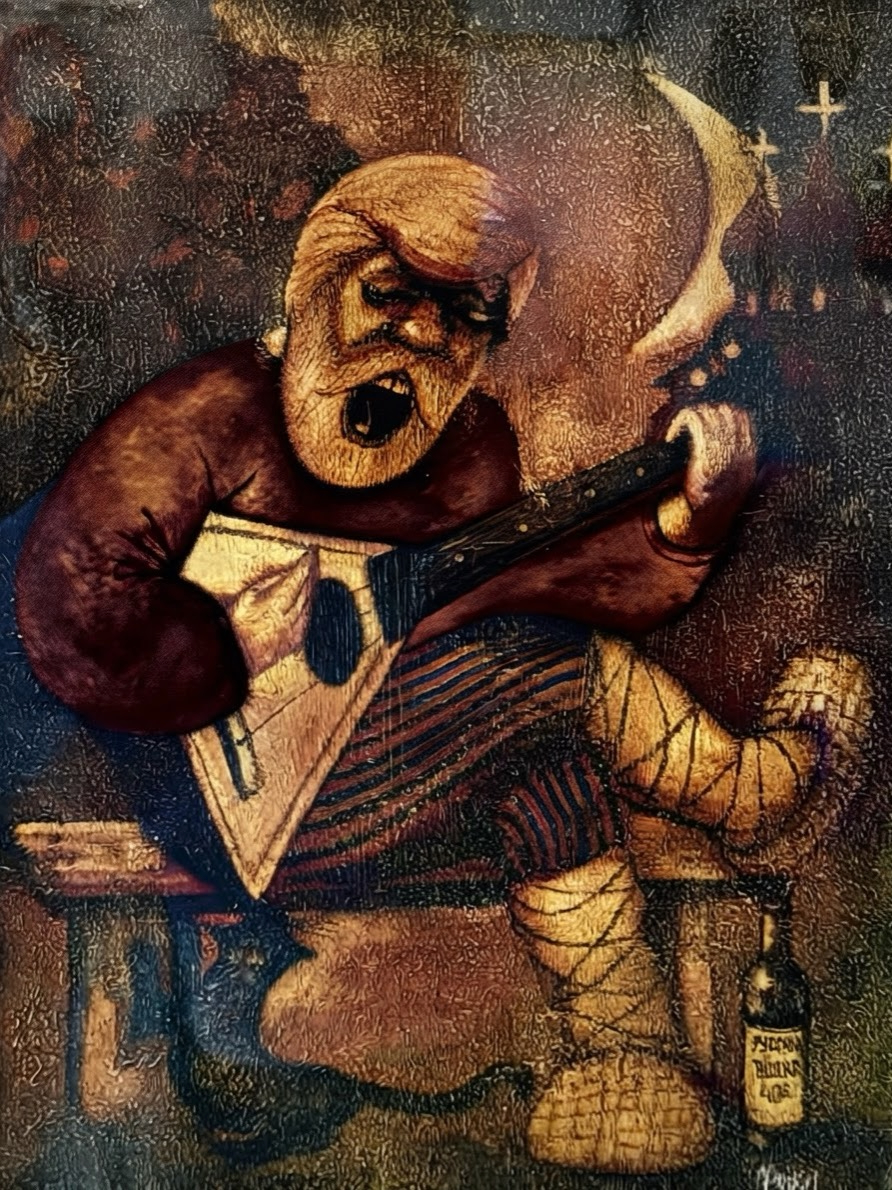
Valerij Narbekov, painting, mid-1990s. A fantastical musician plays a stringed instrument, combining grotesque humor with the atmosphere of a dark fairy tale. Image courtesy of Kristine Zamastil.
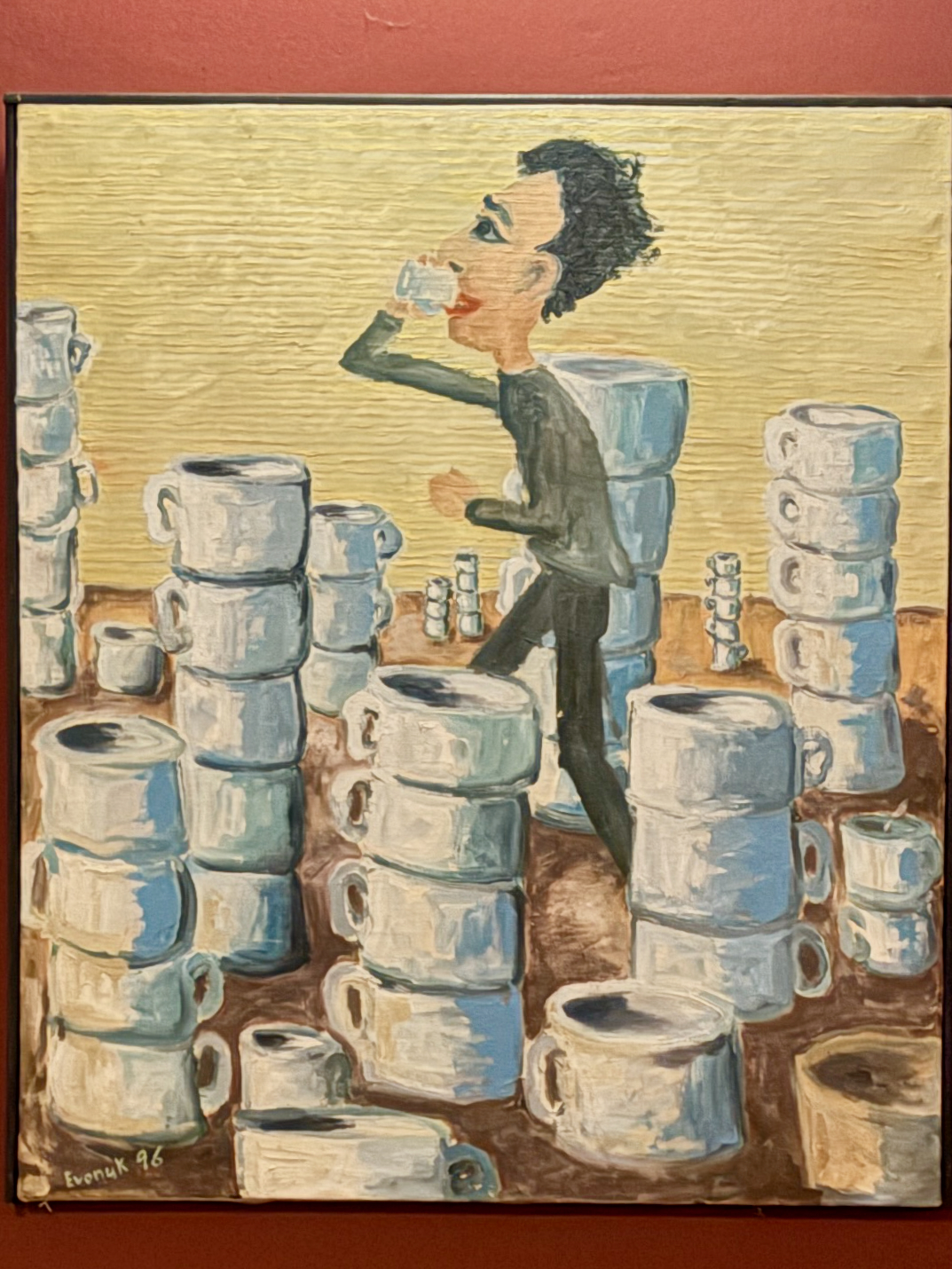
Stephen Evonuk, Coffee Cups, mid-1990s. Originally displayed at the Globe Bookstore & Coffeehouse in its first location, this whimsical painting of a solitary drinker surrounded by towering stacks of coffee mugs still hangs at the Globe's present-day home in Prague's New Town. Photo by Mark Baker.
Sandra Dillon, Petrin, 1994. Mixed media. A bold, colorful composition of overlapping shapes and expressive lines, combining abstraction with playful visual forms. Image courtesy of the artist.

What Remains

Sadly, much of the artwork that once decorated Prague’s expat bars and cafés has disappeared. Establishments closed, interiors were renovated, and murals were painted over. Artists moved away, taking their paintings with them or leaving works scattered among friends and collectors. The visual culture that gave expat Prague so much of its character in the 1990s proved surprisingly fragile.

Yet some pieces have survived to the present day. Stewart K. Moore’s mural at the old Caffrey’s on Old Town Square remains in place, and Stephen Evonuk’s painting of coffee cups still hangs at the Globe, at its later location in the New Town. Other works have found quieter homes. Jo-Anne Emery, sister of Glen Emery, who founded Jo’s Bar and the Municipal House bars and clubs, has kept some favorite pieces. So has Glenn Spicker, founder of U Malého Glena.

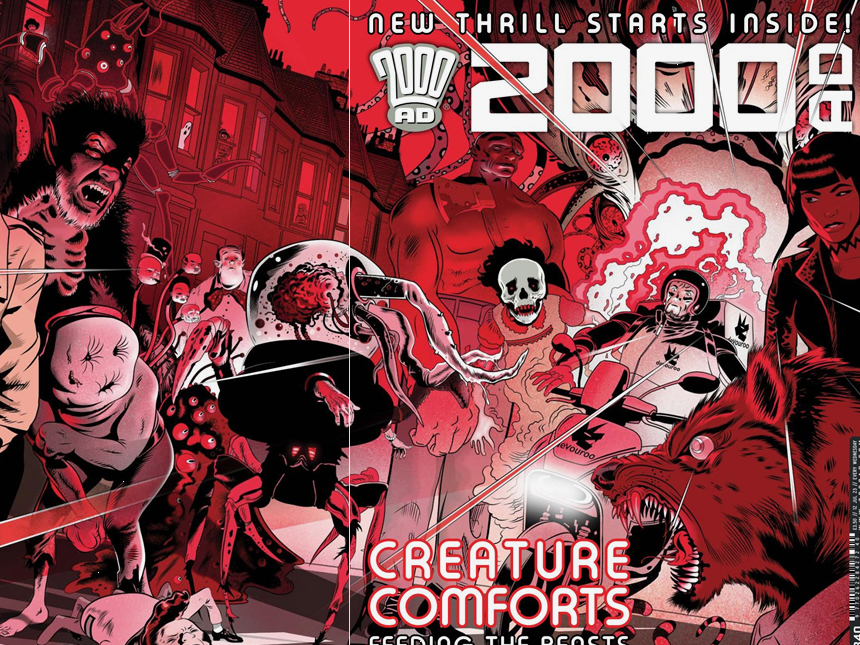
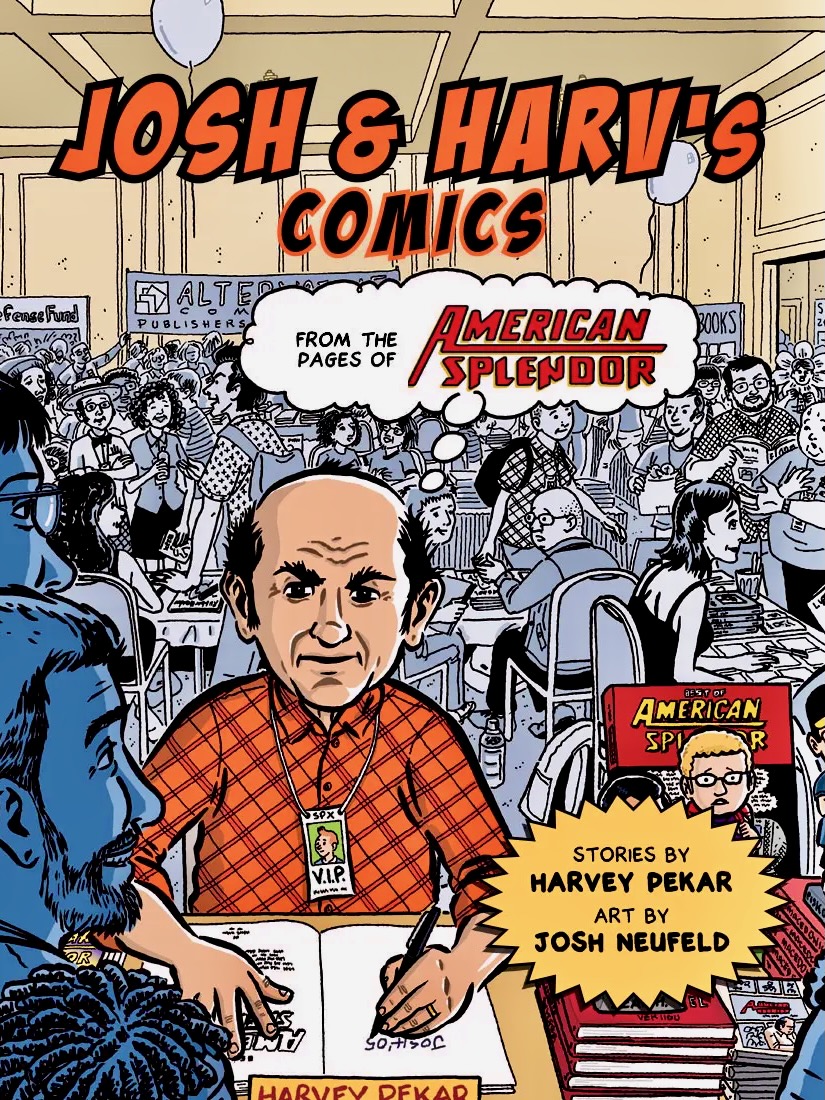
For many artists, 1990s Prague was a formative chapter rather than the end of the story. Several of the illustrators featured in Part 2 went on to work in comics and graphic novels. Josh Neufeld built a successful career in the field, and Adam Trachtman published Immersion in 2023, a graphic novel drawing on his illustrations and memories of 1990s Prague. Stewart K. Moore, meanwhile, moved from his Prague newspaper cartoons, paintings and pub murals to now drawing for major comic-book publishers.

Others are still painting and exhibiting, among them Karl Bielik, Holly Spruck and Fedele (Fred) Spadafora, now based in New York. Dutch artist Boris Van Berkum works in sculpture and visual art from his studio in Rotterdam, and Barbara Benish built an international career in environmental art and education, founding ArtMill in western Bohemia. Kip Bauersfeld, who worked with Prognosis, stayed in Prague and developed a distinctive style of landscape painting inspired by his Letná neighborhood. I bought one of his paintings earlier this year. Many others named here, including Ken Nash, Jonathan Feldschuh, Lawrence Wells and Rachael Robb, have taken their artistic interests in different directions.

Time has taken its toll on some of the people who shaped the scene. Glen Emery and John Bruce Shoemaker, whose establishments gave so many artists a place to show their work, have both passed away. So has Georgia Schaller, whose colorful paintings so beautifully captured expat social life.

Gail Sagman, one of the first foreign artists to establish herself in Prague, no longer lives here but keeps close ties to the city. She’s planning a retrospective at LAFA Gallery in Holešovice in May 2027. Her part in the 1990 Totalitní zóna exhibition makes a fitting link between the artistic excitement that followed the Velvet Revolution and the present day.

Prague’s expat artists did more than decorate the places where we gathered. Their paintings and illustrations -- whether hanging in galleries or on the walls of bars and clubs -- helped shape the way we saw the city. Much of that work has disappeared, but what survives in photos, fragments of paper and scraps online is a distinctive visual record of Prague’s first decade after communism. There is surely much more to discover about this fertile period. I sincerely hope this series encourages others to dig deeper.

(This concludes my three-part retrospective on Prague's expat art scene in the 1990s. I'm indebted to the Facebook group, Ex-Pats in Prague in the 90s, as well as group members and individual artists who submitted names, ideas and images for this series.)

(Keep scrolling for more images.)

(Did you enjoy this story and want to add your own comments, or perhaps correct something I didn't get right? Write me at bakermark@fastmail.fm.)
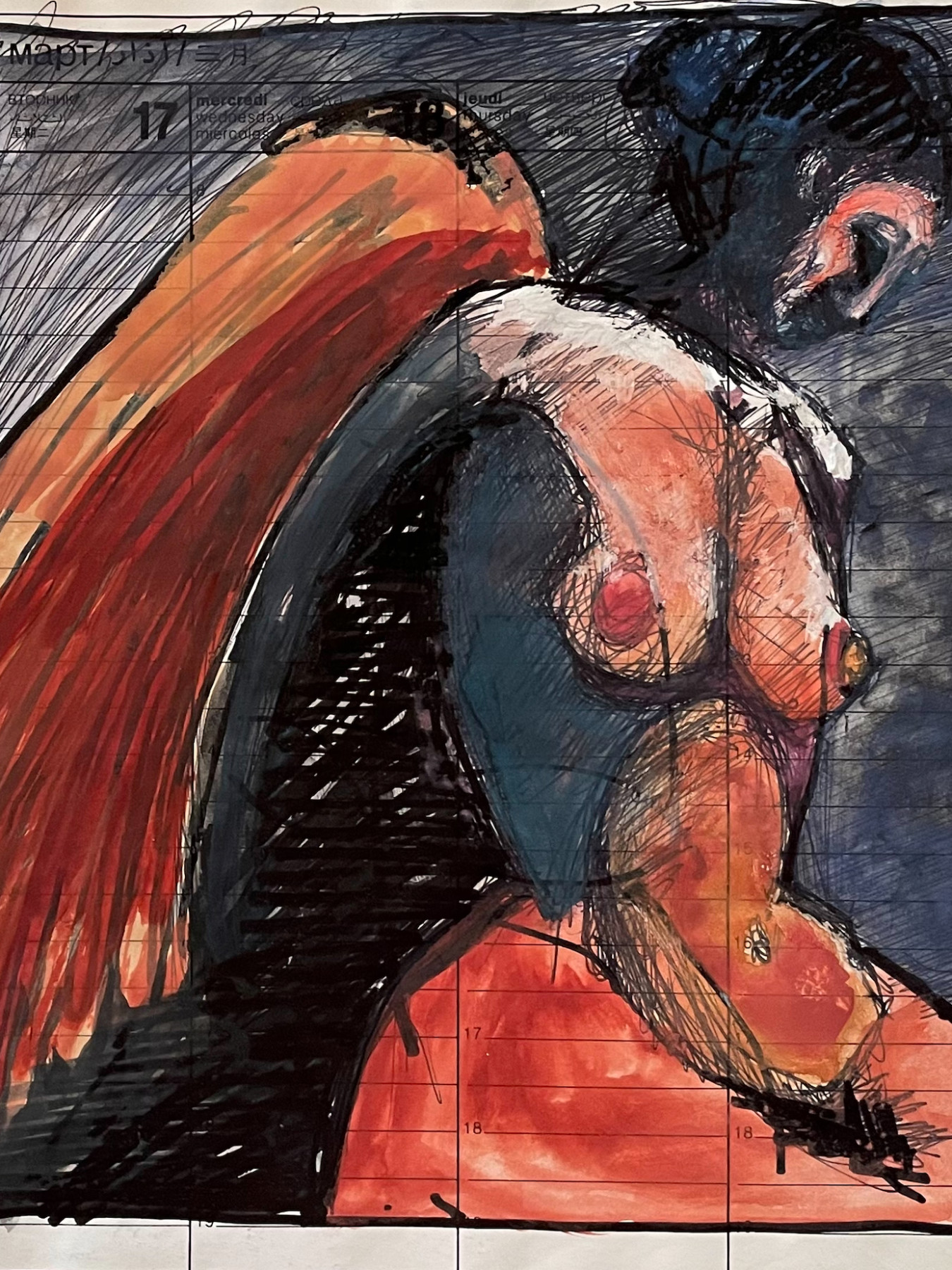
Sandra Dillon, Untitled, mid-1990s. An expressive study of the human figure, combining strokes of red, orange and black with loosely sketched anatomical forms. Image courtesy of the artist.
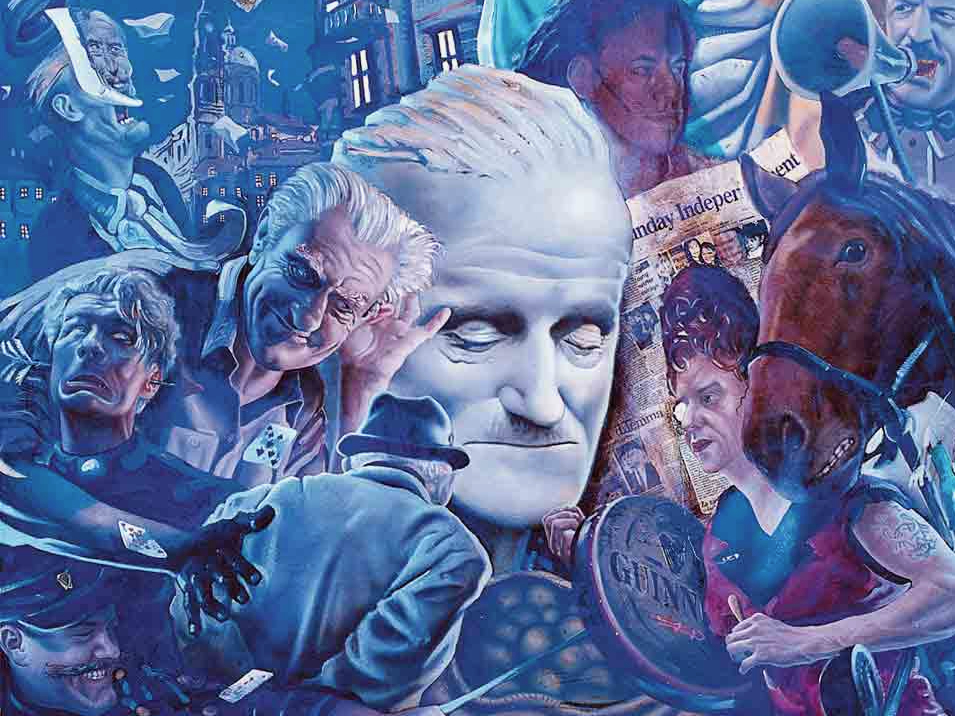
Stewart K. Moore, Bloomsday in Bohemia, 1995. Oil on hardboard. A densely populated, surreal vision, possibly weaving together literary references, everyday figures and the city's expatriate culture. Image courtesy of Think magazine.
Artist Peter Bill at his exhibition at the Globe Bookstore & Coffeehouse, Prague, 1995. The Globe was an important informal exhibition space for expatriate artists during the 1990s. Photo by Lara Tayler.
Artist Peter Bill painting in the open air overlooking central Prague, 1997. With the city's rooftops spread out below him, Bill works on one of his distinctive interpretations of Prague's historic architecture. Photo by Mette Ussing.
Peter Bill, Prague cityscape, 1990s. A characteristically skewed vision of the city, with tilted buildings, exaggerated architectural details and a palette of purples and blues that transforms familiar landmarks into something dreamlike. Image courtesy of the artist.
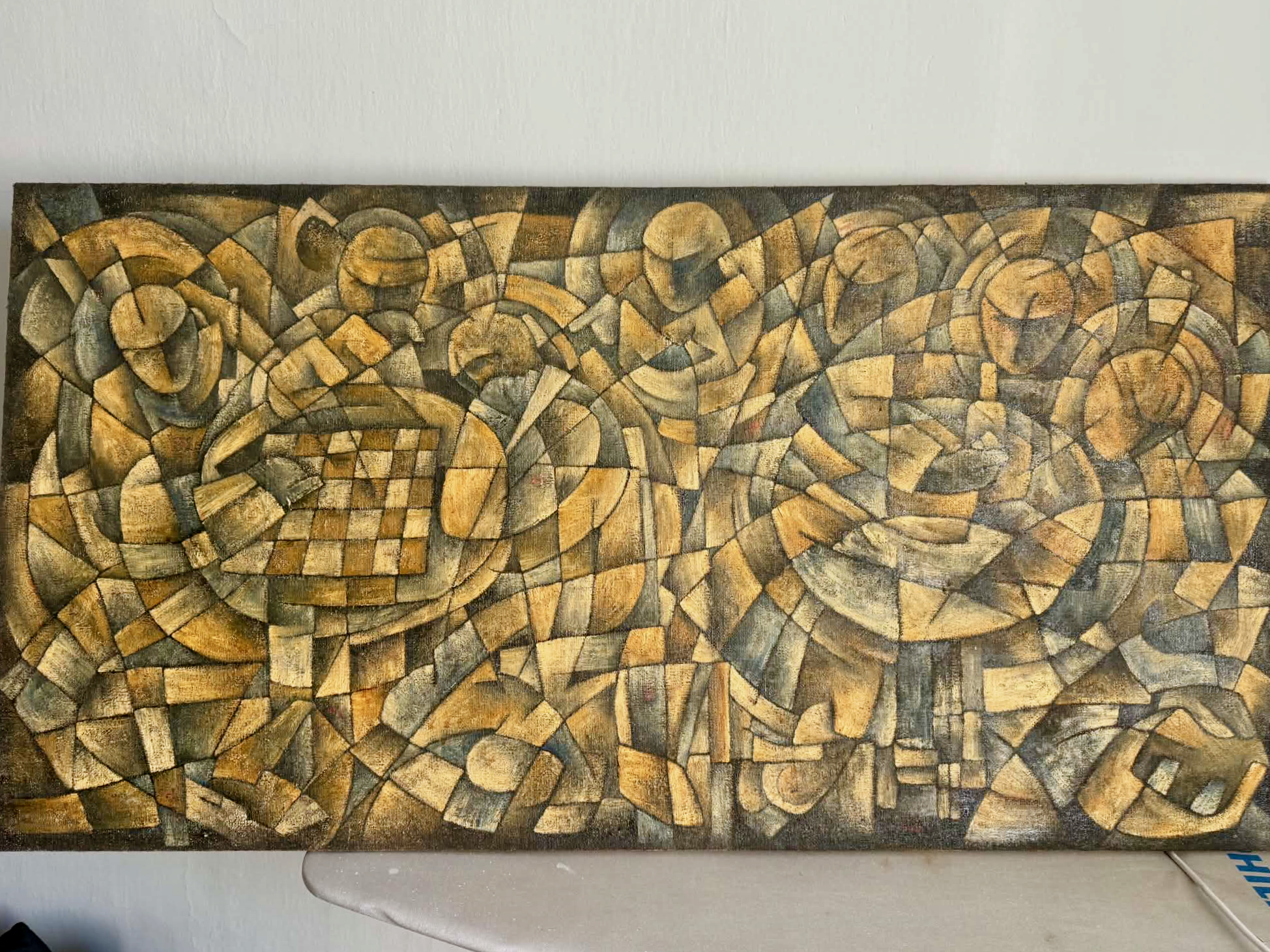
Jesse Littell, The Game, mid-1990s. This Cubist-inspired painting, with its fragmented figures and geometric patterns, hung for many years at U Malého Glena, one of Prague's enduring expatriate-founded music clubs. Image courtesy of Glenn Spicker.
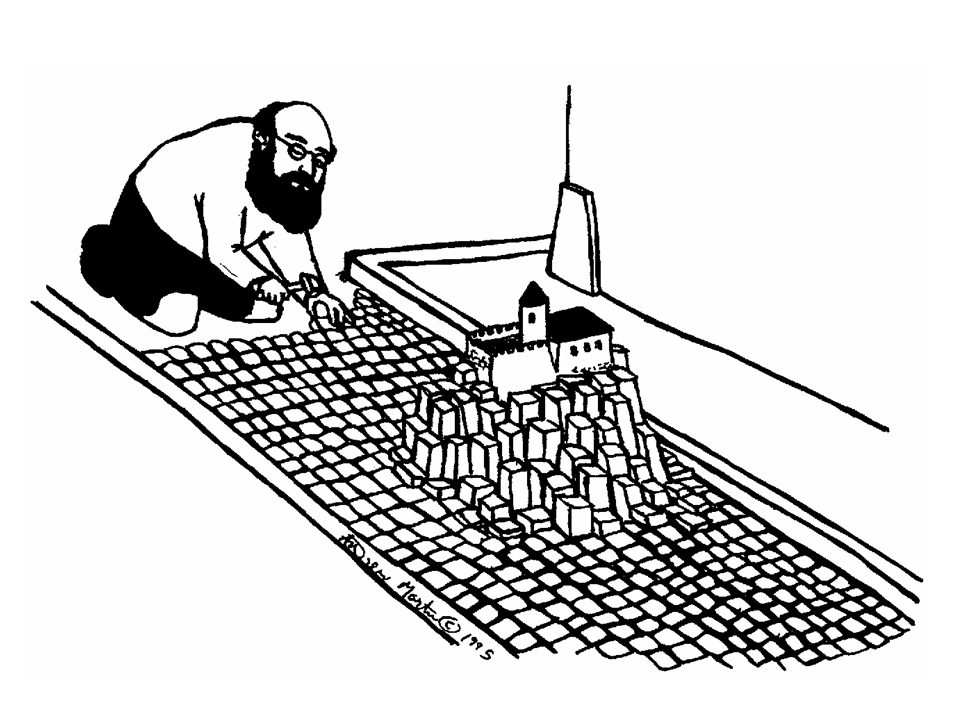
Drew Martin, Prague Cobblestone, 1995. Inspired by the work of Czech cartoonist Jiří Slíva, Martin developed a playful style of wordless illustration. Here, a bearded figure painstakingly lays cobblestones around a miniature Prague cityscape. Image courtesy of the artist.
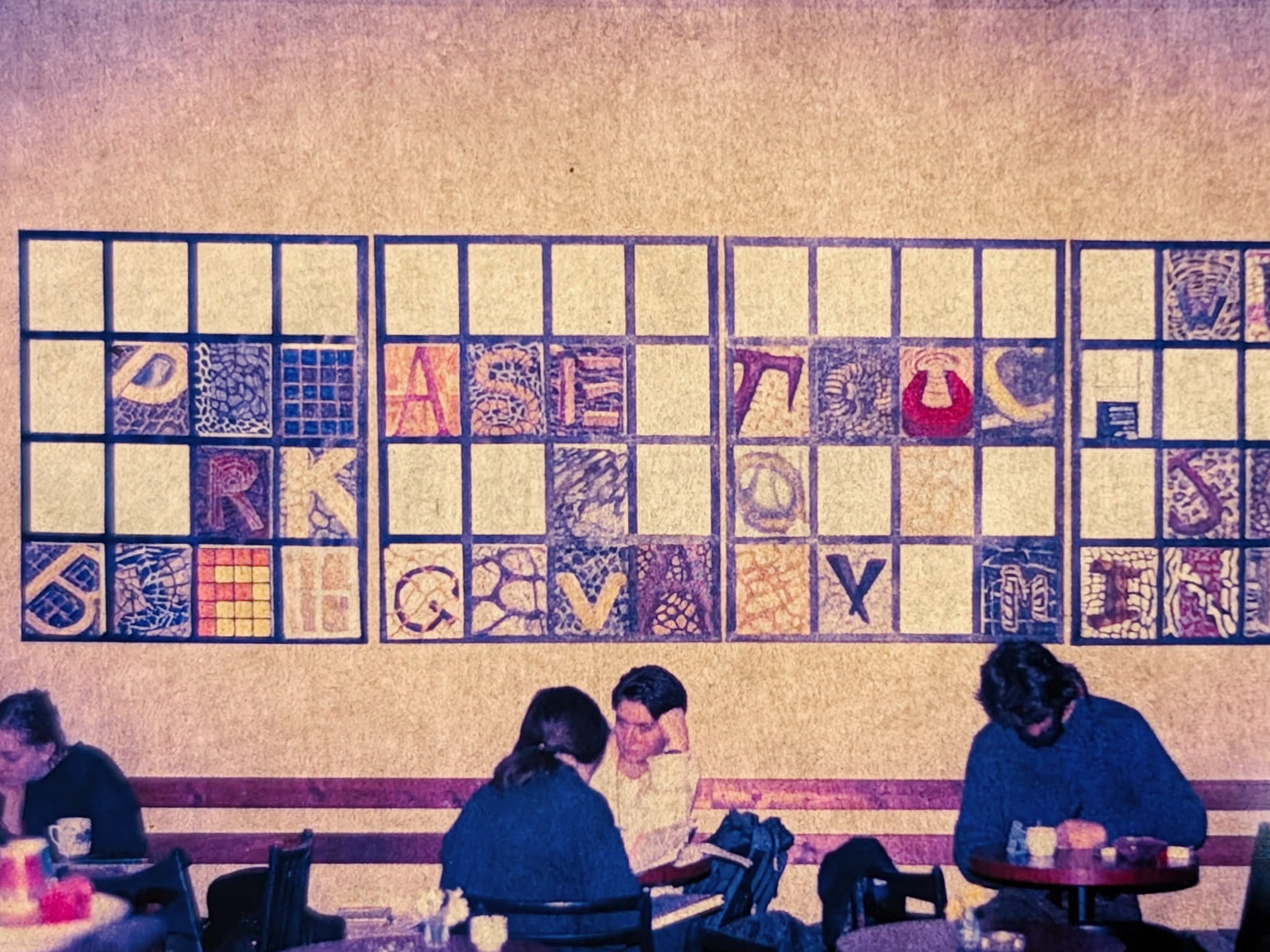
Jonathan Feldschuh exhibition at the Globe Bookstore & Coffeehouse, Prague, 1994. Visitors sit beneath the artist’s colorful, grid-based compositions, illustrating the Globe’s role as an informal gallery for Prague’s expatriate art community. Photo courtesy of the artist.
Jonathan Feldschuh, interactive installation at the Globe Bookstore & Coffeehouse, Prague, 1994. Visitors could rearrange individual letter paintings, attaching them with Velcro to a grid to create their own compositions. Image courtesy of the artist.
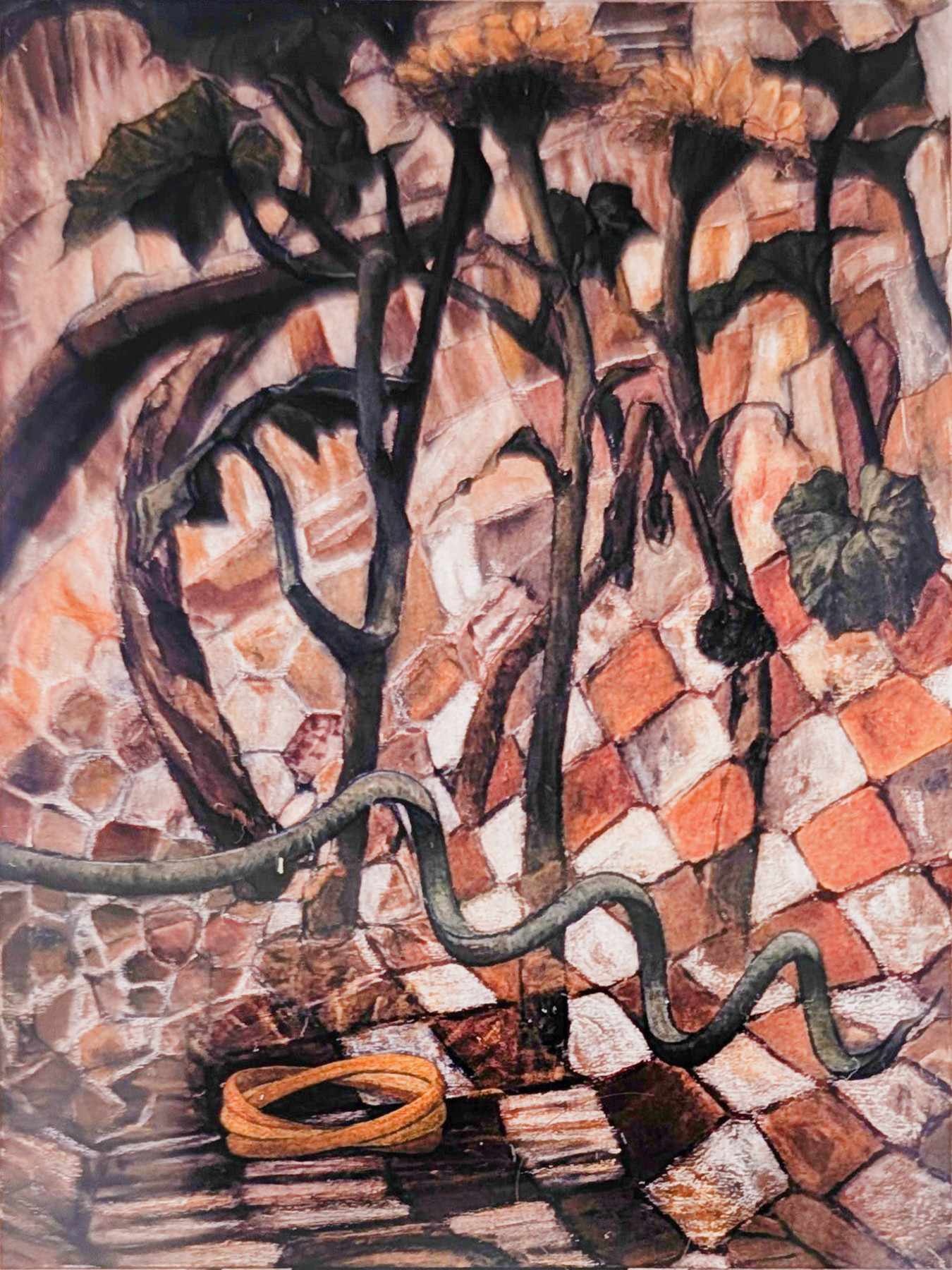
Jonathan Feldschuh, painting exhibited at Galerie Radost, Prague, mid-1990s. A richly textured composition of twisting trees, serpentine forms and warm earth tones, evoking a mysterious, almost dreamlike landscape. Image courtesy of the artist.
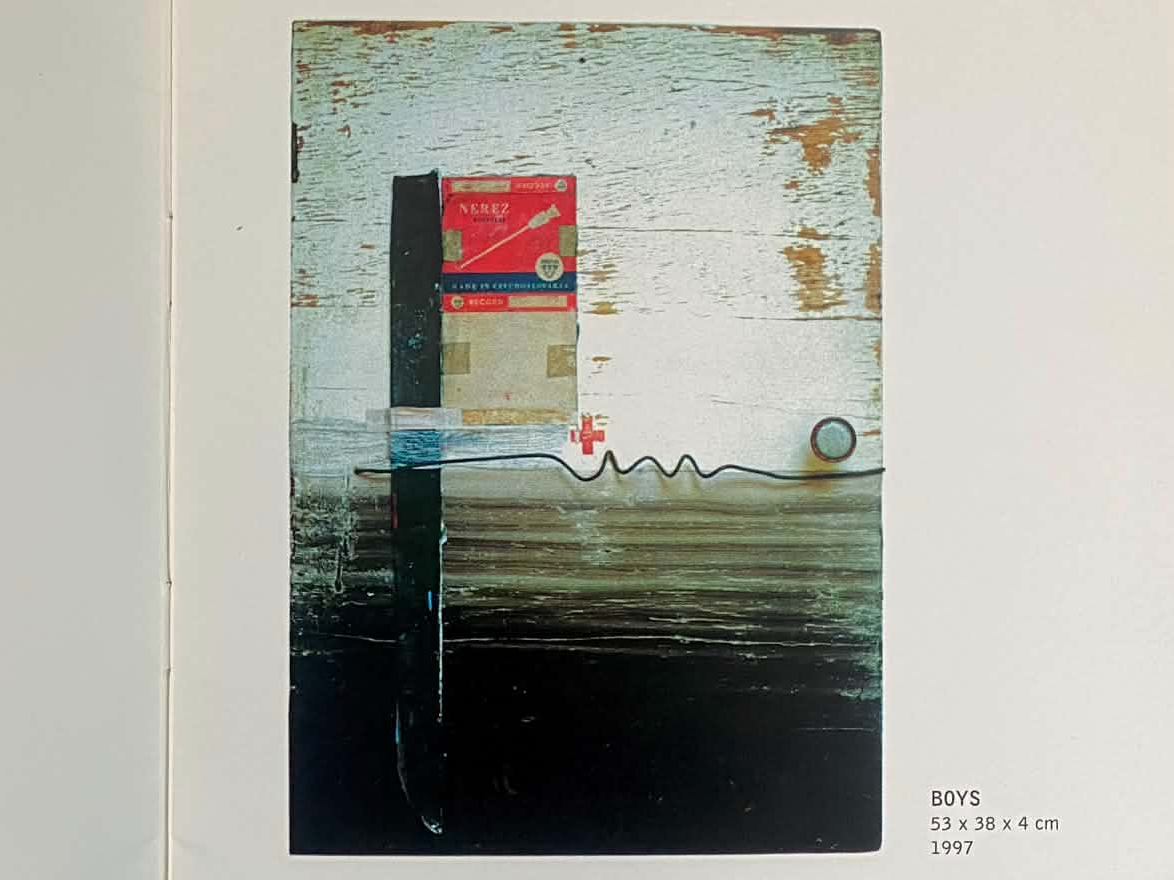
Karl Bielik, Boys, 1997. Mixed-media assemblage incorporating metal wire, linoleum, a bandage, syringe packet, and glue on a medical cabinet door. 53 × 38 × 4 cm. Image courtesy of the artist.
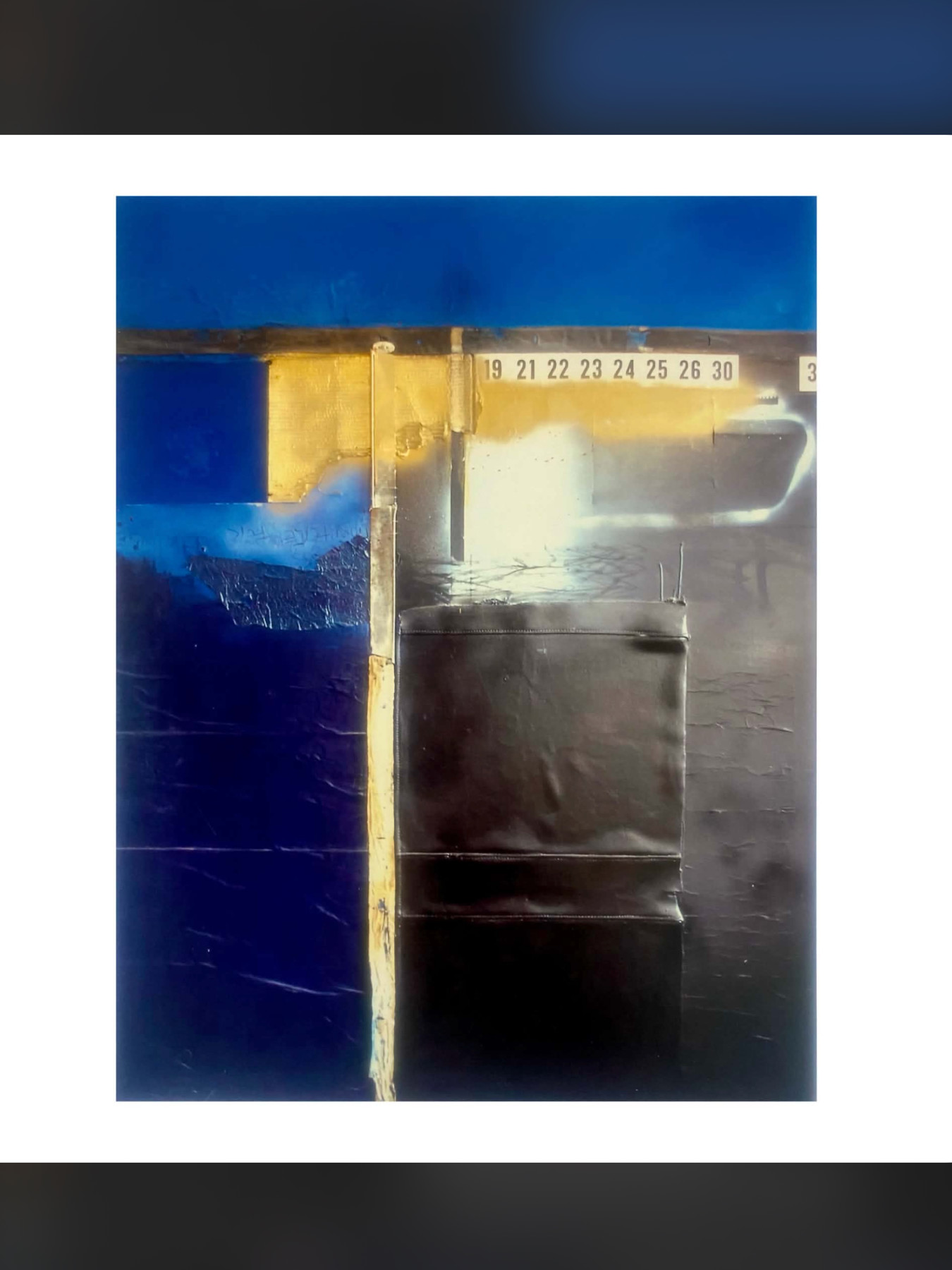
Karl Bielik, Thirty, 1997. Mixed media on canvas, 170 × 130 cm. An abstract composition of deep blues, black and yellow, incorporating layered surfaces, geometric forms and fragments of numbers. Image courtesy of the artist.
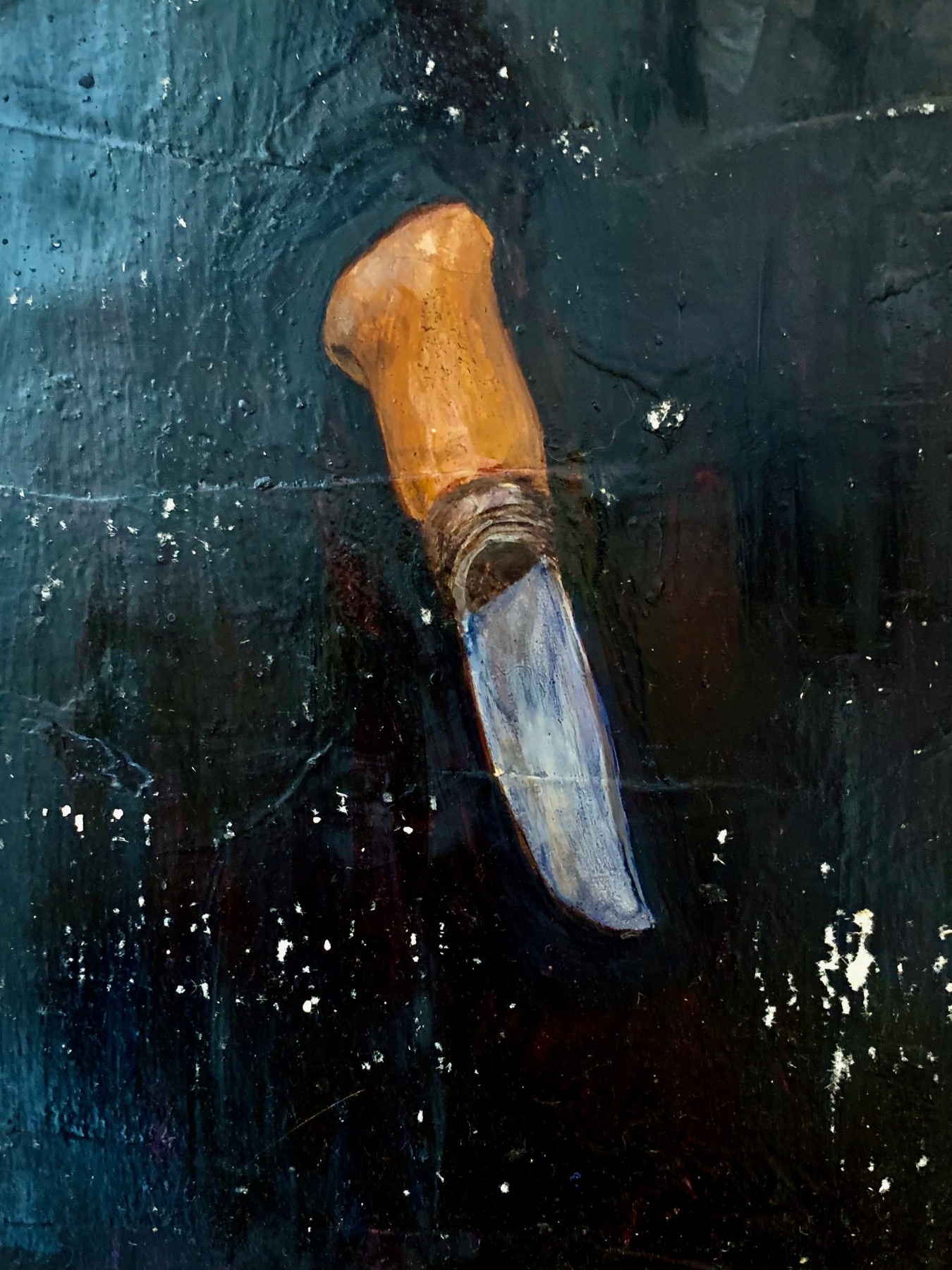
Anne Hars, Knife, 1993. Exhibited at the Globe Bookstore & Coffeehouse in Prague in 1993, this painting transforms an ordinary object into an unsettling image against a dark, heavily textured background. Image courtesy of the artist.
Holly Spruck, Shadow, mid-1990s. A vividly colored, cartoonlike composition of exaggerated figures, combining playful imagery with perhaps a darker psychological undercurrent. Image courtesy of Think magazine.
Artist Jesse Littell at the opening of U Malého Glena, Prague, 1994. The painter stands in front of one of his works at the newly opened bar, which became a leading jazz venue in the city. Photo courtesy of Glenn Spicker.
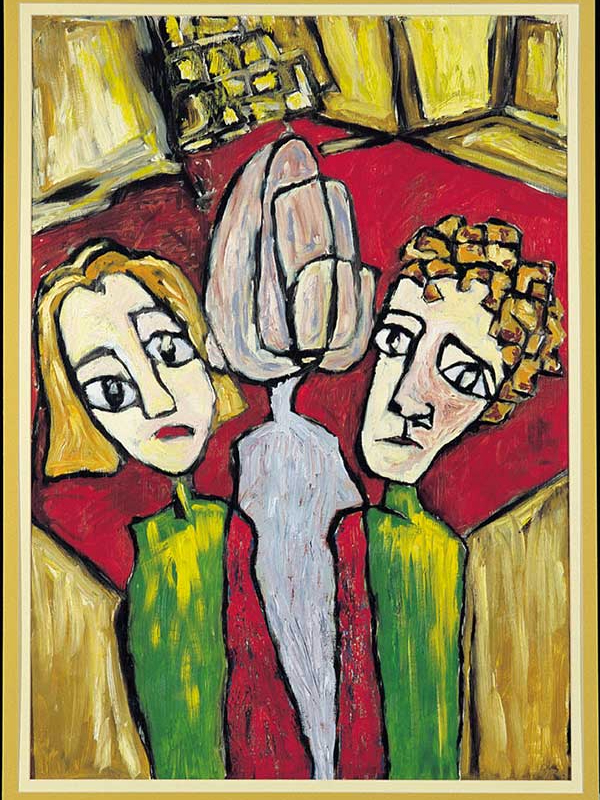
Painting by Georgia Schaller, 1990s. A colorful, semiabstract composition featuring stylized figures and animals, one of several paintings Schaller created for Glen Emery, owner of Jo’s Bar in Prague. Image courtesy of Jo-Anne Emery.
Illustrations by Czech artist Jiří Votruba, 1990s. Votruba’s playful, graphic interpretations of Prague, Kafka and the Golem were ubiquitous in the mid-1990s, providing a visual vocabulary that expatriate artists could draw on in their own work. Image from the artist's website.
Program for Far Horizons II: American Artists in the Czech Republic, July 14–August 10, 1994. Organized by the American Center for Culture and Commerce, the exhibition showcased the work of American artists living and working in the Czech Republic. Image courtesy of Beth Zonderman.
Pages from the program for Far Horizons: American Artists in the Czech Republic, 1994. The bilingual exhibition catalog introduces participating artists through portraits, biographies and statements about their work, documenting the diversity of Prague's emerging American art community. Image courtesy of Beth Zonderman.
Another page from the program for Far Horizons: American Artists in the Czech Republic, 1994. The bilingual catalog presents portraits and biographical profiles of participating artists, offering a valuable record of Prague's expatriate art community. Image courtesy of Beth Zonderman.
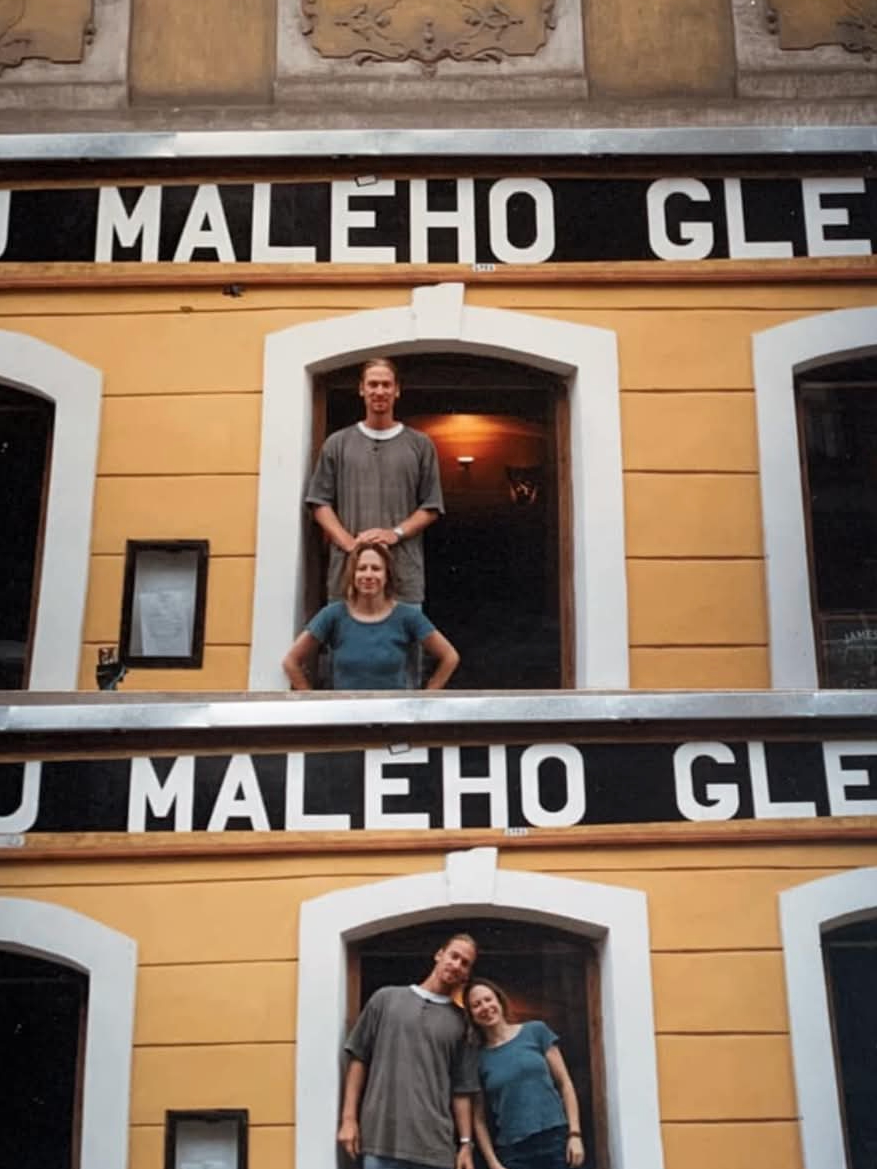
Artist Stuart Jackson at U Malého Glena, Prague, early 1990s. Jackson created the artwork for the bar's distinctive sign, another example of how expatriate artists helped shape the visual identity of Prague's cafés and bars. Photo courtesy of Glenn Spicker.
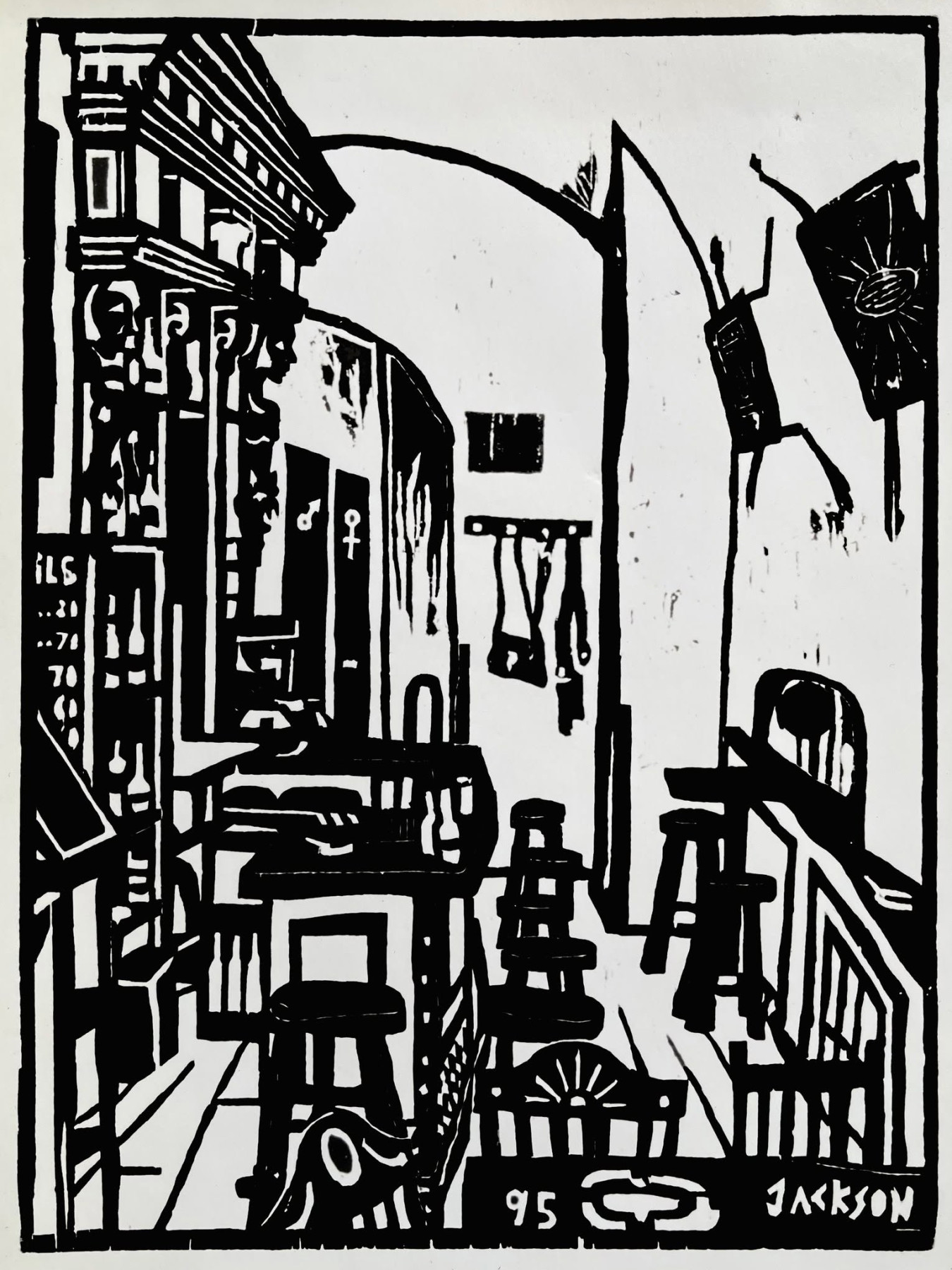
Stuart Jackson, Prague bar interior, 1995. A bold black-and-white illustration capturing the intimate, slightly chaotic atmosphere of the city's expatriate watering holes.
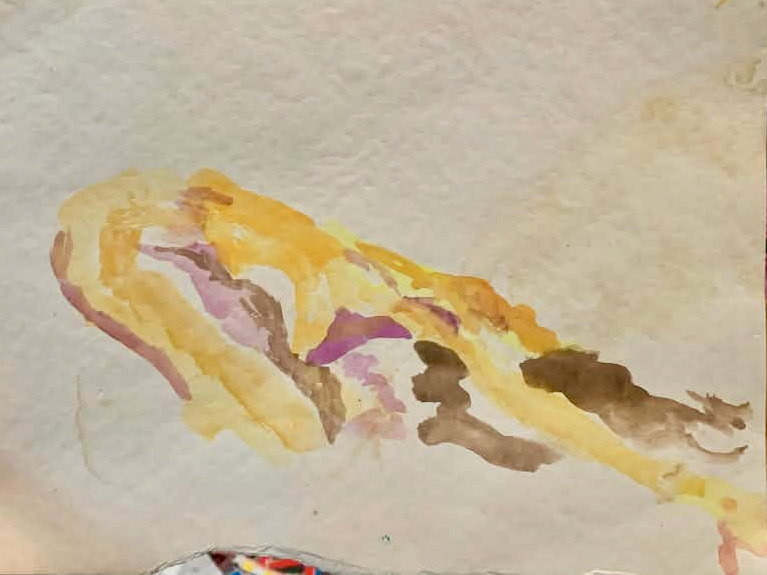
Esther Sharrow, untitled watercolor, mid-1990s. Sharrow, one of the artists active at Asylum, an informal gathering and exhibition space for Prague’s expatriate art community, worked in delicate washes of yellow, pink and earth tones. Image courtesy of the artist.
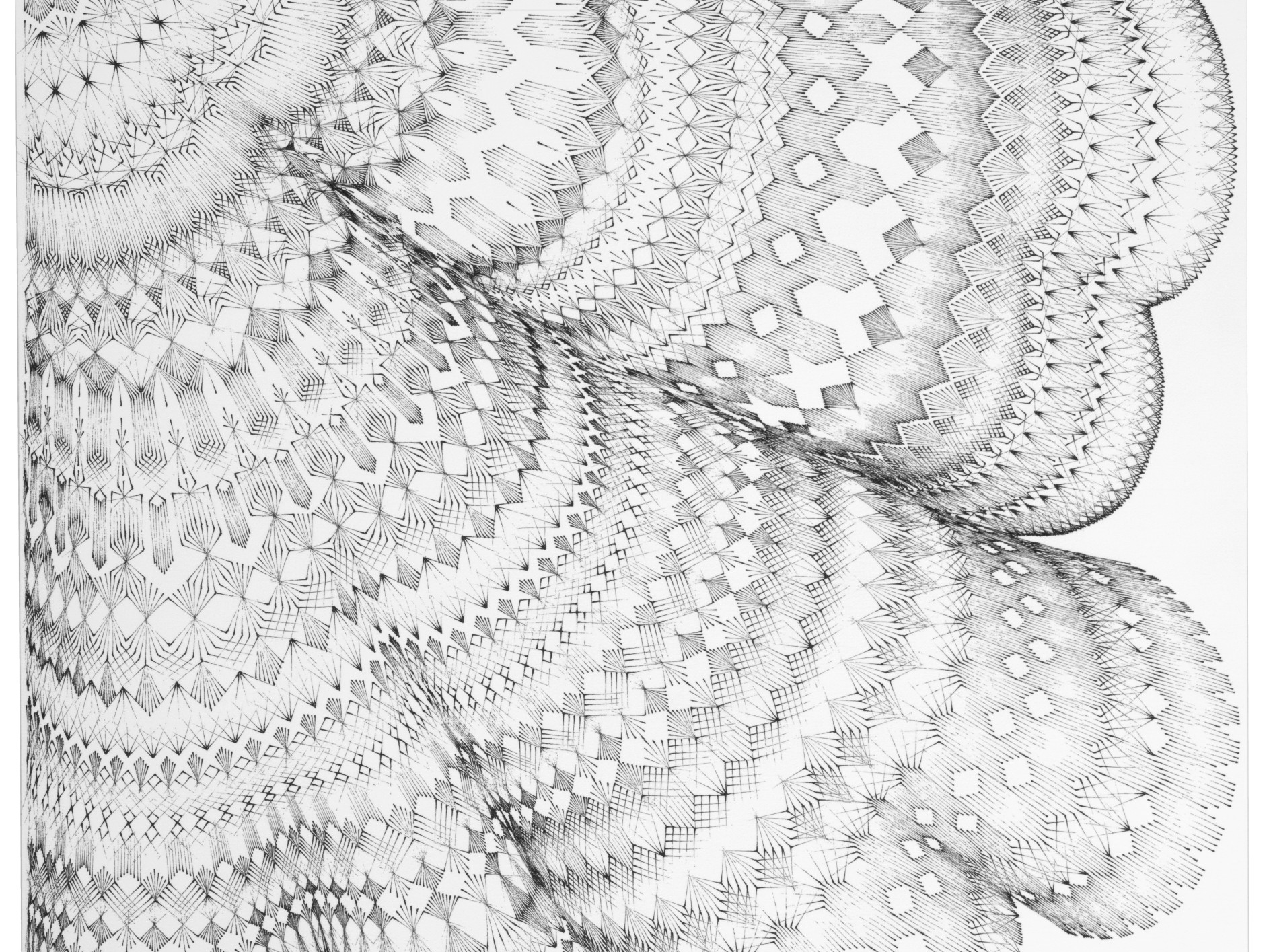
Robert Horvitz, from A History of Ideas, late 1990s. Intricate, interlocking patterns of fine lines and geometric forms create a sense of movement and depth, reflecting the artist's fascination with the possibilities of drawing. Image courtesy of the artist.
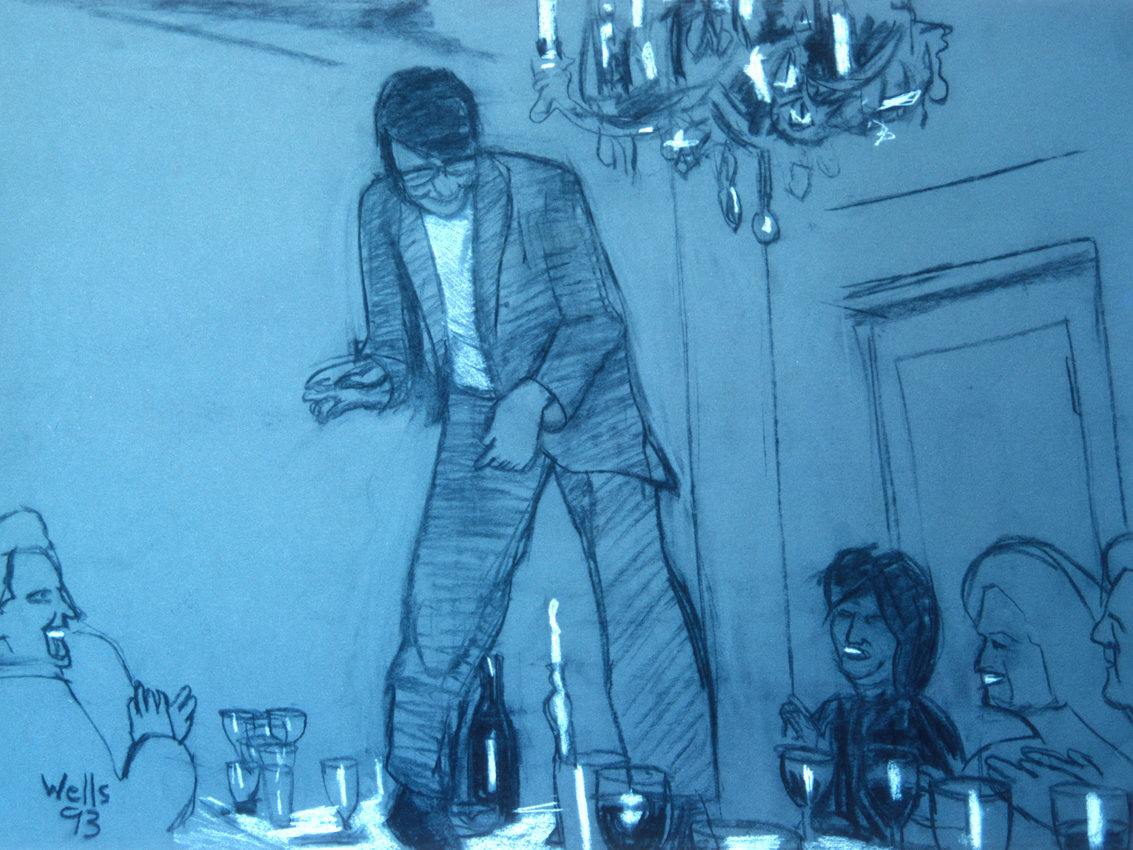
Lawrence Wells, Life of the Party, 1993. A sharply observed drawing of a lively social gathering, capturing the humor and occasional absurdity of Prague's expatriate social scene. Image courtesy of the artist.
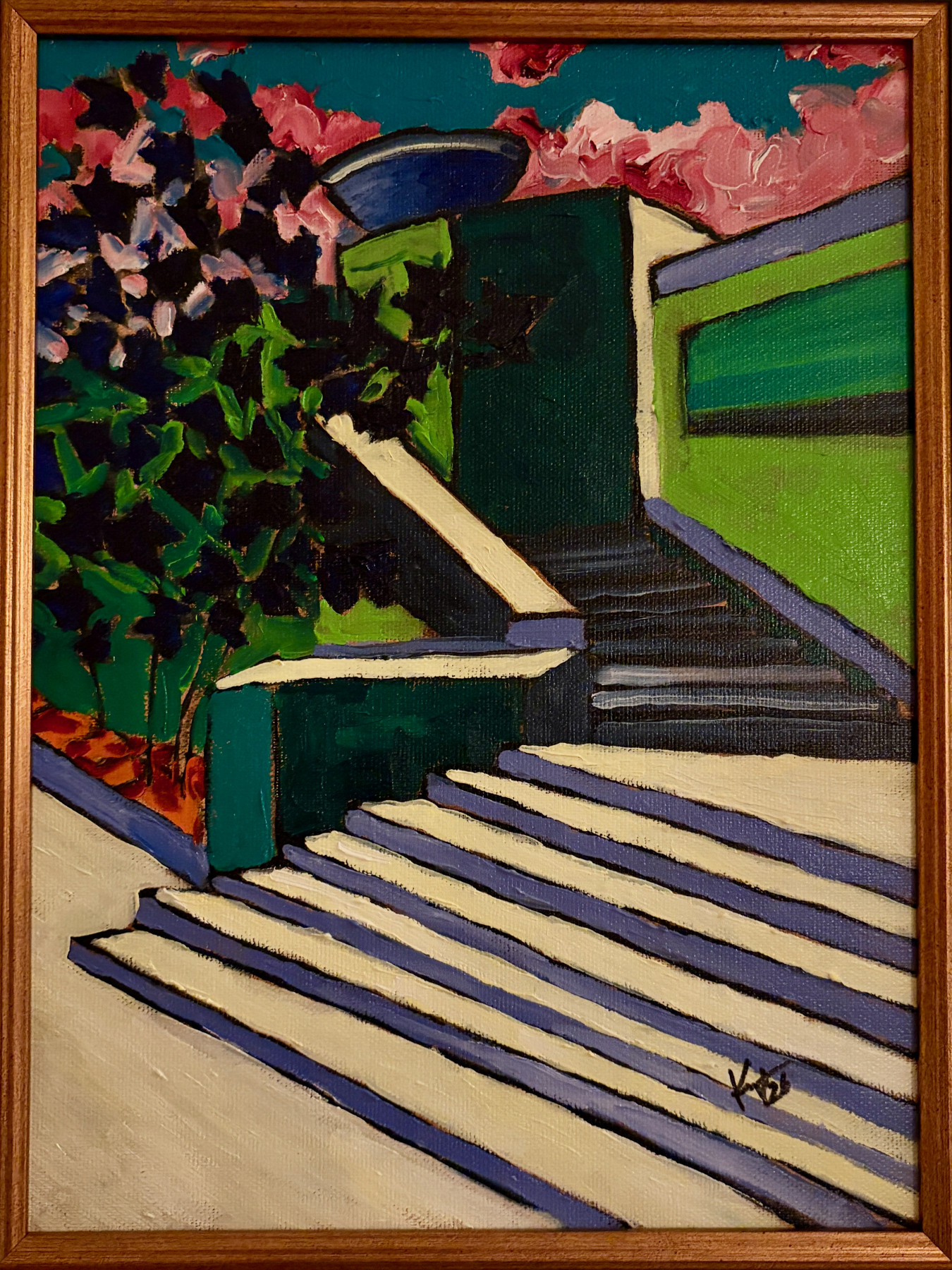
Kip Bauersfeld, contemporary painting. A colorful depiction of a stairway in Prague, painted by the longtime Prague-based artist. I purchased this painting in 2026 and it now hangs in my Prague apartment—a small but tangible reminder of the artistic community that took shape in the city during the 1990s. Photo by Mark Baker.
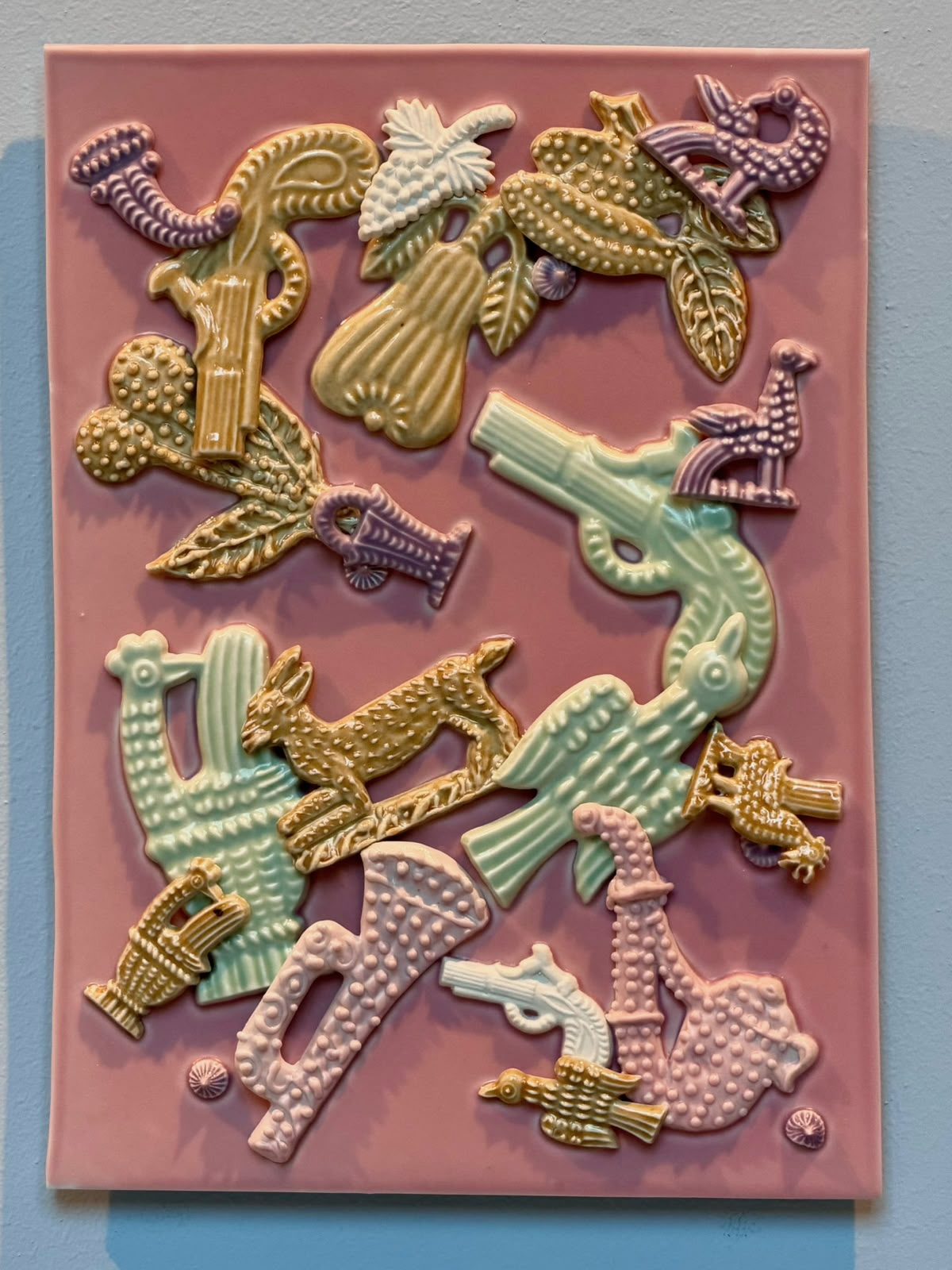
Boris Van Berkum, contemporary mixed-media artwork, Rotterdam. Drawing on cultural and historical imagery, Van Berkum continues to explore the possibilities of mixed media, creating richly textured, sculptural compositions that reflect the evolution of his art since his Prague years. Image courtesy of the artist.
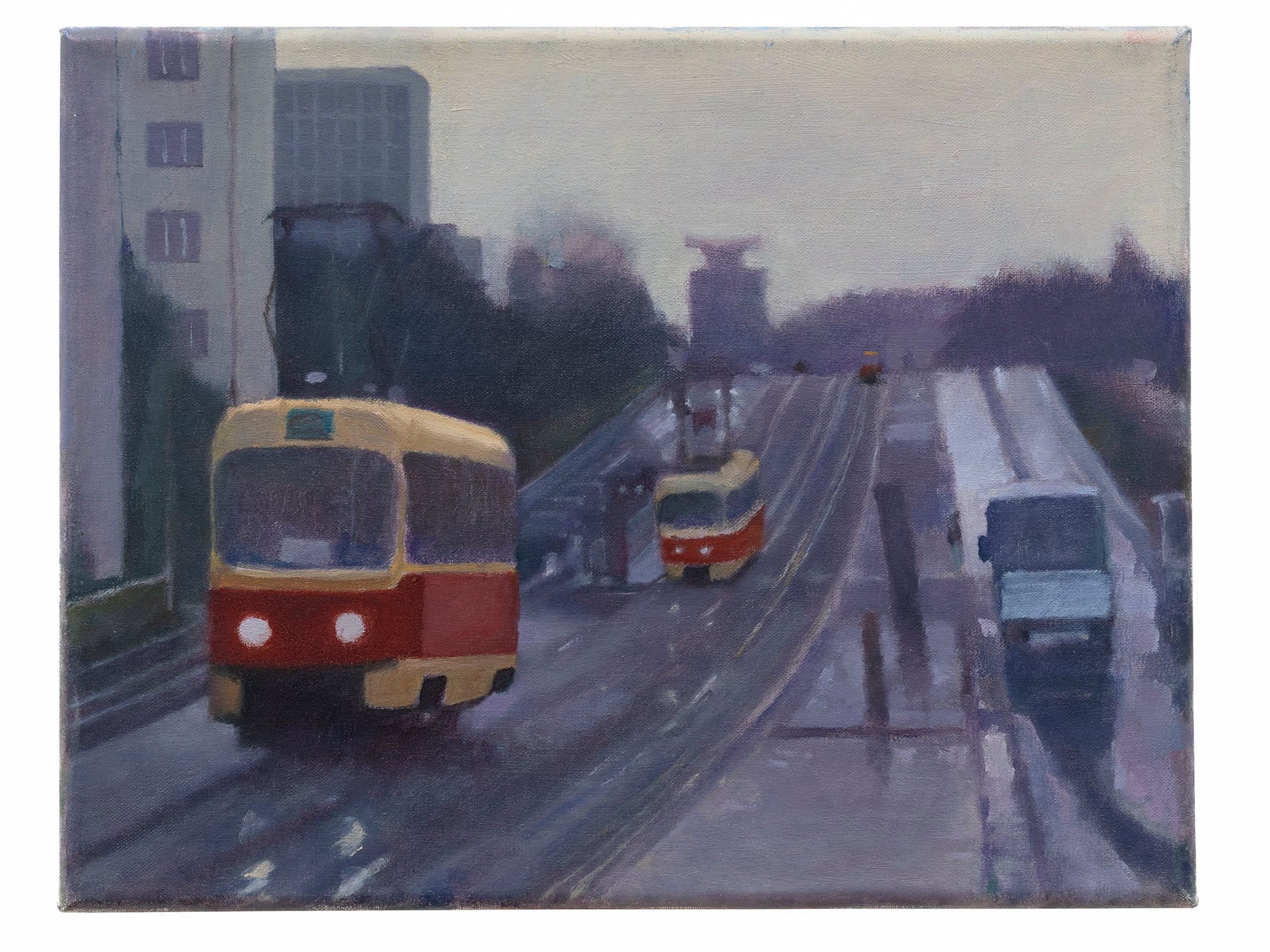
Fedele (Fred) Spadafora, Prague cityscape, 2020s. Exhibited in Frankfurt, Germany, in March 2026, this atmospheric painting of Prague's red-and-cream trams demonstrates how the artist's years in the Czech capital continue to inform his work more than three decades later. Image courtesy of the artist.
Stewart K. Moore, artwork for 2000 AD, “Creature Comforts.” A prominent figure in Prague’s expatriate art scene of the 1990s, Moore went on to illustrate stories for major comic-book publishers, including the celebrated British science-fiction anthology 2000 AD, home of Judge Dredd. Image courtesy of Stewart K. Moore.
Cover of "Josh & Harv’s Comics," a collection of Josh Neufeld’s collaborations with legendary comics writer Harvey Pekar, creator of "American Splendor." Neufeld, who contributed illustrations to Prague’s expatriate press in the 1990s, has gone on to work with leading comics writers. Image source: www.joshcomix.com/product/josh-harvs-comics
Photo of Mark Baker
About the author

Mark Baker

I’m an independent journalist, travel writer and author who’s lived in Central Europe for nearly three decades. I love the history, literature, culture and mystery of this often-overlooked corner of Europe, and I make my living writing articles and guidebooks about the region. Much of what I write eventually finds its way into commercial print or digital outlets, but a lot of it does not.

And that’s my aim with this website: to find a space for stories and experiences that fall outside the publishing mainstream.

My Book: ‘Čas Proměn’

In 2021, I published “Čas Proměn” (“Time of Changes”), my first book of historical nonfiction. The book, written in Czech, is a collection of stories about Central and Eastern Europe in the 1980s and early ‘90s, including memories of the thrilling anti-communist revolutions of 1989. The idea for the book and many of the tales I tell there were directly inspired by this blog. Czech readers, find a link to purchase the book here. I hope you enjoy.

Tales of Travel & Adventure in Central Europe
Mark Baker