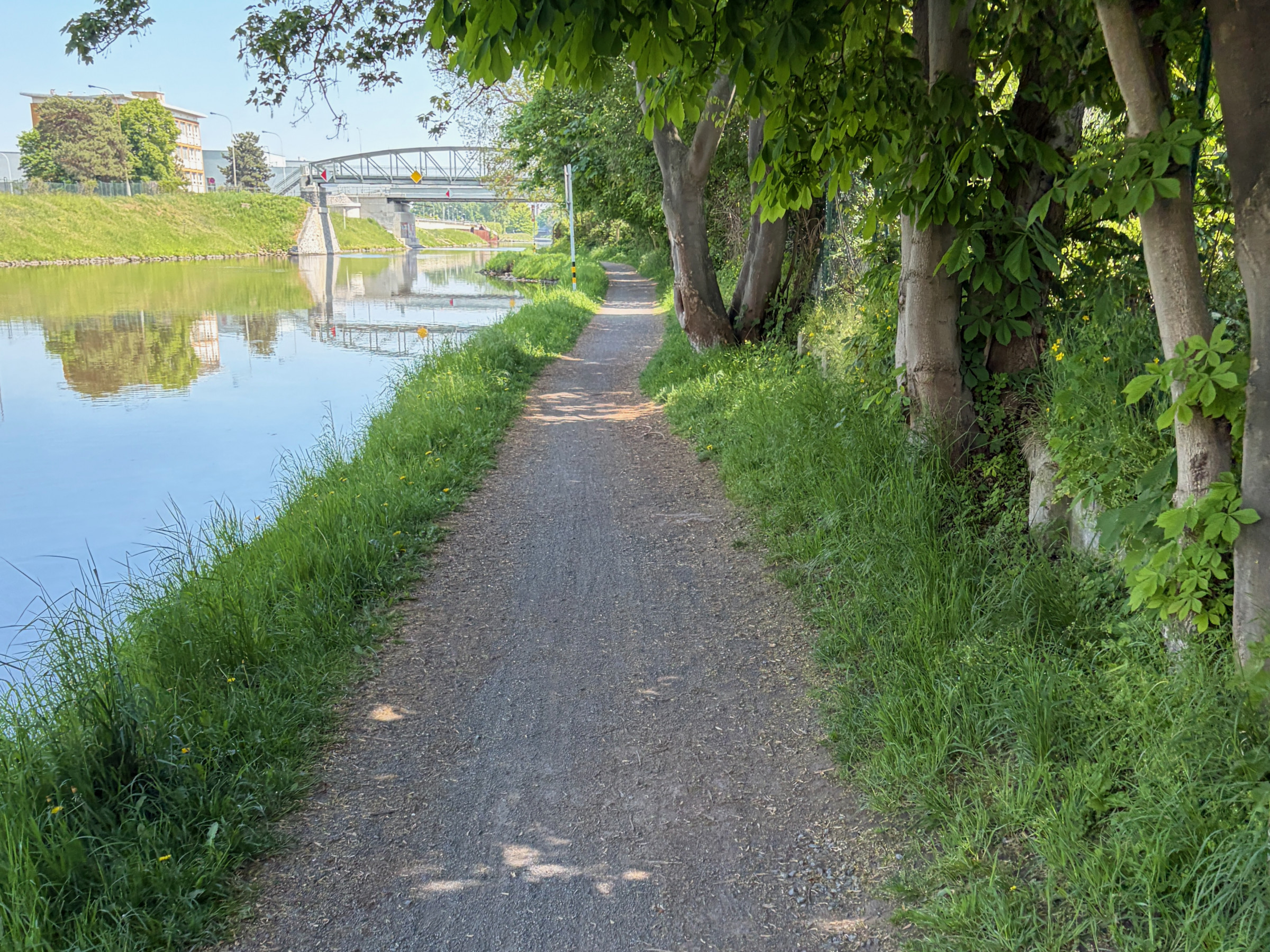
Along the Vltava River to Troja
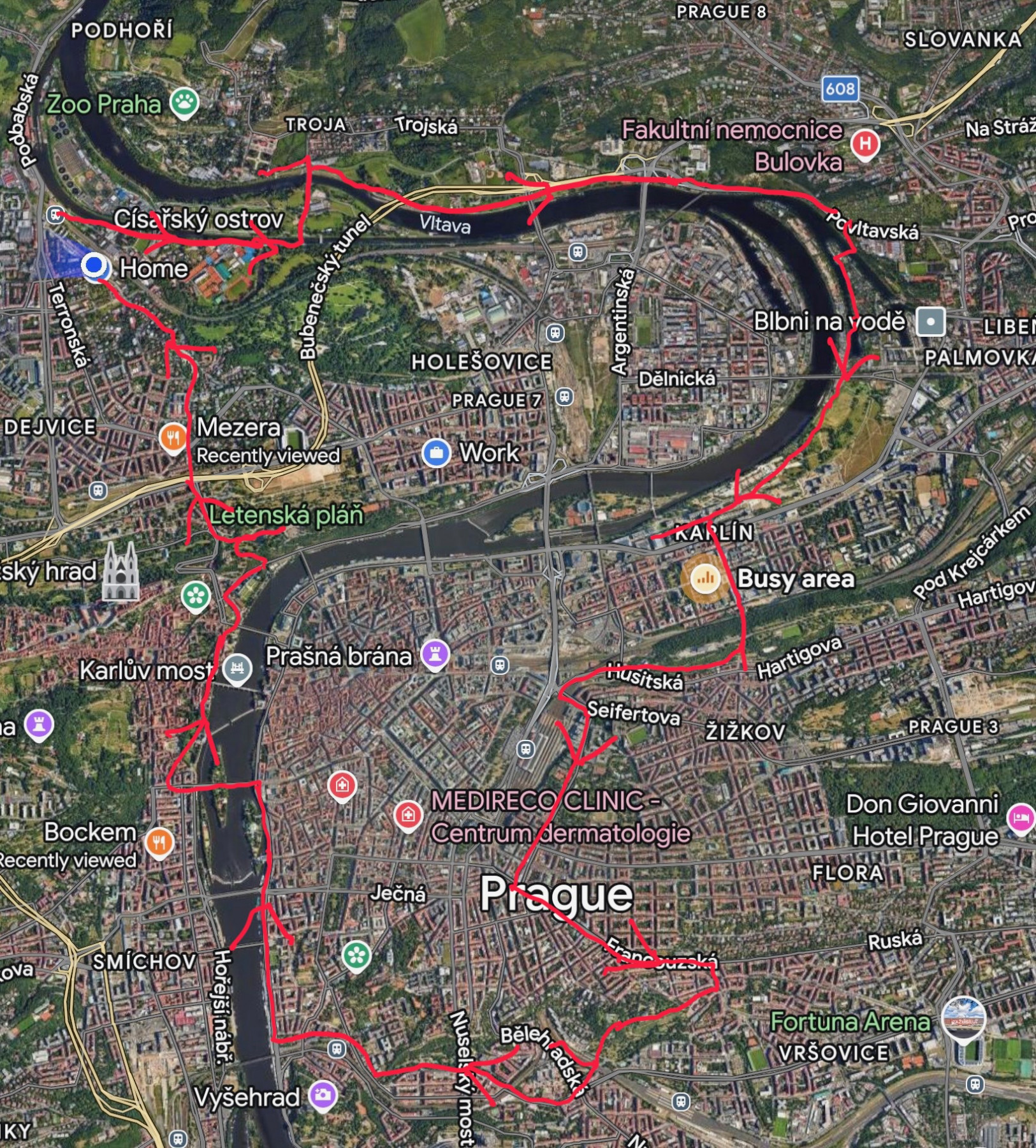
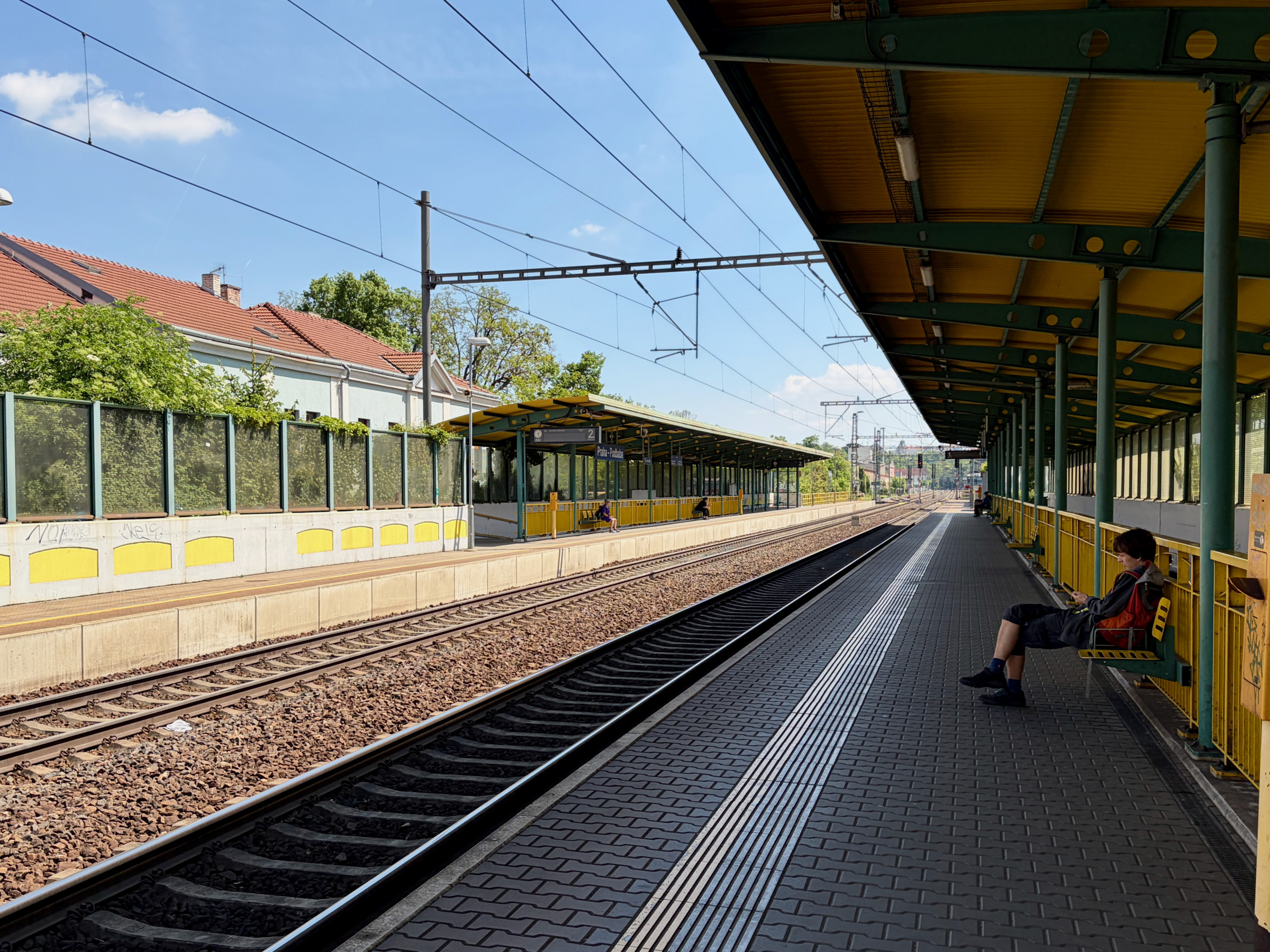
The ride begins near Podbaba railway station (see map), northwest of the city center and conveniently close to where I live. A gravel cycling path follows the southern bank of the Vltava River eastward toward Stromovka Park, one of Prague’s great green spaces. Early in the morning, the river here feels almost sleepy. I’ll occasionally spot a rower or two gliding across the water, along with plenty of dog walkers (Prague has no shortage of these) and the occasional fellow cyclist.
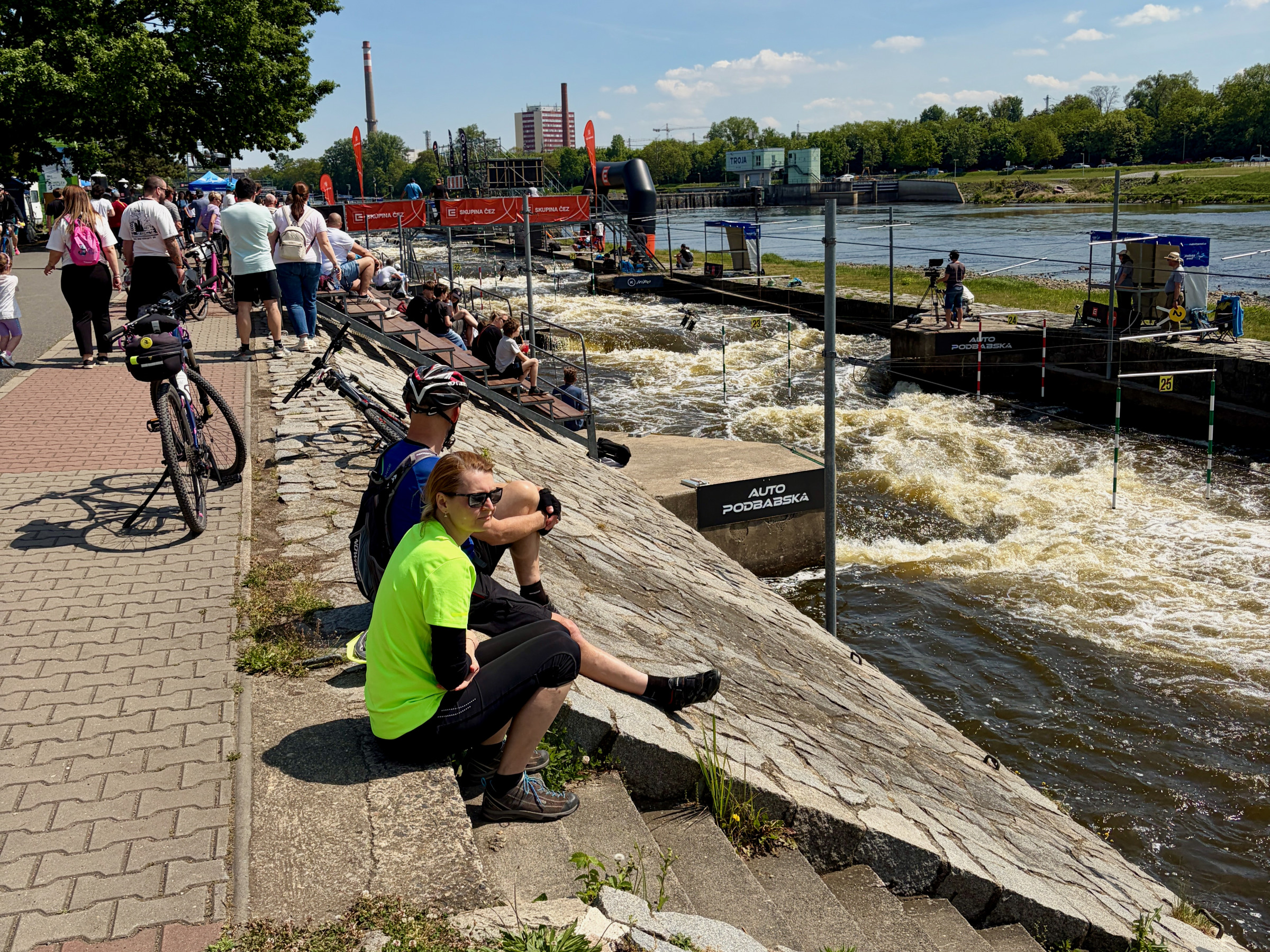
Rather than continuing into Stromovka, the ride bears left onto a small bridge and crosses the river onto Císařský Island, a long strip of land tucked between bends in the Vltava. For many years this area felt industrial and forgotten, but cycling infrastructure has gradually stitched it into the city’s recreational network. Farther along, a pedestrian bridge, replacing an earlier structure that collapsed into the river a few years ago, leads into the district of Troja. Crossing the bridge suddenly opens views toward the vineyards, the Troja Château, and the Prague Zoo climbing the hillside beyond.
This has to be one of the nicest transitions in Prague cycling: within minutes, the route moves from urban embankments into something that feels almost semi-rural. The château’s Baroque gardens sit quietly below the slopes, while the zoo spreads upward into the valley. On weekends, this area fills with families and rollerbladers, but on weekday mornings it can still feel remarkably calm.
From Troja, the ride continues east along the northern bank of the Vltava. This long riverside section is one of the reasons I love the route. Prague gradually reveals a different face here: less historic, more infrastructural. The bike path passes rowing clubs, tennis courts, marinas, and stretches of riverbank that many tourists never see at all.
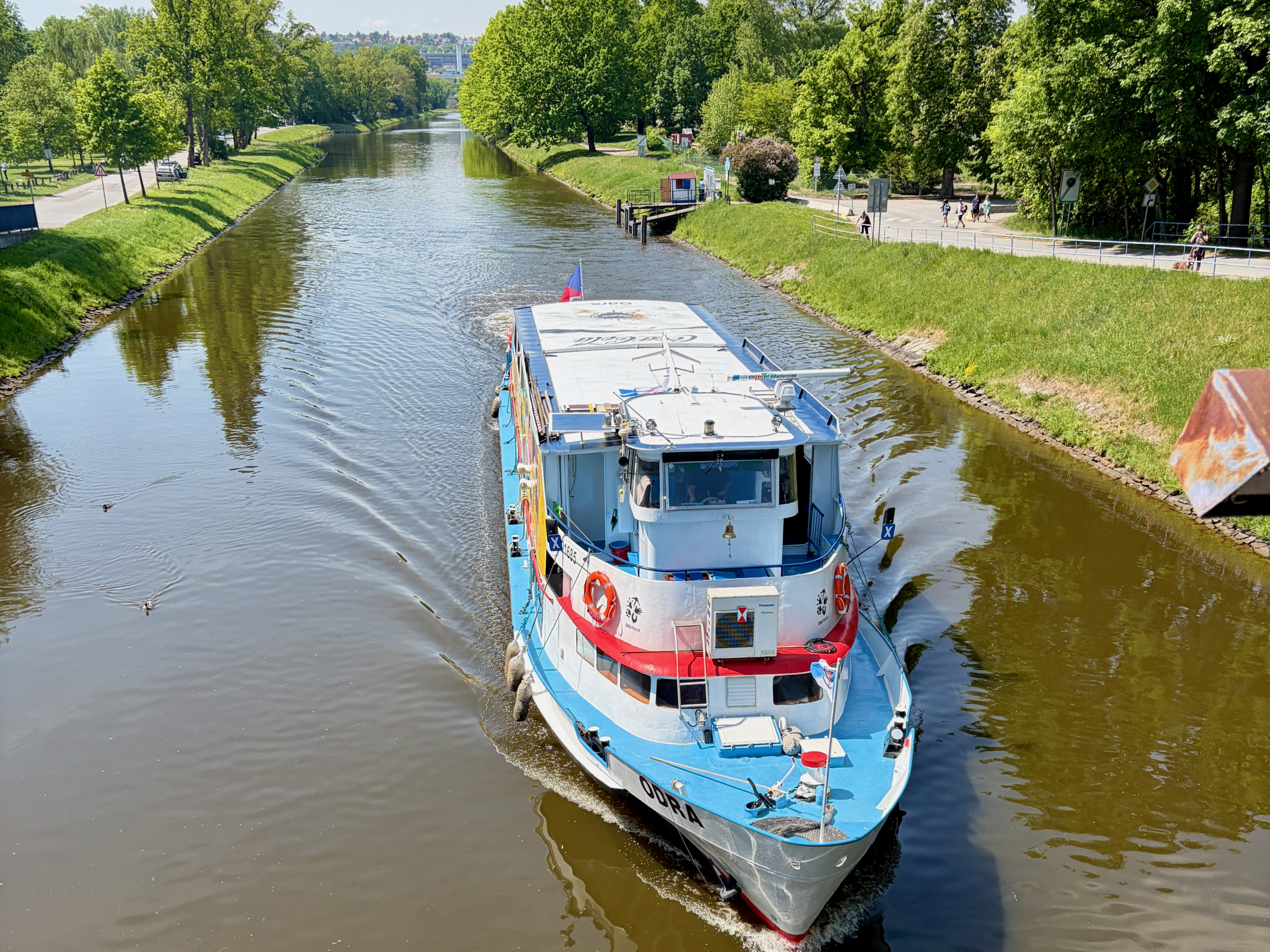
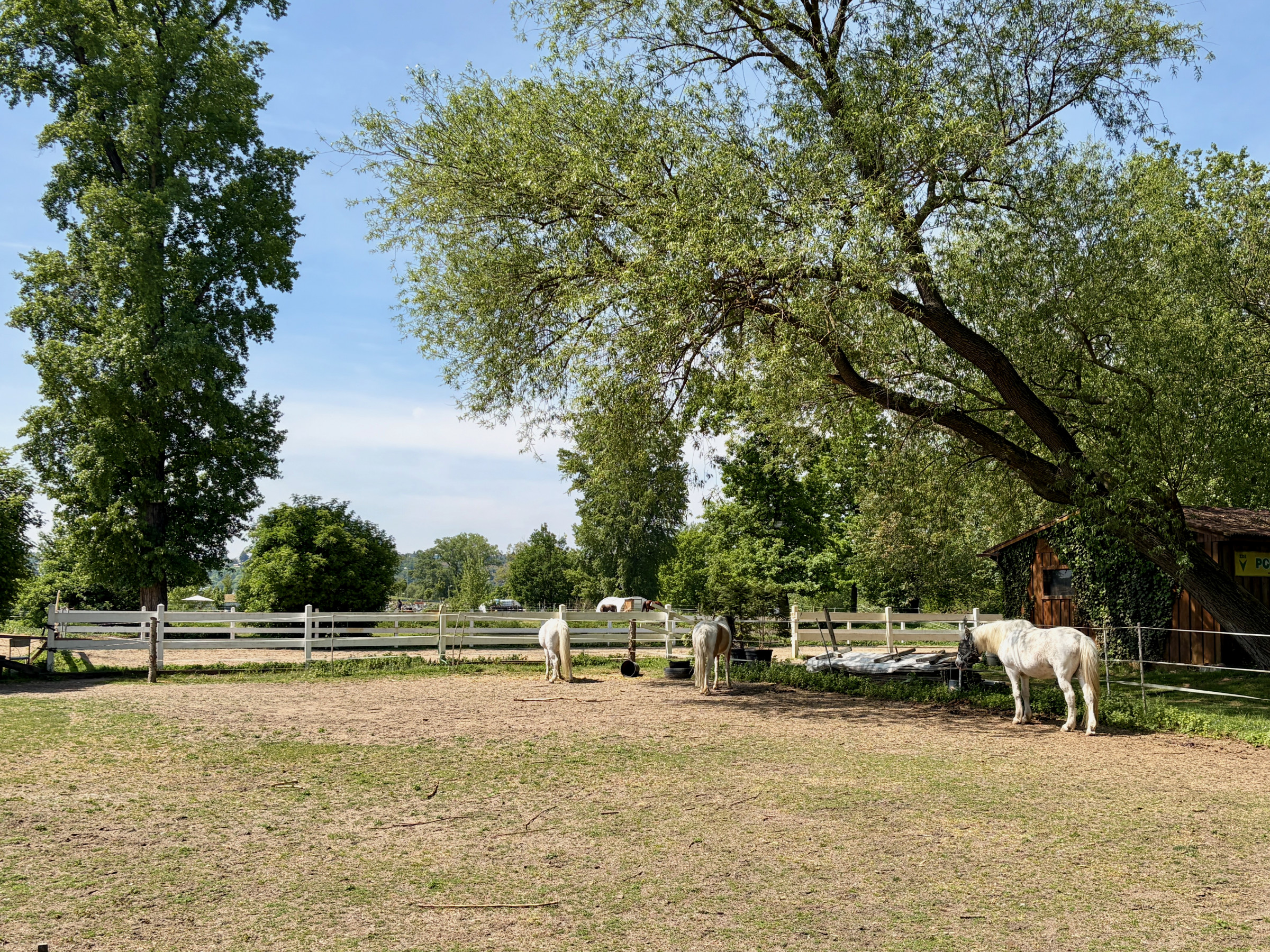
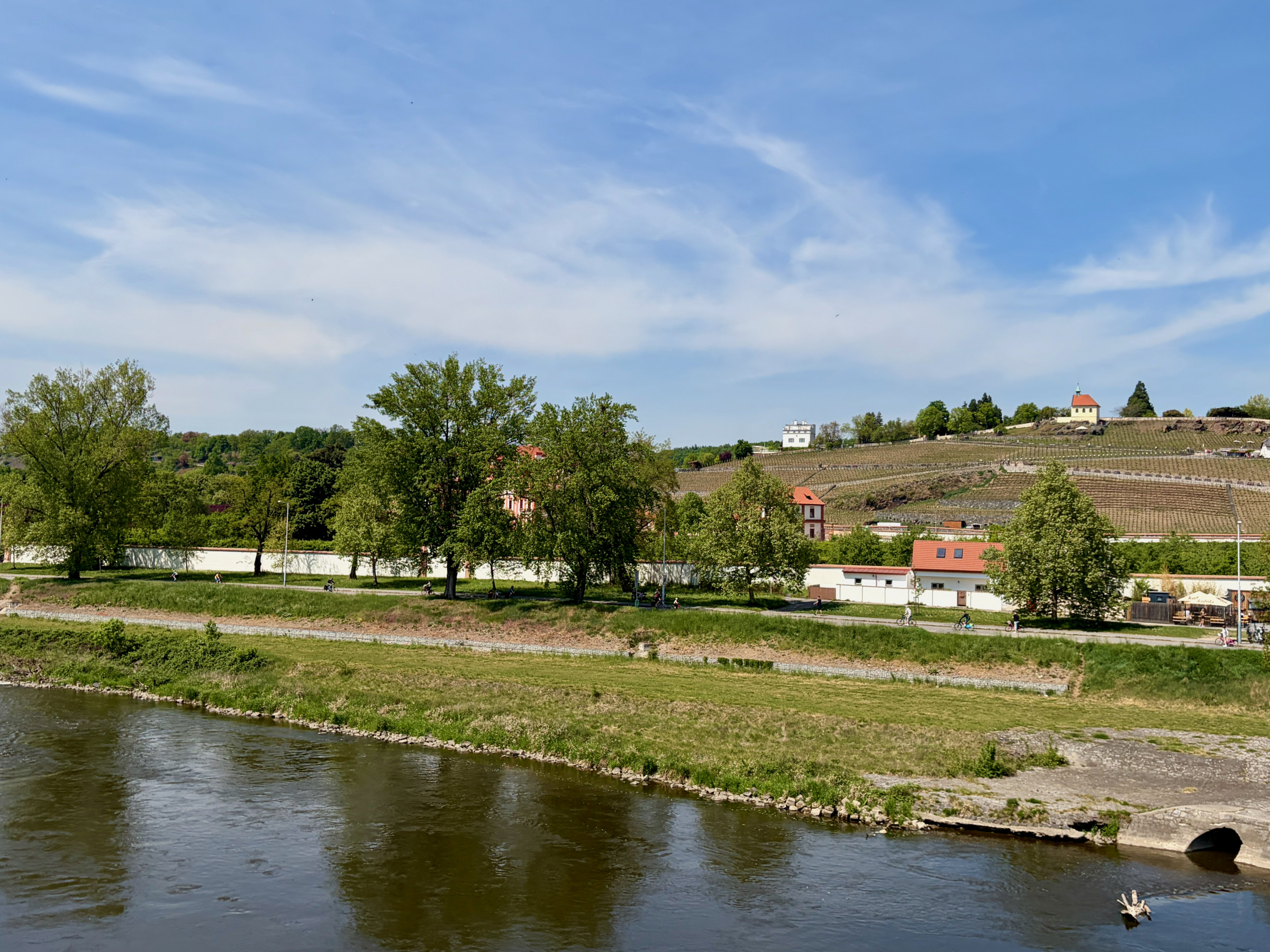
Libeň, Karlín and the Industrial Riverfront
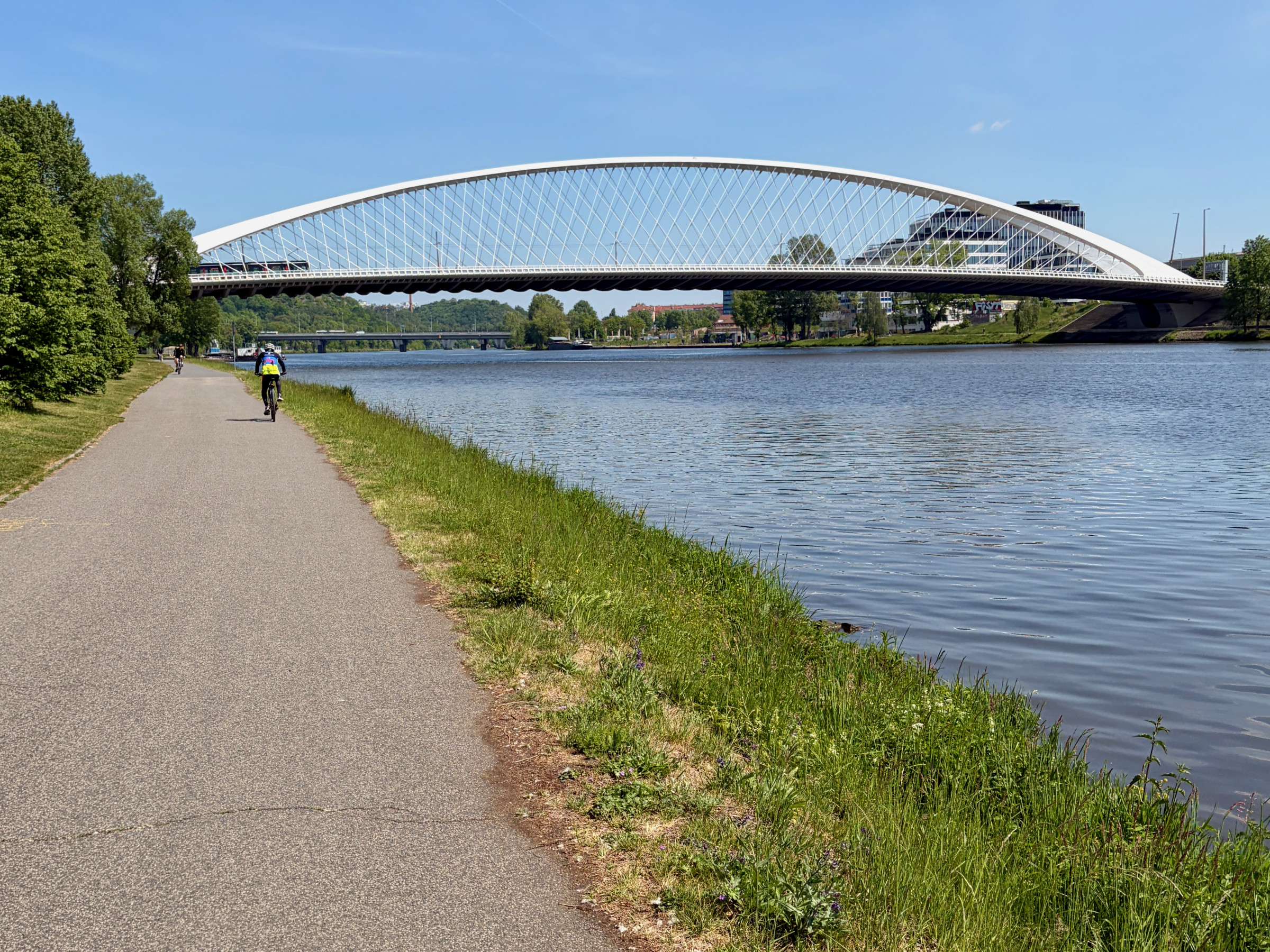
The path continues beneath Troja Bridge, briefly joins a busy road, and then reconnects with another cycling trail that passes through a long, tranquil park toward the district of Libeň. This area has changed enormously over the past two decades. Once considered an outlying industrial neighborhood, it is now slowly being absorbed into Prague’s expanding inner-city geography.
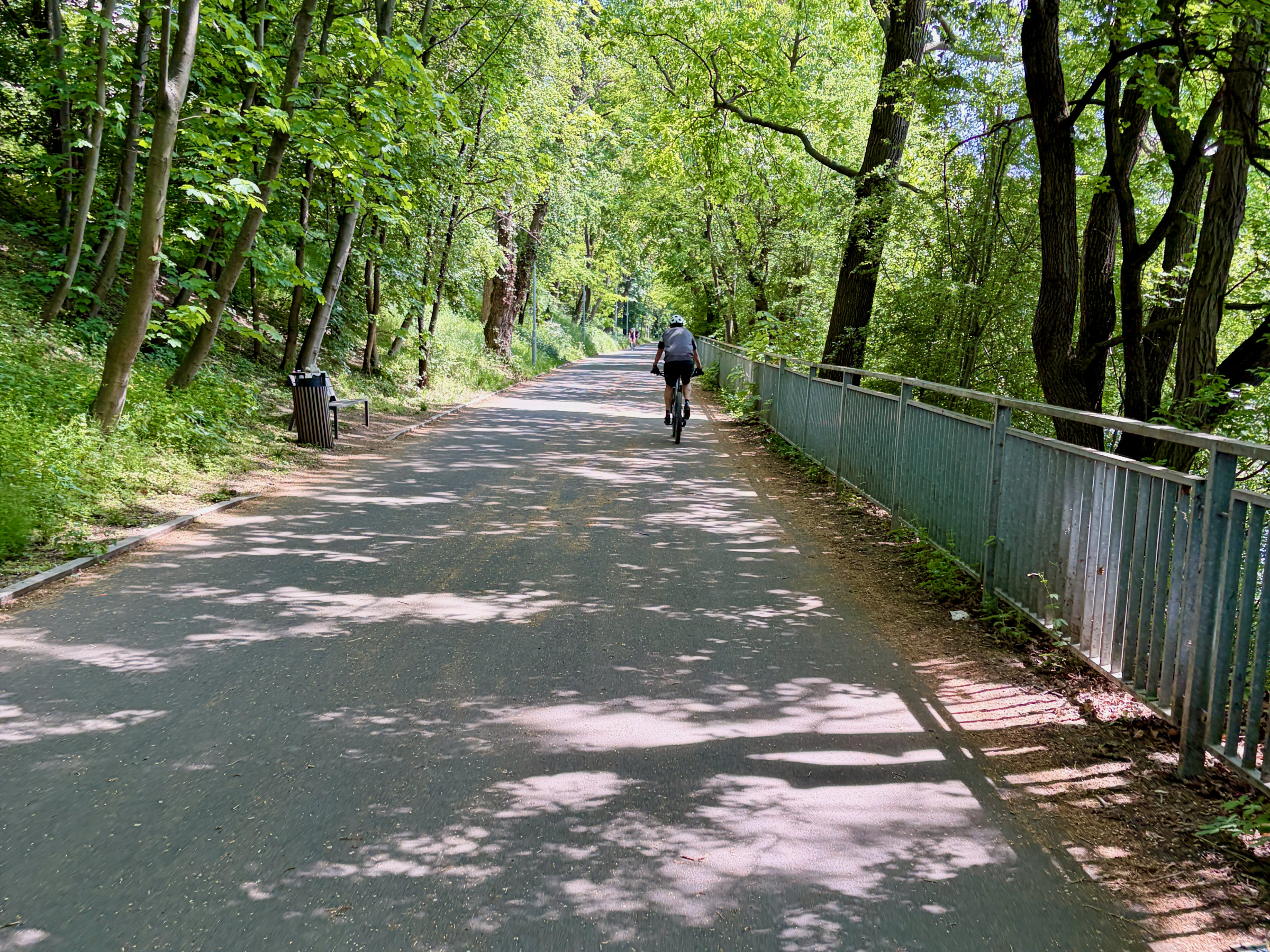
Exiting the park, the ride crosses a series of small bridges toward Libeňský Island before passing through a tunnel beneath Libeň Bridge into Karlín, one of Prague’s great urban comeback stories. After the catastrophic floods of 2002, much of Karlín was rebuilt and reinvented. Today, the district still seems to be building aggressively, adding gleaming new office and residential complexes almost every year. Thanks to the Vltava River along its northern edge, Karlín manages to retain some surprisingly green spaces despite all the new construction.
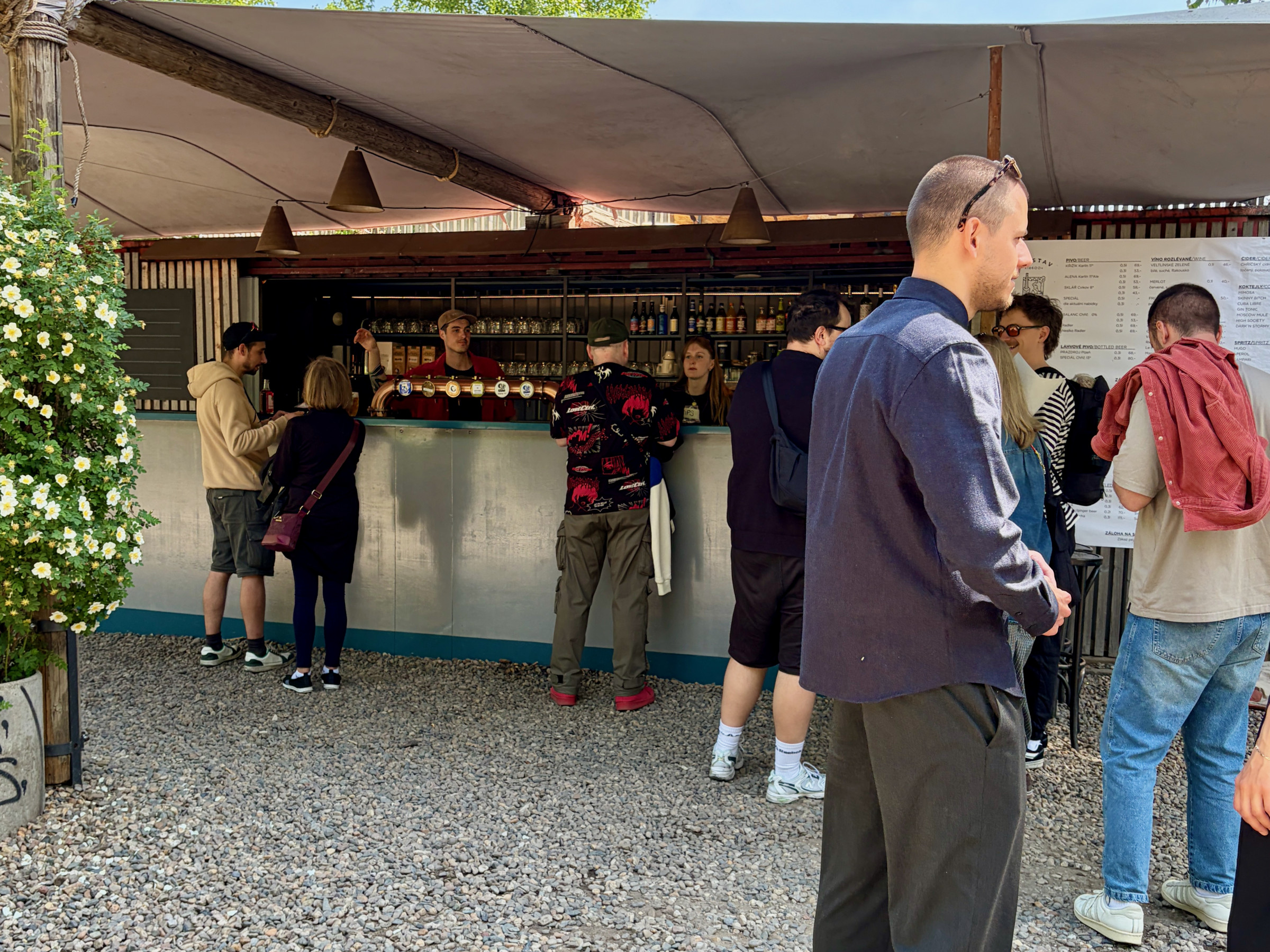
One of my regular stops along this stretch is Přístav 18600 on Rohanský Island, a seasonal riverside bar built partly from shipping containers and reclaimed materials. It’s exactly the kind of place Prague does well: casual, improvised, and perfectly positioned beside the river. Cyclists lean bikes against makeshift tables while office workers sit outside with beers after work. On a warm afternoon, it can be difficult not to stay longer than planned.
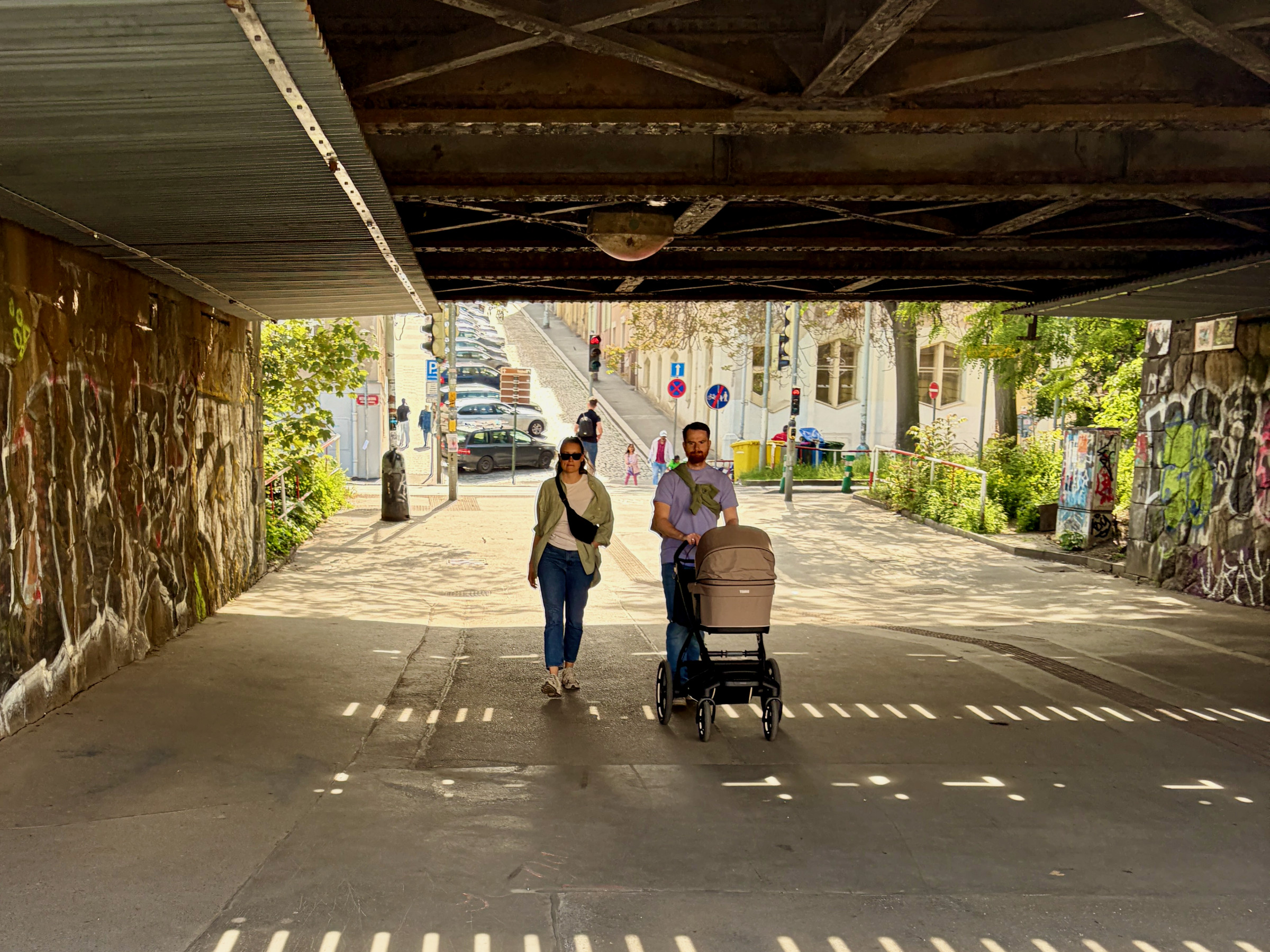
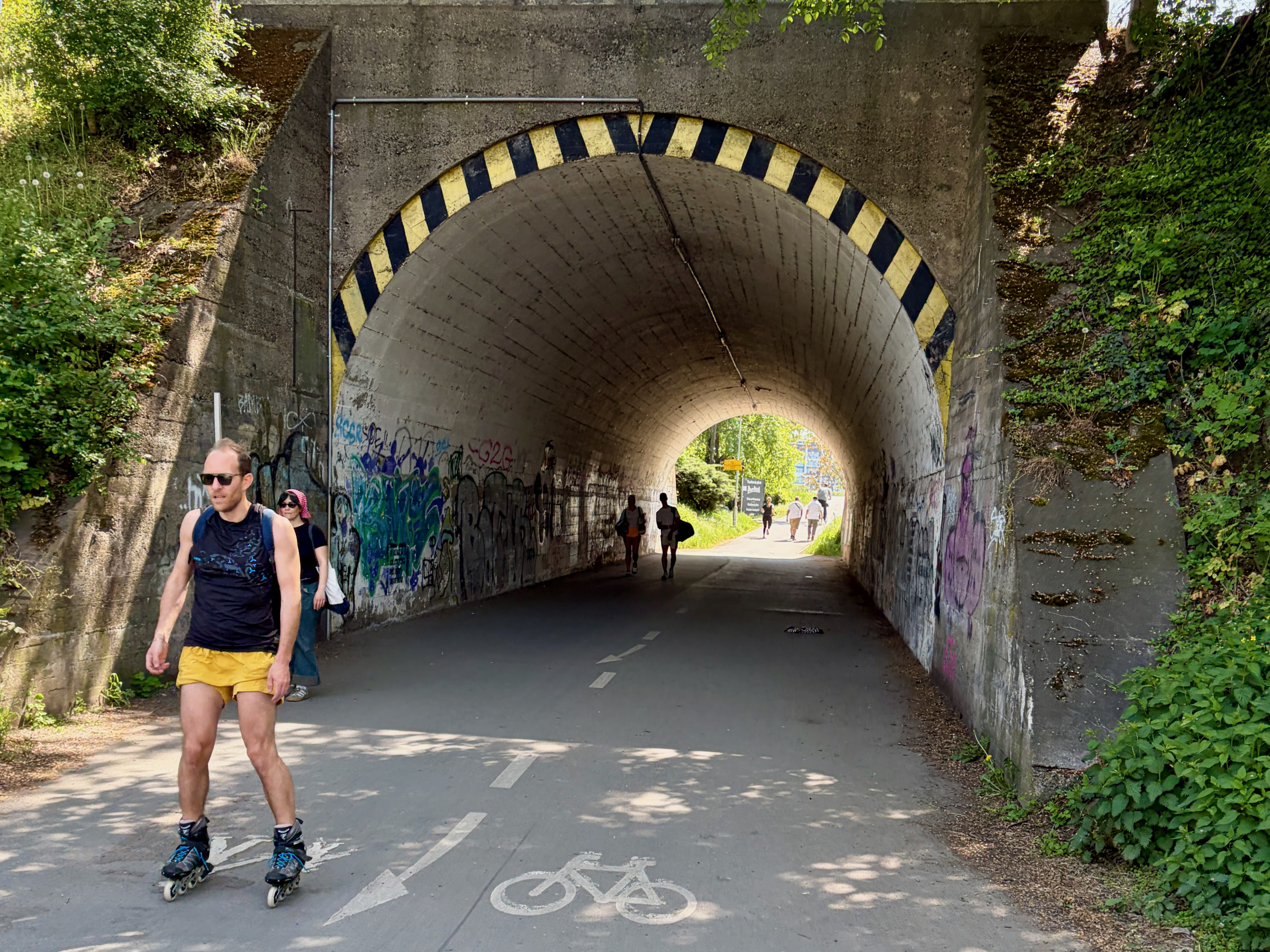
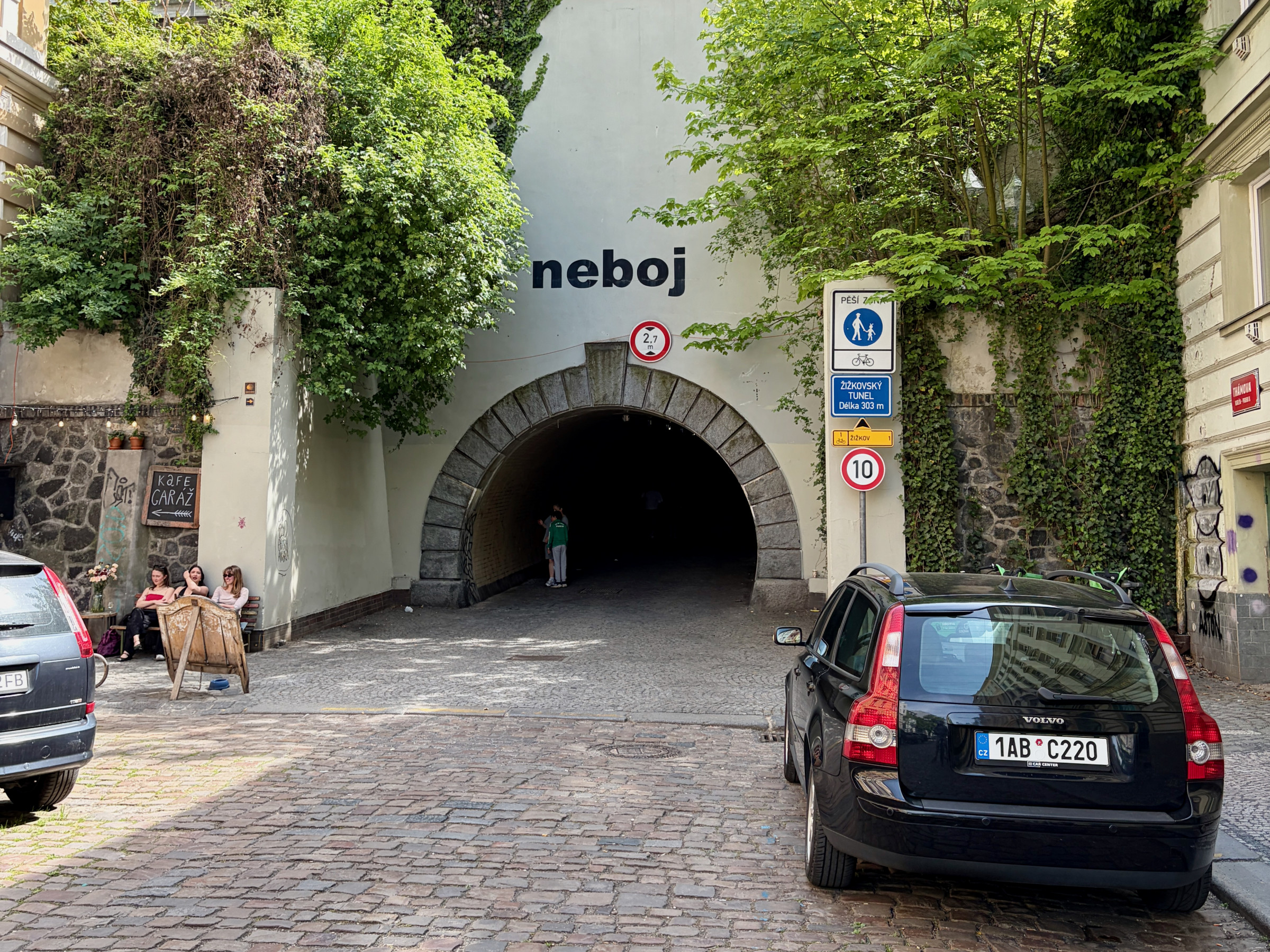
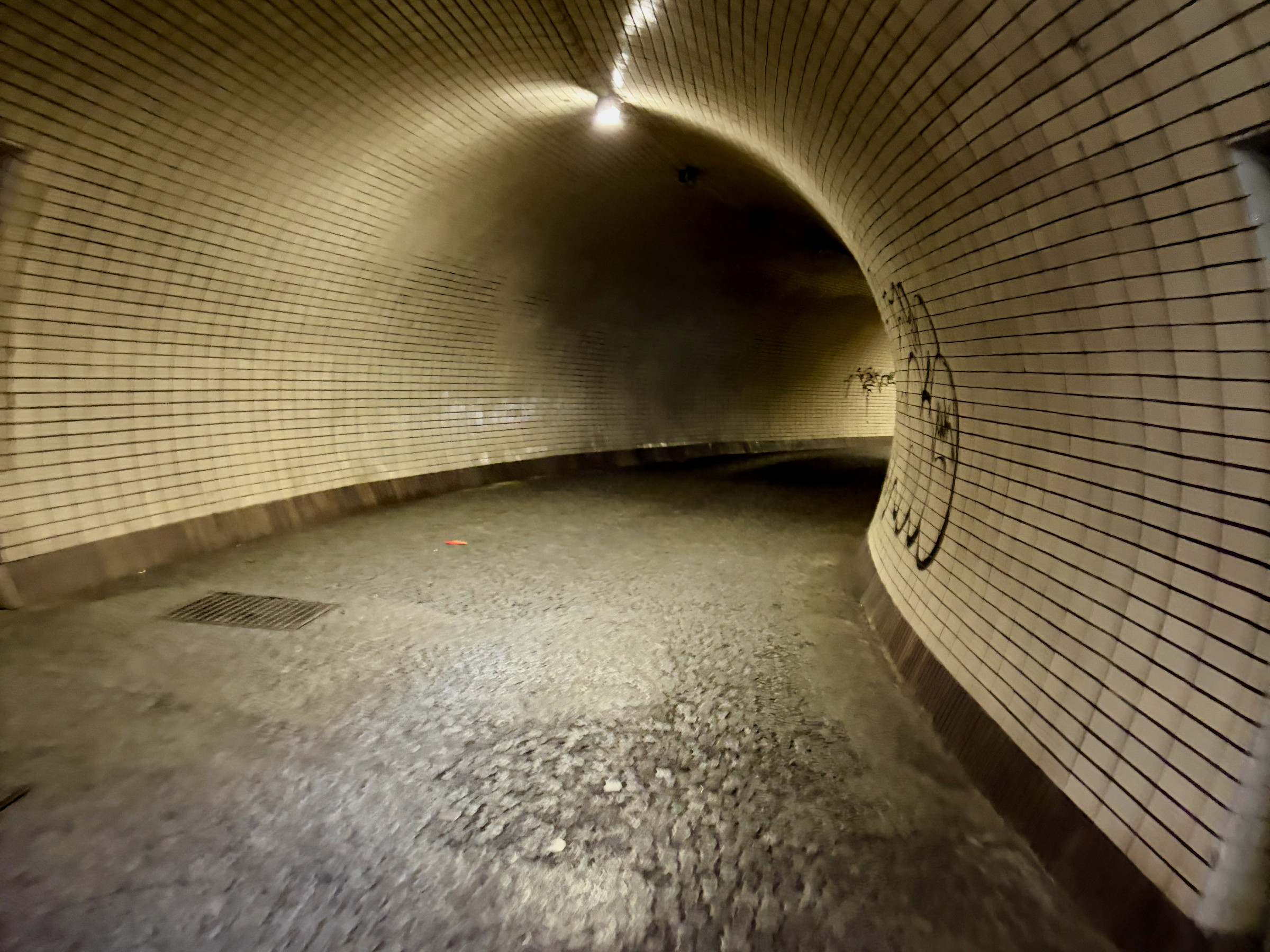
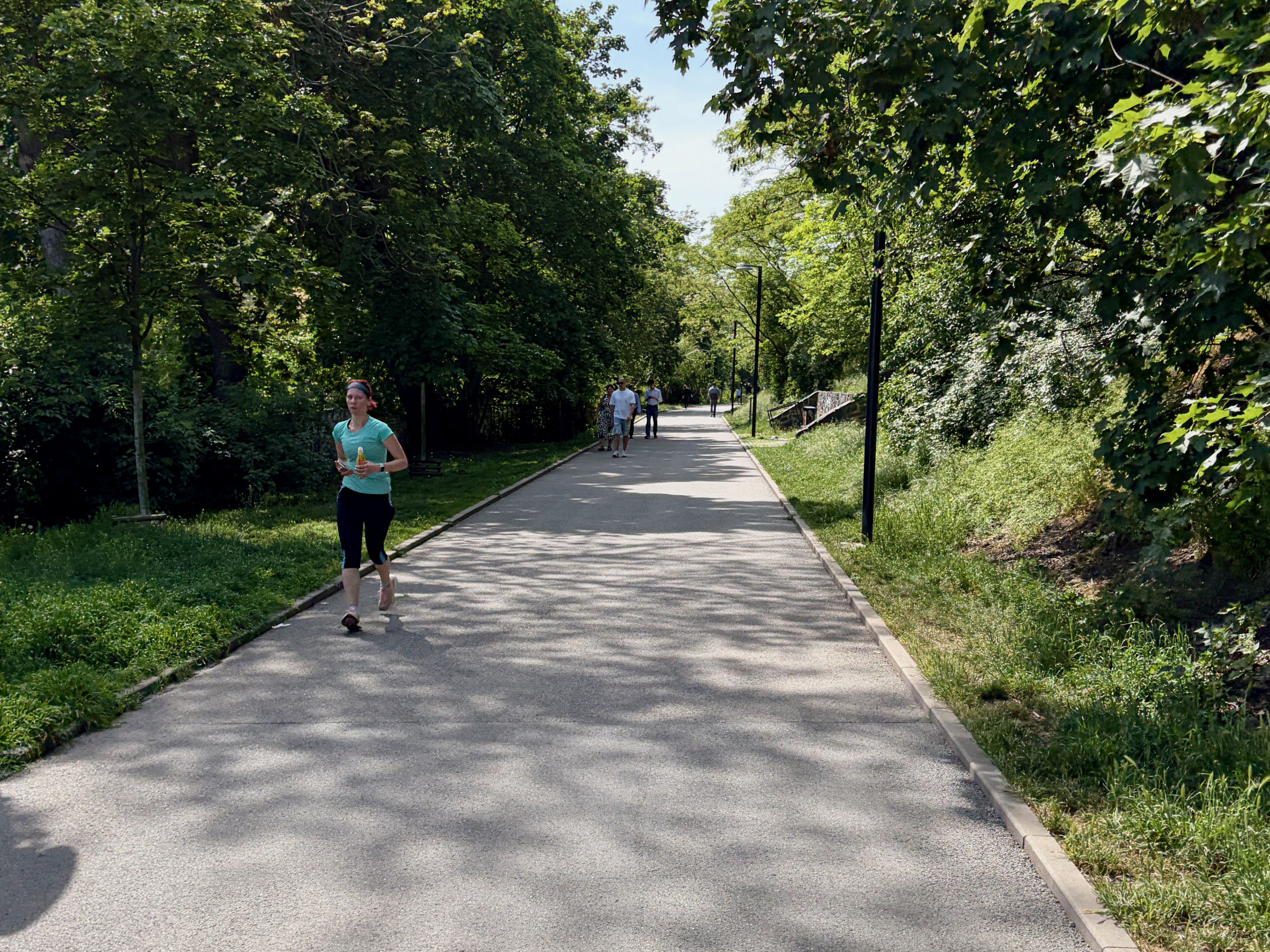
From here, the route heads south through busy Karlín toward one of Prague’s more unusual pieces of cycling infrastructure: the Žižkov pedestrian tunnel. The tunnel climbs steeply beneath Vítkov Hill, conveniently linking Karlín with Žižkov while avoiding several difficult traffic corridors. Emerging on the Žižkov side, the ride joins the Žižkov Highline, a long, elevated cycling and walking corridor built along former railway infrastructure.
Across Žižkov, Vinohrady and Vršovice
This is another favorite stretch of the ride. The city opens up here. Below rises the massive National Memorial on Vítkov Hill, one of Prague’s stranger landmarks: part monumental architecture, part historical relic, part urban viewing platform. Cyclists and runners move steadily along the path while trains fan outward below toward the main railway station.
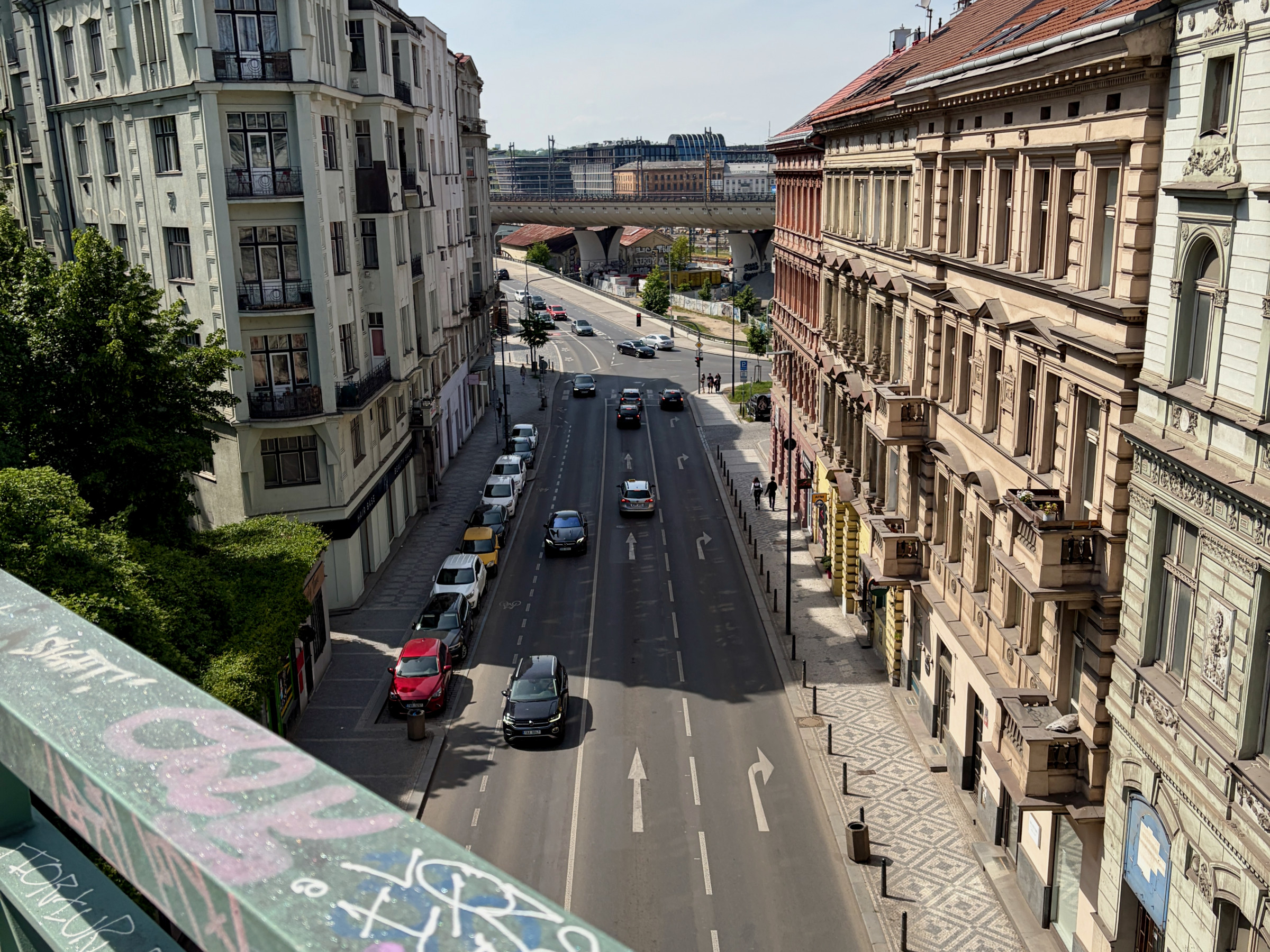
The route follows the highline toward Prague’s main railway station before continuing east along Seifertova Street and then south onto Italská Street. This is one of the busier sections of the ride — and another uphill slog — but it also offers a fascinating cross-section of central Prague neighborhoods. Gradually, the city shifts from dense urban center into the calmer residential streets around Náměstí Míru in Vinohrady.
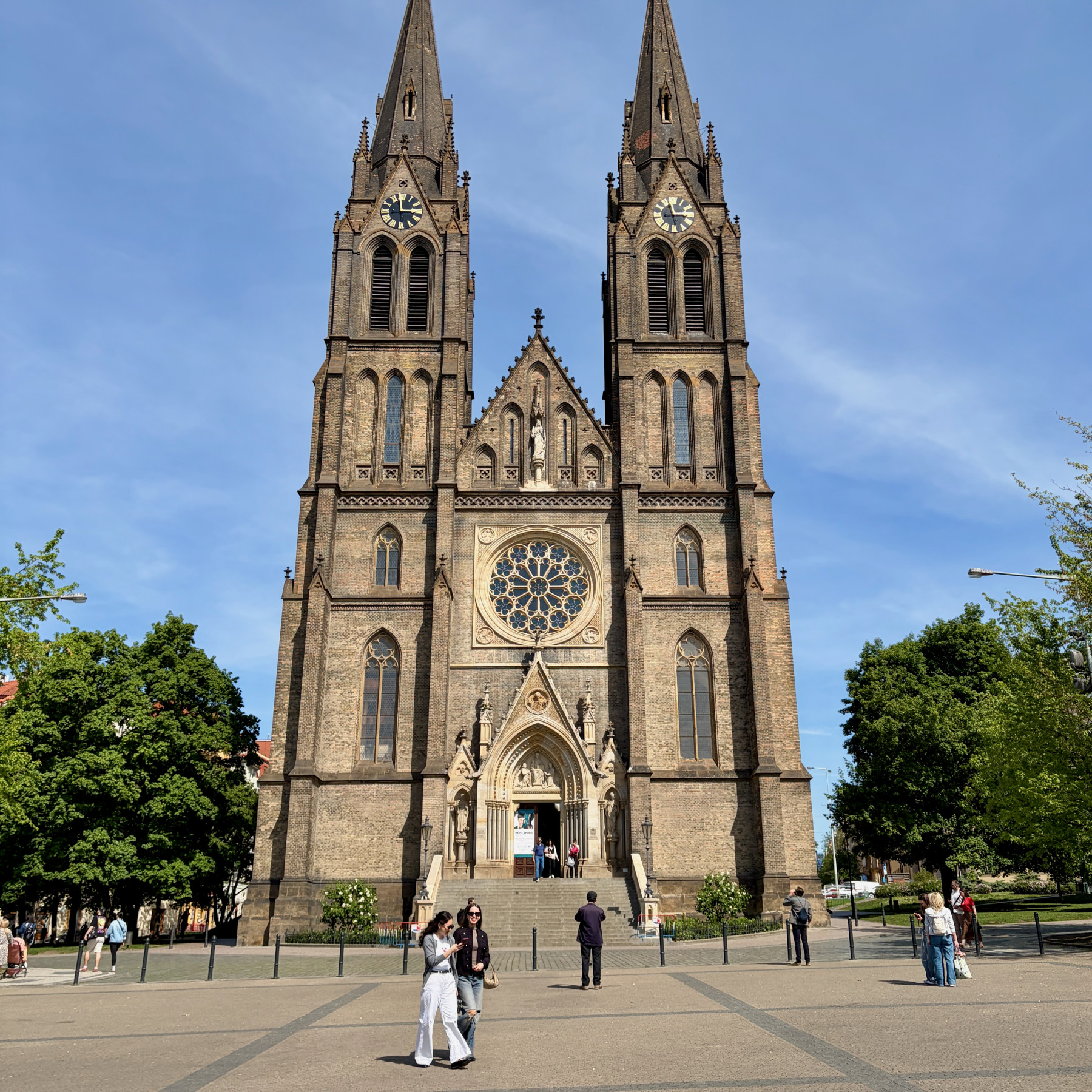
The church towers of St. Ludmila dominate the square, while cafés spill onto sidewalks beneath large trees. From here, the ride follows Francouzská Street southeast toward Vršovice. This is another favorite Prague district: less polished than nearby Vinohrady, but lively and increasingly creative.
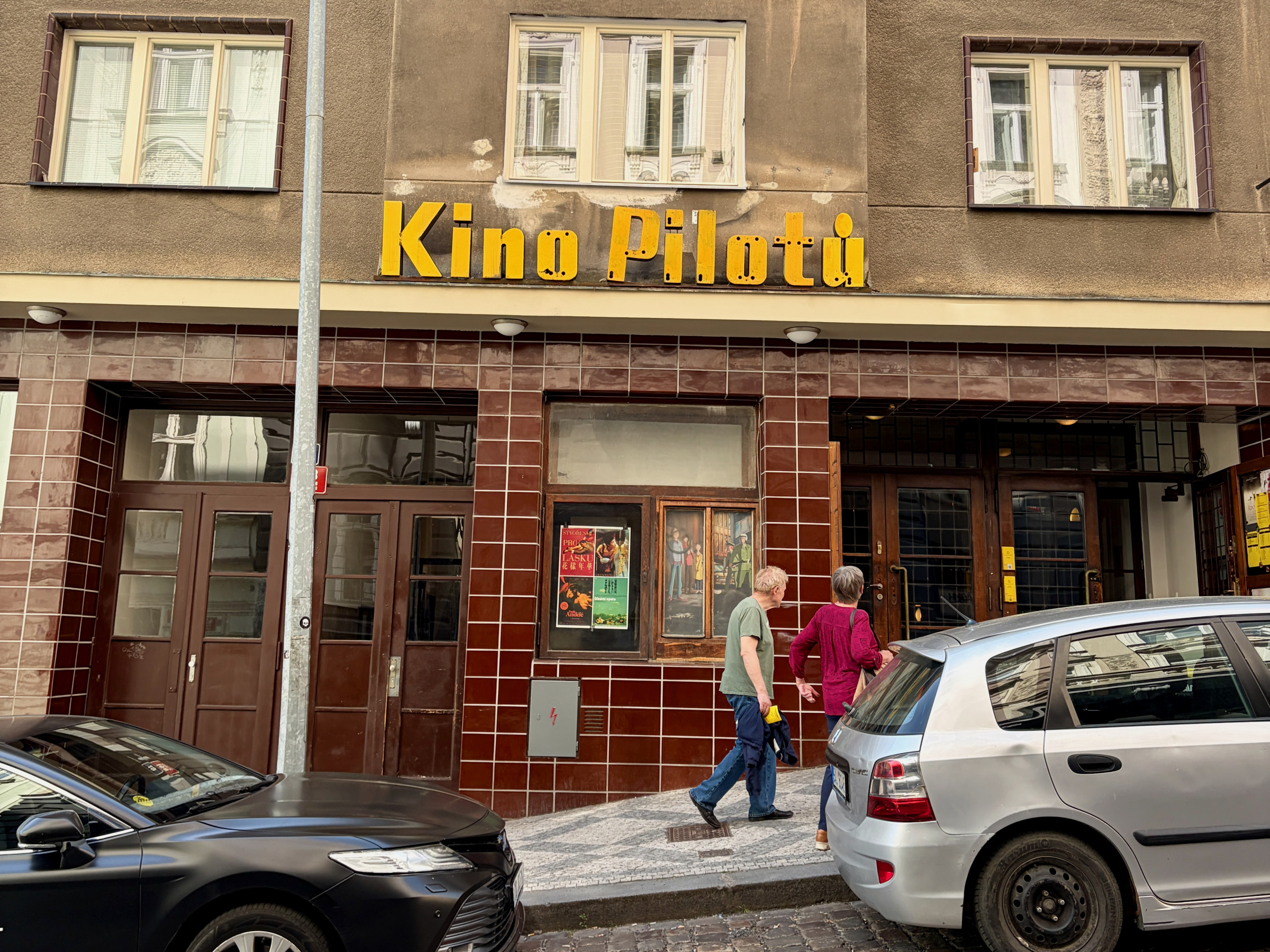
Krymská Street has become one of the neighborhood’s social centers, full of bars, cafés, and small independent businesses, though it can feel surprisingly quiet on a sunny afternoon. The atmosphere changes block by block. Students, artists, families, longtime residents, and newcomers all seem to overlap here in a way that feels distinctly Prague.
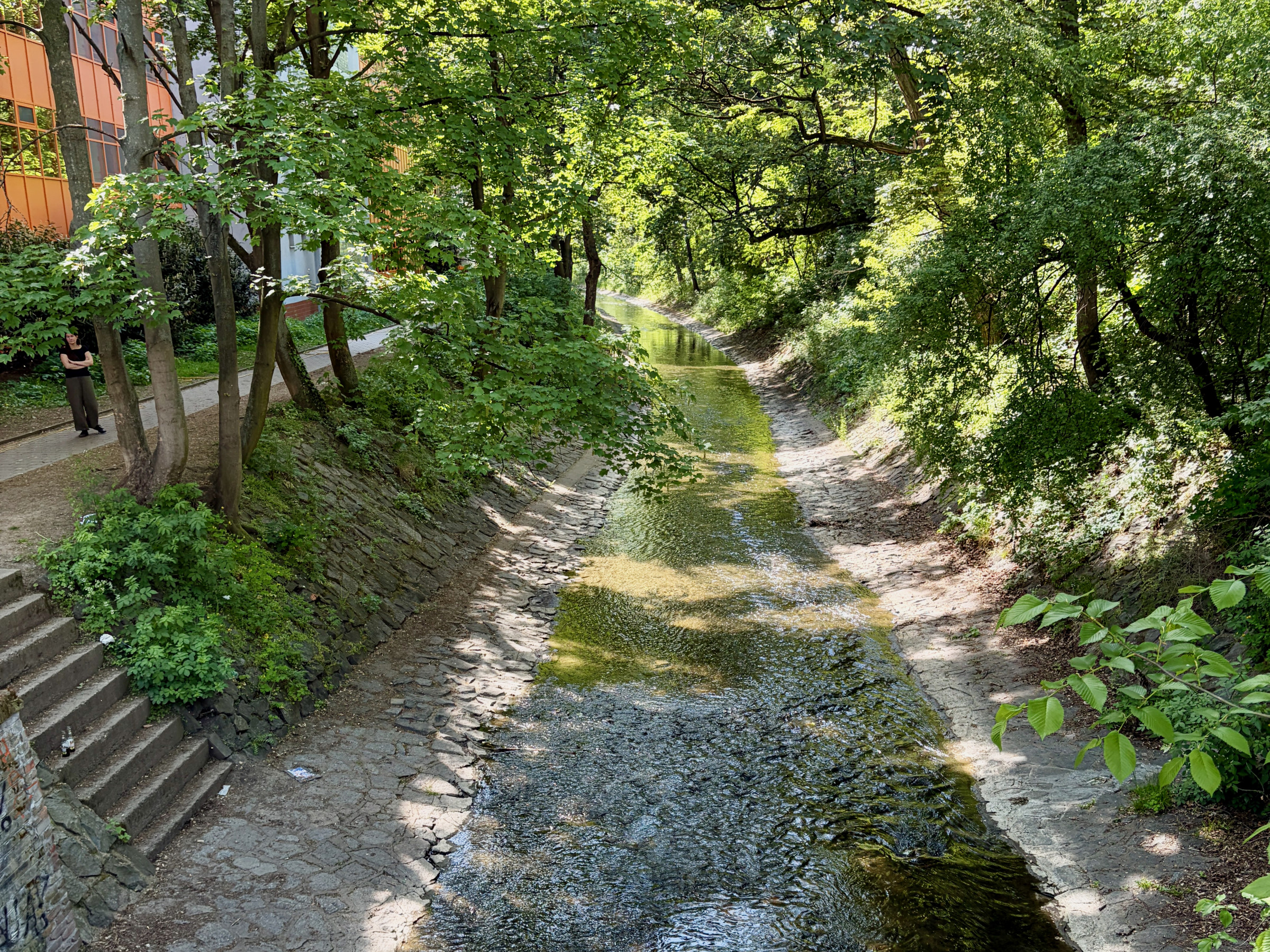
From here, the route continues south and west through a sequence of ordinary residential streets before picking up one of the ride’s hidden pleasures: a small trail following the Botič stream. Many people pass through Prague for years without realizing these quiet green corridors exist. The trail threads between buildings, behind railway lines, and through small parks, briefly separating the ride from traffic and noise.
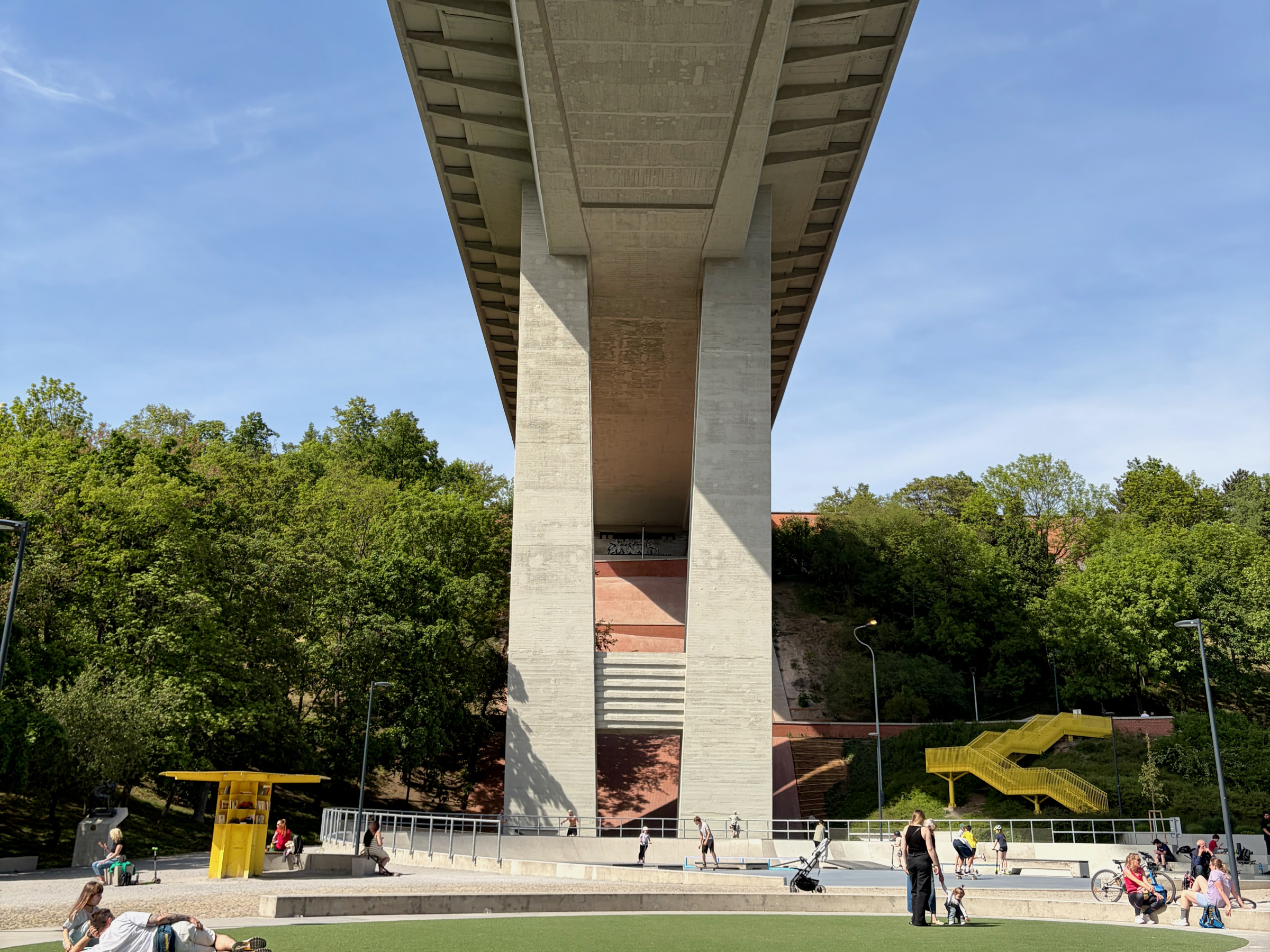
Eventually, the route reaches the Nusle area beneath the great concrete span of Nusle Bridge. Seen from below, the bridge feels almost overwhelming, one of those massive pieces of twentieth-century infrastructure that completely reshaped the city around it. Beneath the bridge, however, Prague has gradually created small parks, paths, and recreational spaces that soften the landscape.
Along the Embankment and Home Through Letná
From here, the path works its way toward Vyšehrad, passing below the impressive Vyšehrad Citadel before rejoining the river embankment. This part of the ride reconnects with the familiar Prague of postcards and guidebooks. Trams rattle along the waterfront while boats move slowly upstream beneath the bridges.
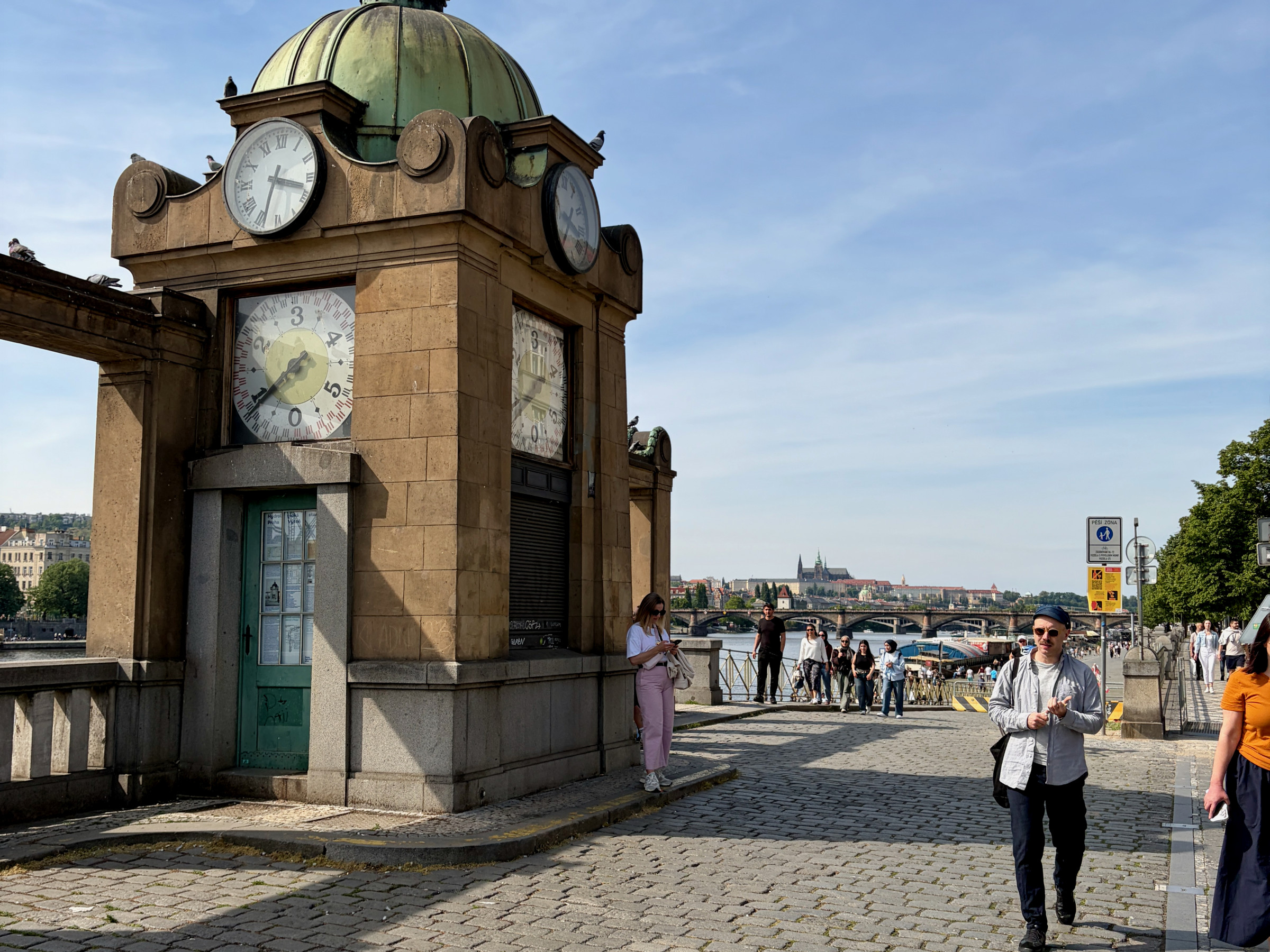
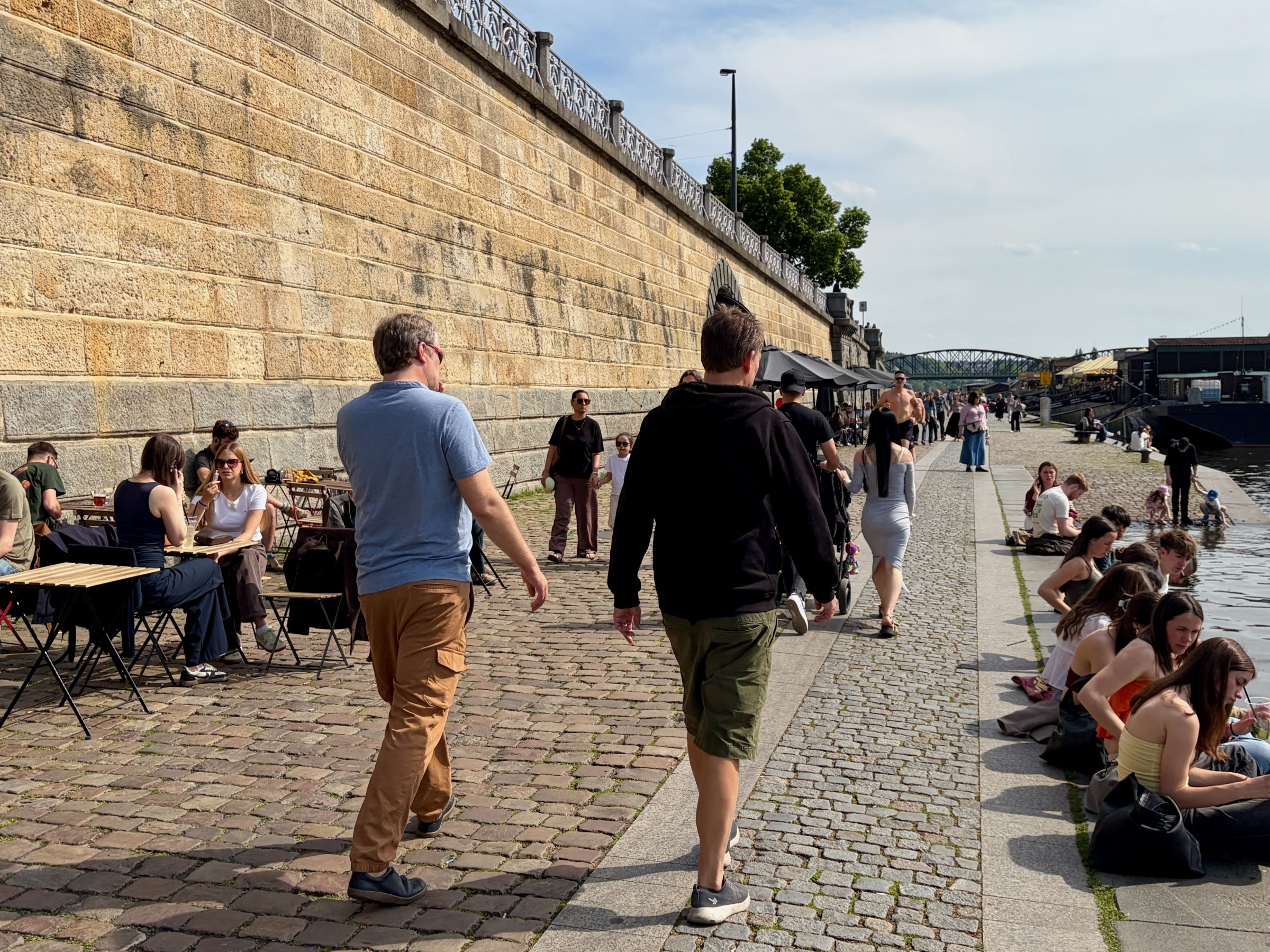
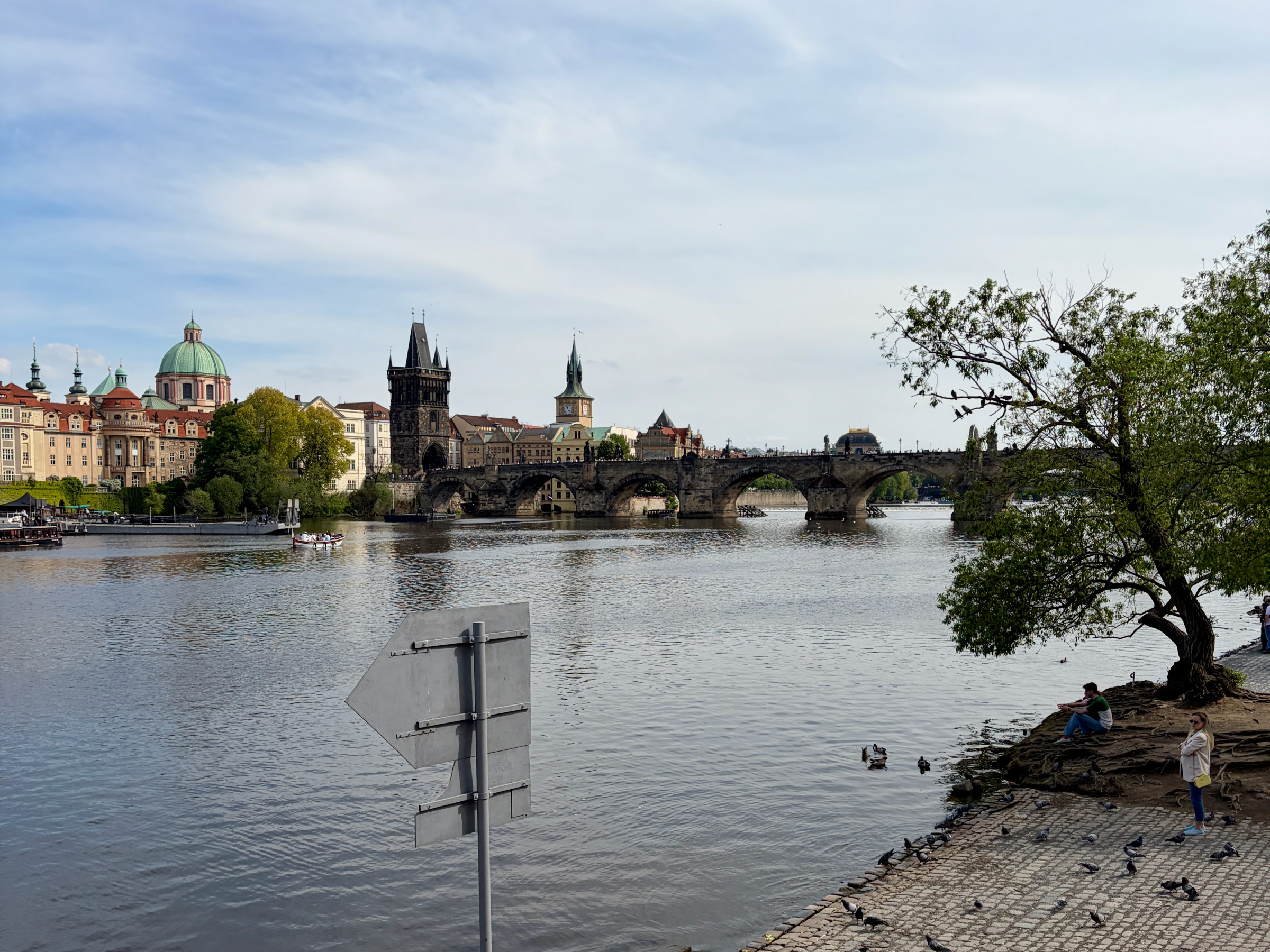
Heading north along the embankment, the route passes some of Prague’s most recognizable river scenery. This stretch can be extremely busy with pedestrians, strollers, runners, and fellow cyclists, and progress is often slow, but the carnival atmosphere is part of the appeal.
The ride then leaves the lower level of the embankment and continues at street level toward Legií Bridge. This is probably the most challenging section of the route. The street here is too busy to cycle comfortably, while the sidewalk (partly closed for long-term repairs) is usually clogged with tourists. Unless the crowds thin out, it’s often easier to dismount and walk.
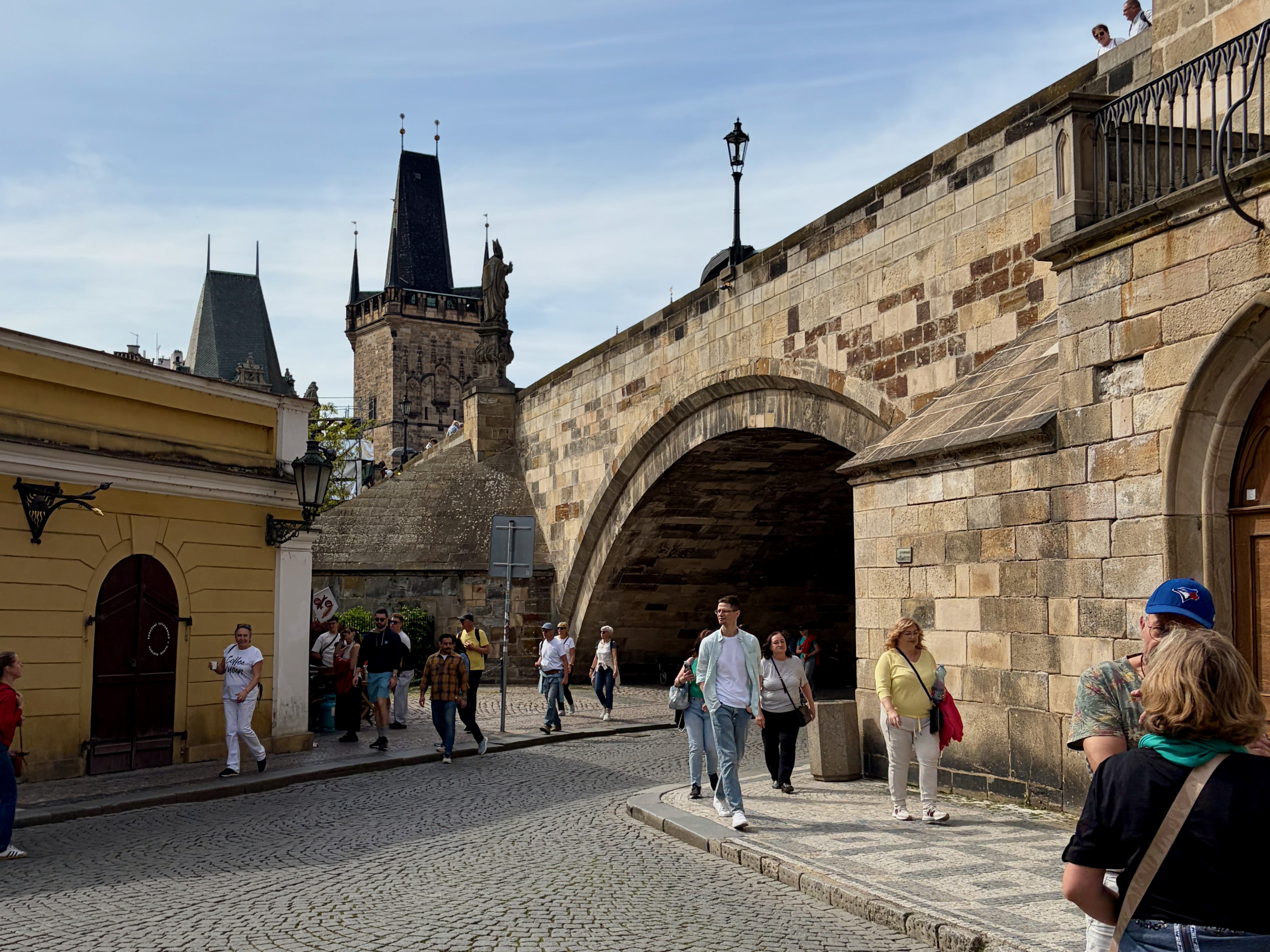
The route crosses the river at the Legií Bridge, offering beautiful views toward Prague Castle in the distance, before continuing onto Kampa Island. From here, the circuit heads north through Kampa Park and beneath one of the arches of Charles Bridge.
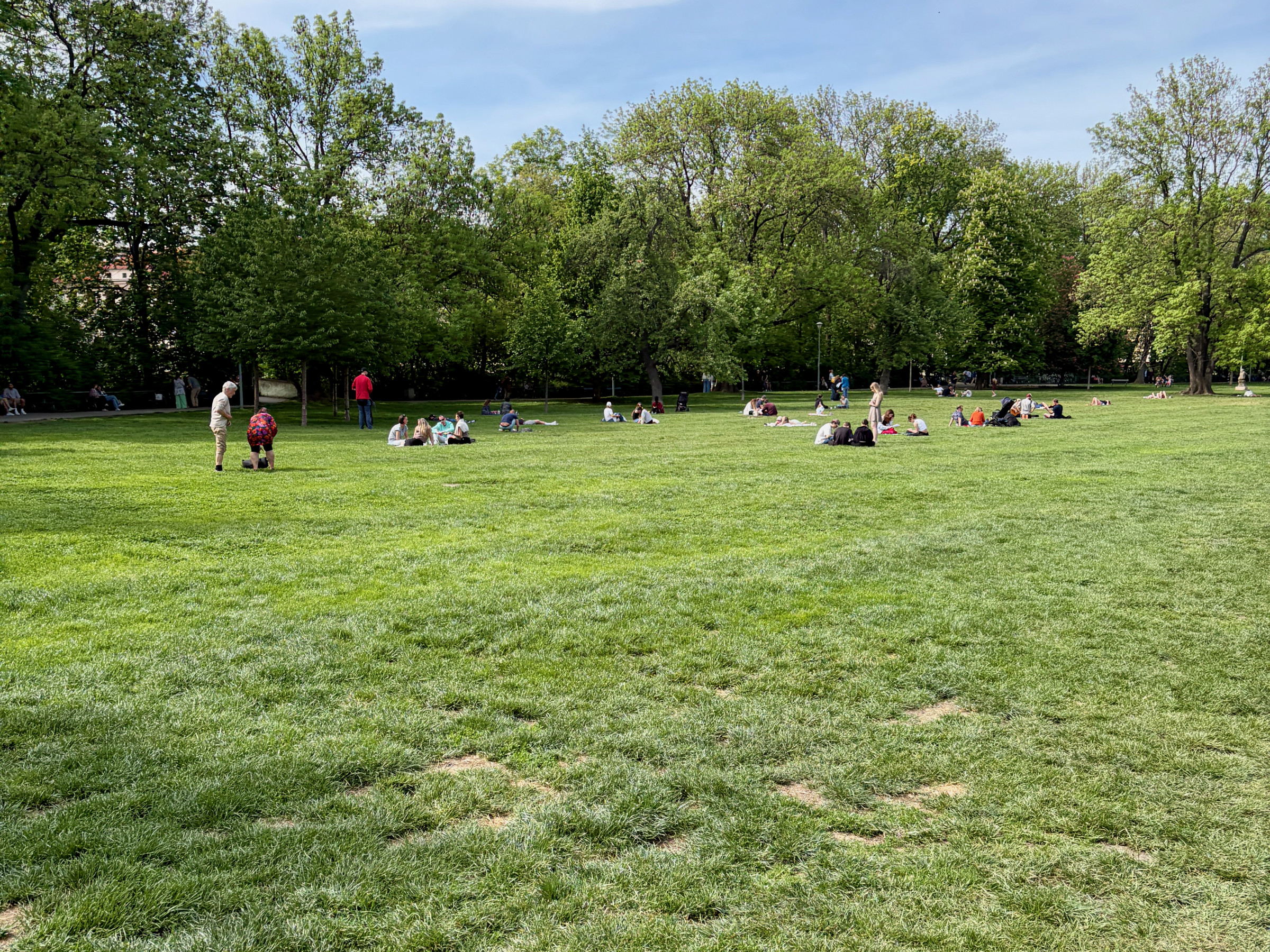
Continuing north along the quiet Kosárkovo nábřeží, the ride passes the Czech government offices and gardens on the left before climbing sharply into Letná Park. After two hours of riding, the steep ascent feels particularly punishing. But the reward is one of Prague’s classic panoramic views stretching across the river and bridges below.
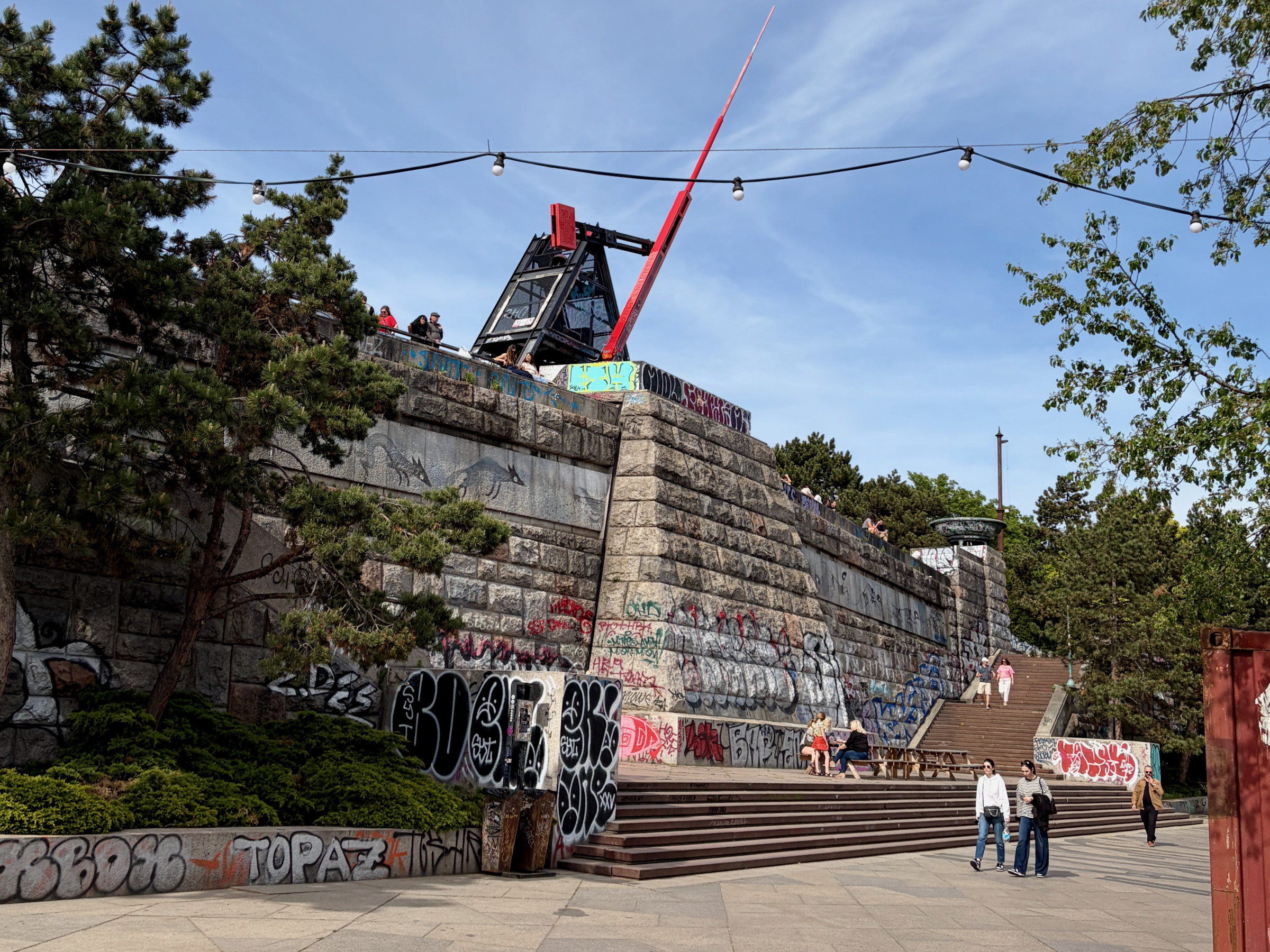
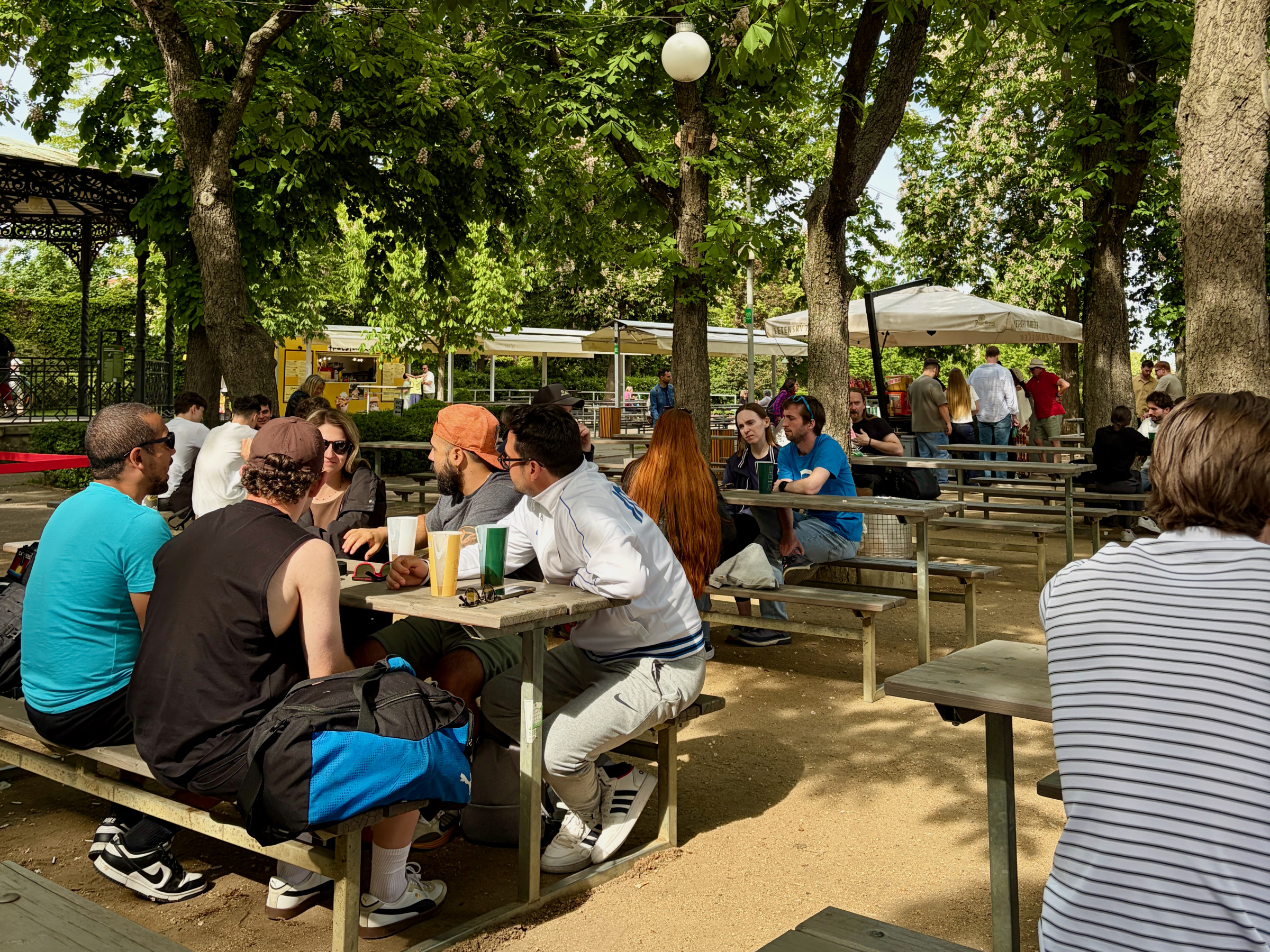
Letná has always felt like Prague’s great urban balcony, perched above the spires of the Old Town. Skaters gather near the metronome, while the popular beer garden farther east fills during the summer months. From Letná, a network of smaller paths and quiet streets leads toward Hradčanská metro station and then north along Bubenečská Street back toward my neighborhood in Prague 6.
By the time the loop is complete, the ride feels like a journey through several different versions of Prague in a single afternoon: imperial Prague, industrial Prague, residential Prague, railway Prague, riverside Prague. That’s what makes this route so satisfying. It’s a reminder of how interconnected the city becomes once you start exploring it on two wheels.
(Keep scrolling for more photos.)
(Did you like this post and want to add your own comments, or maybe correct something I might have gotten wrong. Write me at bakermark@fastmail.fm.)