Why Prague?
For young artists arriving in Prague in the early 1990s, the city offered something increasingly difficult to find in Western Europe or the United States: the freedom to devote themselves to their work without worrying quite so much about making a living. Rents were low, food and beer were cheap, and it was possible to get by on surprisingly little money. That gave them something precious: the physical and psychic space to create.
But the attractions went beyond the low cost of living. The Velvet Revolution of 1989 had captured the world's attention, and the international media soon discovered Prague's growing community of foreign writers, artists, and adventurers. Stories about the expat scene helped turn Prague into a destination for anyone looking to escape a conventional path back home. Thousands of foreigners poured in. Something was happening here, even if nobody was entirely sure what it was.
I was there too and remember that early enthusiasm, even if it was difficult to explain exactly what made Prague so exciting. I've written more about the influx of foreigners in an earlier blog post: When Prague Was the Center of the World.
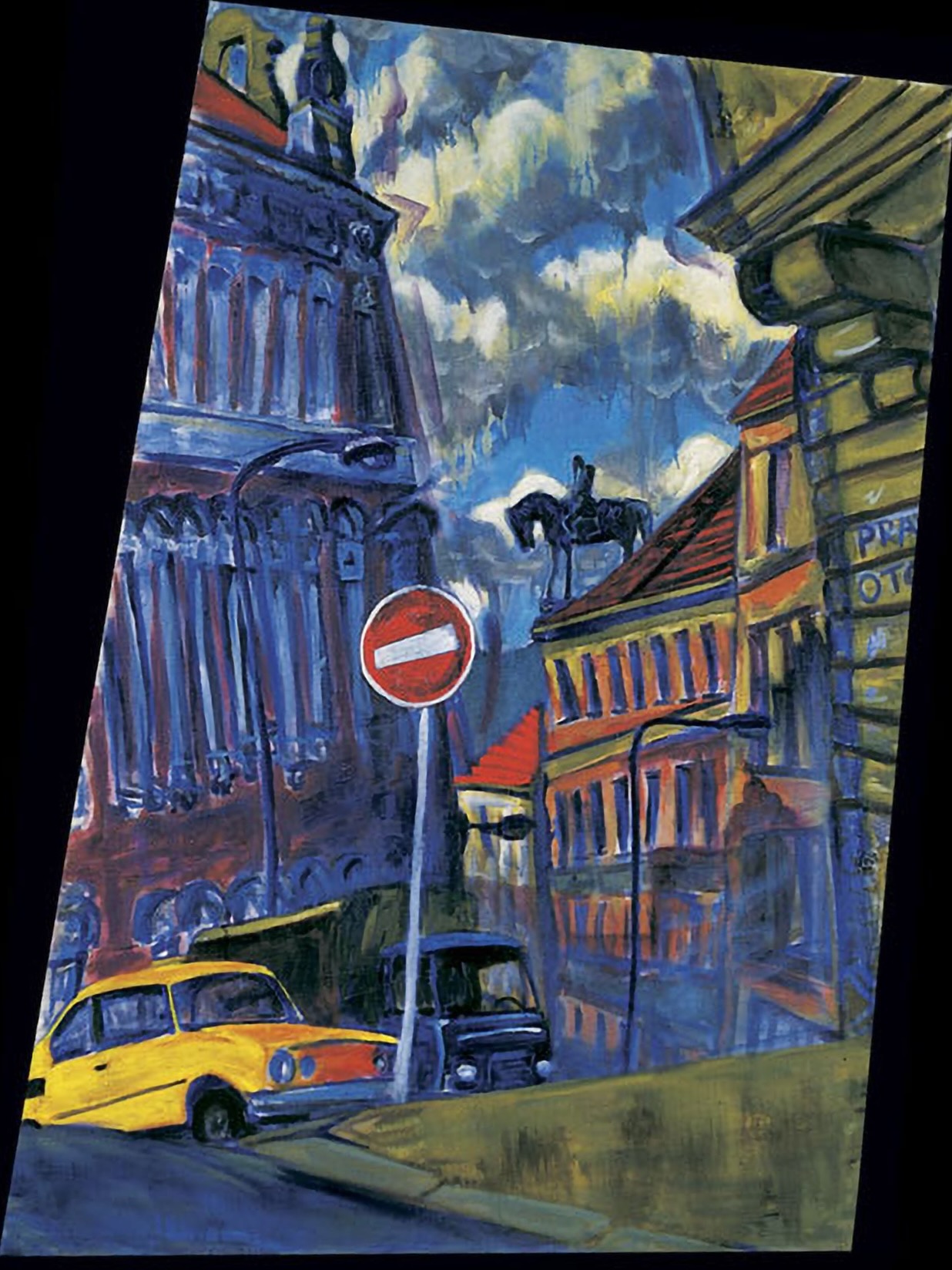
American artist Barbara Benish, who had been visiting Czechoslovakia since the 1980s before moving to Prague in 1992 to pursue a Fulbright fellowship, remembers the atmosphere vividly. "The '90s Prague scene was experimental, exciting, and full of possibilities for any artist willing to manifest an idea," she recalls. She remembers the mix of foreign artists and Czechs returning from abroad as particularly stimulating.
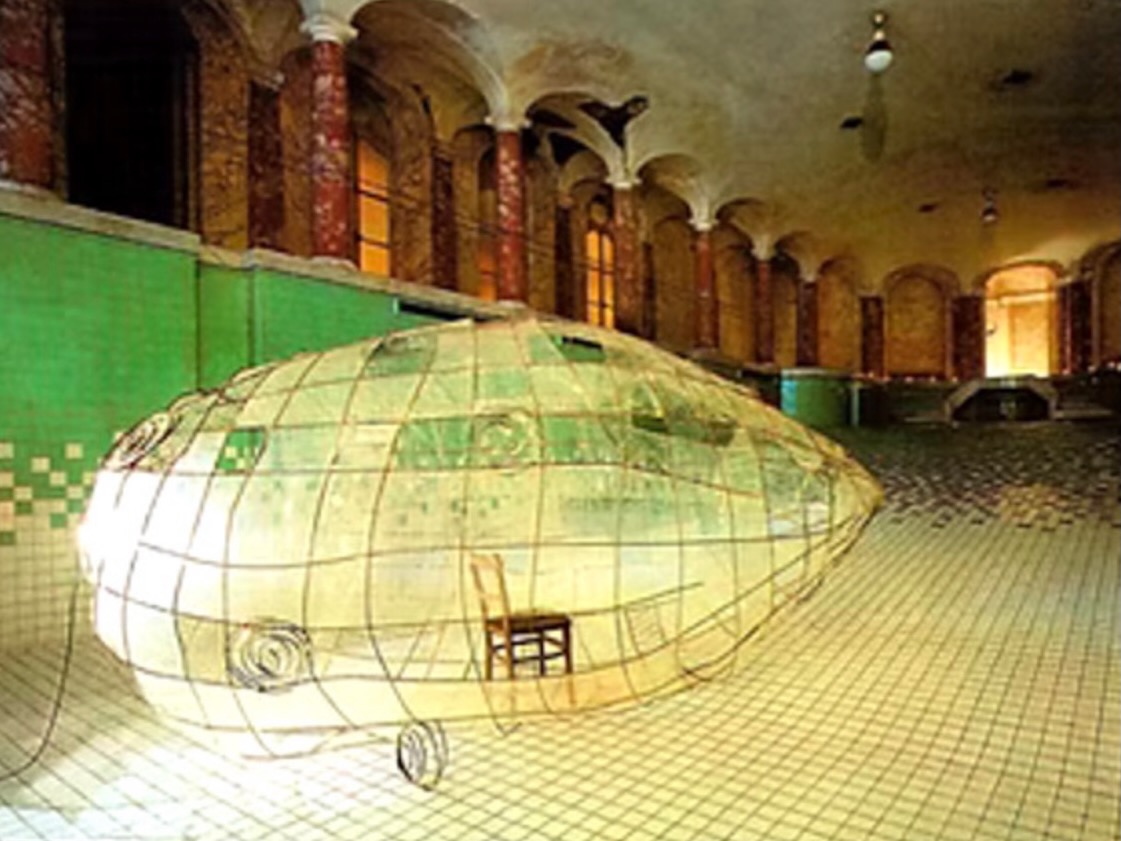
Artists Stuart Jackson and Jesse Littell, for example, had been college roommates in the United States and arrived in Prague specifically to pursue their art. Others discovered their creative ambitions after arriving. For Beth Zonderman, another American artist, one of Prague's greatest attractions was the "privilege of free time."
Of course, living cheaply wasn't the same as earning a living. Opportunities to sell artwork were limited, and the excitement didn't necessarily translate into commercial success. But for a few extraordinary years, Prague offered the freedom to experiment, make mistakes, and see where the work might lead.
Bars and Cafés
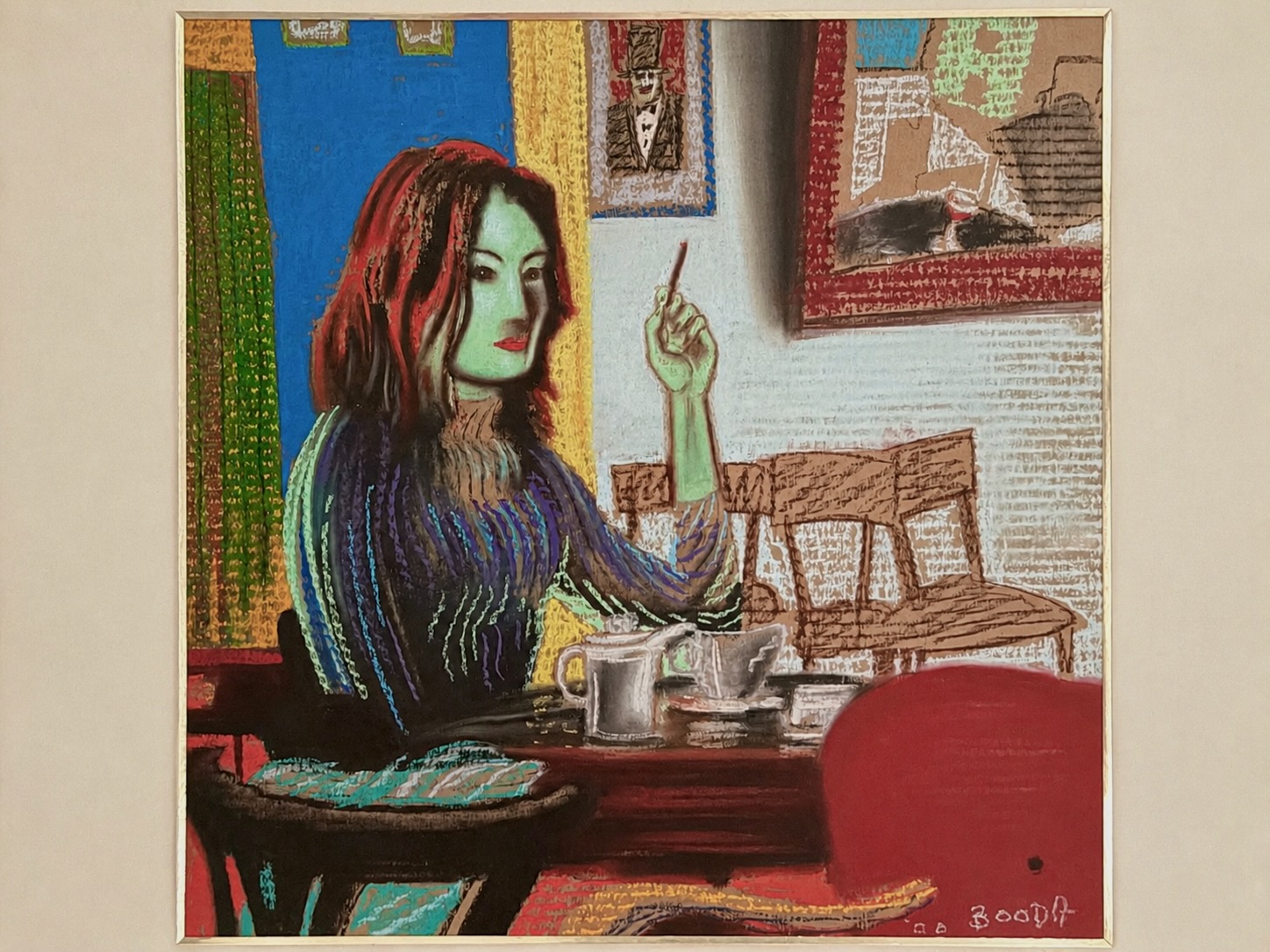
Prague's expat-owned bars and cafés were more than places to meet friends and drink beer. Many doubled as informal galleries, with paintings on the walls, murals covering entire rooms and temporary exhibitions giving young artists a chance to show their work.
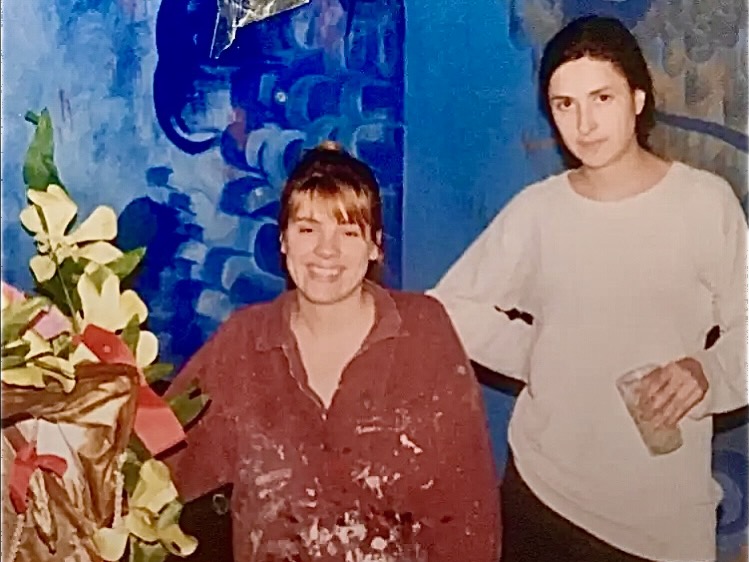
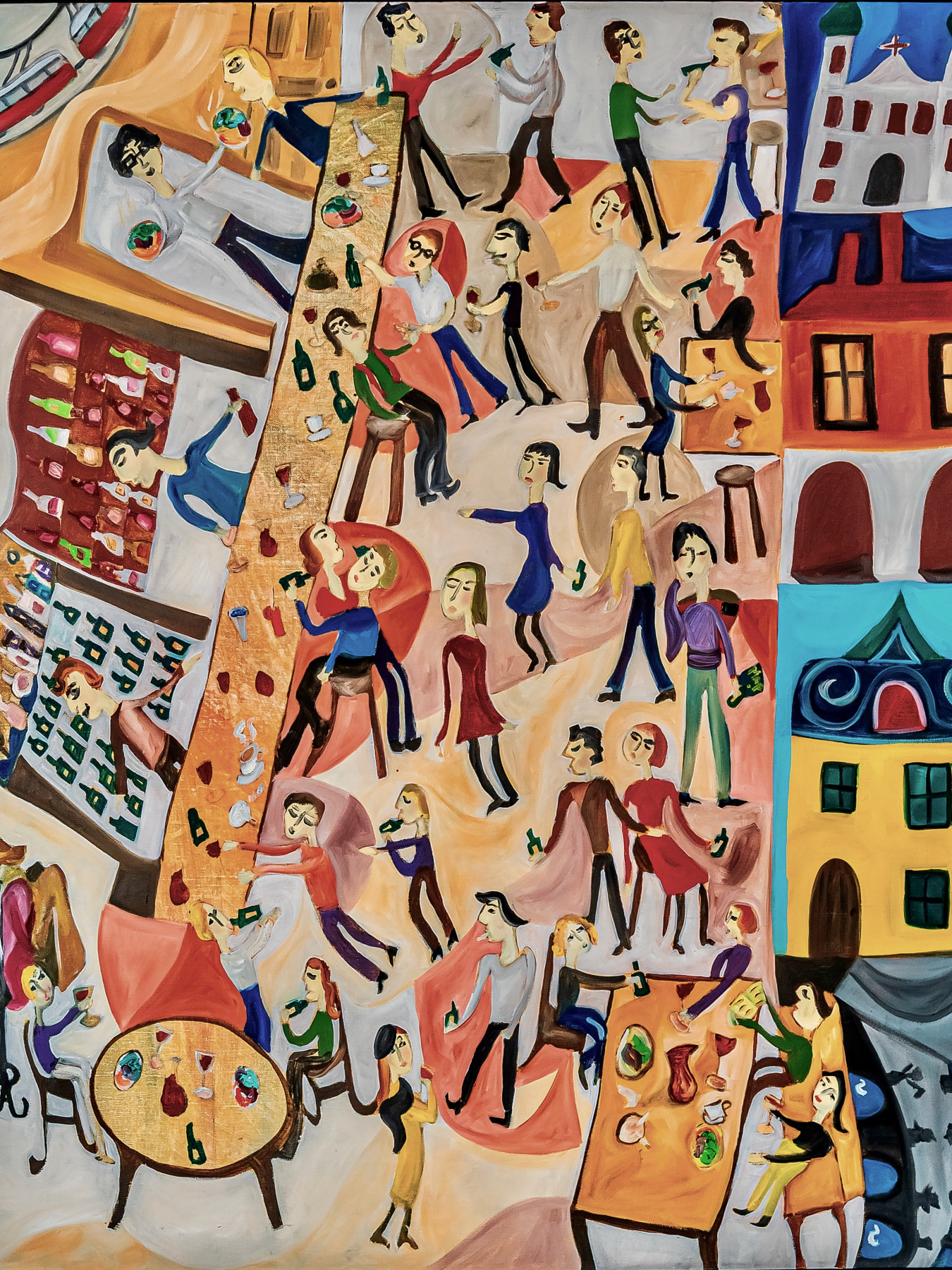
I've written previously about the proliferation of bars and clubs in Prague in the 1990s, but looking back, I'm struck by how much original artwork surrounded us in these places. The original Thirsty Dog bar, which operated from roughly mid-1993 to mid-1994 on the periphery of the sprawling Municipal House (Obecní dům) complex, featured exuberant murals painted by Georgia Schaller. I dropped in occasionally for a drink, though it's only now, looking at surviving photographs, that I can fully appreciate her work.
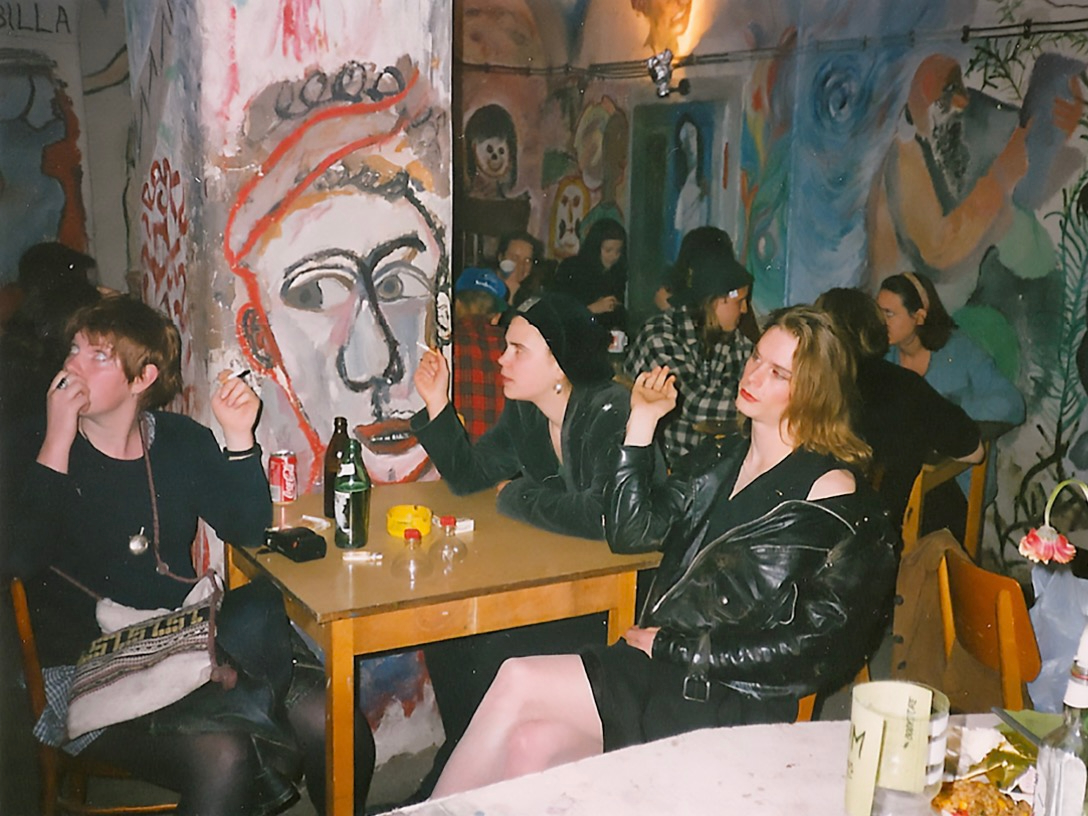
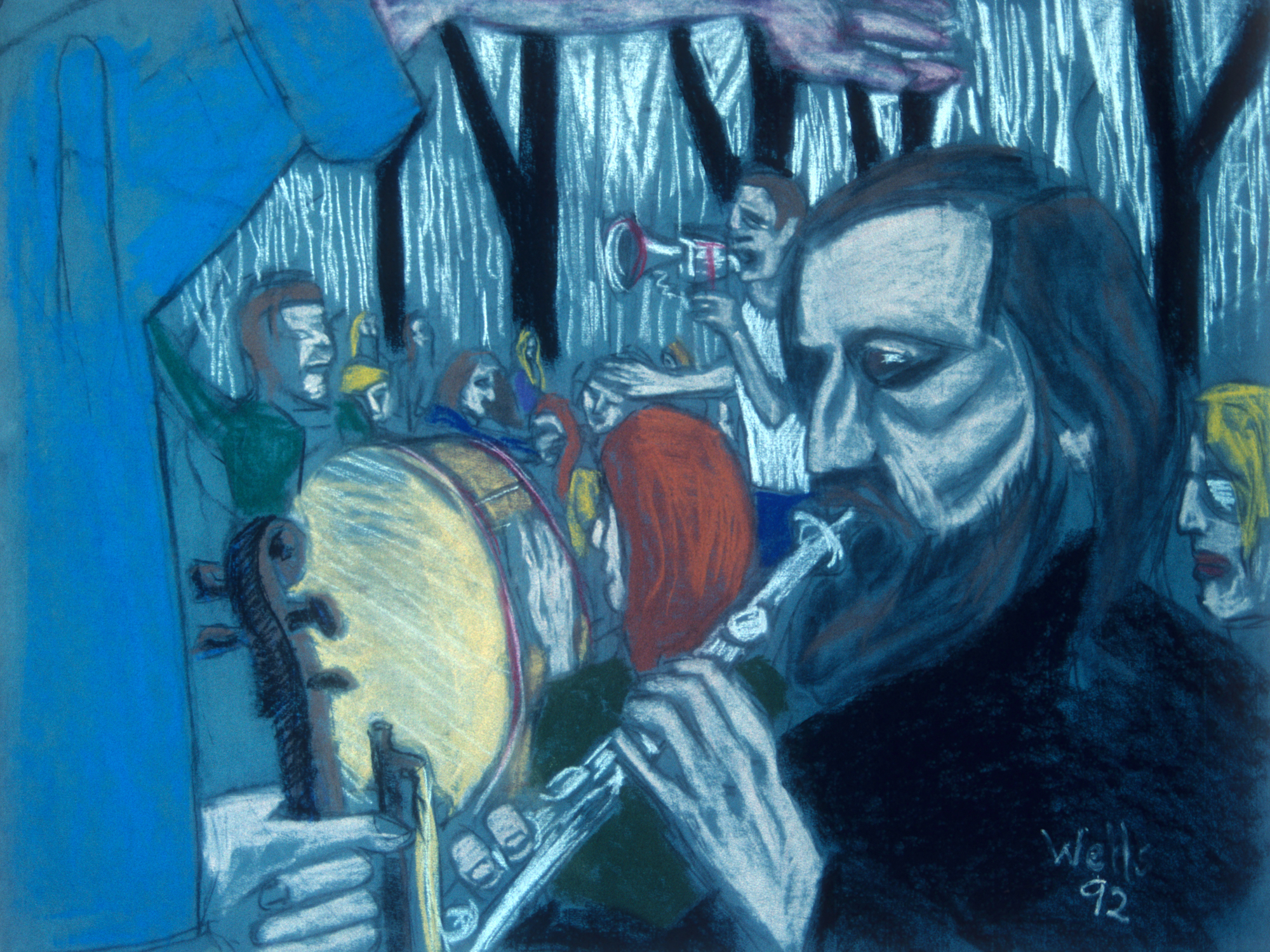
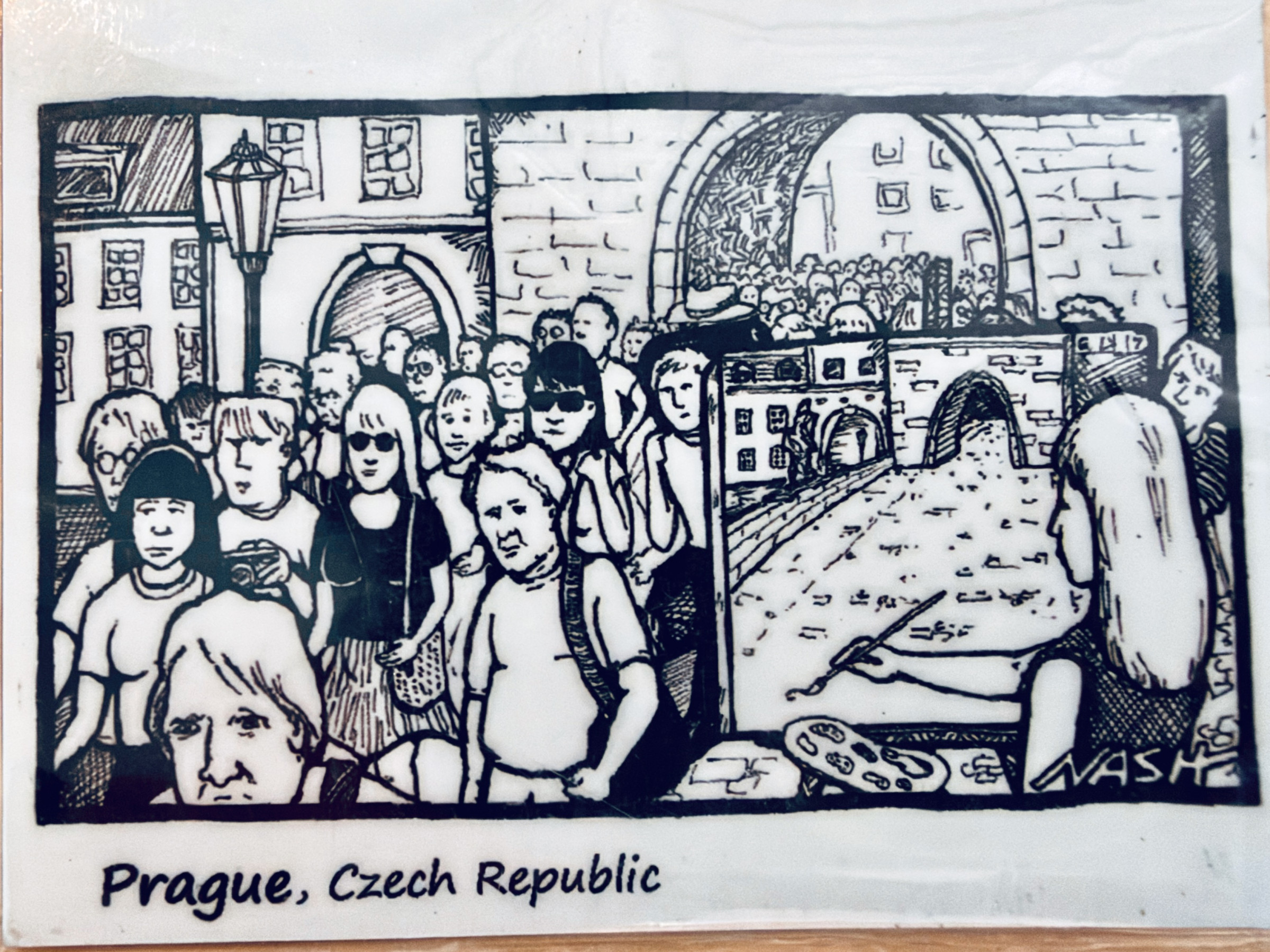
The Asylum squat and café on Betlémská Street was even more unconventional. Active mainly in 1993, its interior was practically covered in paintings and drawings. My own recollections of Asylum are hazy, but photographs preserved by American artist Ken Nash show its extraordinary interior. American painter Lawrence Wells, who arrived in Prague in 1992 with a freshly minted MFA from the University of Mississippi, recalls helping organize two exhibitions there in 1993. One, known as the "Tape Show," was an experiment in artistic democracy. The organizers invited anyone to attach artwork to the walls with duct tape -- though in fact not many artists turned up.
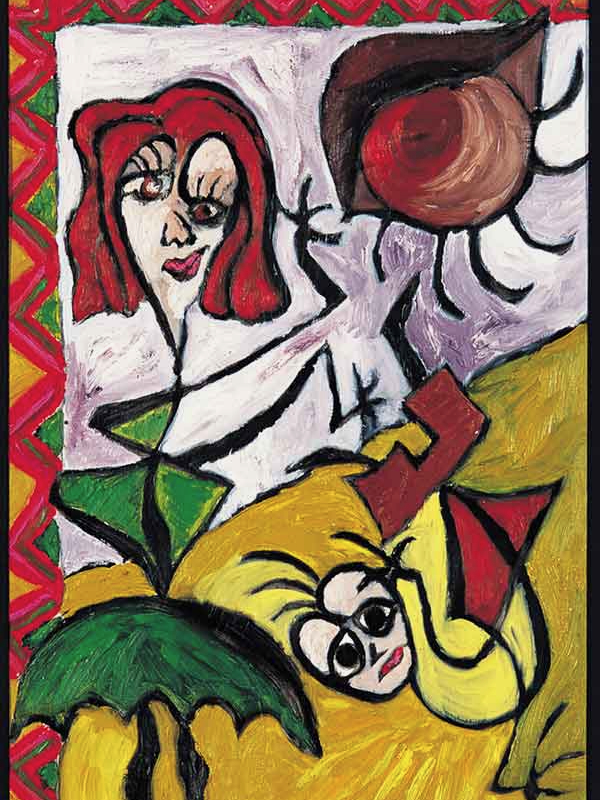
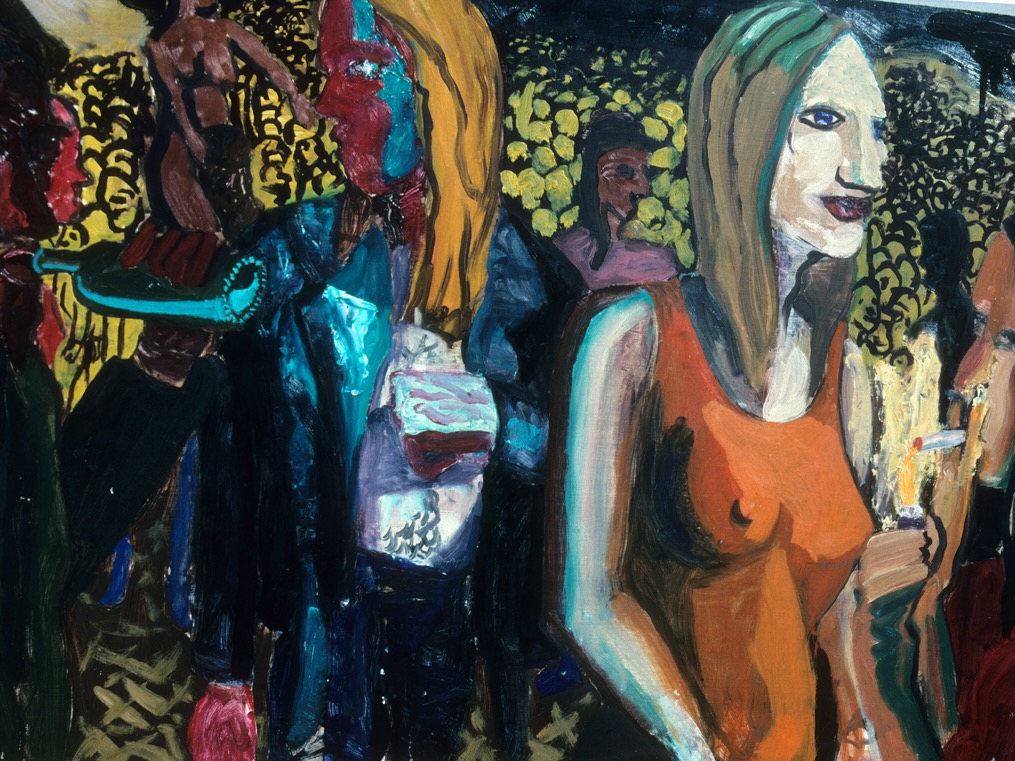
While the work of artists like Schaller, Nash and Wells differed considerably in execution, it shared a playful, sometimes naive quality that would become a recognizable feature of much of the expat art produced in Prague during those years.
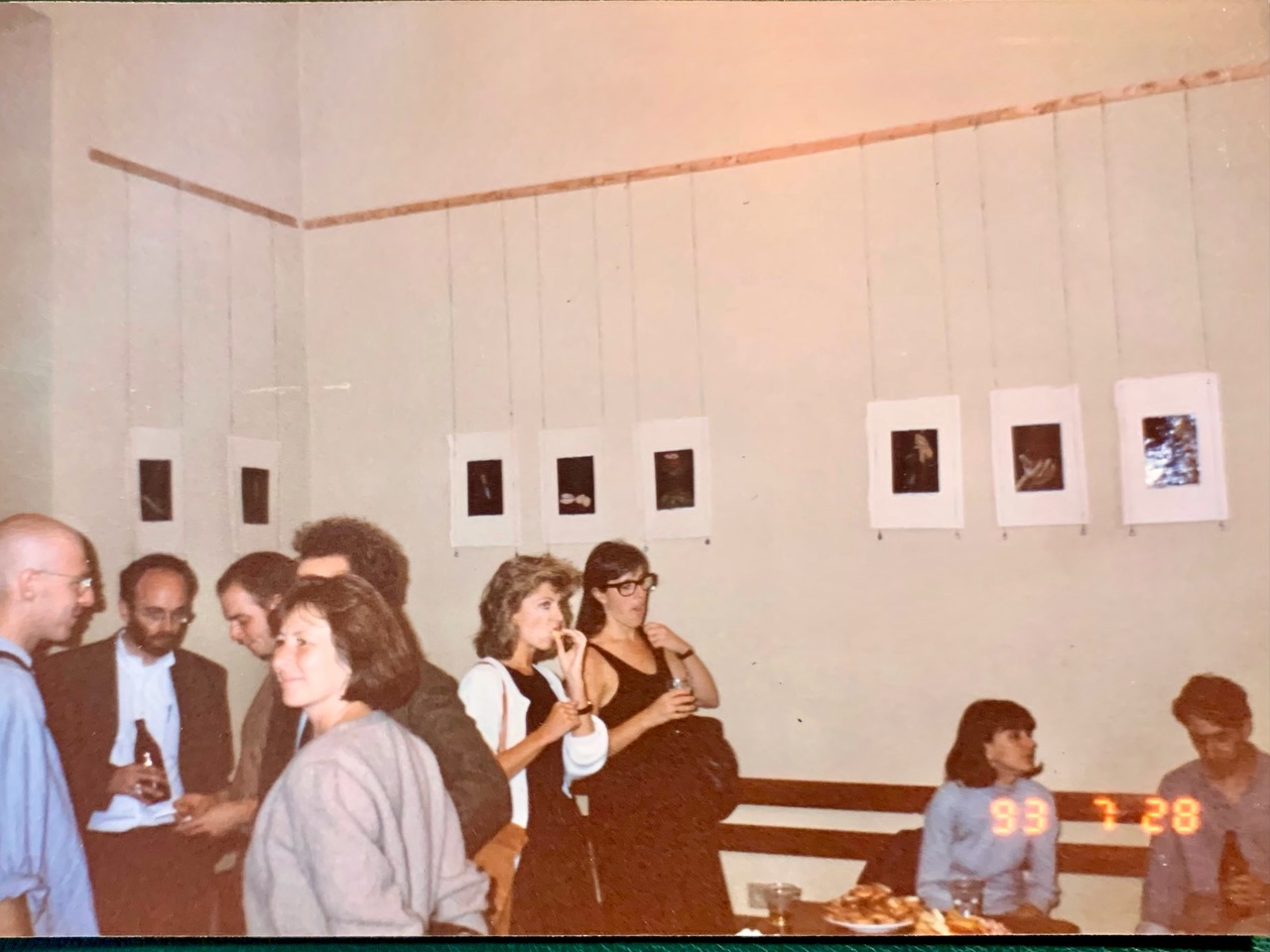
Other venues offered more conventional exhibition opportunities. When we opened the Globe Bookstore & Coffeehouse in 1993, we regularly displayed paintings by expatriate artists. Anne Hars exhibited at our opening party, and after that the walls hosted a new show every month. Hars and artist Kirsten Kempfer also helped decorate the interiors of Radost FX. Jo's Bar, Jáma and other popular venues showcased original artwork and became drinking spots for painters, writers, musicians, and basically everyone else.


Artists Everywhere
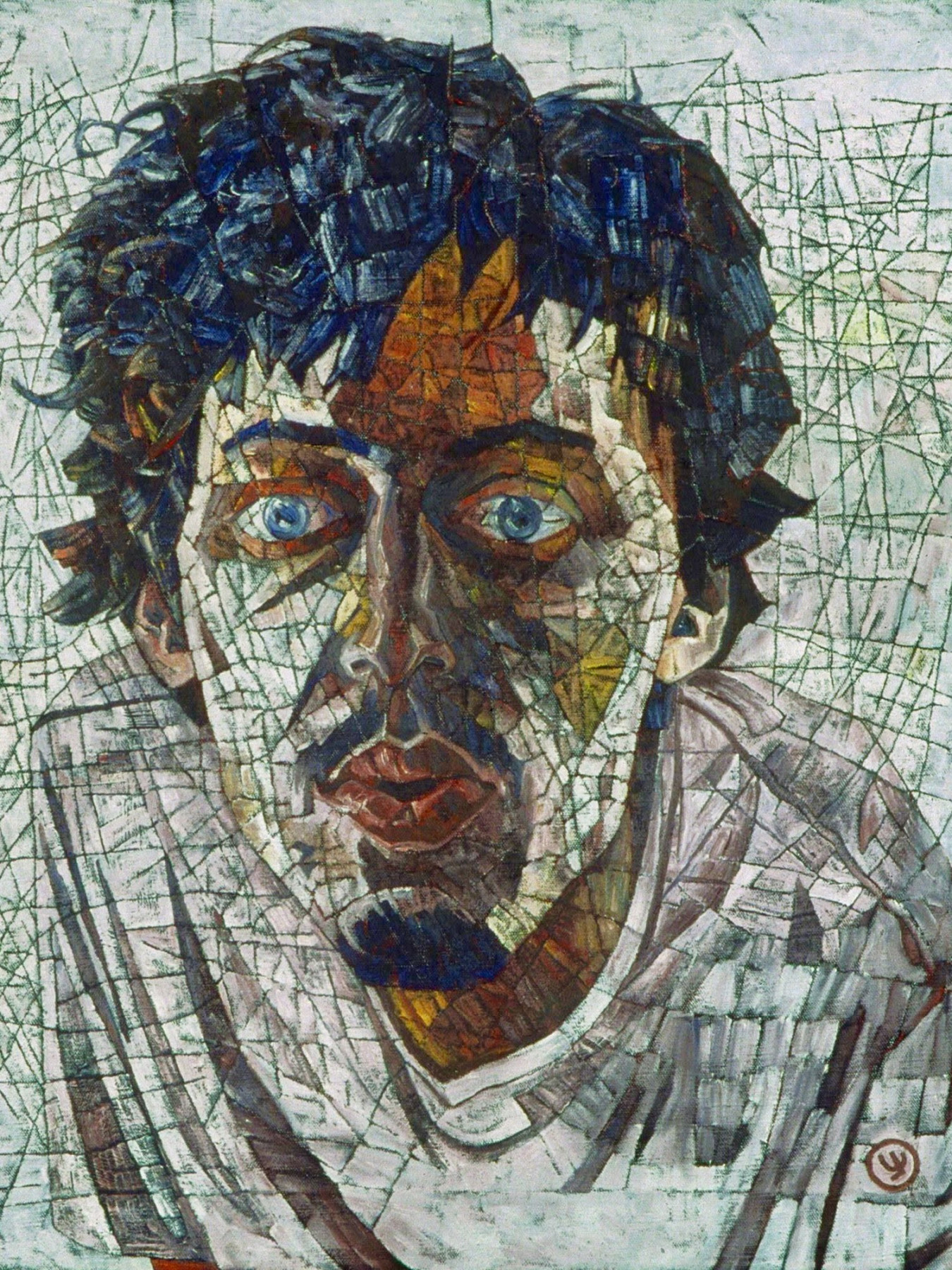
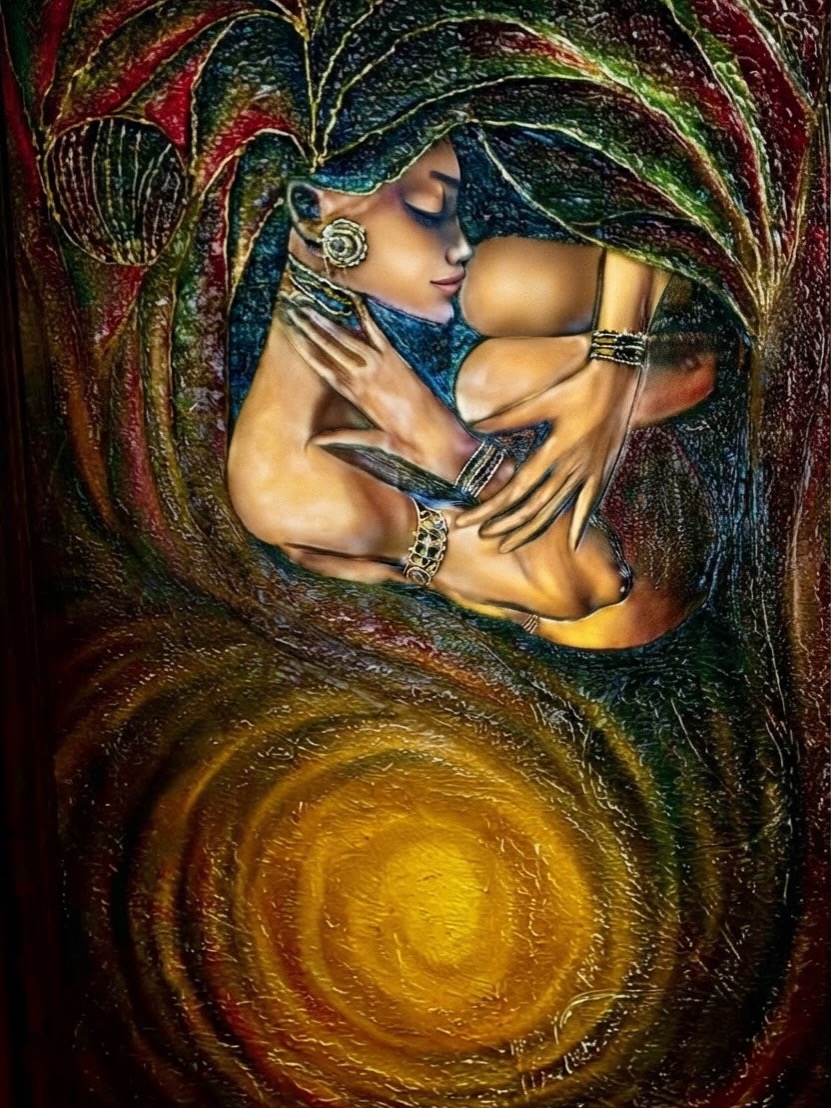
Being an artist in Prague back then wasn't particularly unusual. Someone might be a writer, teacher or journalist, but also a talented painter or illustrator. Art wasn't always a full-time occupation or even a primary ambition. It was simply one of the things people did.
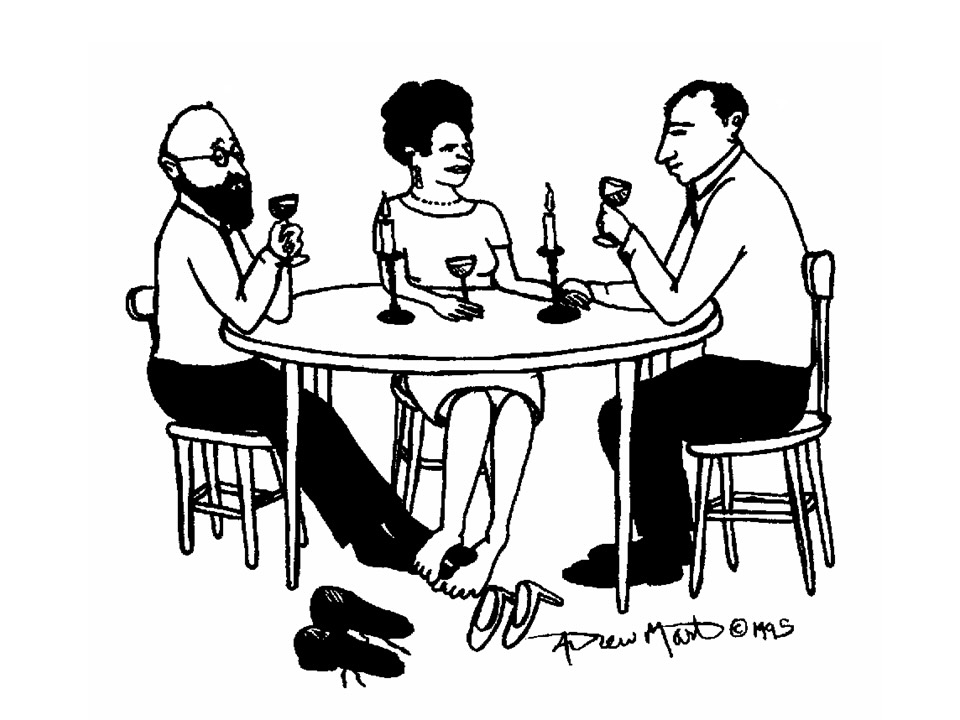
I saw this firsthand during my time as business editor of The Prague Post in 1991 and ’92. We employed a couple of dedicated cartoonists but also called on anyone in the newsroom who could draw to meet the high demand for bespoke illustrations in those pre-Internet days. The pages of Prognosis reflected much the same approach.
One example I've reproduced here is a 1992 sketch of investment fund manager Viktor Kožený, drawn by business reporter Boris Gomez shortly after he and I interviewed him for The Prague Post. Several writers at the paper had these skills, though I rarely thought of them as belonging to a separate community of artists.
It was much the same at the Globe and other venues. People dropped by constantly and conversations rarely began with the usual question of what someone did for a living. It was assumed that everyone was working on something creative.
The popular (and much-maligned over the years) Beef Stew poetry readings, held Sunday evenings in the basement at Radost FX, were another example. It wasn't unusual for painters or illustrators to try poetry, or for poets and writers to experiment with visual art. Nobody seemed particularly concerned about staying within a single discipline.
Of course, not everyone was a budding genius. Some people had genuine artistic ambitions, training and considerable talent. Others were experimenting, trying out new identities, or taking advantage of Prague's freedom to see what they could do. For many, illustrating a newspaper article or designing a poster was less an artistic calling than a way to earn money toward the rent.


Art in Unexpected Places
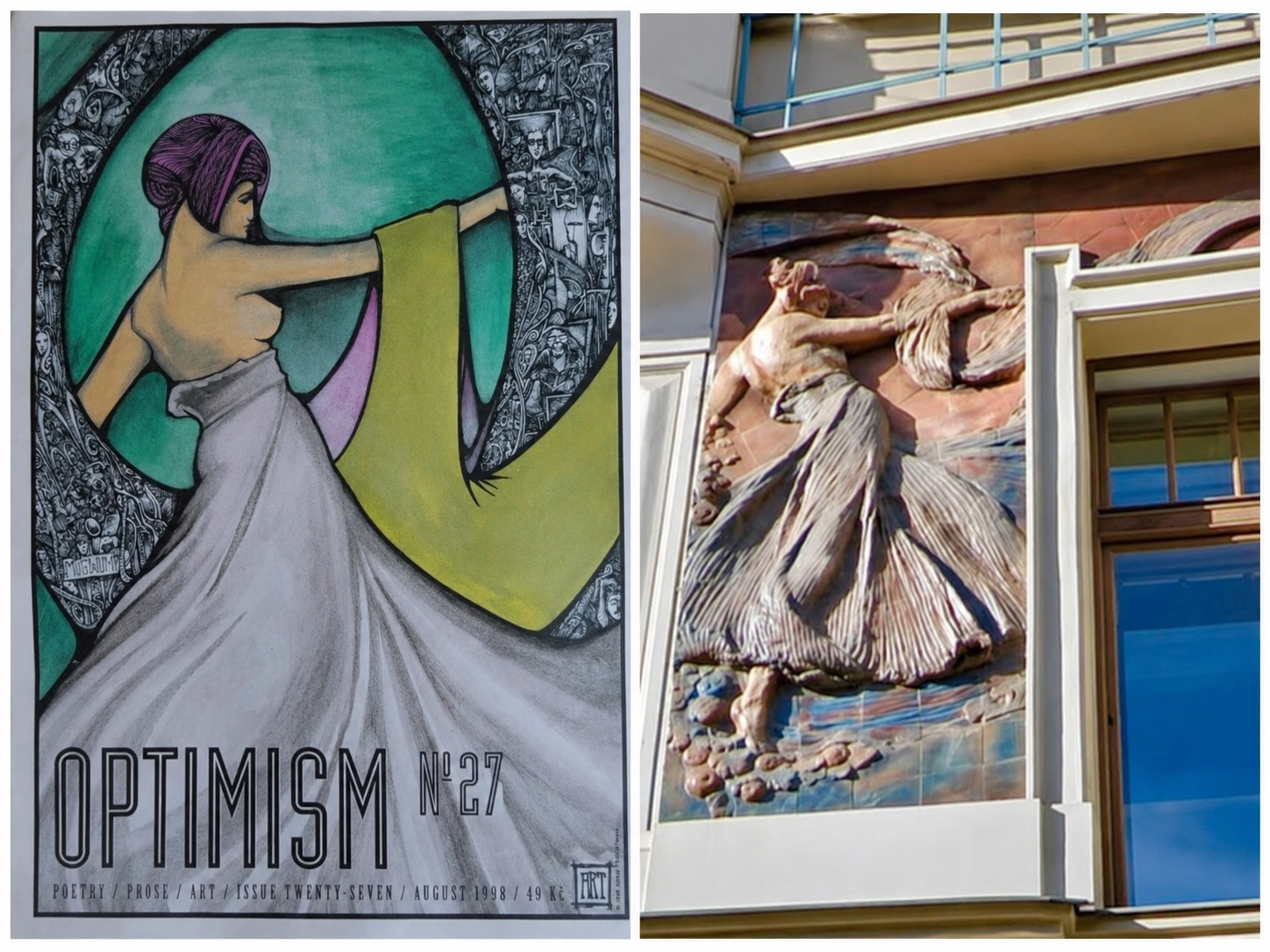
One of the ironies of Prague's expat art scene is that some of its most memorable images were created for the most ephemeral purposes. A flyer announcing a one-night show, a poster promoting a club, or a promotional postcard or bookmark might have been destined for the trash within weeks. Yet thirty years later, some of these disposable scraps of artwork are now among the most evocative reminders of that time.
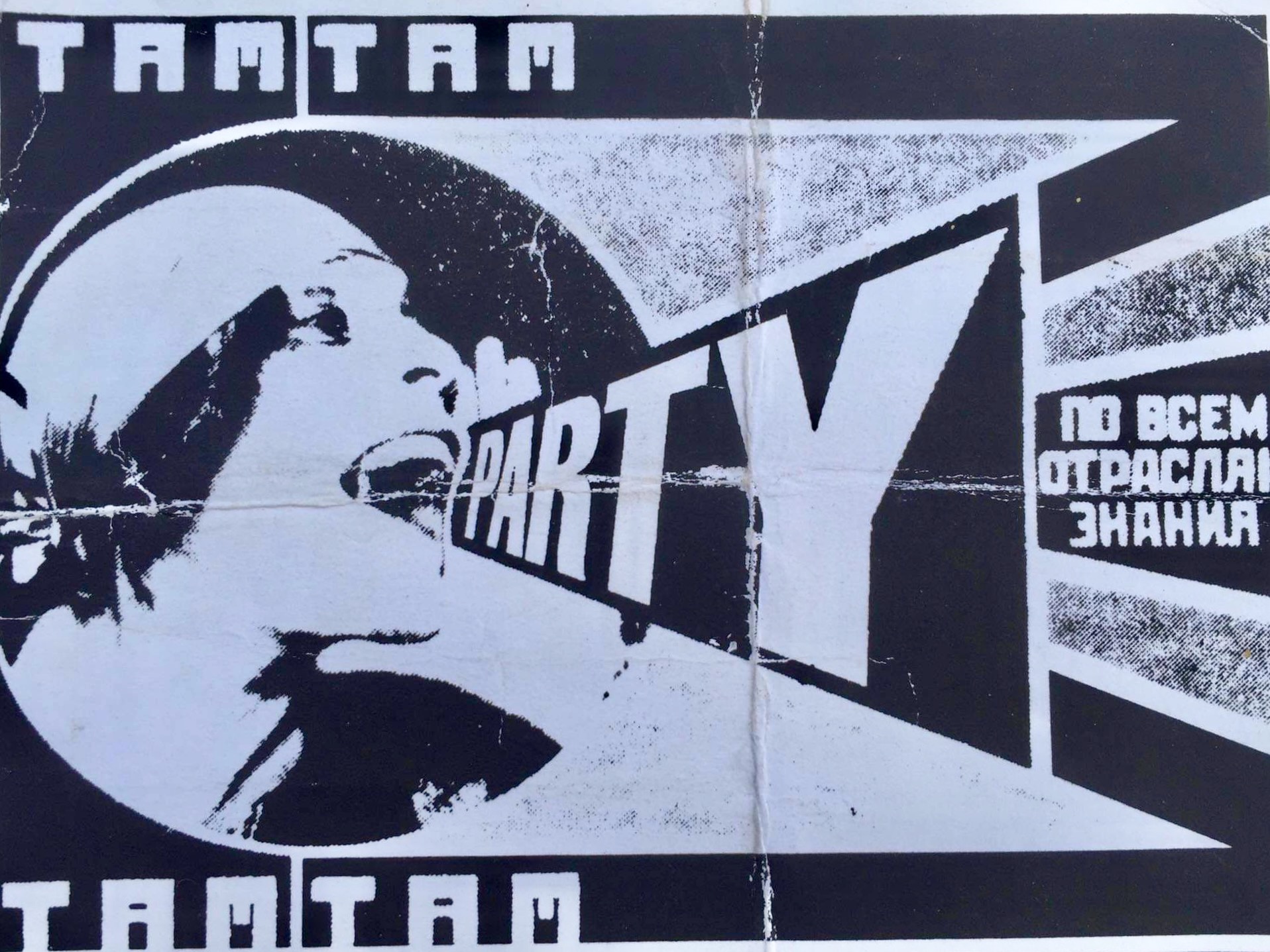
Looking through the material I've collected, I'm struck by how much original artwork went into promoting bars and clubs. Places like Ubiquity, Tam Tam Club, Fetisch Klub and Klub X relied on original artwork to establish their identities and attract customers. A memorable logo or striking look could help an establishment stand out in Prague's increasingly competitive nightlife scene.
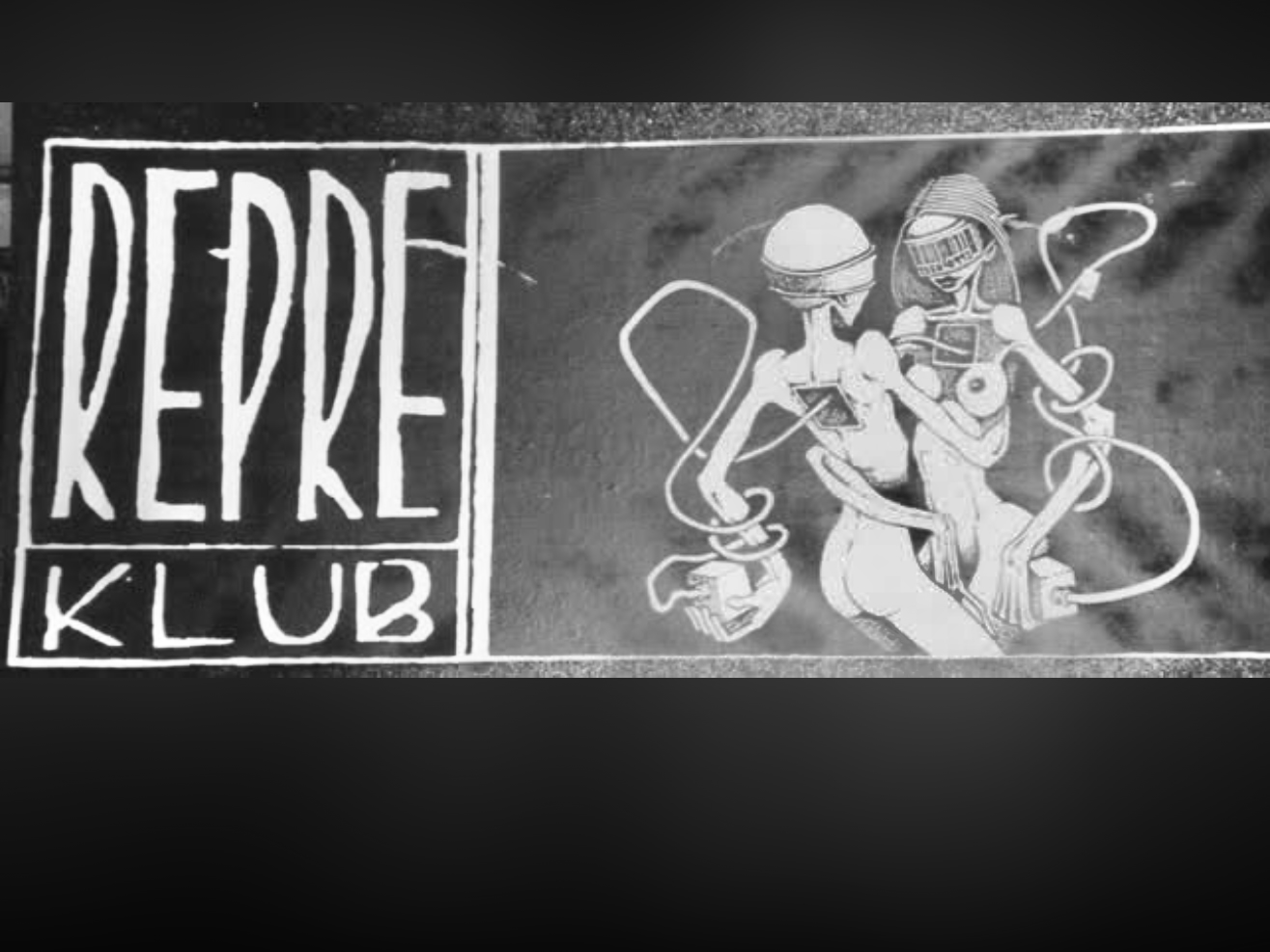
The Municipal House complex, the brainchild of expat entrepreneurs Glen Emery and John Bruce Shoemaker, was particularly fertile ground for this. Chris Stander's weird, eye-catching illustrations for the Repre Klub and Christian Mercer's flyers for the original Thirsty Dog -- including his wonderfully odd, iconic mechanical dog -- evoke that brief, strange period when the expat circus had decamped to one of Prague's most important historical venues.
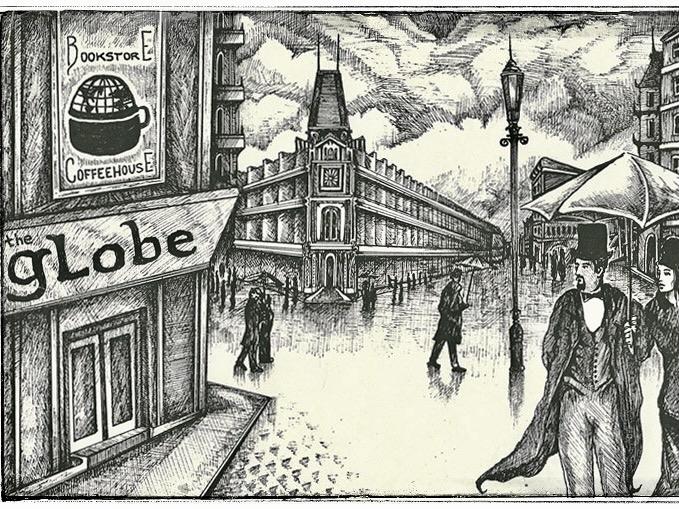
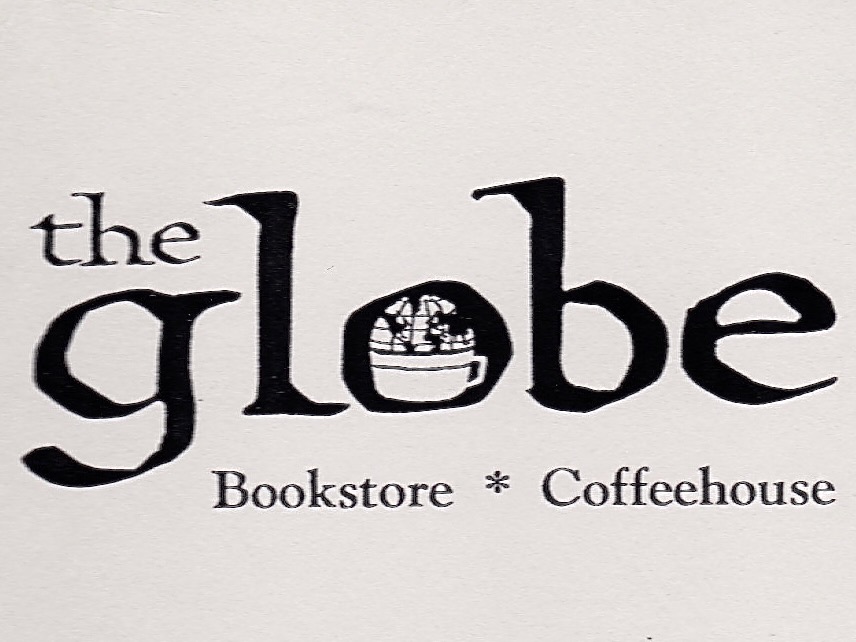
Artists helped to give the Globe its own quirky personality. In 1993, Douglas Arellanes designed the original logo, with the letter "o" holding a coffee cup and globe, reproduced on countless T-shirts and mugs. Adam Trachtman created a memorable Globe postcard, lending the establishment a 19th-century Art Nouveau vibe. Simon Gray drew a playful map showing visitors how to find the bookstore near Strossmayerovo náměstí.
Looking back, I sometimes remember the artwork more clearly than the places themselves. I may struggle to recall the details of an establishment, but a familiar poster or drawing brings the atmosphere rushing back. Nearly all those bars and clubs have disappeared, but their surviving artwork offers a vivid record of that world as it was.
(Stay tuned. Next week, in Part 2, I'll look at the talented cartoonists and illustrators whose work filled the pages of Prague's English-language newspapers, alternative magazines and literary journals throughout the 1990s.)
(Keep scrolling for more images.)