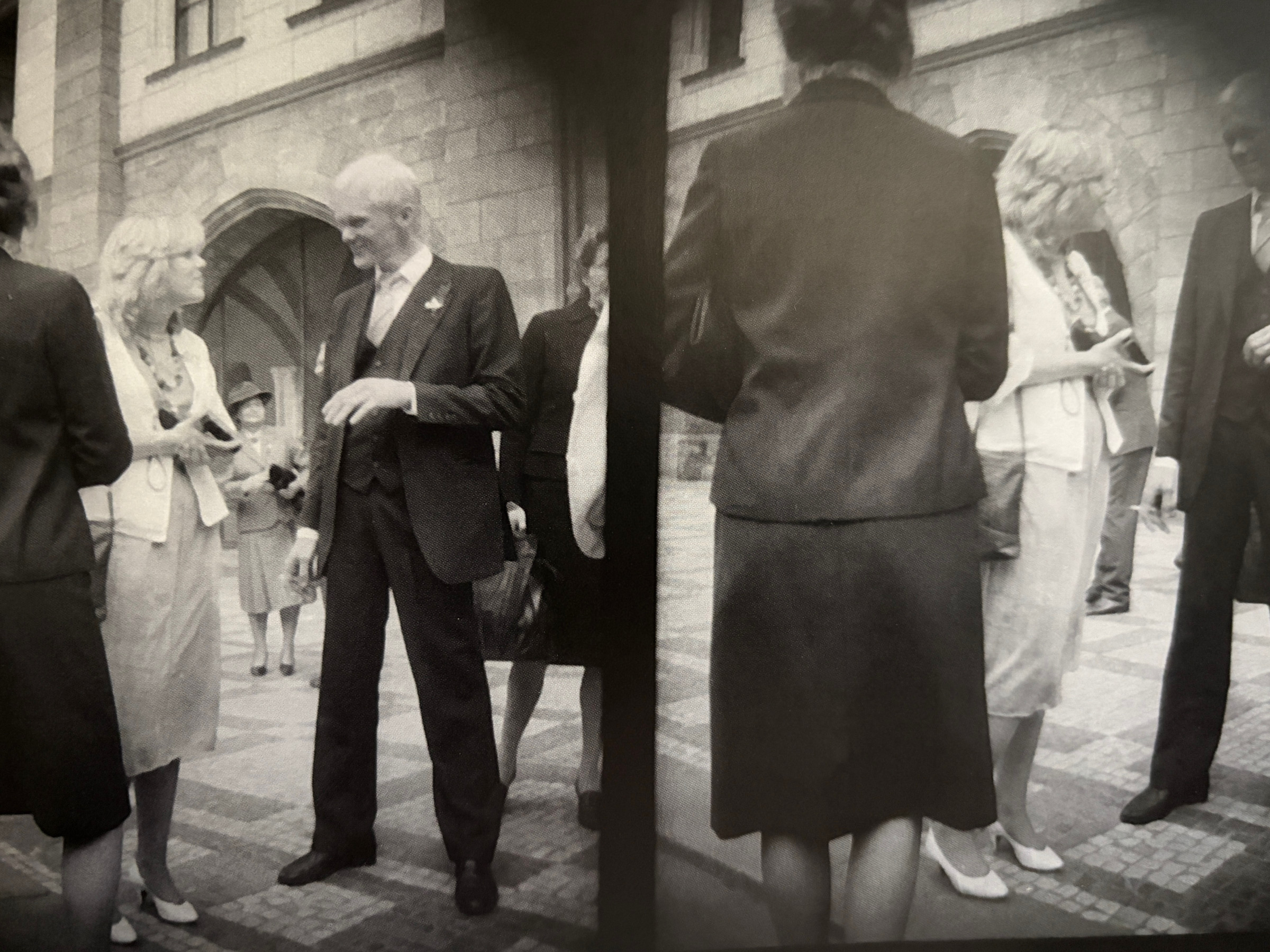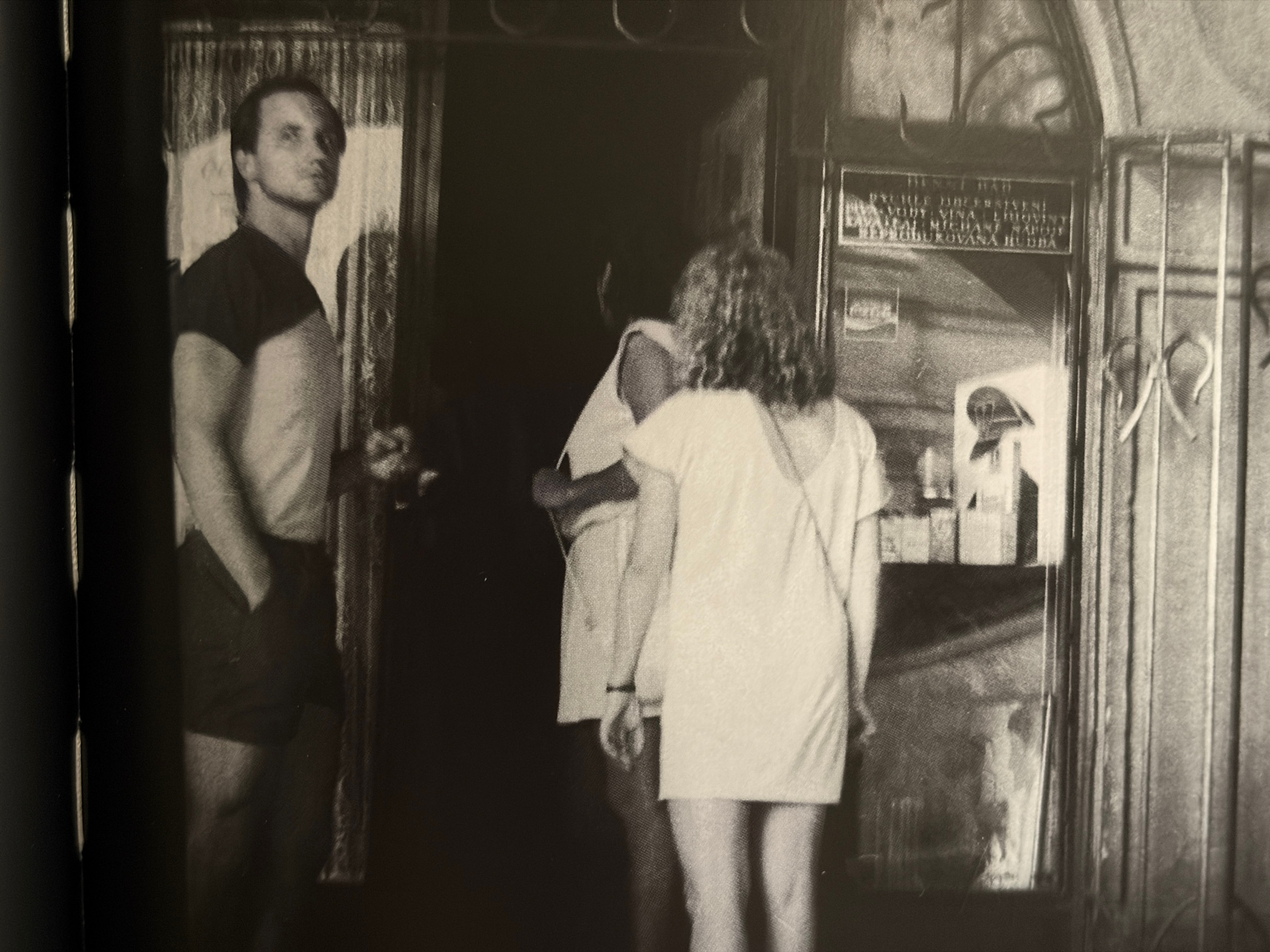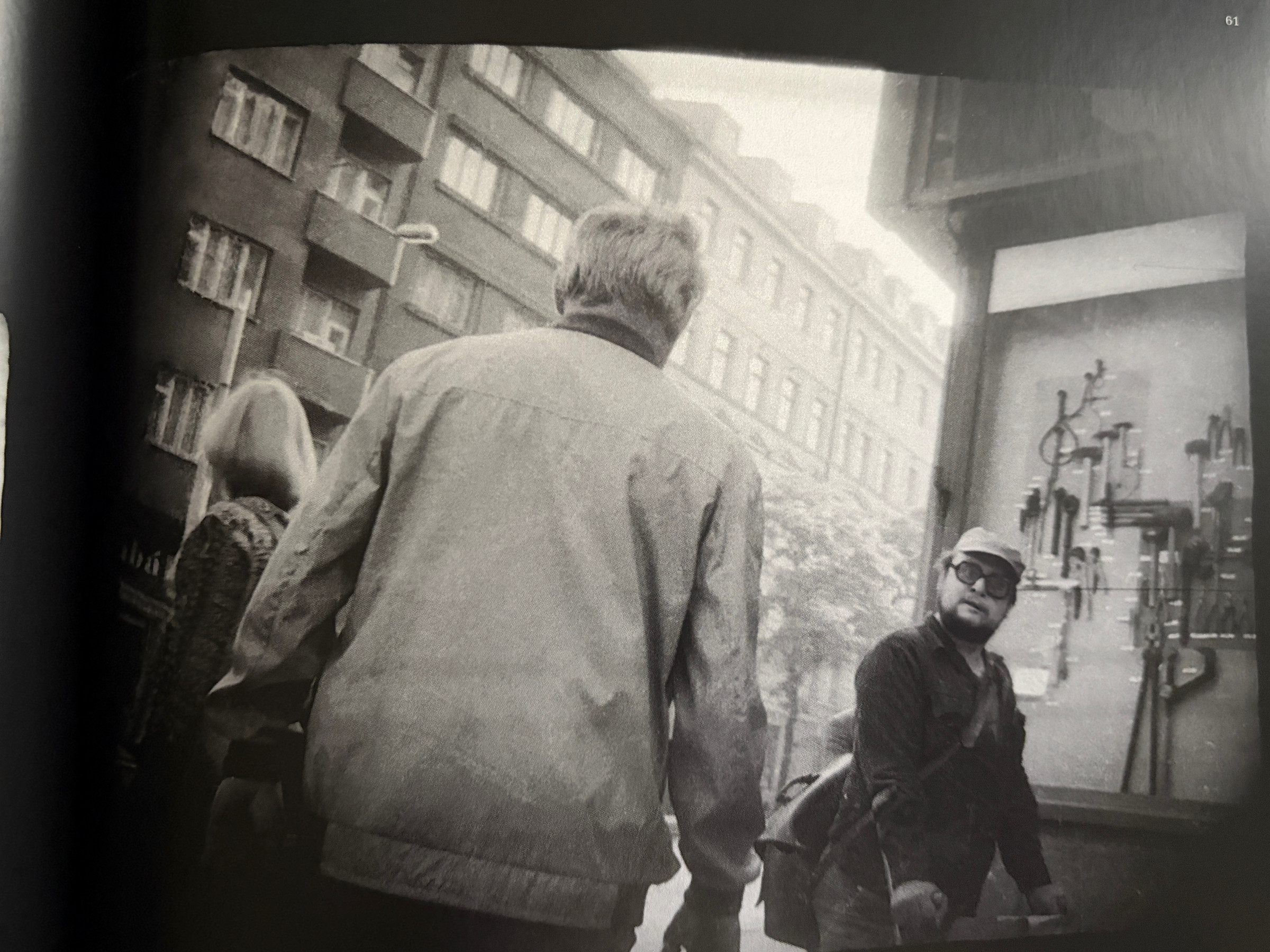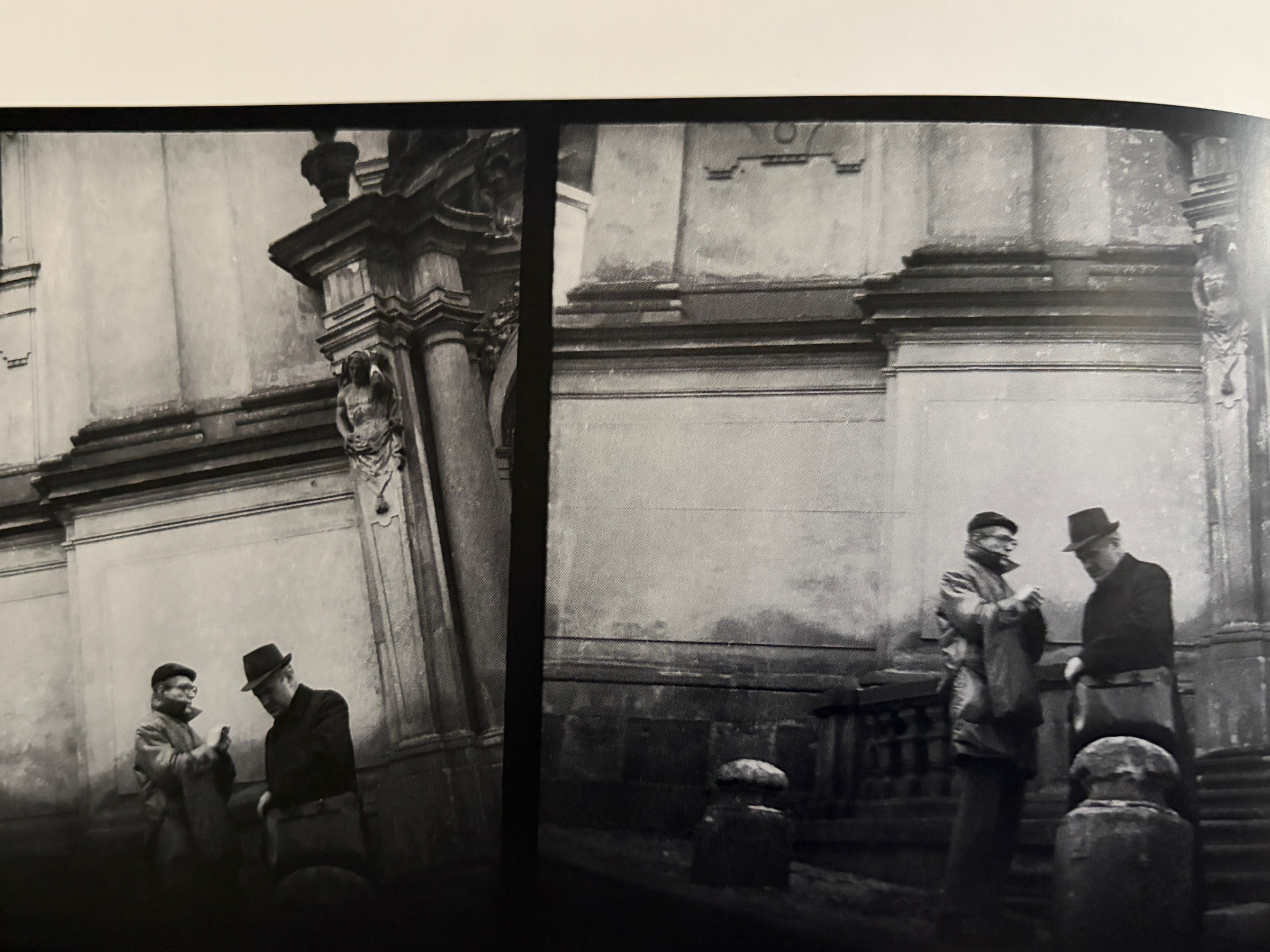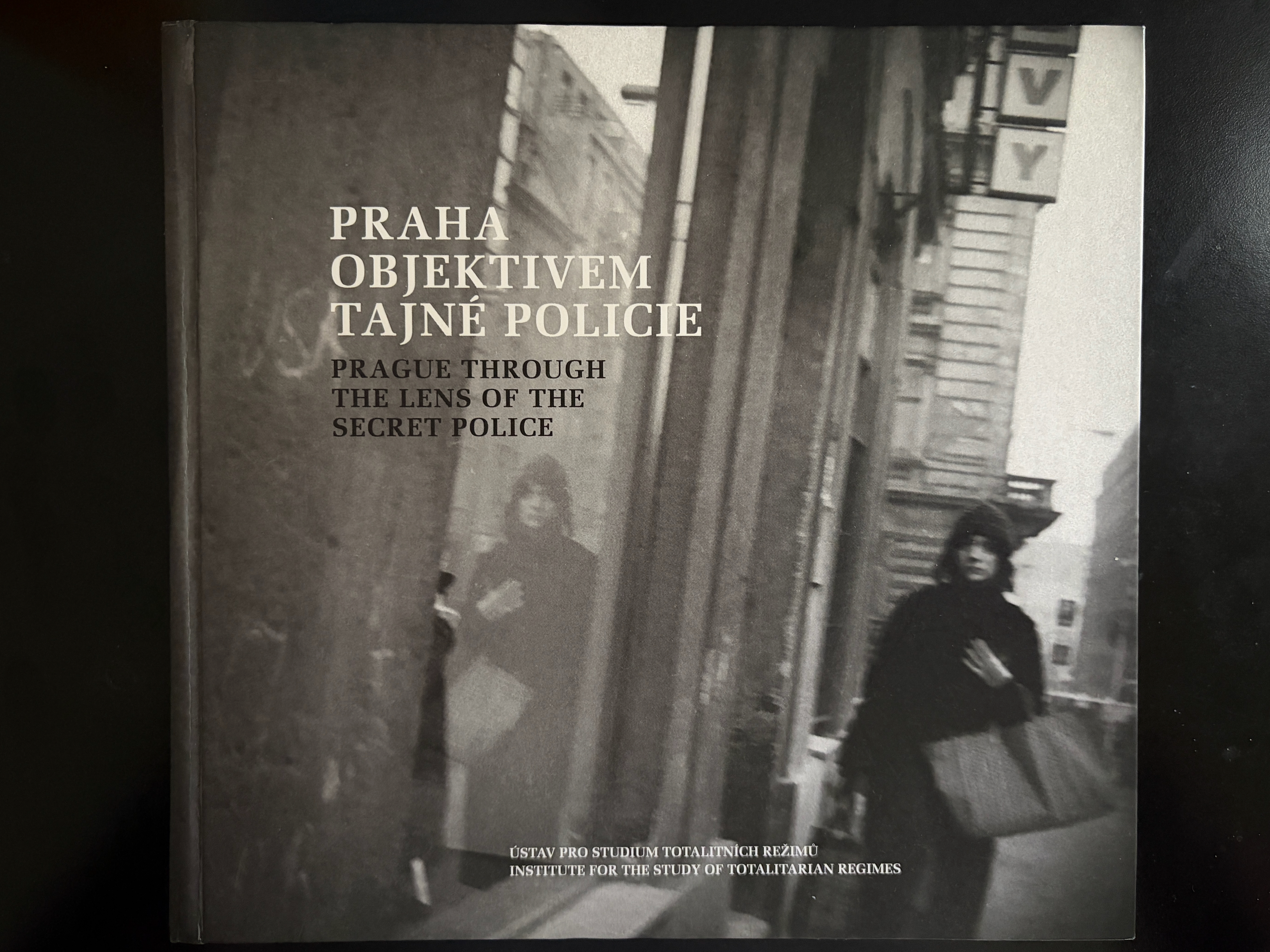
I could probably write about every photograph in the book, but that would defeat the point. Part of the pleasure -- and unease -- of Prague Through the Lens of the Secret Police is simply paging through it and inventing stories for the people who appear before you. Instead, I'll simply describe in more depth here a few of the photos that have stayed with me and include screenshots of some of my other favorite images. Anyone drawn to this subject should track down the book itself and explore the rest.
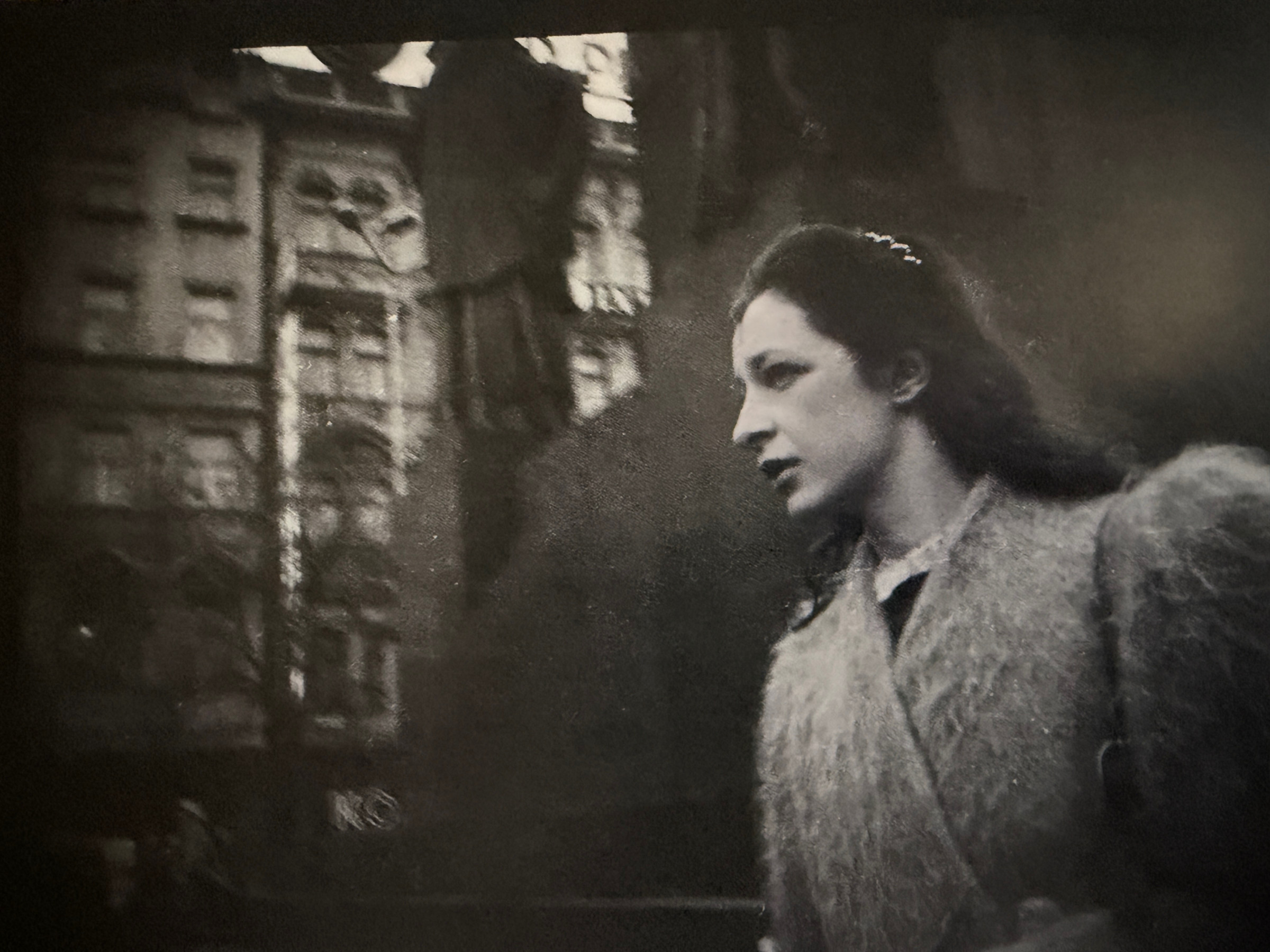
The eye-catching photograph toward the top of this post shows a woman standing at the top of Wenceslas Square, beside the statue of St Wenceslas. What makes the image so arresting is her expression and the dramatic lighting -- the background dissolves into darkness and isolates her from the city around her. Taken out of context, it could pass for a carefully composed piece of street photography.
Thanks to the book's index, we know otherwise. The photograph was taken at around 6 p.m. on March 24, 1987, and the StB wasn't actually interested in this woman at all. Their real target was the late dissident academic Alena Hromádková, codenamed "ALI," who was under surveillance for "writing, translating and reproducing hostile materials, and maintaining numerous contacts abroad." The woman here may have been one of those contacts. Agents never identified her and called her "EMA" in the files. According to the book, she managed to lose them in the Prague metro.
That detail changes the picture again. What first reads as a solitary woman in a pool of light becomes the more menacing spectacle of a woman being pursued, her minders positioned just outside the frame.
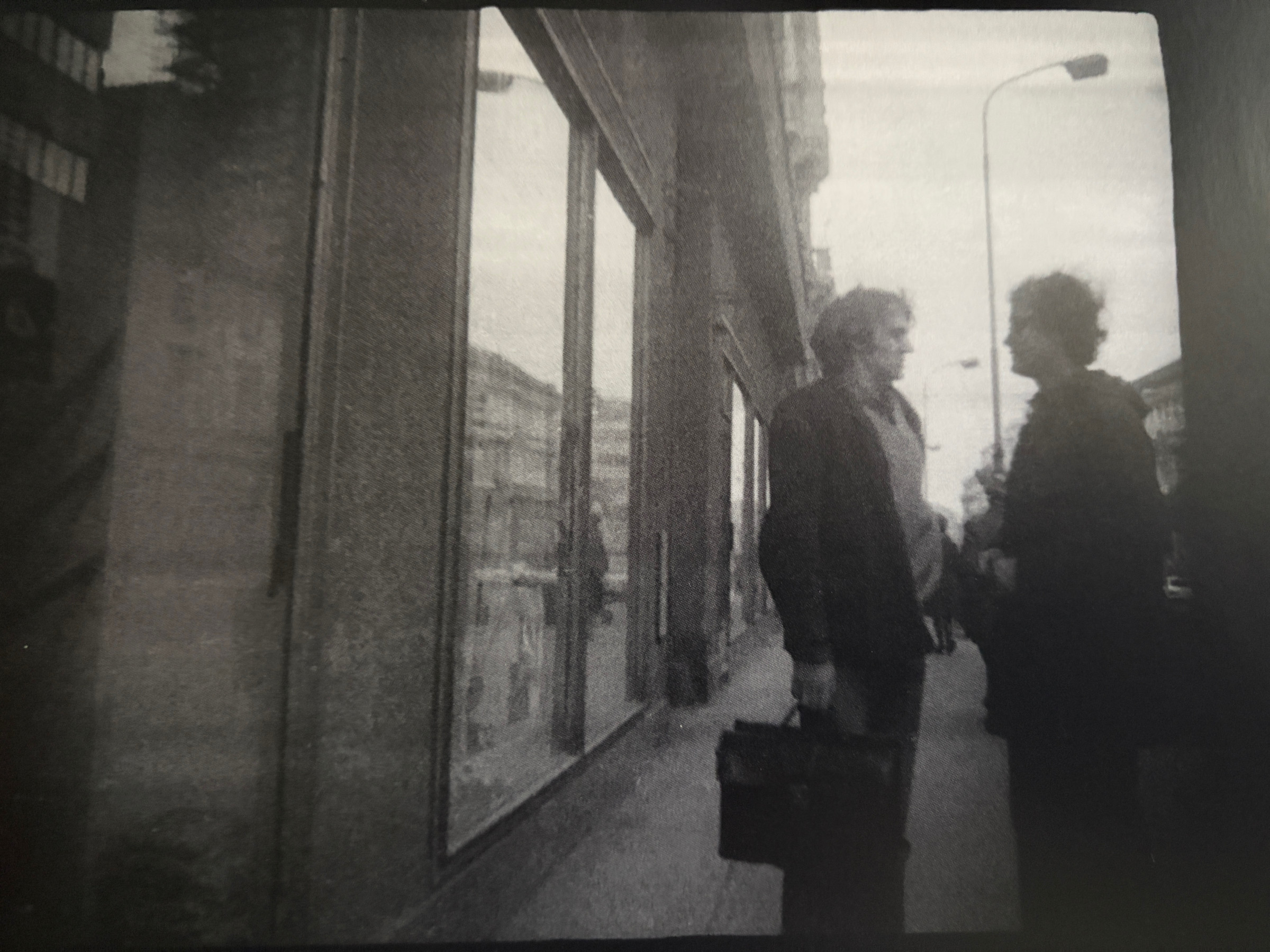
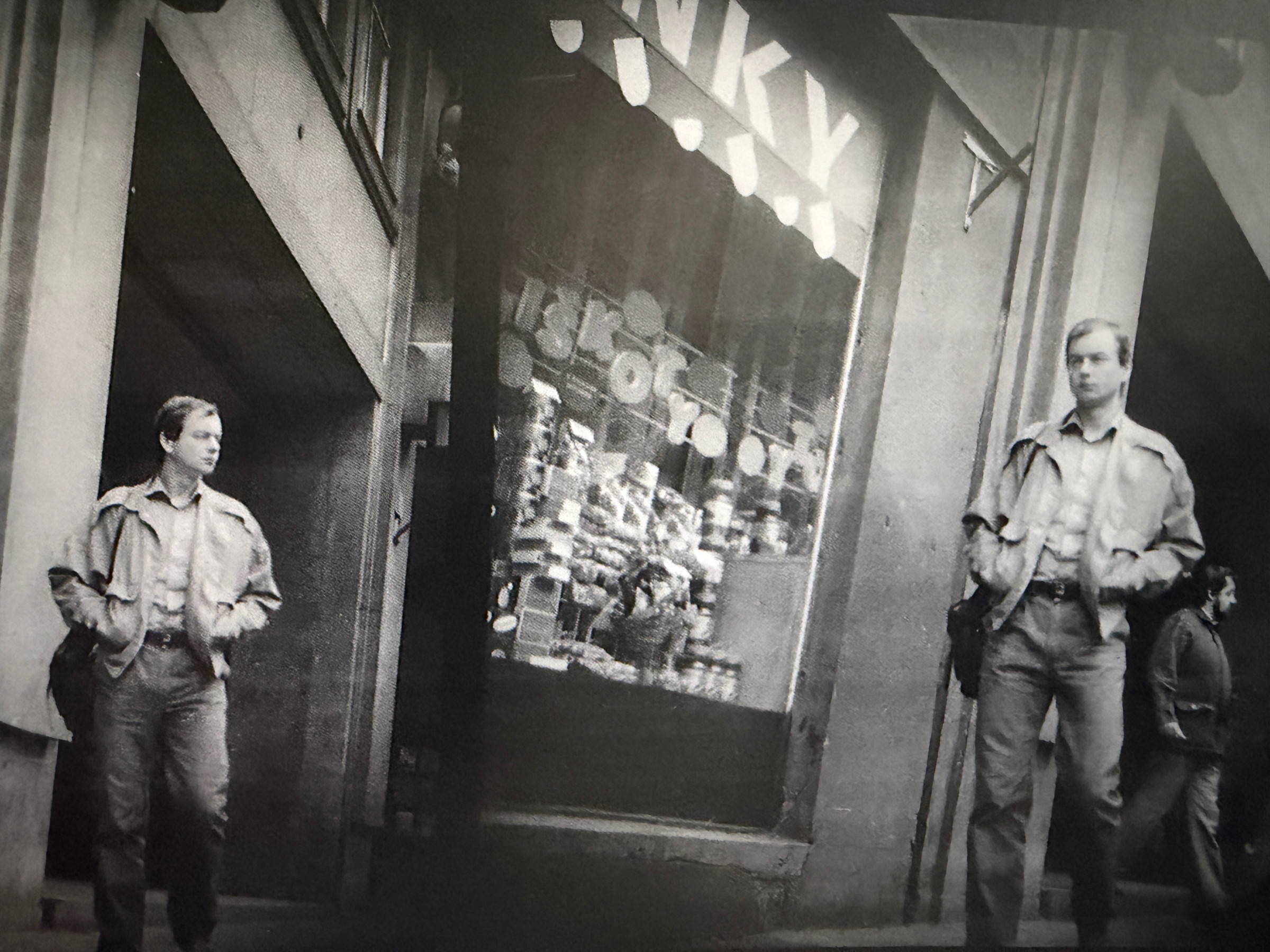
The second photograph I'll highlight here (below the image of the woman) is less dramatic, but maybe more typical: two men chatting on a sidewalk beside a shop window. Nothing in the image suggests anything subversive is underway.
They were not, however, random passersby. The man on the left is Ivan Dejmal, a Charter 77 signatory who had already served time for his anti-communist political activities; the StB tracked him under the codename "PŘEDNÁŠKA," after using an earlier alias, "ZAHRADNÍK" ("Gardener"). This latter name is fitting, since Dejmal actually had worked as a gardener and later became, in the years after 1989, the Czech environment minister. The man facing him is Karel Freund, another Charter 77 signatory active in Prague's independent cultural scene, known to the StB as "ADAM." The photograph was taken on November 23, 1977, at the corner of Ječná and Štěpánská streets in Prague’s Nové Město district.
Here the contrast is what compels: we know something the two men don't: that their conversation has drawn the state's attention, and that someone nearby has been ordered to put it on film.
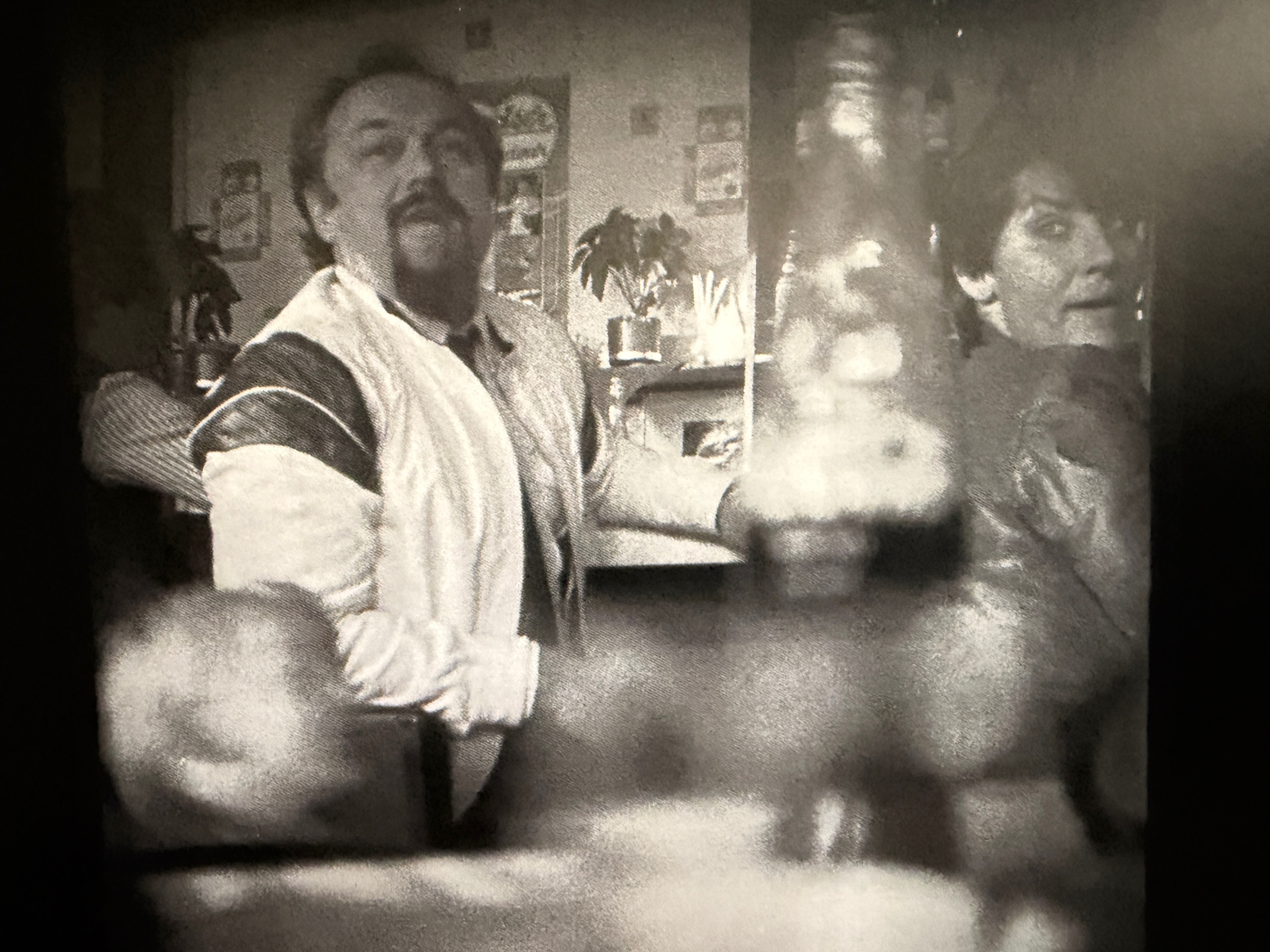
The third photograph (below the image of the woman) pushes the intrusion further. It shows a man and a woman at a table inside a roadside café near Konopiště Chateau, outside of Prague, shot from outside through the window. The reflections, shadows and other figures partially obscure the scene, giving it an oddly layered, almost deliberately composed quality. A second man at the edge of the frame appears to be nothing more than a customer who had wandered into the StB's shot.
The book identifies the central figure as Heinz Kousal, codenamed "ALFONZ." The woman beside him is not identified. Beyond that, it tells us surprisingly little -- not even why the StB was interested in him. The photograph is dated October 1, 1983; just the day before, agents had photographed a woman named Alla V Zyazina, codenamed "LOLA," as part of the same operation that involved Kousal, but it’s not clear how closely the two individuals were connected.
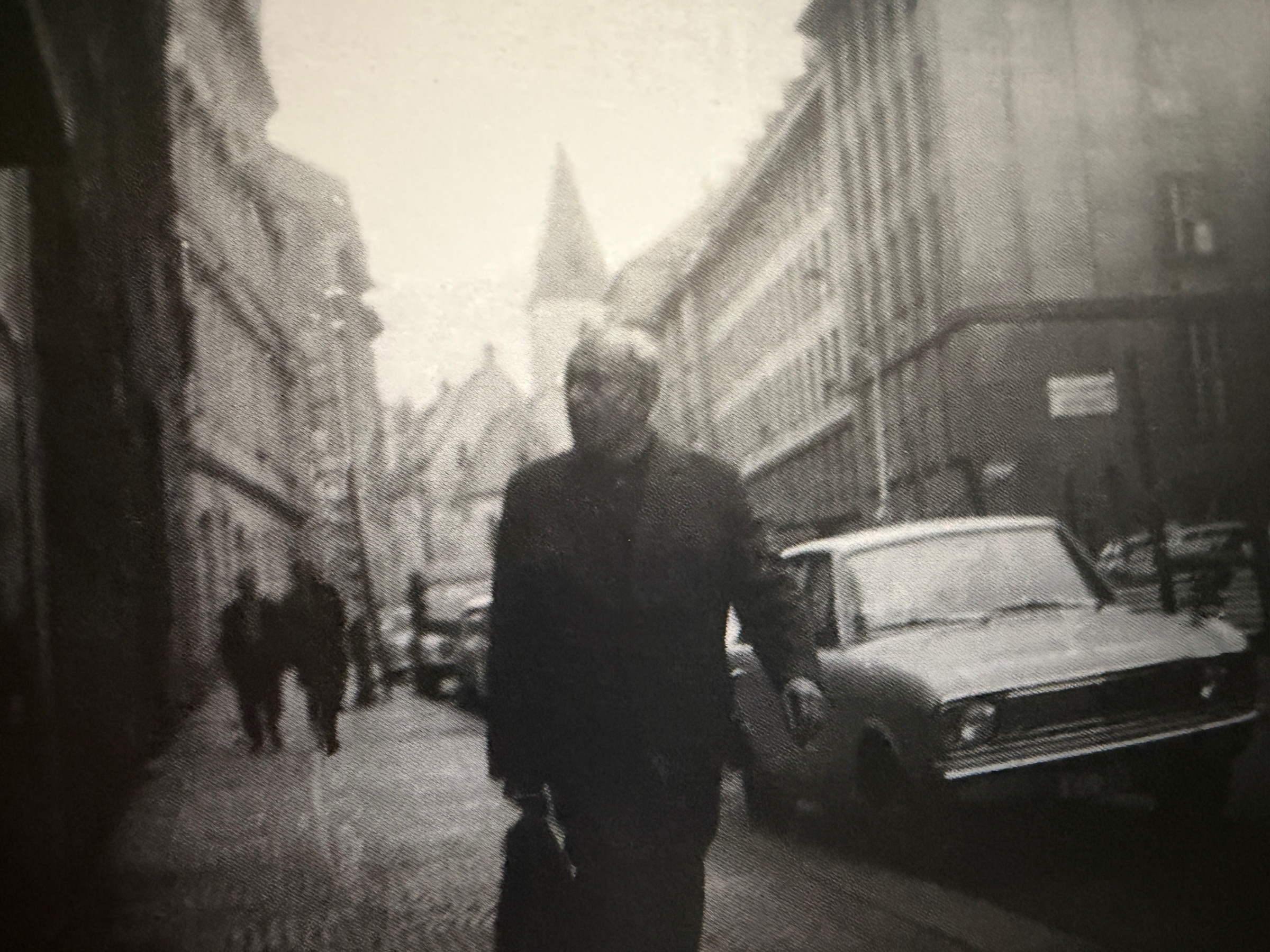
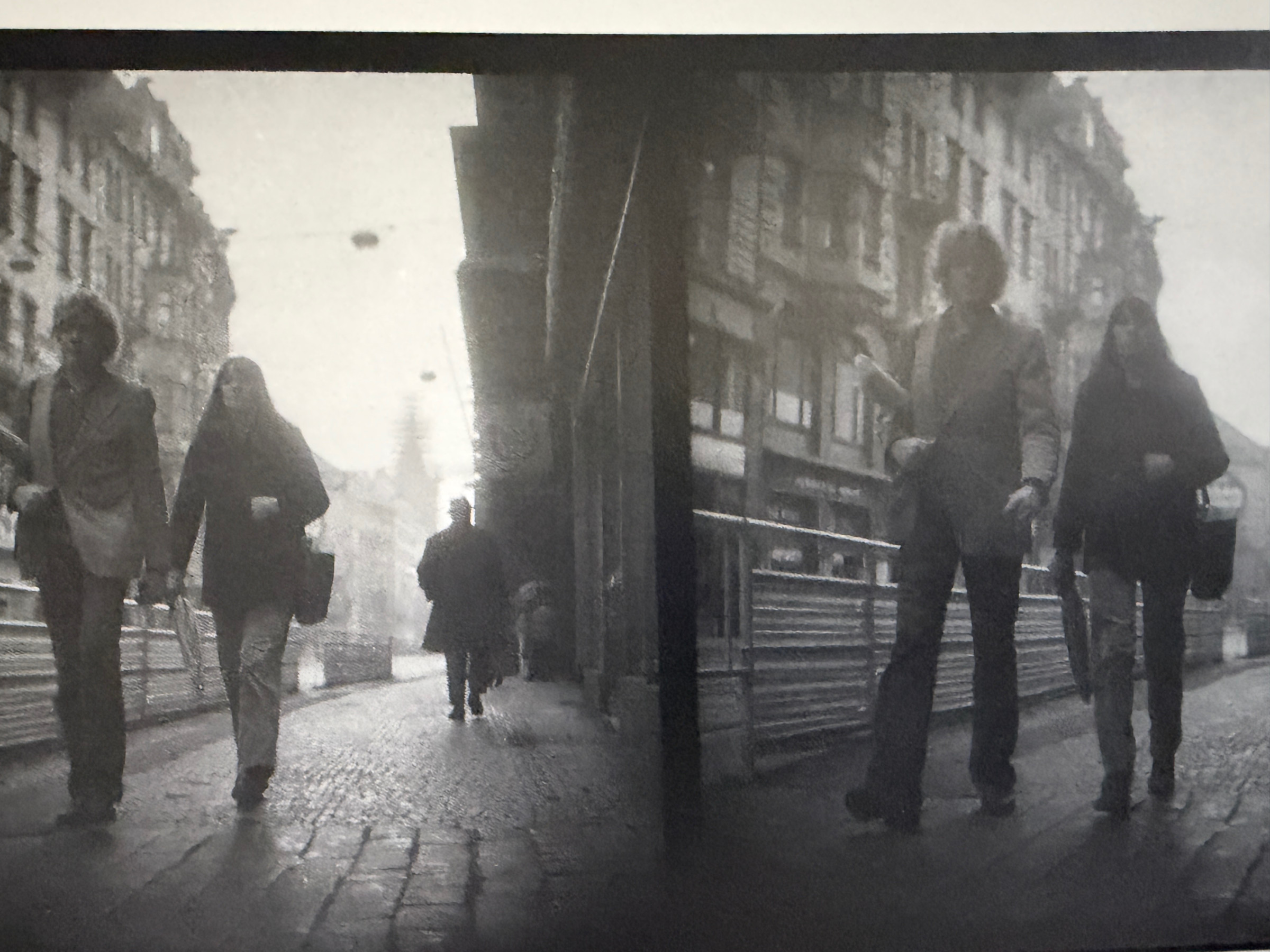
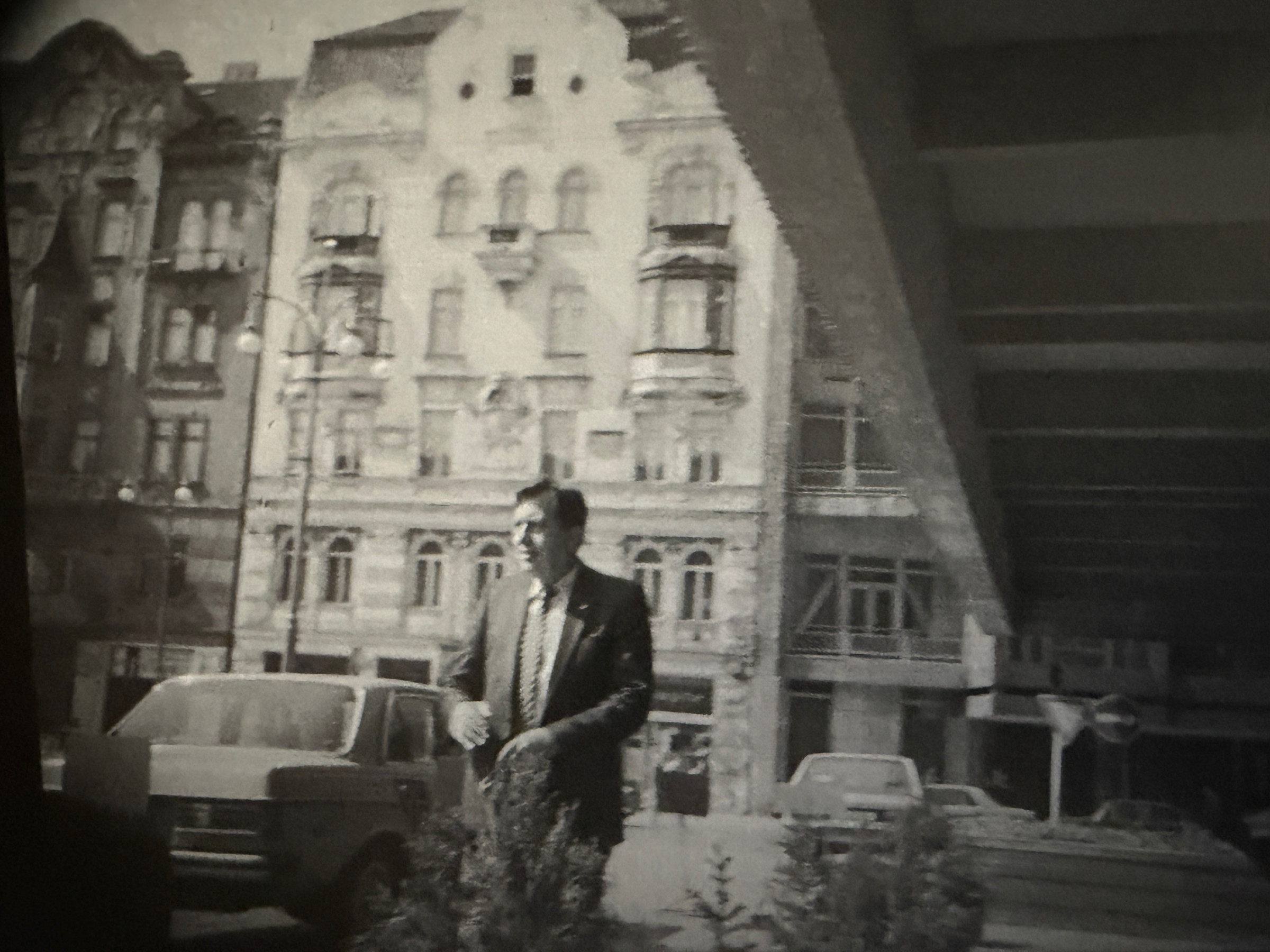
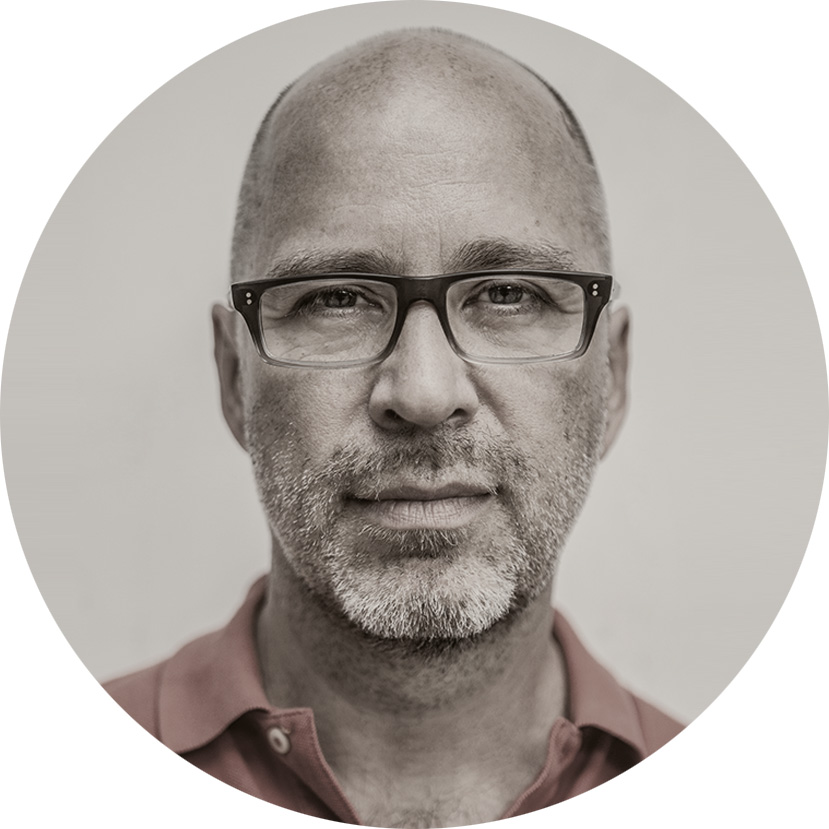
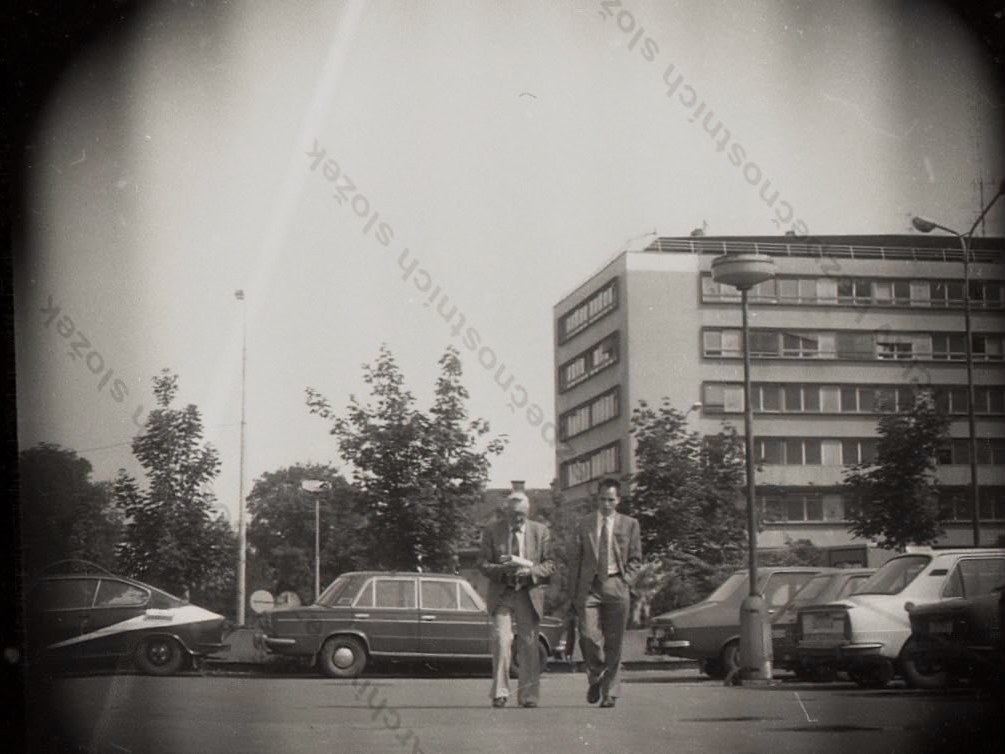
This last image I’ll go into here is different from the other three: it's actually a photograph of me (scroll up).
The image shows two individuals crossing a parking lot on an ordinary afternoon, complete with rows of boxy Eastern European cars, a modern office block with a flat roof and tiers of identical windows, a lamppost, and a group of trees. Nothing in the scene suggests urgency or significance. It could be any workday. I'm the guy with the briefcase on the right (identified as "INTER" in the files); beside me is Arnold, a Czech translator and fixer I worked with at the time. He was also a paid collaborator with the StB, but I had no idea about that back then.
What gives the photograph away as an StB effort is the frame itself. Unlike many of the more composed images in the book itself, this one carries a heavy circular vignette and a streak of white across the left side. It’s the unmistakable signature of a concealed camera rather than a photographer working with a lens and a composition. There's really no mistaking this for art.
On the day the photograph was taken, June 29, 1989, I was in Prague on a reporting trip for a Vienna-based publication, with a meeting arranged with the head of Czechoslovakia's International Telephone Exchange. There was nothing cloak-and-dagger about it. I was a journalist asking the kind of questions journalists ask, in this case about the country's telecommunications priorities and what equipment it might be looking to import from the West.
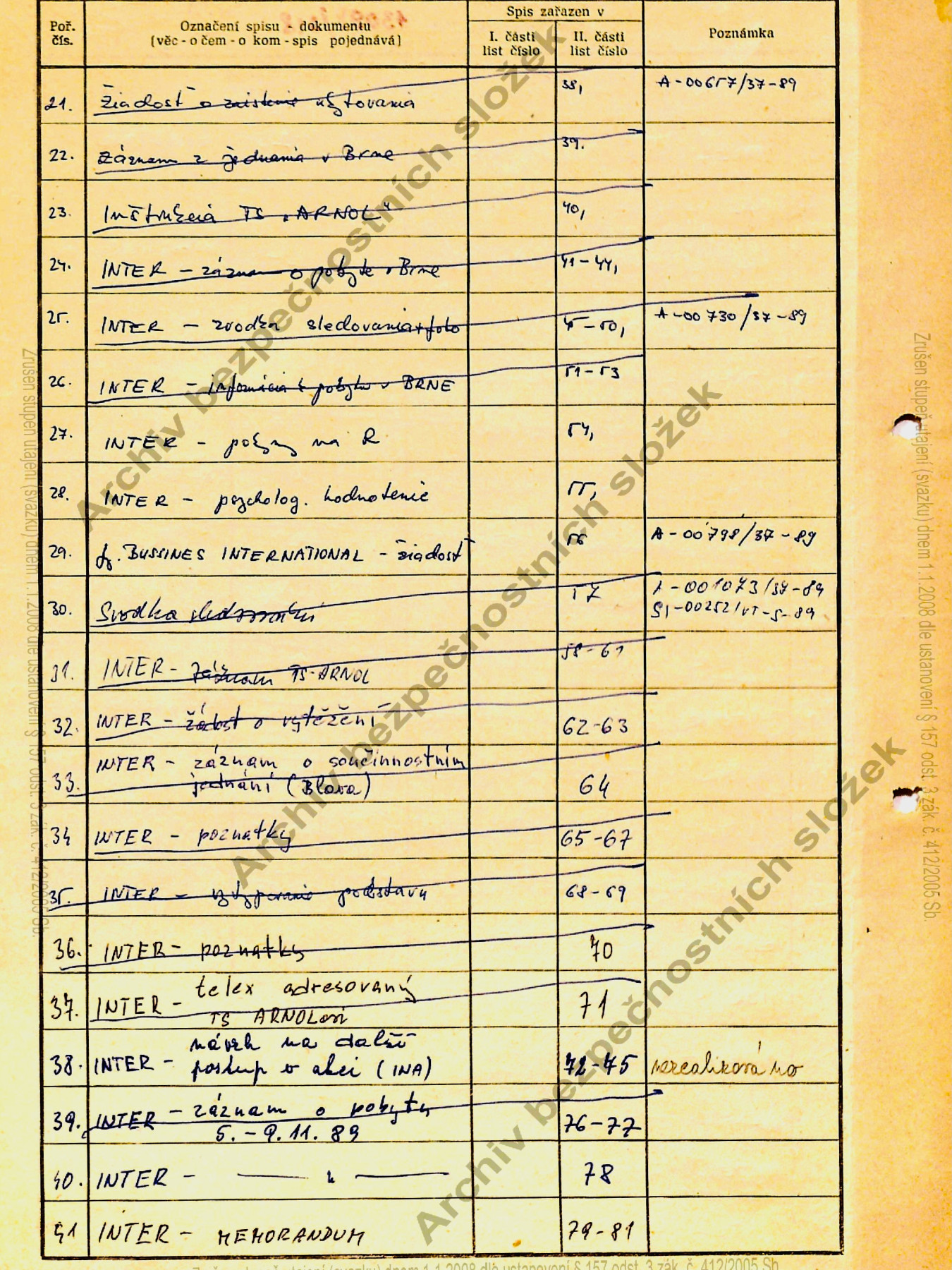
What I didn't know was that the StB was interested in the meeting too. Years later, after I found and read through my own secret police surveillance file, I learned that a team of agents and at least one photographer had been assigned to follow me for the entire day -- from the moment I left my room at the Intercontinental Hotel that morning to the moment I left Prague by car that evening for Brno. The operation included covering that meeting with the telecommunications company in Žižkov, and it's there, crossing the parking area, that an StB photographer caught Arnold and me walking together.
There's another layer to it. According to my file, though Arnold was secretly working for the StB himself (codenamed "ARNO"), he apparently didn't know we were being photographed either. The StB often withheld operational secrets from its own agents.
Why the StB picked that particular moment isn't entirely clear. My file suggests agents were trying to determine whether I really was a journalist, rather than an intelligence officer working under journalistic cover, and were watching for any sign I might meet with dissidents or pass along forbidden materials.
Looking at the photograph now, though, I feel almost none of the mystery I feel while looking at the other images. I know exactly where we'd been and what we were doing that day. And I know that neither of us had any idea that someone nearby was pointing a camera at us, or that anyone would have thought we were worth the trouble.
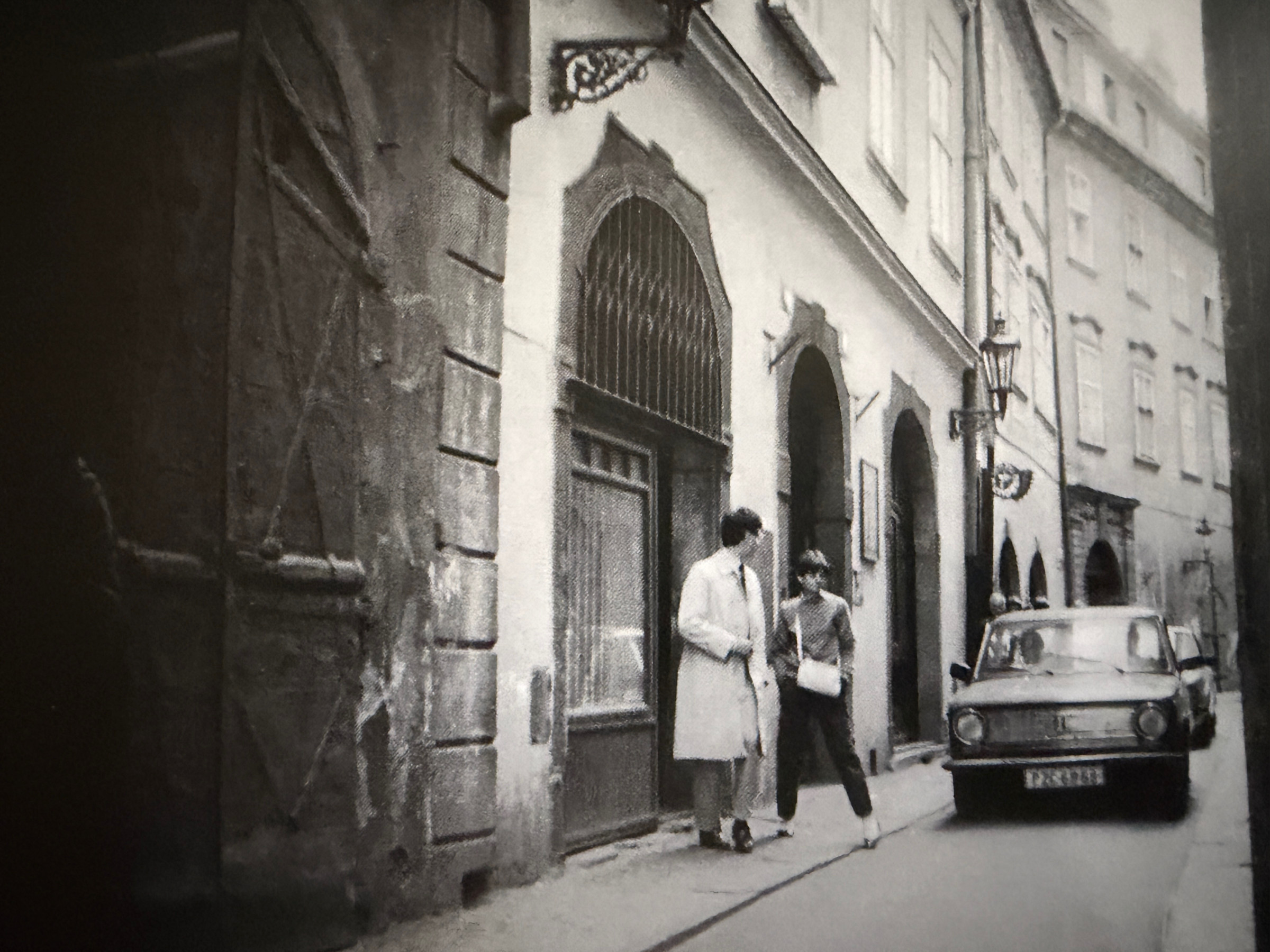
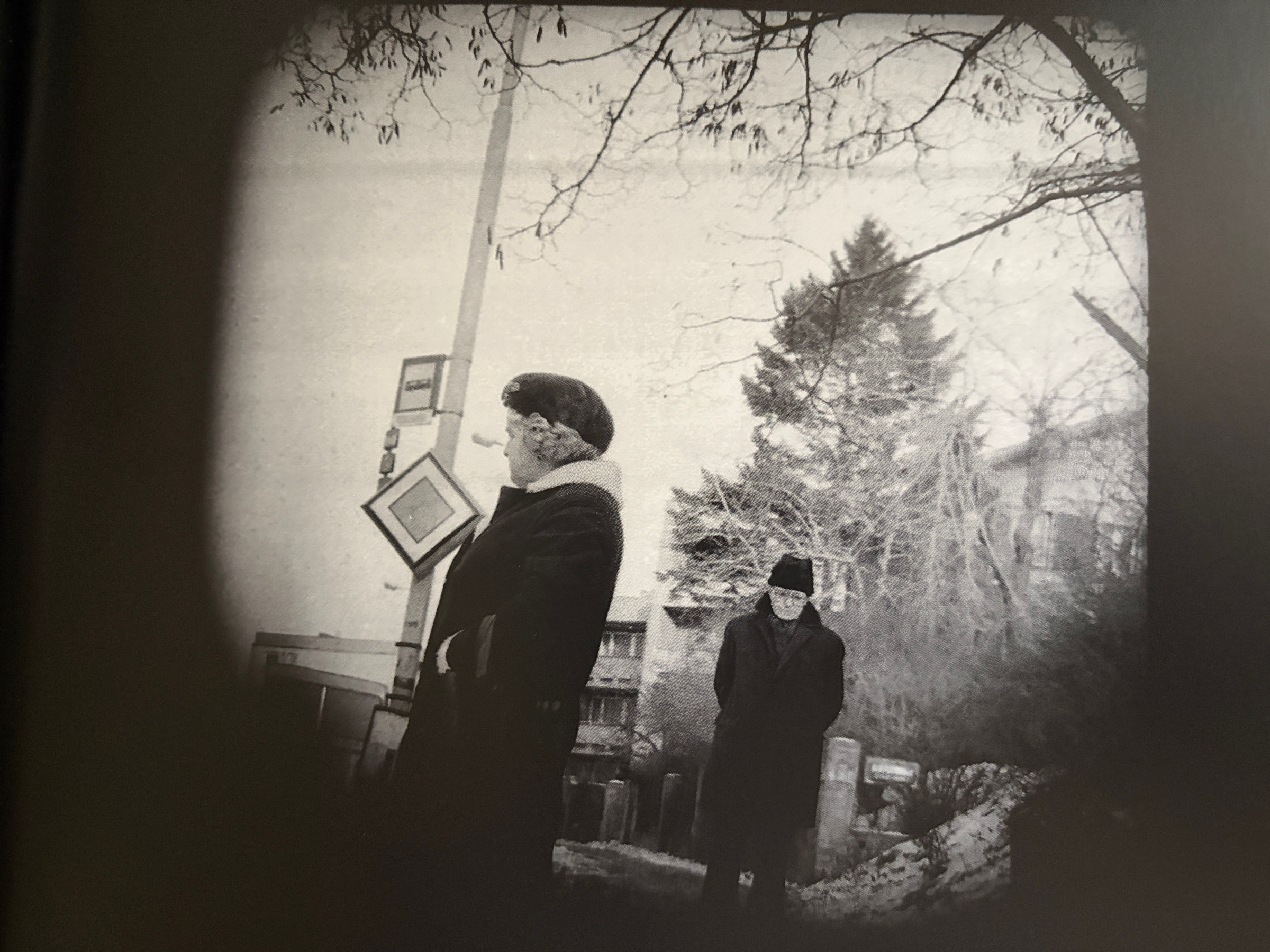
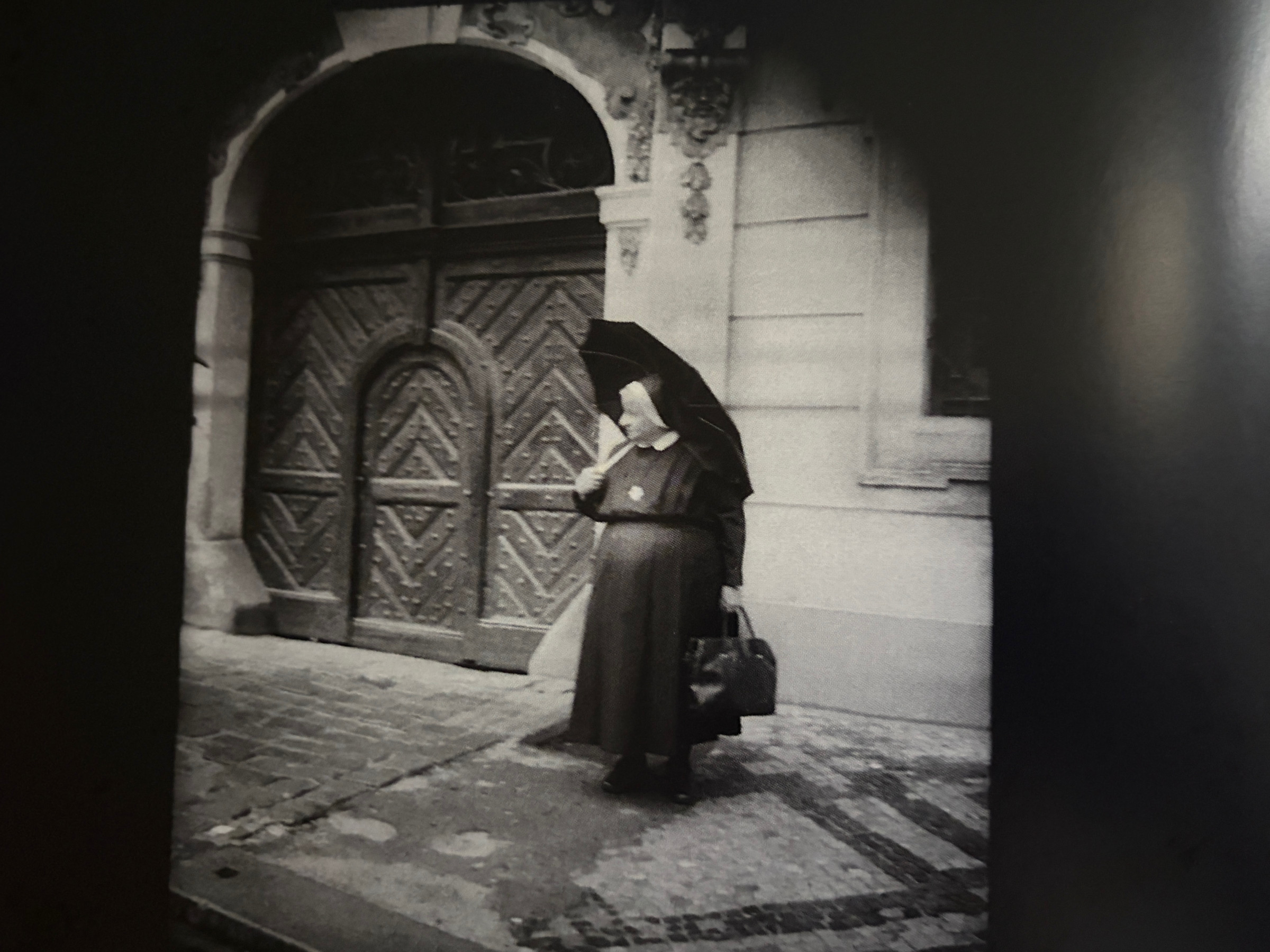
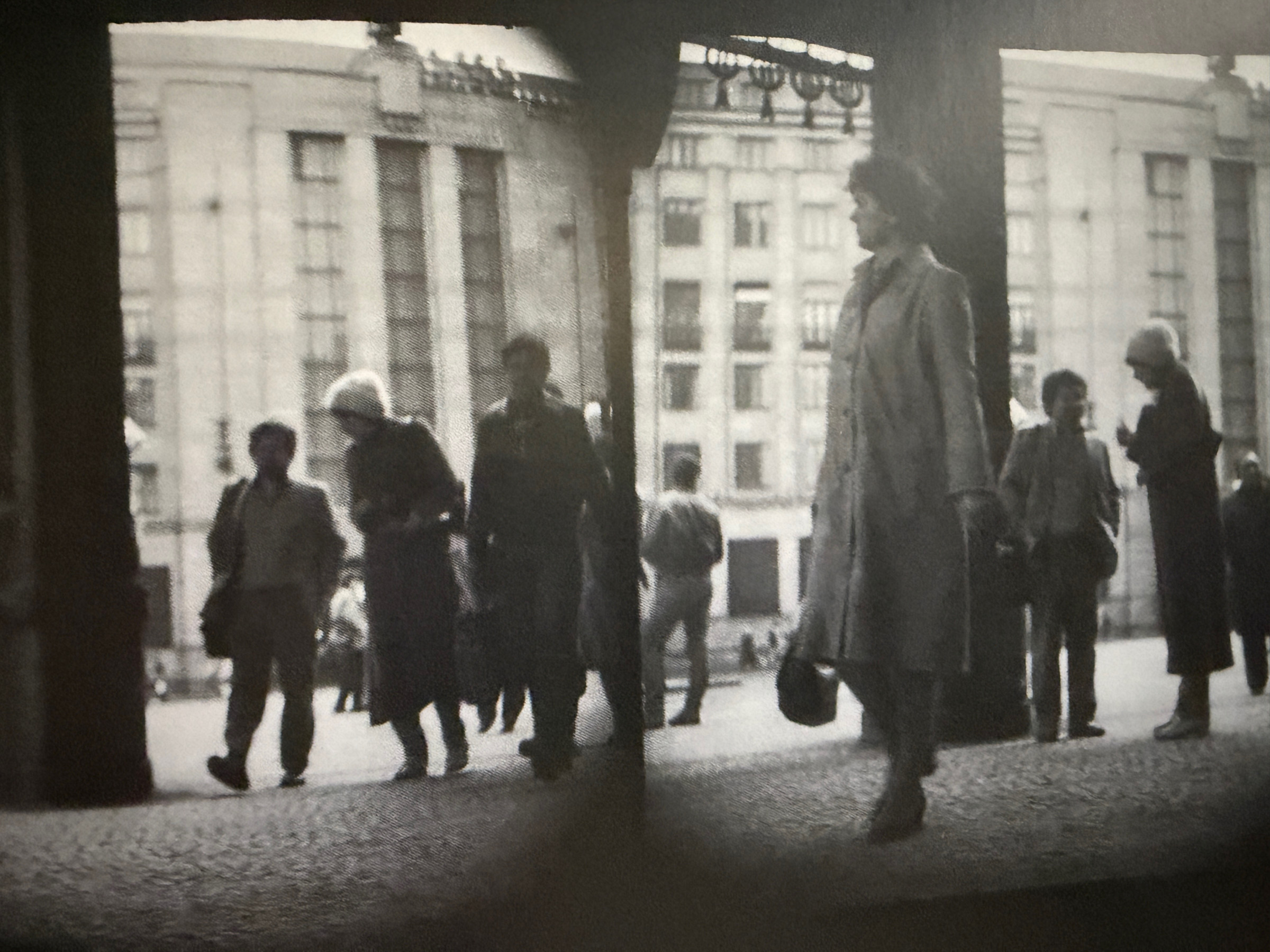
It's not easy to say what kind of book Prague Through the Lens of the Secret Police ultimately is. Is it a document of StB surveillance methods? A photographic record of Prague during normalization? A record of people who were being watched? Or a collection of remarkable photographs that were never intended to be seen this way? It's all of those things, and maybe that ambiguity is part of what makes the book work.
What isn't in dispute is how the meaning of these photographs has changed over time. The StB cameramen weren't trying to document everyday life in communist Czechoslovakia; they were gathering evidence on people the state had decided were worth watching. Their photographs were instruments of surveillance. But in doing their jobs, they inadvertently preserved something else: the faces, clothes, streets, cars and everyday rhythms of Prague life in the 1970s and '80s. The details that were irrelevant to the StB back then are the ones that fascinate us most today.
My own file is a small case study in that irony. A team of agents spent an entire day tailing me around Prague over a meeting in which I asked a state telecommunications official about import priorities for phone equipment. Read as intelligence, the operation amounted to practically nothing: no secret contacts, no hostile materials, nothing more suspicious than a foreign reporter doing his job. Read as anything else, it's an unexpected, oddly nostalgic record of a day spent in Prague. The moment was originally preserved because someone thought it mattered -- for reasons that turned out not to have mattered at all.
(Keep scrolling for more photos from the book).
(Did you like the post and want to add your own experiences, or maybe correct something I got wrong? Please write me at bakermark@fastmail.fm).