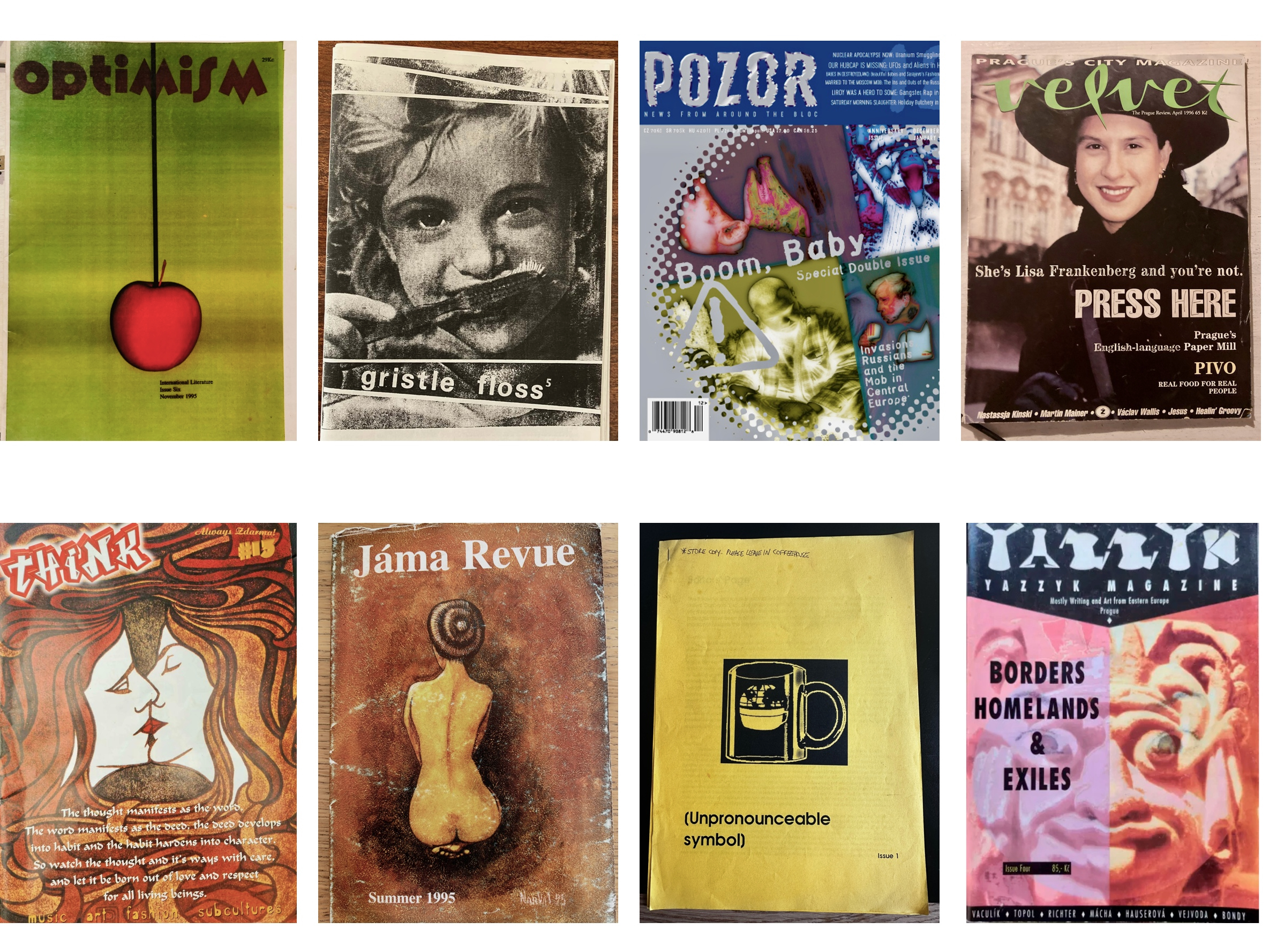
The many cultural and literary magazines, journals, and ’zines that sprang up in the ’90s—in contrast to the more serious newspapers and business publications—were, in many ways, the purest expression of Prague’s expat scene. While the newly minted newspapers and business journals responded to an obvious market need, with their content and form largely shaped by that demand, there was no real “demand,” in the strictest sense, for publications devoted to locally produced essays, poetry, and fiction.
That’s not to say there weren’t many excellent publications or outstanding works of fiction and poetry—or that these journals and ’zines operated outside the rules of basic economics. What set these more culturally minded publications apart, however, was that they were largely products of invention and therefore freer to assume whatever form or role their editors or backers desired.
Surveying the titles, they fall loosely into two genres, with some overlap. The first is the “city magazine” model, in the vein of City Paper, The Village Voice, or New York Magazine: publications focused on the people and places that made Prague tick. The second is more literary, closer to The Paris Review, featuring original writing, art, and poetry that might—or might not—have a direct connection to Prague. This latter genre was a natural direction to explore, given the widespread talk at the time of Prague as the “Left Bank of the ’90s,” not to mention the large community of expats and Czechs writing in English who dabbled in poetry and prose. As the decade progressed, some publications broadened their scope beyond Prague to encompass Central Europe more generally, reflecting the belief that the fall of communism had created a new, cohesive cultural realm with an aesthetic distinct from Western Europe or the United States.
I've divided the list of publications here below into three broad headings: city mags, literary journals, and 'zines. Each title is listed according to the year it first published. Sadly, none of the publications is still around.
CITY MAGS
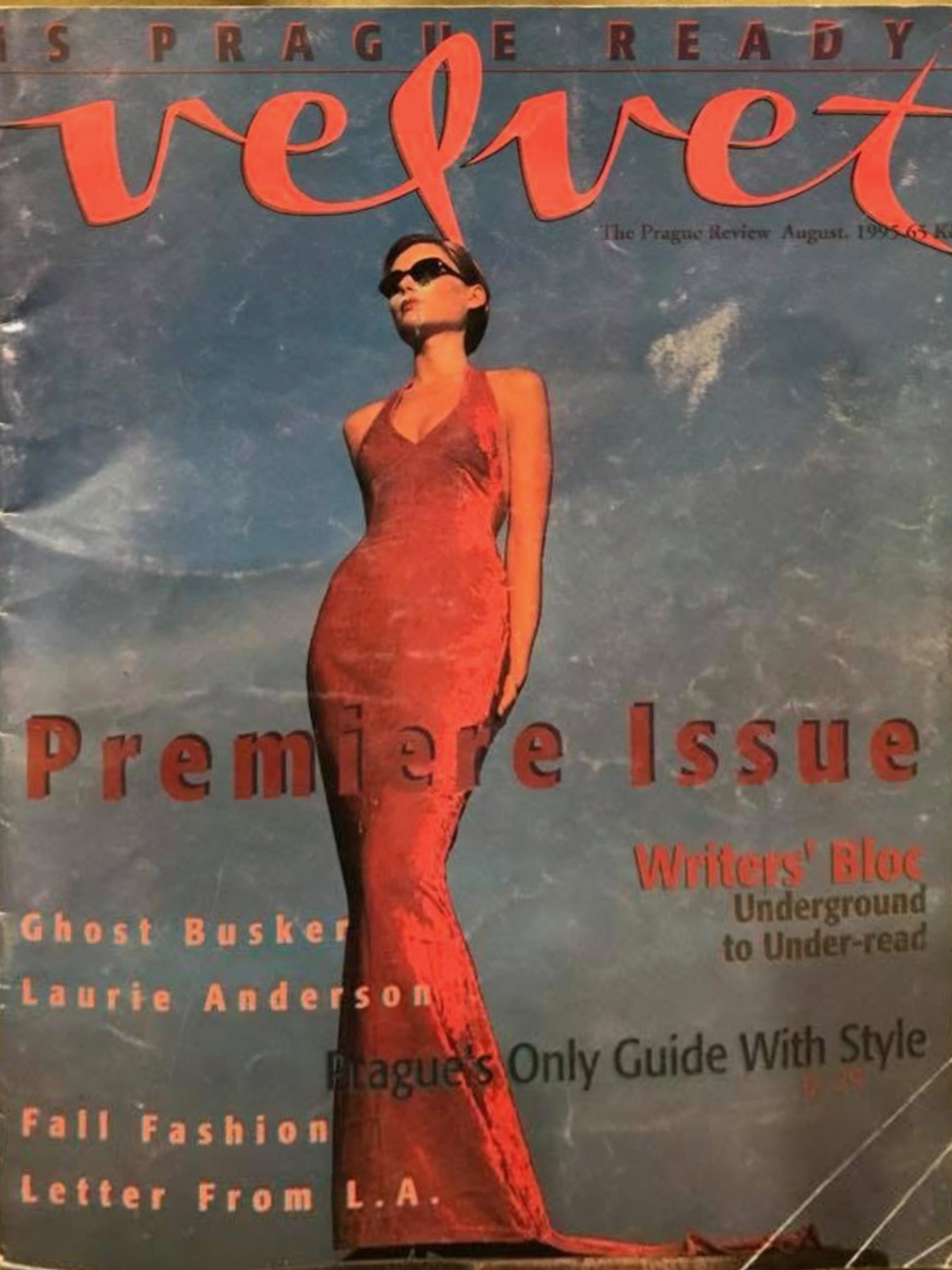
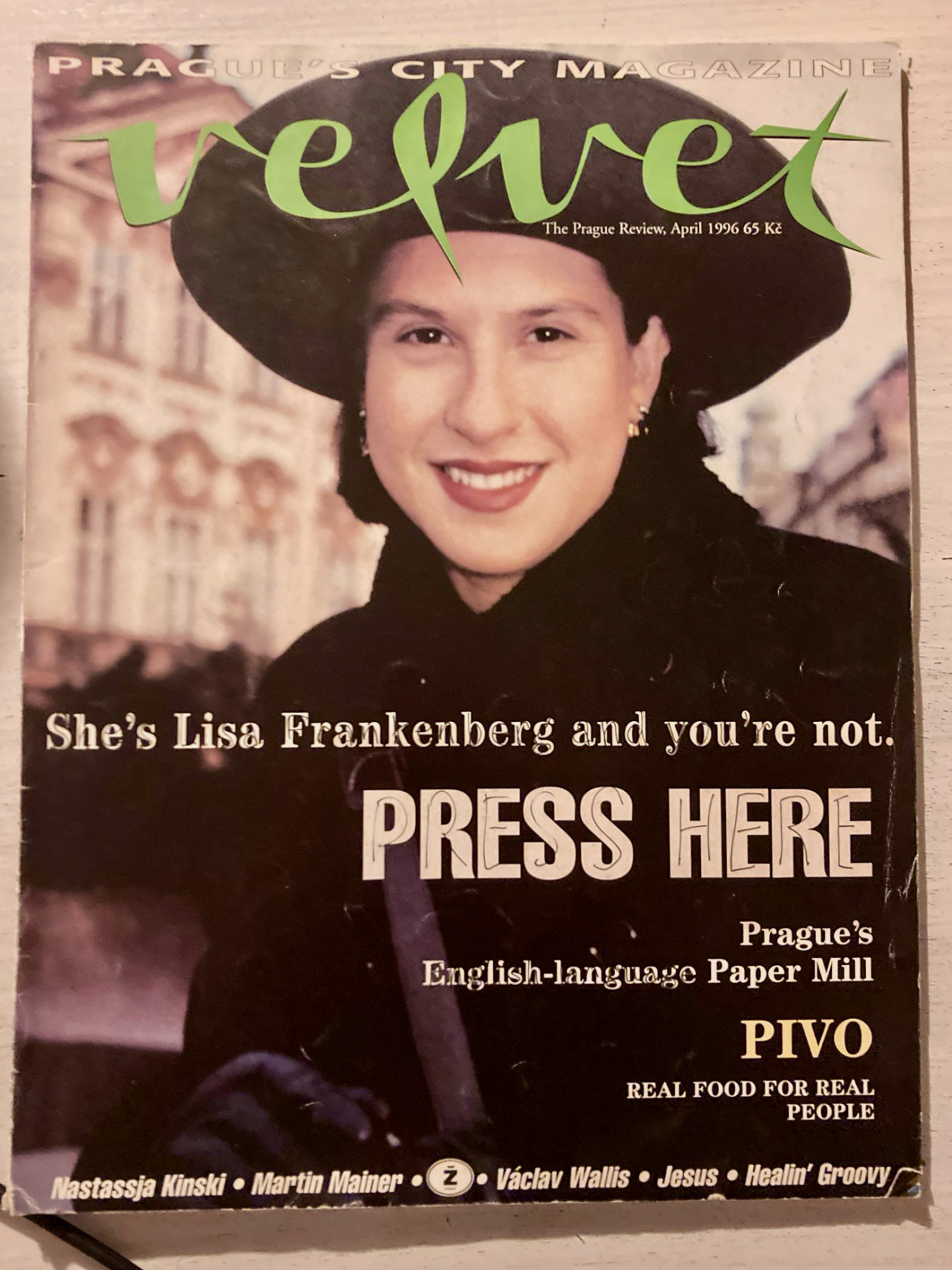
Velvet (1995-1996)
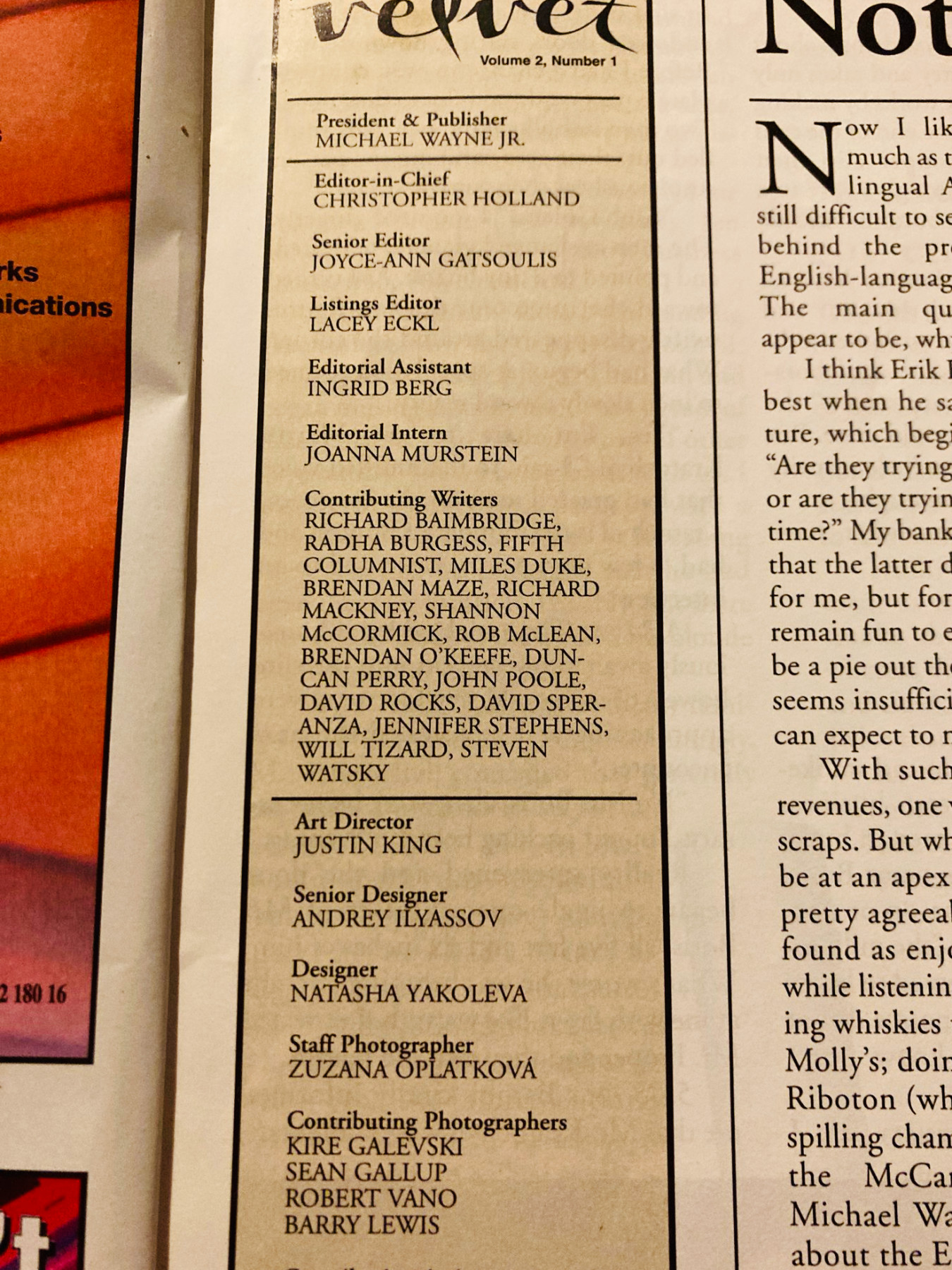
Velvet looms large in Prague lore—not only for its lively, original content, but also for the tragic fate of its executive editor, Christopher Holland. After the magazine folded in 1996, Holland returned to the United States, where he soon passed away of a possible drug overdose.
Velvet was arguably Prague’s first true English-language city magazine. Clicking through its six surviving issues—preserved on Think Magazine’s archive site—the interviews, restaurant and pub reviews, and lighter features on the quirks of Czech culture and other topics feel instantly familiar. The mastheads include many well-known expat writers of the time, among them Matt Welch, Radha Burgess, Lou Charbonneau, David Freeling, Laura Zam, and David Rocks. I’d buy a copy today if it were still around.
With all of these expat publications, there are rarely more than two degrees of separation. In this case, you can draw a direct line from Velvet to Think Magazine, which appeared shortly after the former ceased publication. Jeffree Benet of Think designed Velvet’s final issue—one he later said was killed on the very day it was scheduled to go to press.
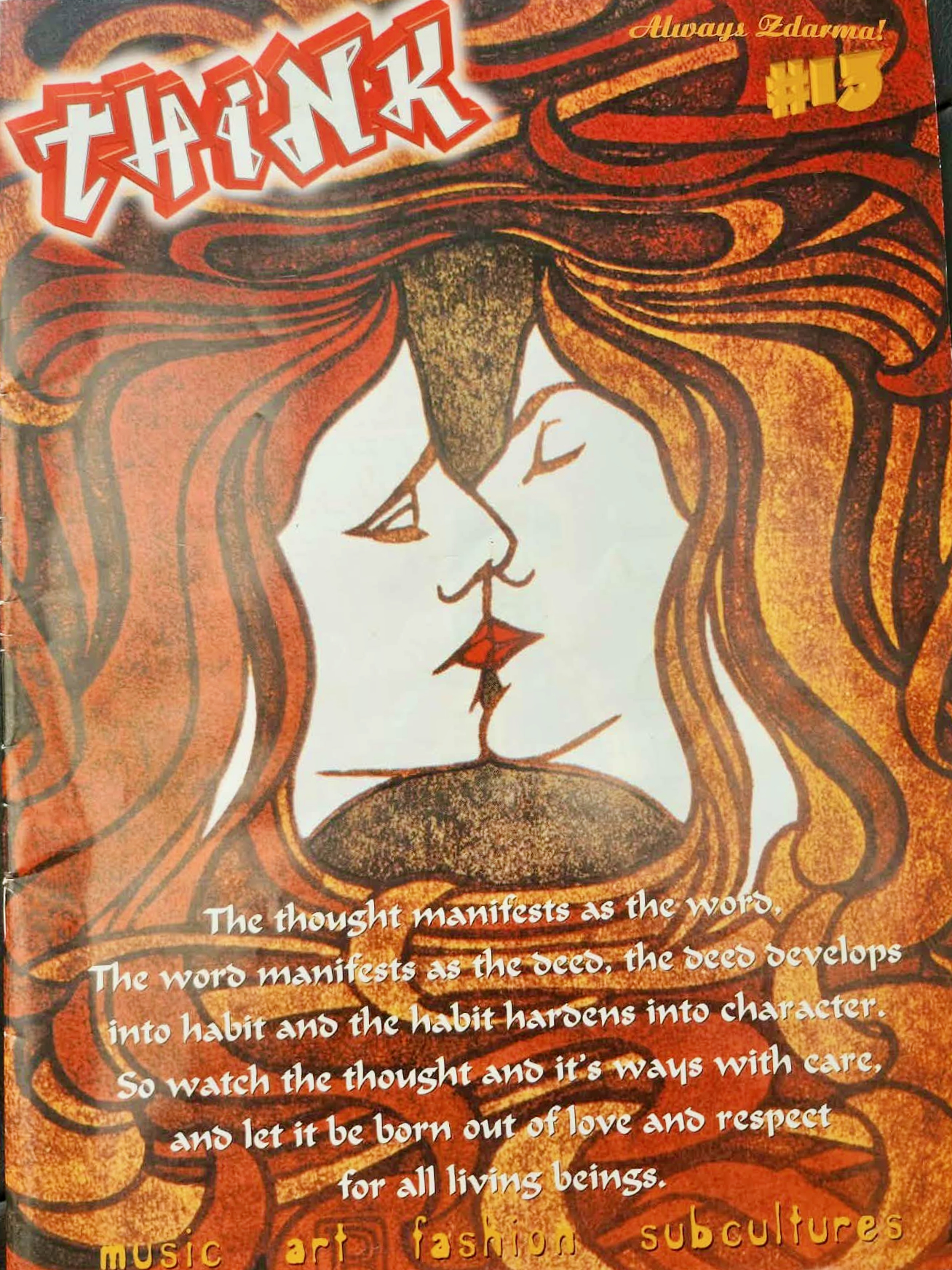
Think Magazine (1996–2008)
Think Magazine pioneered the rise of the “free publication” (Always Zdarma!) in Prague, where readers could simply find copies stacked up in their favorite bar or restaurant. In this model, circulation is king and advertisers, not buyers or subscribers, pay the bills. Co-founded by Jeffree Benet and Keith Kirchner, Think was steeped in art and fashion subcultures, mixing the usual listings lineup with a fanzine sense of humor and a provocateur’s edge. The initial goal was simply to “chronicle the madness” of expat life—and at this, it more than succeeded. The pages of club photos at the back of each issue alone were must-reads.
In a recent text exchange, Benet wrote that the idea for Think first took shape over conversations at the Globe Bookstore & Coffeehouse, where he and Kirchner toyed with starting either a magazine or a bar. The magazine was initially run out of a Žižkov flat; Benet designed the early issues on computers at McCann Erickson, where he worked, while Kirchner handled ad sales. Think faced possible legal hurdles early on—Czech regulations initially restricted free publications—but thankfully that roadblock was lifted ahead of the launch. Circulation climbed to around 25,000, surpassing some established expat newspapers. The magazine got another boost after the founders secured investment and launched a Czech-language edition, opening the door to major local advertisers. By the late 1990s, Think even branched into television, producing a weekly show on TV3 (some surviving episodes are still floating around on YouTube—and are hilarious).
After 55 issues, the original founders stepped away. The magazine continued under new leadership as Think Again until the 2008 financial crisis—one of the longer-lasting legacies of Prague’s ’90s publishing boom. The website is still occasionally updated with new stories.
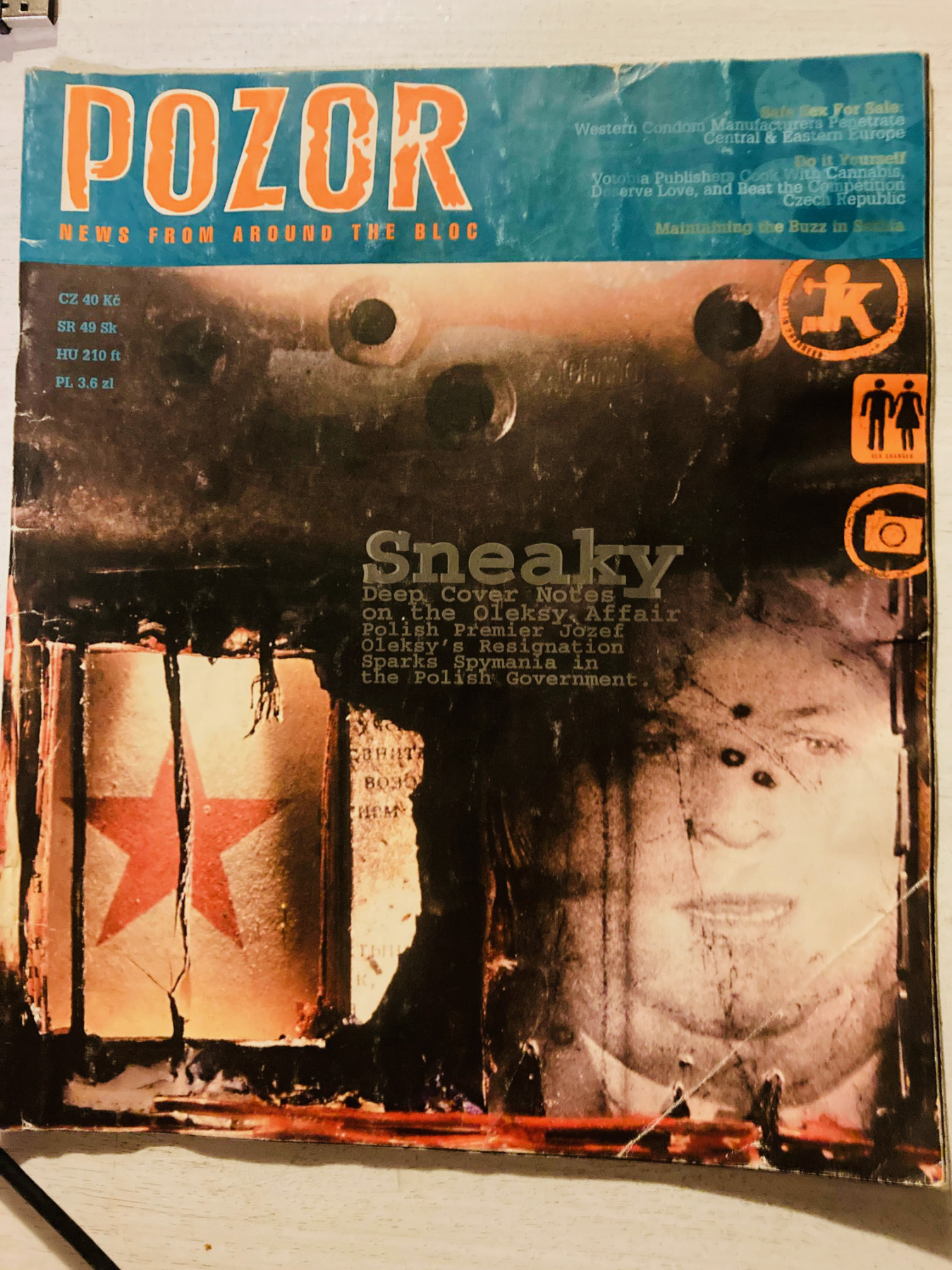
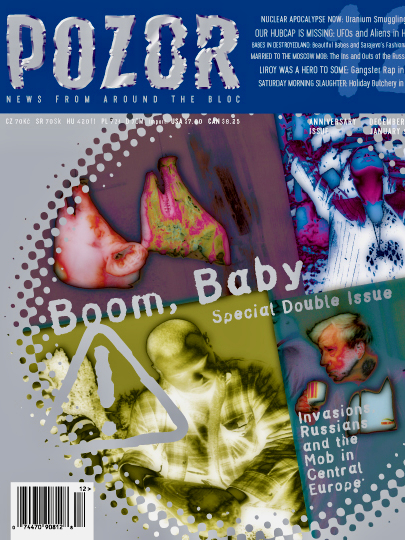
Pozor (1996)
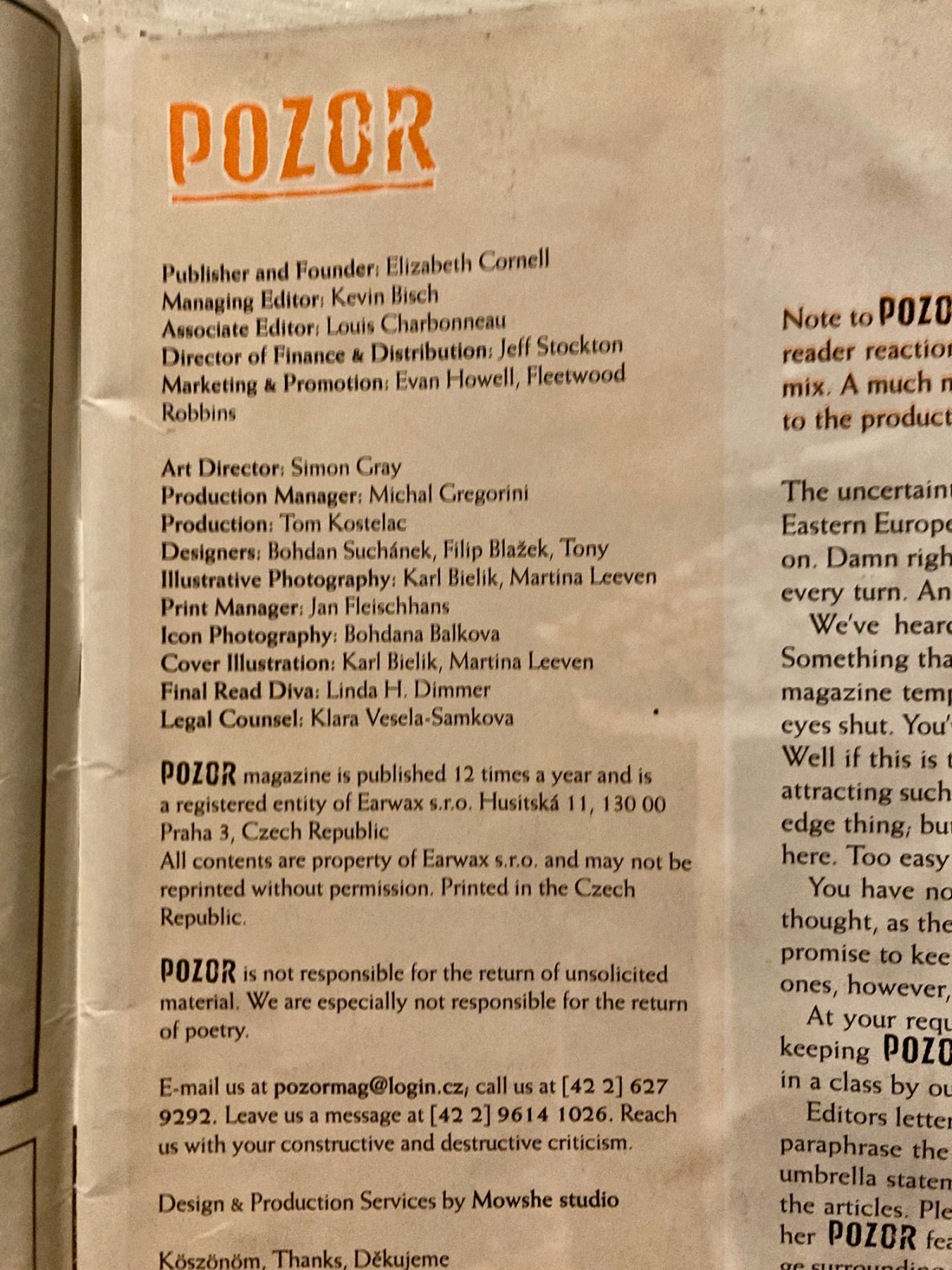
Pozor was one of the most ambitious English-language magazines to emerge from Prague’s expat publishing boom, debuting on newsstands in January 1996. Founded by Elizabeth Cornell, and with editors like Lou Charbonneau on the masthead, the monthly set out to be something larger than a city magazine—a publication with a distinctly “New Europe” sensibility, reaching beyond Prague to the broader cultural expanse stretching eastward toward Moscow and many places in between.
What set Pozor apart was its design. Early issues, led by Simon Gray and later by Tony Oleksewitz and art director Filip Blažek, treated typography and layout as central to the editorial vision. The magazine experimented boldly with typefaces, print techniques, and visual imperfections, using design not as decoration but as part of the storytelling itself. Editorially, Pozor fused cultural journalism and visual experimentation with a broader regional outlook.
As an owner of the Globe Bookstore & Coffeehouse at the time, I can confirm how exciting Pozor felt every time we would get a stack of new issues to sell. The design—while occasionally impinging on legibility—was undeniably fresh. And there really was something in the air back then: the emergence of a distinct “Central European” vibe. The clubs, fashions, attitudes, and issues in places like Berlin, Budapest, and Bucharest felt shared and clearly distinct from what was happening to the west of the old Iron Curtain.
Looking back now, though, Pozor’s early sales projections appeared to be wildly unrealistic. Managing Editor Kevin Bisch told Think Magazine not long after launch that some 13,000 copies would initially be distributed in the Czech Republic, Slovakia, Hungary, and Poland; within six months, he projected that circulation would rise to 50,000, including sales in far-flung places like Belgrade, Vienna, Manchester, and the United States. By the end of 1996, however, those ambitions were already, sadly dead in the water.
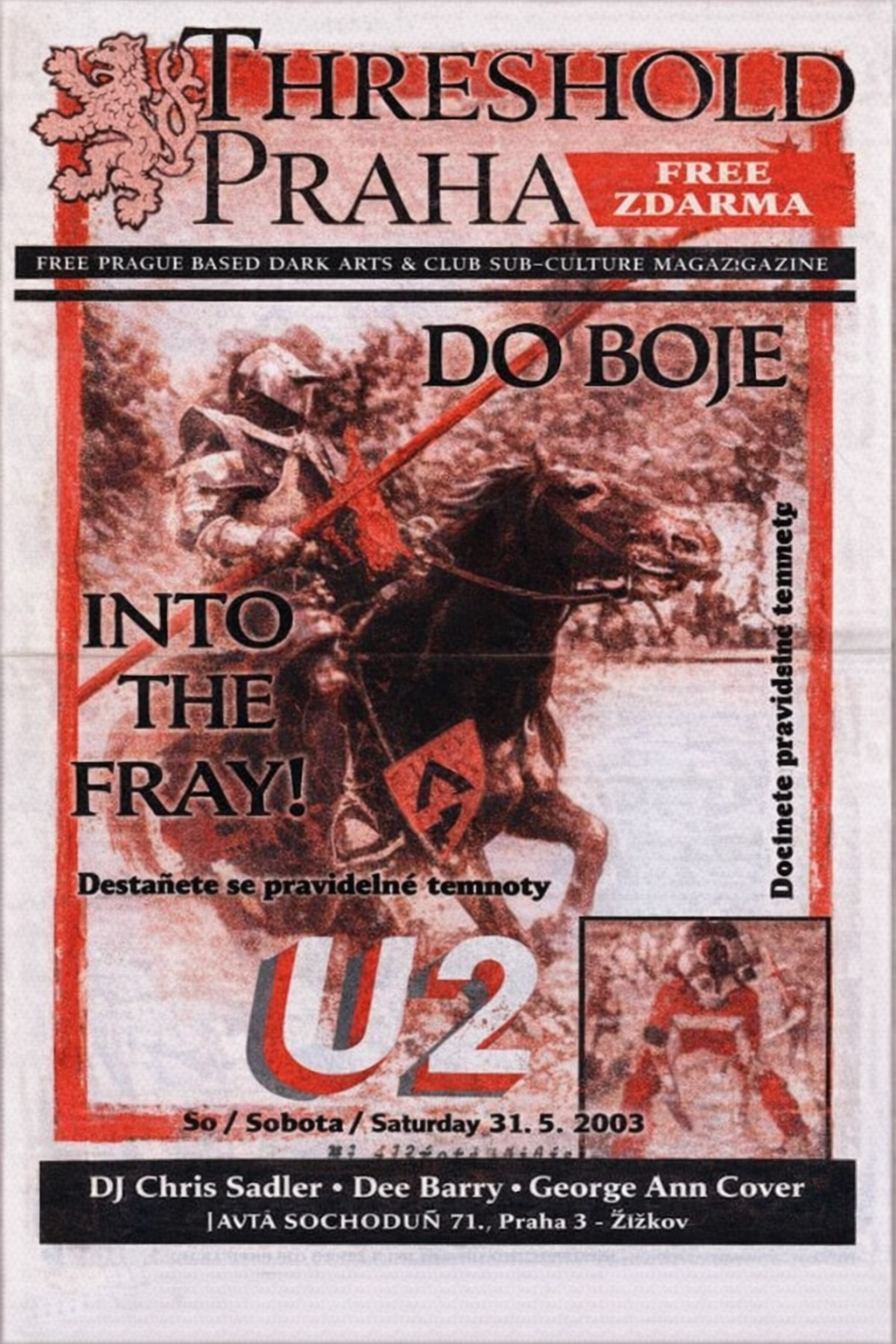
Threshold Praha (1997)
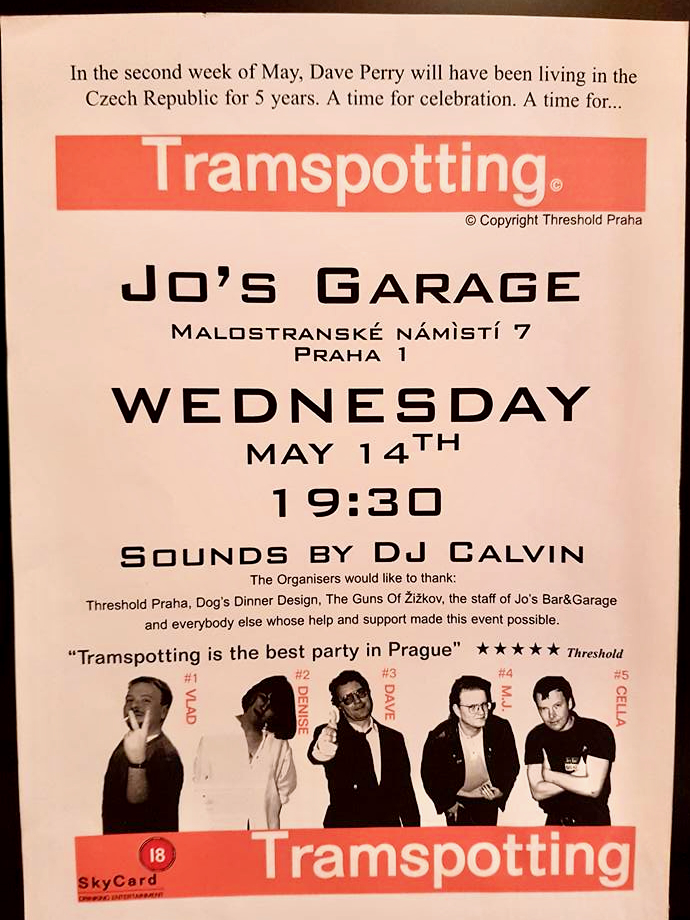
I probably should have included Threshold Praha, a short-lived newspaper from the summer of 1997, in Part 1, with my roundup of the other expat-run newspapers. Indeed, I have faint memories of Lisa Leshne (Frankenberg) at The Prague Post telling me on Threshold’s launch that she was a little concerned about the new competition. Threshold’s secret sauce was that founder Robert Forrester had obtained access to the Washington Post Writers’ Group and content from Universal Press Syndicate, including rights to publish the then-popular humor columnist Dave Barry.
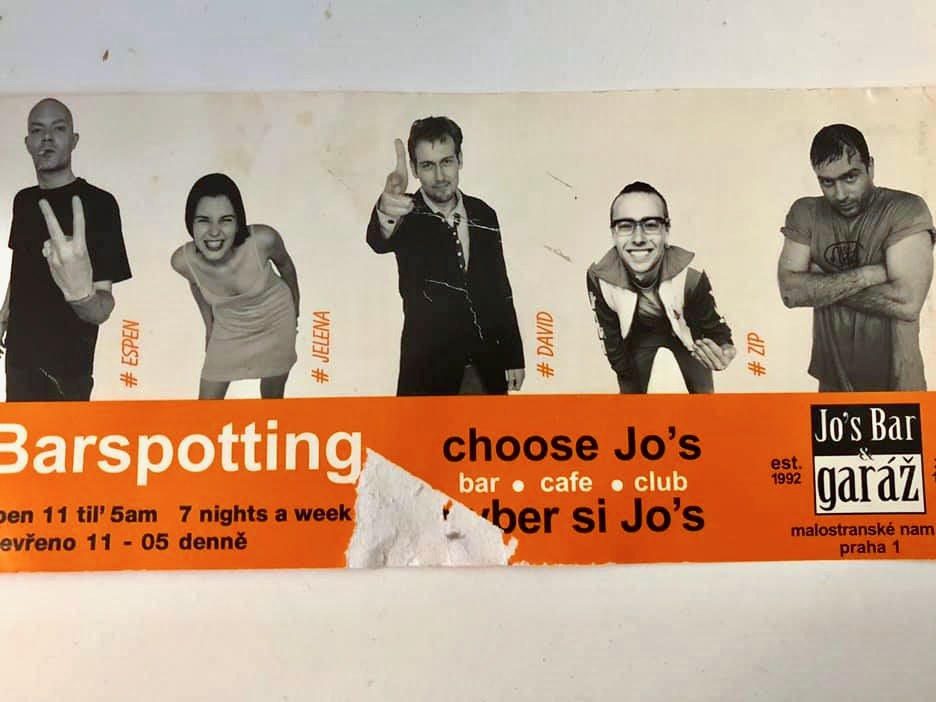
In retrospect, there was no need to panic. Threshold burned through its start-up capital in just a few issues. Its most enduring legacy might be a graphic by the paper’s designer that riffed on a popular movie at the time, “Trainspotting.” This apparently inspired Glen Emery and the folks over at Jo’s Bar to create their own iconic “Barspotting” poster ad that appeared on walls all around town in 1997 and ’98 (see photos below).
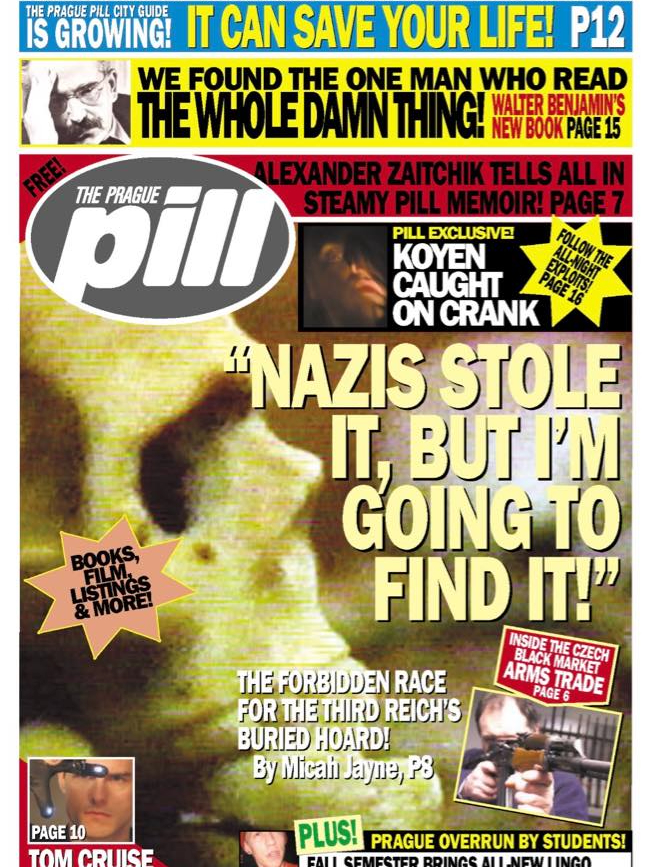
The Prague Pill (2001-2003)
The Prague Pill was a free, very funny English-language fortnightly, published by John Caulkins, that styled itself as “Prague’s Alternative Medicine.” Bigmag.cz describes it as “a literate, provocative, and satirical take on expat life in Prague. Each issue featured an investigative piece by a local or expat reporter, built around a core of listings, reviews, and cultural coverage.” I was an avid reader at the time.
Names associated with the Pill include Micah Jayne, Alex Zaitchik, Josh Cohen, Travis Jeppeson and Jeff Koyen. Caulkins told me in a text that the paper was modeled after Moscow’s The Exile as well as The Stranger in Seattle. He praised Jayne as the “workhorse who willed the paper to life” and Zaitchik as the Pill’s voice. Zaitchik and Koyen later left the Pill to run the New York Press, along with well-known American author and journalist Matt Taibbi.
Prague Insider (2002)
The people behind the Prague Business Journal (PBJ) juggernaut dabbled in a short-lived, freebie “What’s On” mag, Prague Insider, to compete directly with Think Magazine and The Prague Pill. This new kid on the block, headed up by American expat Scott MacMillan, was apparently modeled on the PBJ stable’s highly successful Warsaw Insider. The timing couldn’t have been worse. Prague Insider failed to generate much advertising buzz and disappeared after just two or three issues, eventually succumbing to PBJ’s own mounting financial woes.
LITERARY AND CULTURAL JOURNALS
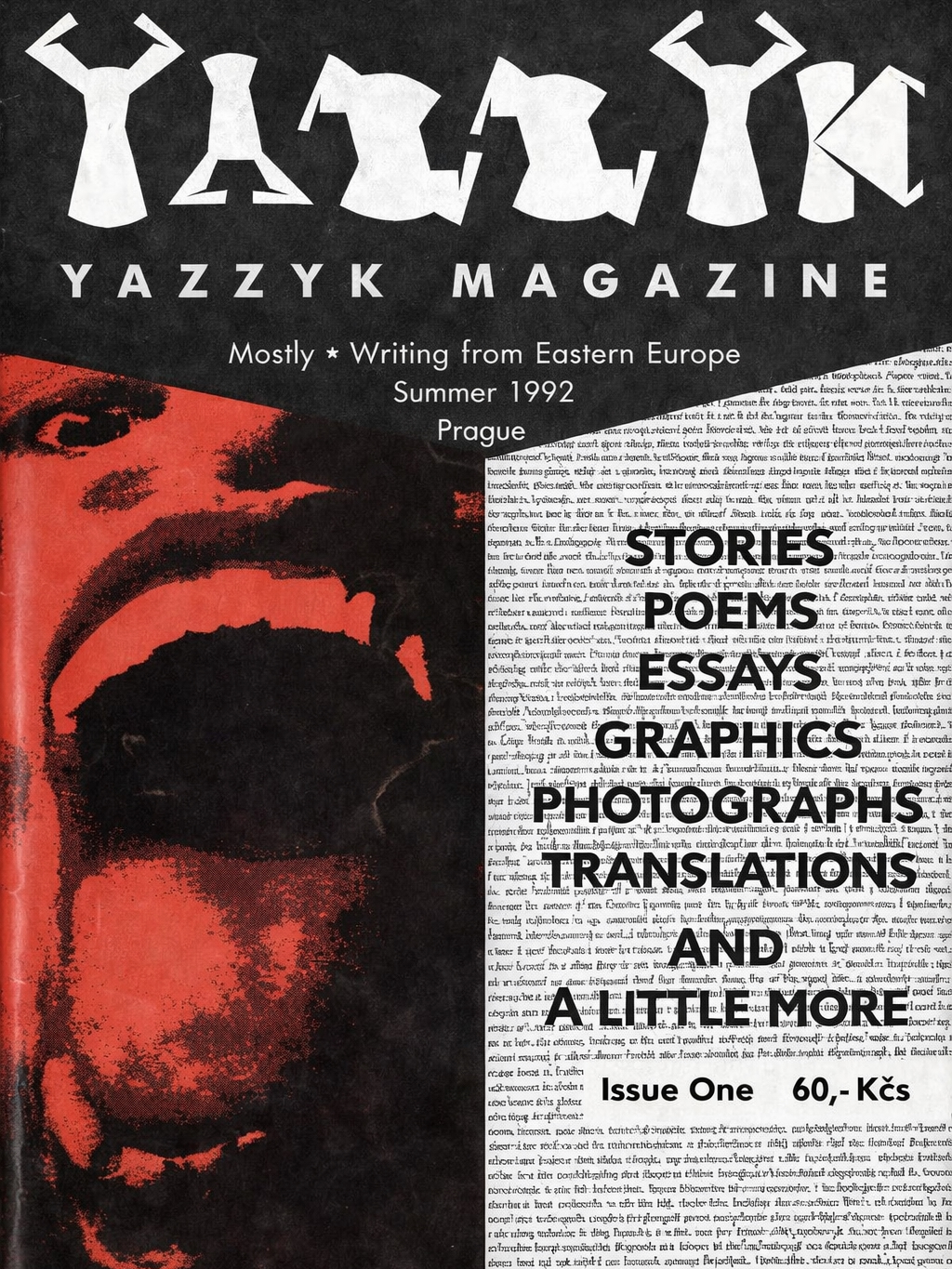
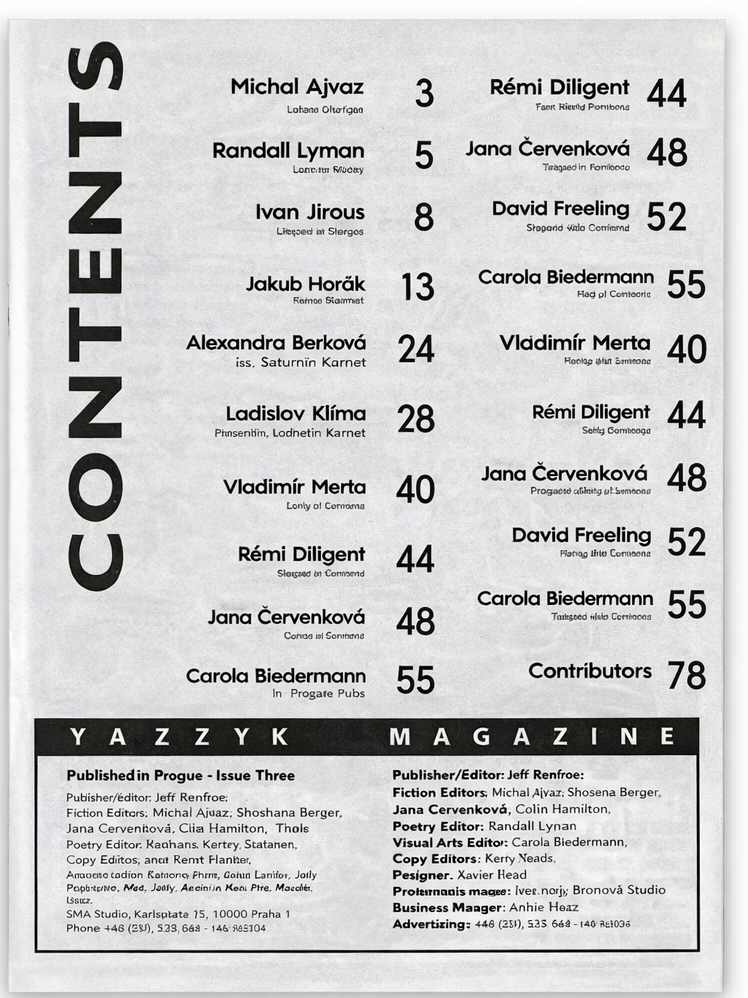
Yazzyk (1992–1995)
Yazzyk helped pave the way for English-language publications that eschewed the more traditional, often-snide expat takes and restaurant reviews in favor of straight-up art and literature. Its modest run—just a handful of editions over three years—also hinted at the economic limitations of such an approach. Yazzyk was founded by Canadian Douglas Hajek and originally led by editor-in-chief Tony Ozuna (I later worked with Tony when he was a dean at Anglo-American University). Its bread and butter was Czech writing in English translation, though it also published work by non-Czechs and expats. The magazine featured striking graphic design by Czech artist Veronika Bromová.
As a brief aside that may interest readers: Hajek’s name has recently resurfaced in Czech news reports involving potentially questionable investments in private universities. In the early 2000s, he founded Prague College (later renamed Prague City University). Last year, the university abruptly ceased operations and entered insolvency proceedings. Creditors have now filed claims totaling tens of millions of Czech crowns. Anglo-American University later stepped in to assist some of the affected students
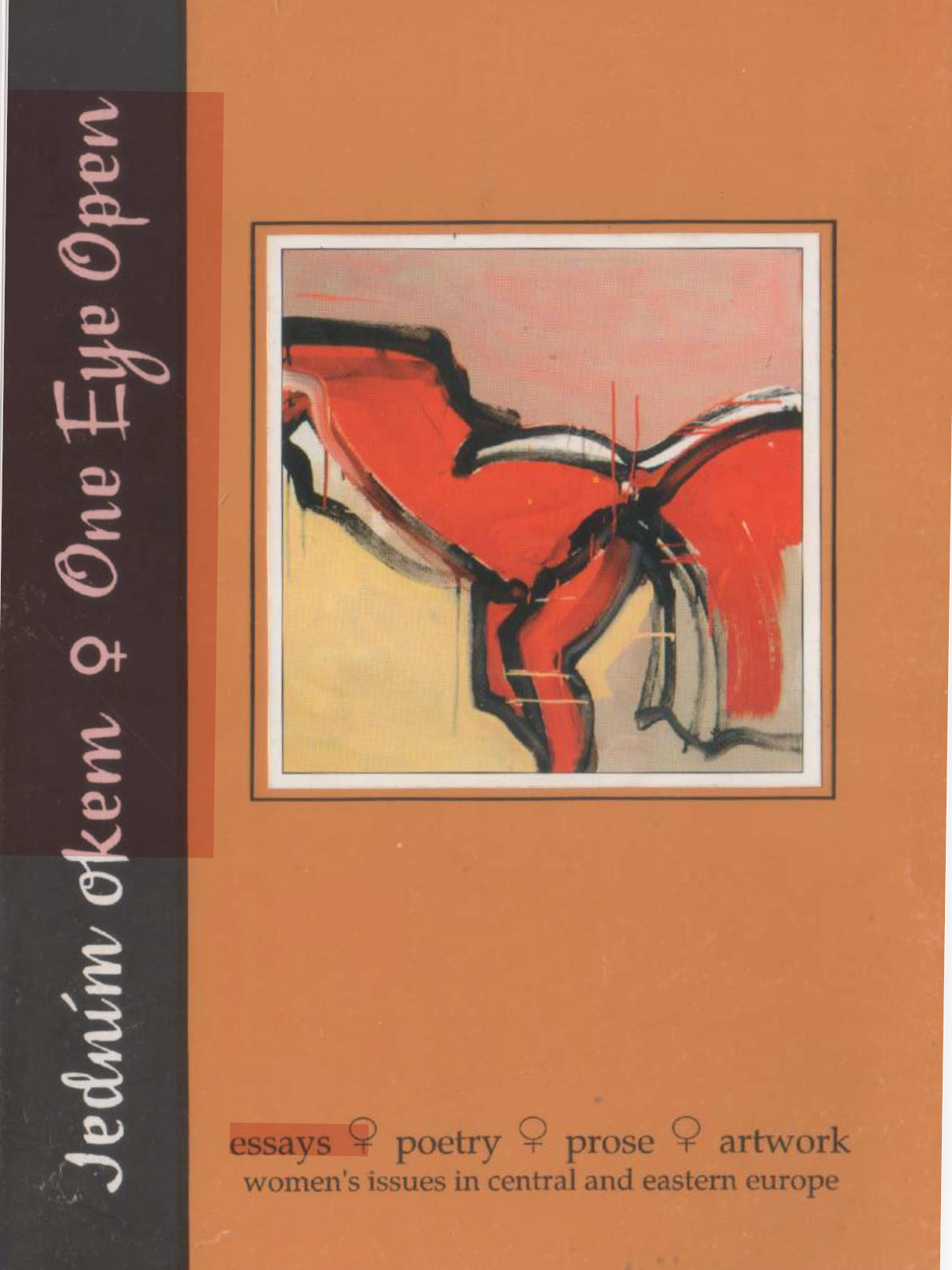
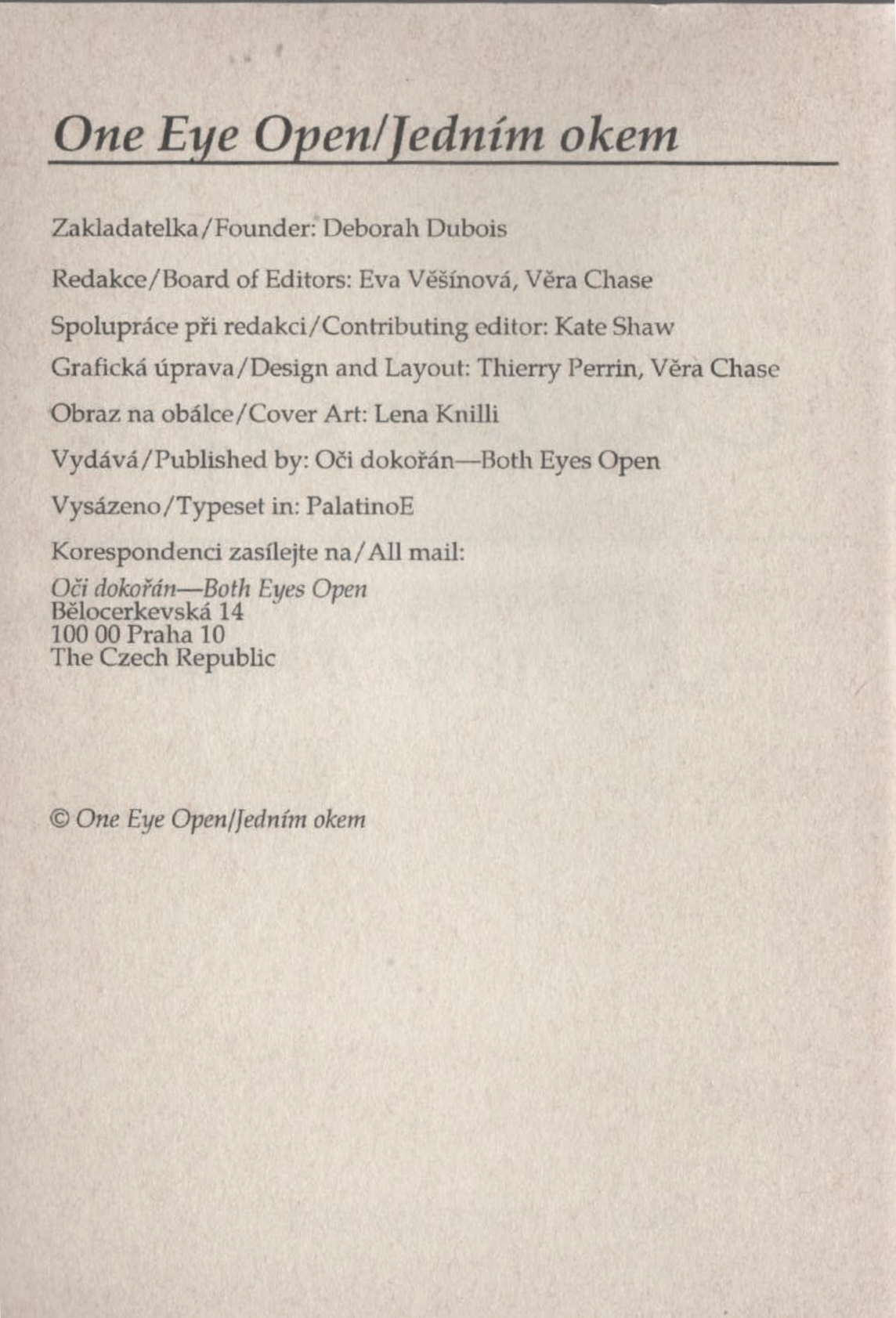
One Eye Open (Jedním okem) (1993-2006)
One Eye Open was a bilingual English-Czech journal, founded by American expat Deborah Dubois, that broke ground as a forum for feminist and gender-aware writing throughout Central Europe. The publication mixed essays, interviews, criticism, and creative work, while attempting to connect literature and culture to everyday life under rapid social change. Beset by funding challenges, the journal appeared irregularly and sometimes as themed “special issues” (e.g., on gender and historical memory). It featured contributors from both Czech and international circles.
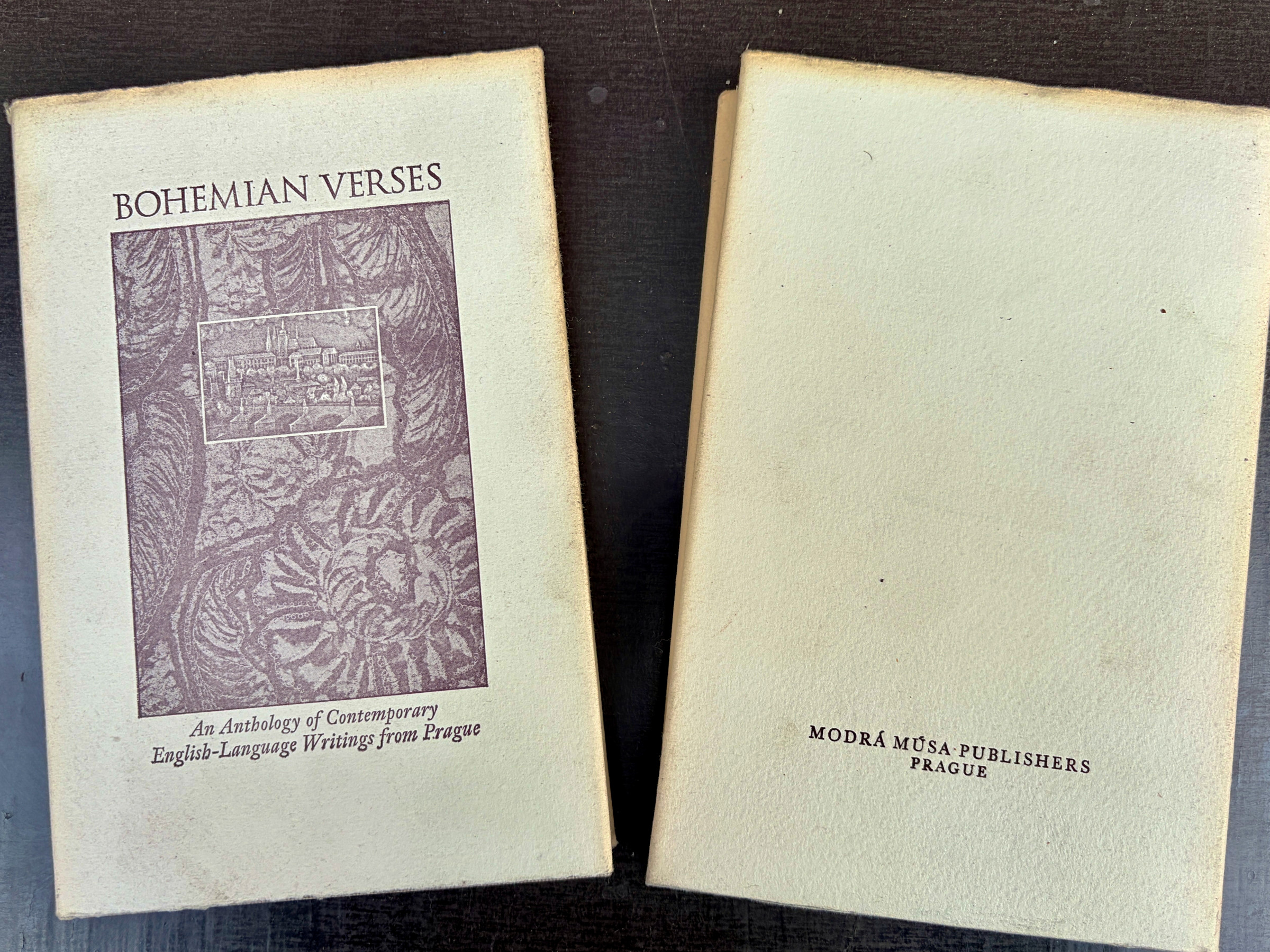
Bohemian Verses (1993)
Bohemian Verses wasn’t a literary magazine per se, but rather a one-off, hardcover anthology that mixed elements of short prose and poetry. The pitch to international readers was high-quality, English-language writing from post–Velvet Revolution Prague. The 215-page volume was edited by my former partner at The Globe Bookstore & Coffeehouse, Scott Rogers, and printed on expensive, handmade paper from the Velké Losiny paper mill.
Leafing through the table of contents today, I see contributions from many old friends and then-rising writers on the scene—Jeffrey Young, Andrew Waterman, James Ragan, and David Freeling, among others. Alan Levy, editor-in-chief of The Prague Post, wrote the introduction: an essay on his return to Czechoslovakia from Austria in 1990. I recall a minor kerfuffle over that intro at the time. Rogers wanted to edit it; Levy, as was his nature, flatly refused. As I remember, Levy even threatened to pull the piece if he didn’t get his way. He was stubborn like that.
At the time, Bohemian Verses felt like an optimistic high-water mark for the Prague scene—the belief that readers around the world would look to this newly liberated city for literary insight. The print run of 3,000 copies reflected those hopes, though I’m not sure how many were ultimately sold. The other day, while poking around the dilapidated bookstore of the Ouky Douky Coffeehouse—the Globe’s original home—I spotted an entire row of unsold copies gathering dust on a high shelf. They hadn’t been touched in years. The owner sold me two copies for 40 crowns ($2) each.
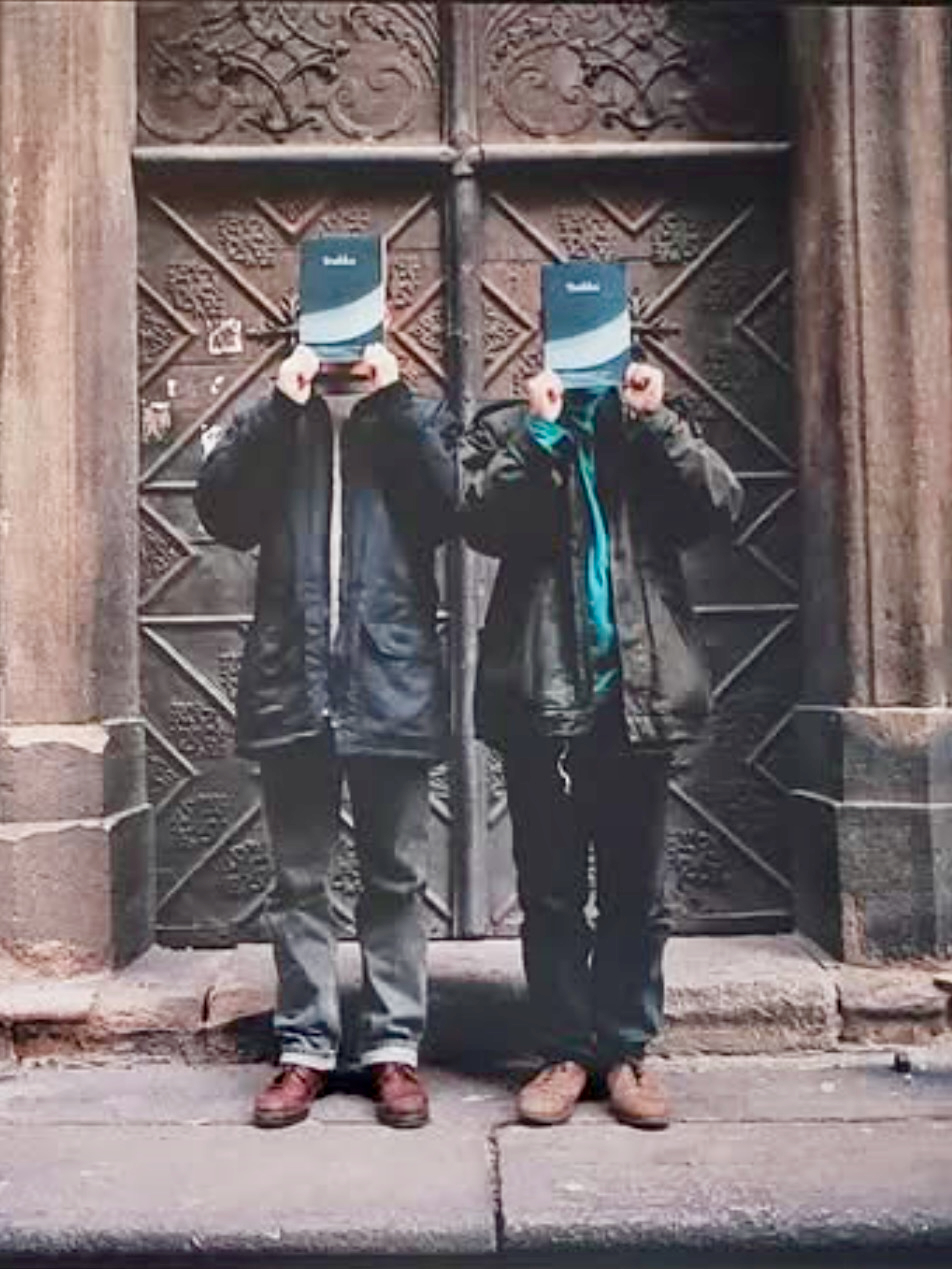
Trafika (1993–1999)
If Bohemian Verses expressed the collective optimism about Prague’s potential as a hub for world literature, Trafika—a high-quality quarterly featuring fiction, translation, and interviews—felt like proof of concept. As with Bohemian Verses, Scott Rogers played a key role, this time alongside Michael Lee, Alfredo Sanchez, and Jeffrey Young.
Trafika found immediate success—not only in Prague, but also among taste-makers in London, New York, and across the United States. Its board of advisors reads like a who’s who of cultural heavyweights: Lewis Lapham of Harper’s Magazine, Jonathan Fanton of the MacArthur Foundation, and Wendy Luers of the Foundation for a Civil Society, along with the editors and publishers from Grove/Atlantic, Alfred A. Knopf, Bantam, Doubleday & Dell, William Morrow & Co., Farrar, Straus & Giroux, and The New York Times. In 1994, when I temporarily relocated from Prague back to my hometown of Youngstown, Ohio, I would routinely spot copies of Trafika sitting on the shelves at my local Barnes & Noble.
For one brief, shining moment, that old chestnut—Prague as the “Left Bank of the ’90s”—suddenly, and strangely, felt real. Then real reality caught up. Around 1995, Trafika shifted its headquarters from Prague to New York and some of the early magic started to wear away. Trafika was so big at the time that The New York Times even weighed in on that move and quoted George Plimpton: “Trafika, a hip literary journal edited by Americans writing from Prague, is considering relocating [to New York]. ‘They think this is where the action is,’ said George Plimpton, editor of The Paris Review, with whom they’ve been consulting.”
For reasons that are still a bit unclear, interest, funding, or institutional support began to dry up not long after this period. Trafika published its seventh and final issue in 1999. The name lives on today as Trafika Europe, an online literary platform showcasing new writing from Europe in English translation.
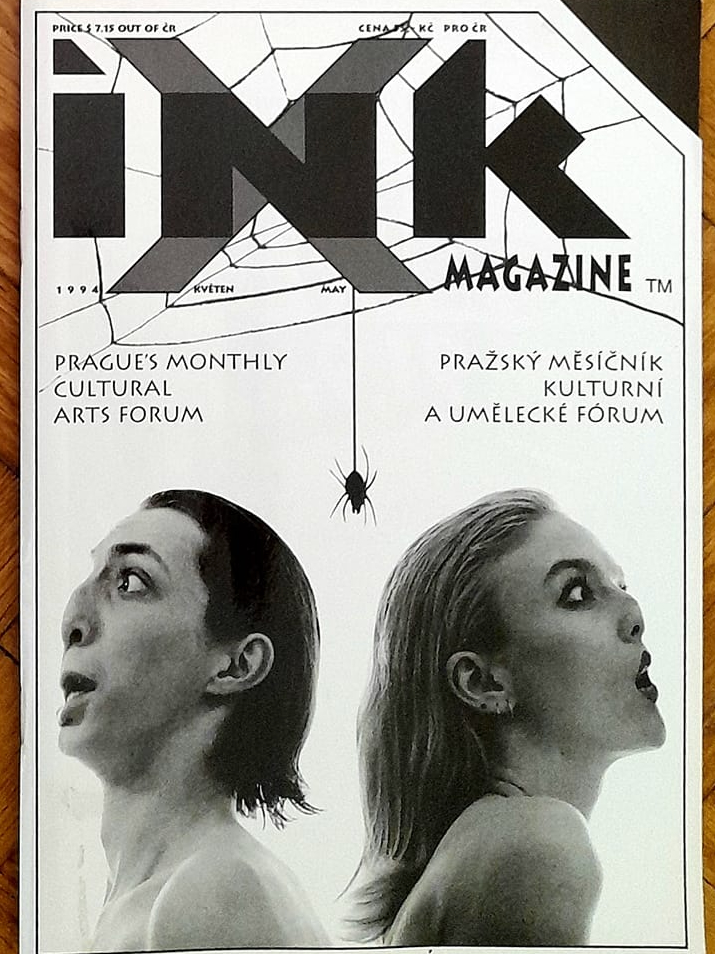
X-Ink (1994–1995)
I have no recollection whatsoever of X-Ink, so I’m indebted to the folks at Think Magazine, who identified it as a short-lived challenger to Yazzyk. According to Think, X-Ink was published by American expat Matthew Salt and had deep connections to the Czech art scene. The publication started strong in late-‘94 but folded after a few issues.
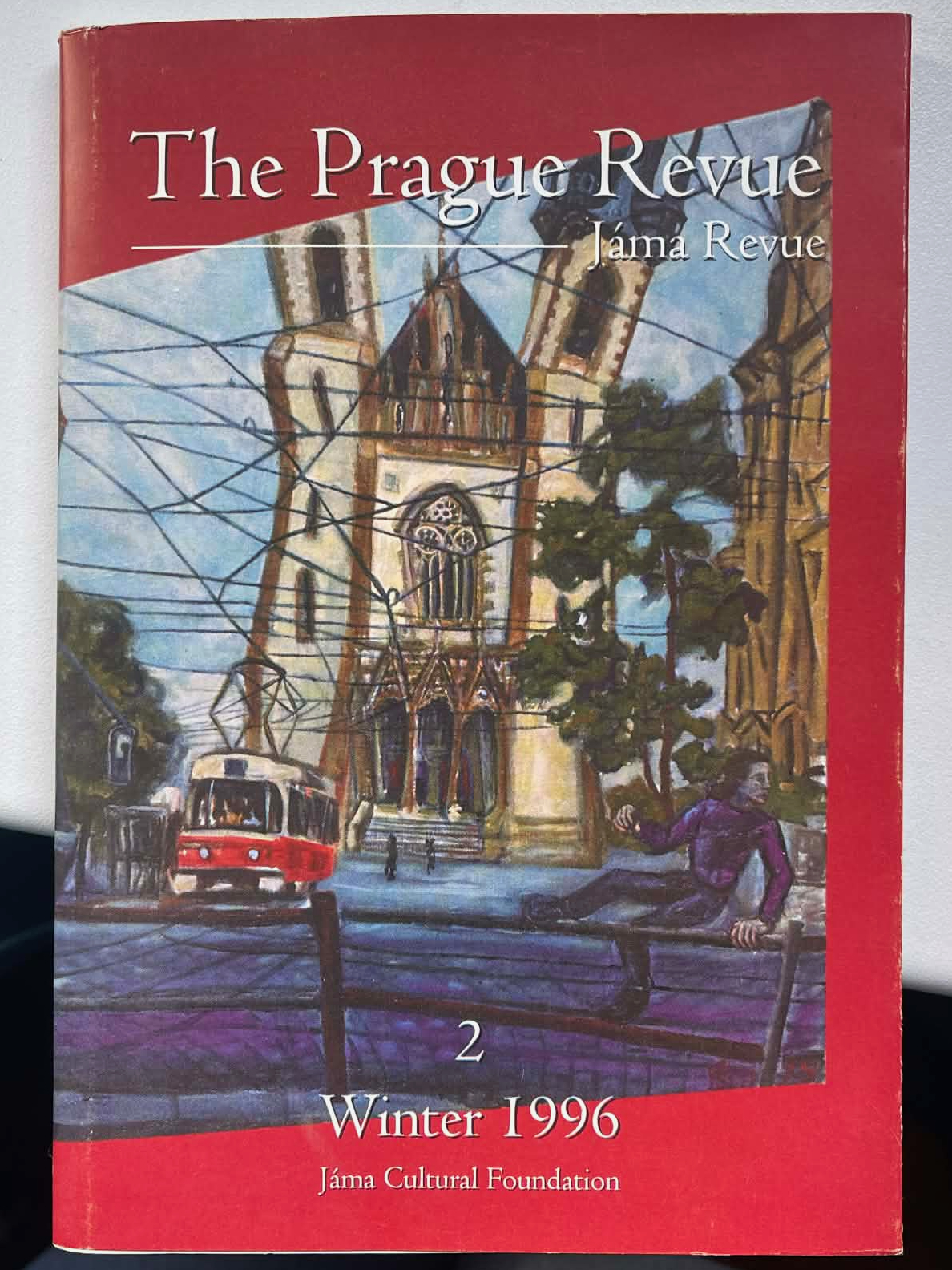
The Prague Revue (formerly Jáma Revue) (1995-2014)
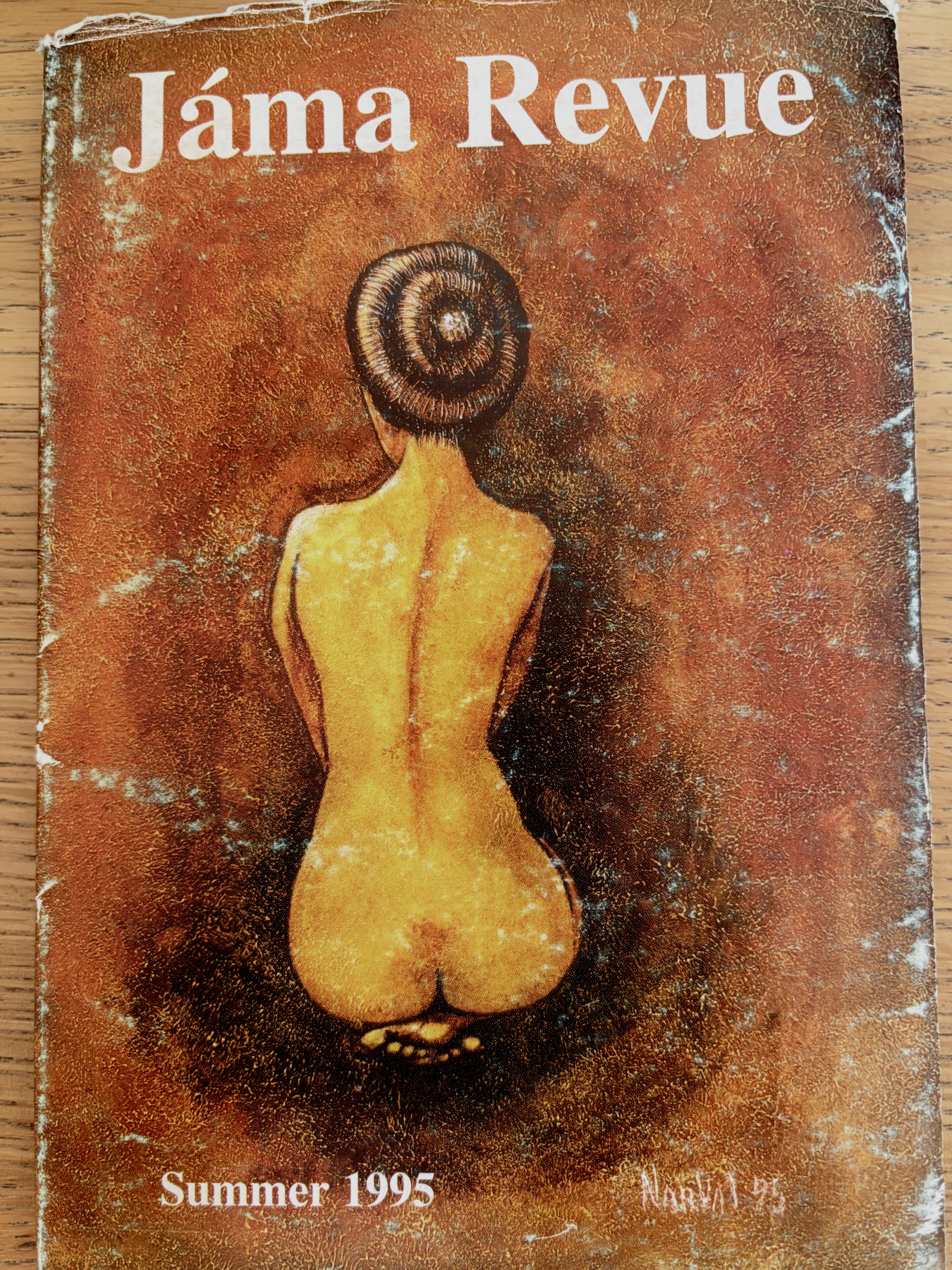
Literary reviews were clearly in the air in 1995. The initially warm reception accorded to Trafika, which helped fuel that appealing myth of Prague as a haven for novelists and poets, encouraged the launch of two high-profile publications that year—both of which would outlast Trafika and linger longer than many of their competitors. The Prague Revue began life in 1995 as The Jáma Revue. One of its founders, Max Munson, said the name derived from Munson's popular bar in Prague’s New Town, which held regular Sunday readings of poetry and short fiction. Eventually, he said, they decided to publish the best of what had been read aloud.
Around 1996, the readings moved to Klub X, another popular venue, and the journal was renamed The Prague Revue to give it broader international appeal. Munson said they gathered submissions wherever they could—old friends and teachers, cold calls, and local Prague connections. The respected Prague-based writer Louis Armand later joined as one of the review’s poetry editors. The Prague Revue’s formula—part local forum, part international ambition—has proven unusually durable. In 2008, the review published its eighth issue under Managing Editor Stephan Delbos, and in 2014 released a special “Samizdat Series” edition under Editor-in-Chief Shaan Joshi. I wouldn’t at all be surprised to see another issue someday.
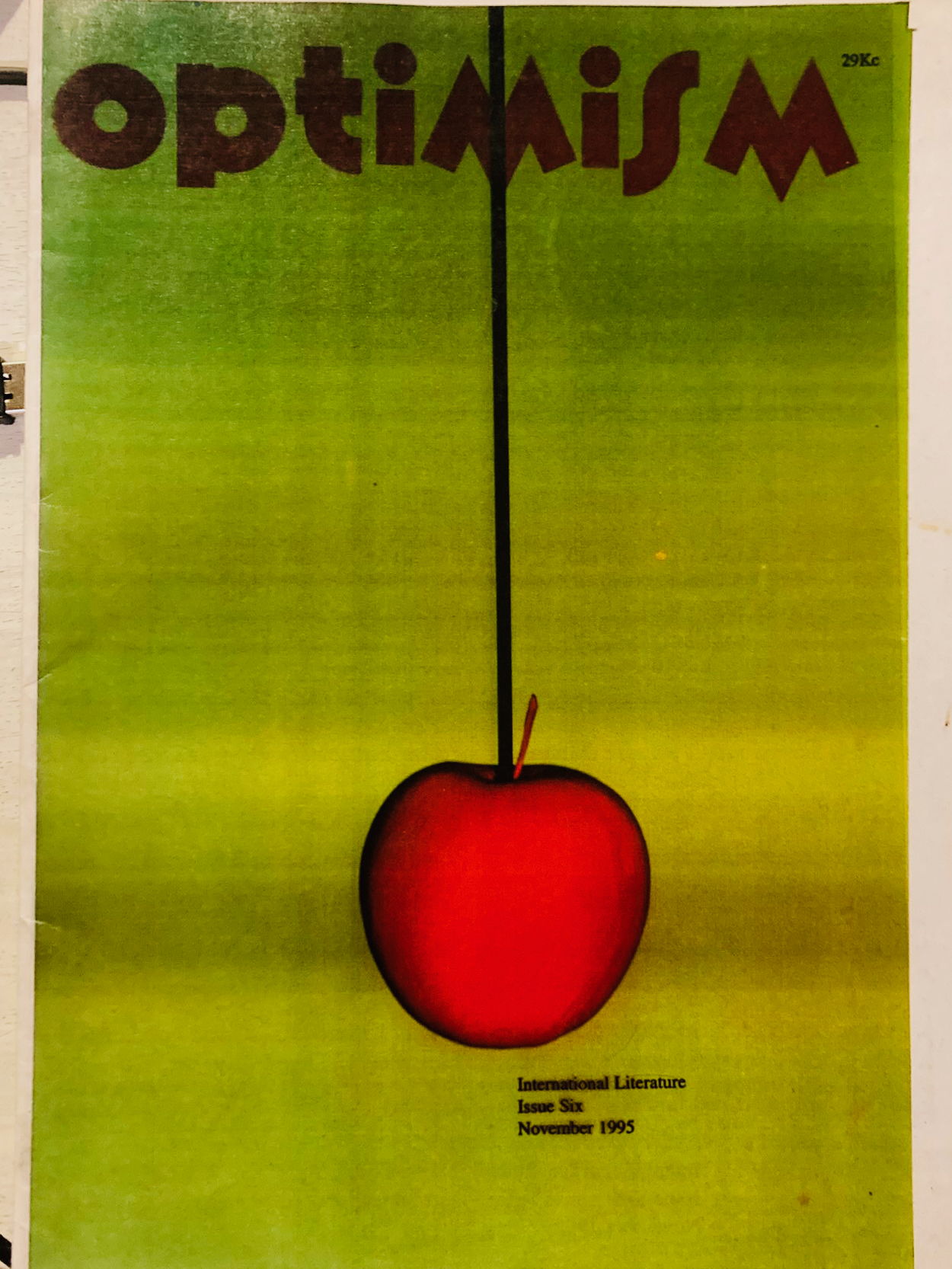
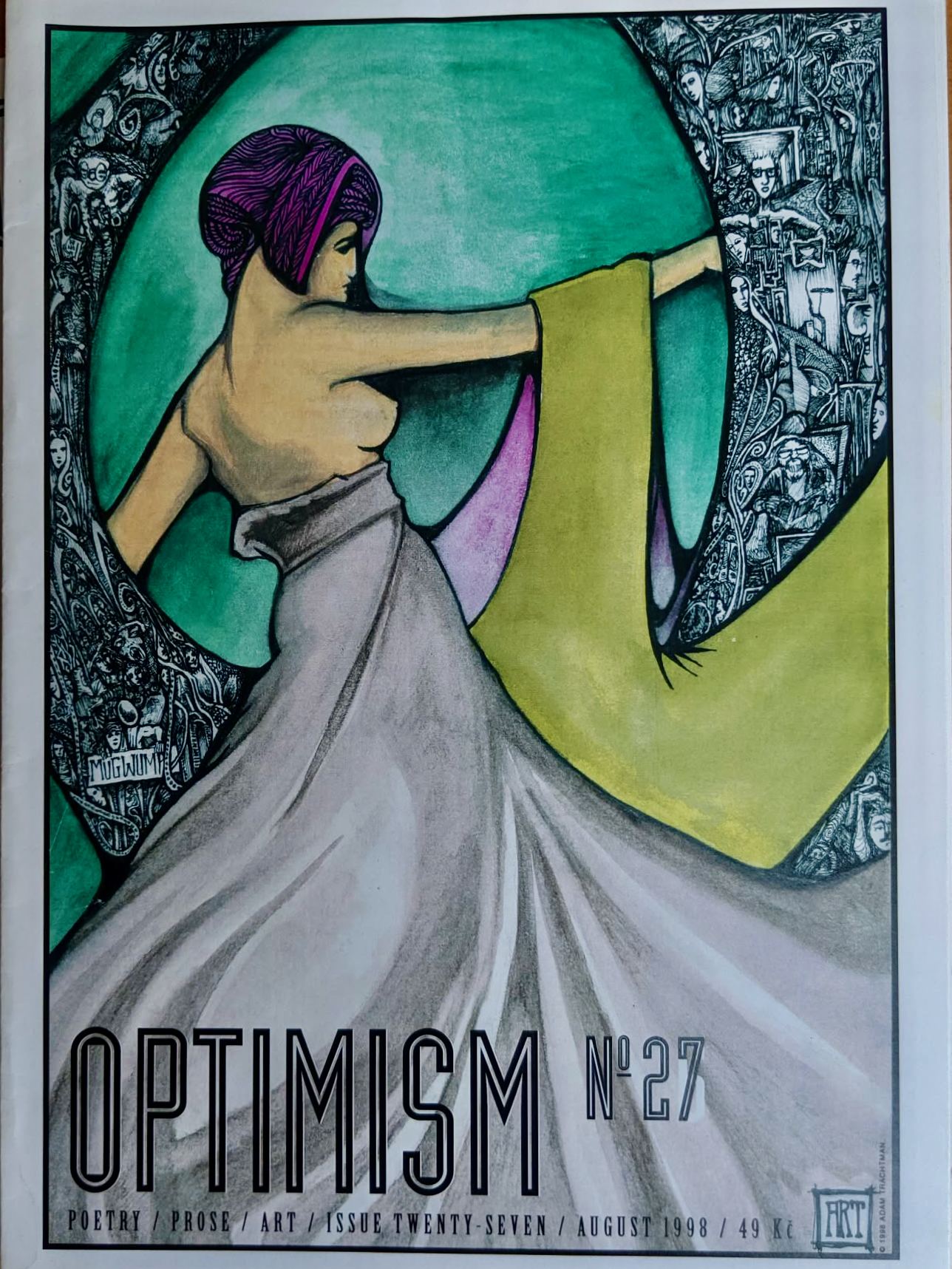
Optimism Monthly (1995–2000)
Similar to The Prague Revue, Optimism Monthly billed itself as a magazine of poetry, prose, and art. The high-profile nonprofit was founded by Tim Otis and initially featured a full-sized color cover and four pages of material in English and Czech (later expanded to 16–20 pages). Like Munson at The Prague Revue, Otis said Optimism was inspired by open-mic poetry and fiction readings—in this case, the weekly “Beefstew” sessions held on Sunday nights downstairs at Radost FX.
Longtime editor Thomas Alan Ward, in a 1996 interview, said Optimism’s early mission was to counter what he described as “tremendous cynicism” that had set in after the initial “Left Bank of the ’90s” hype began to fade. Ward argued that Optimism differed from other literary publications, such as Trafika, by focusing on writers who lived and worked in Prague, rather than taking a more international approach.
That formula proved successful. Optimism ultimately ran for some 39 issues before ceasing print publication in 2000. Ward edited the first 30 issues before being succeeded by Laura Conway.
Prague Literary Review (2003-2005)
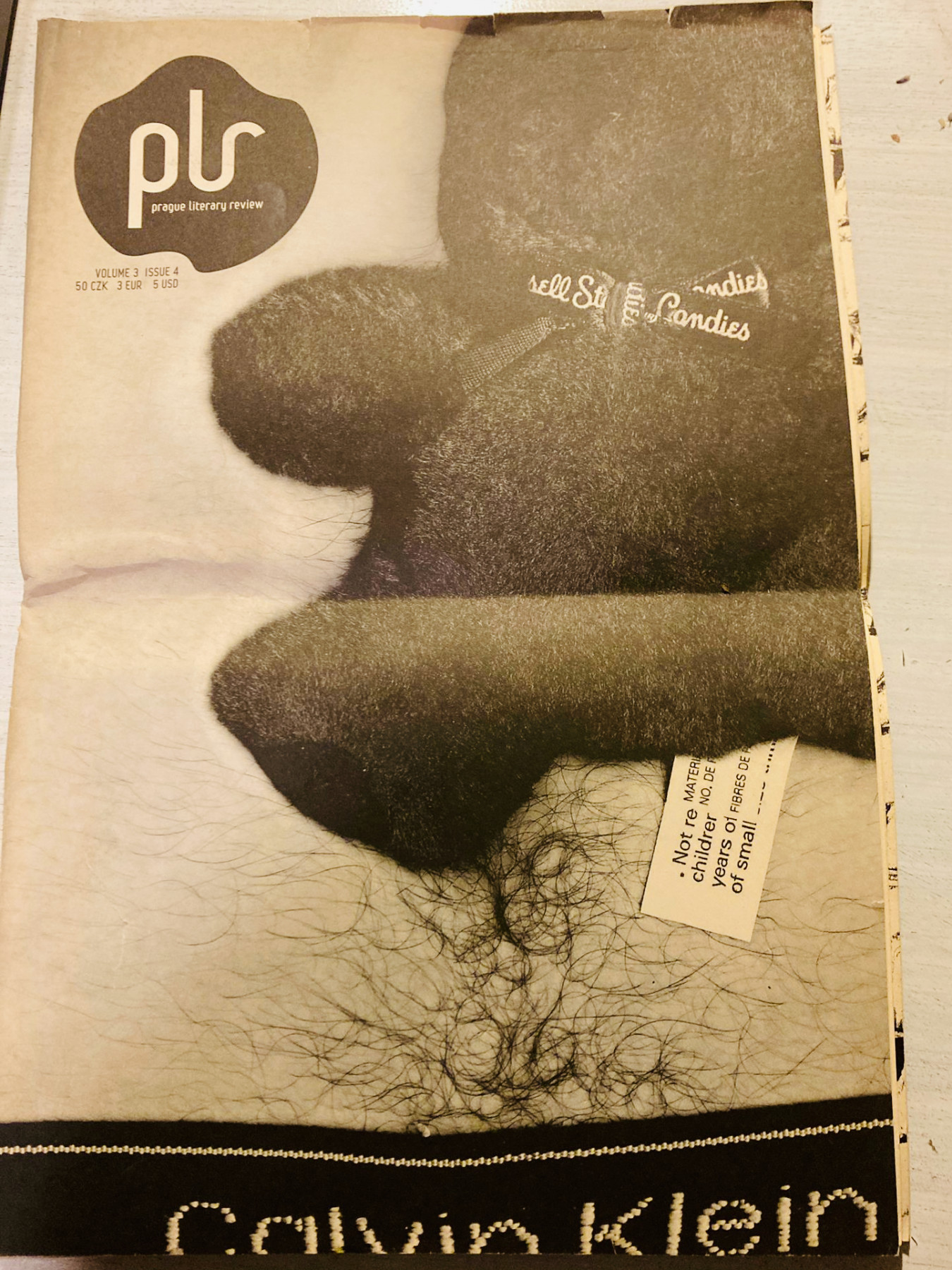
Prague Literary Review appeared later than the other publications on this list, and though I don’t have much personal recollection of PLR, I’m including it for the sake of completeness. Bigmag.cz describes PLR as follows: "a monthly ... where the word ‘literary’ in the title was not taken too literally, and apart from literature (from the Californian pervert Dennis Cooper to the Balkans), it embraced performance art, social criticism and Basquiat.” Bigmag.cz says PLR published 24 issues; it was founded by Louis Armand and American author Michael Levitin.
HANDOUTS AND ‘ZINES
Prague on 13 Beers a Day (1993)
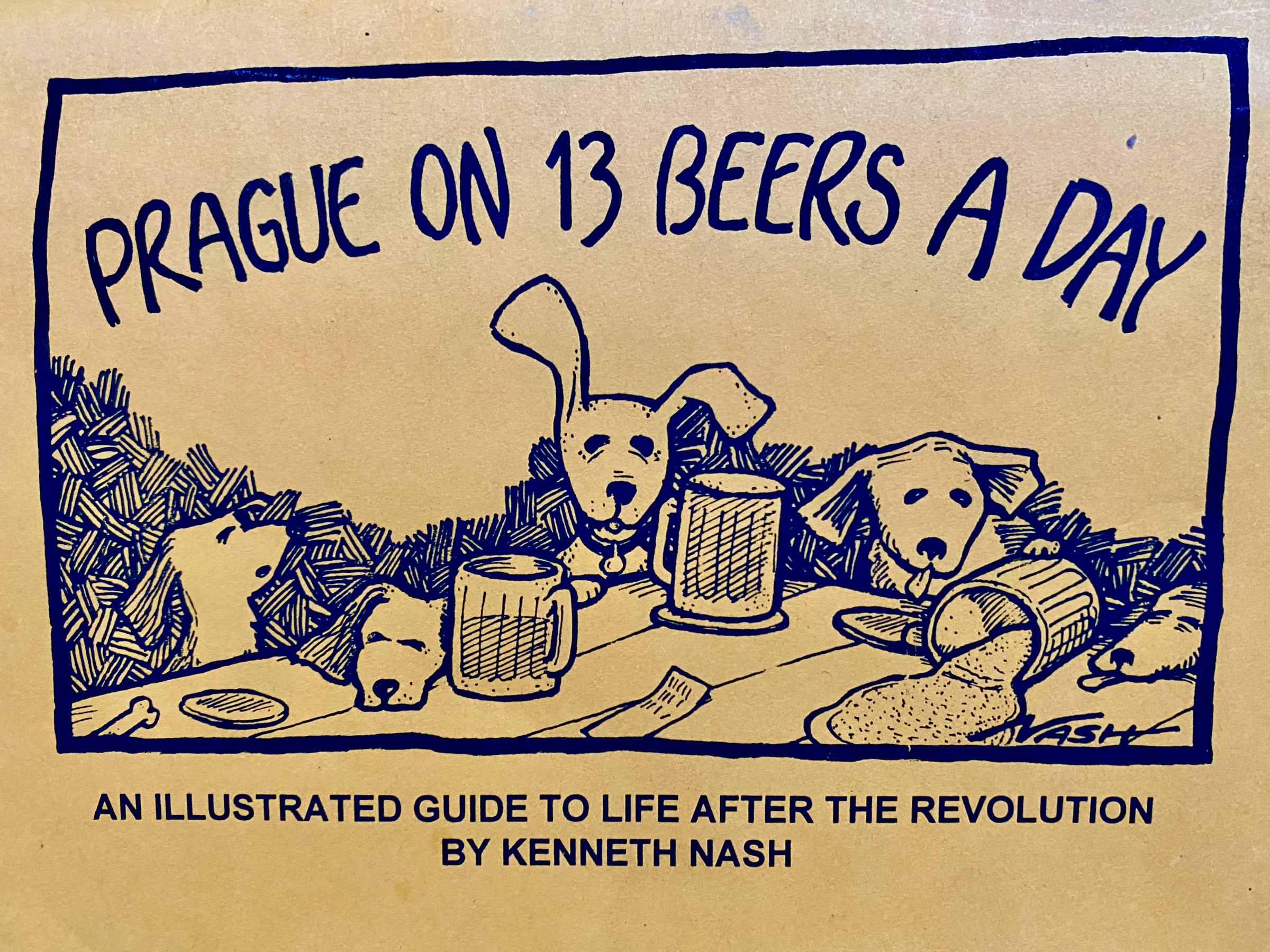
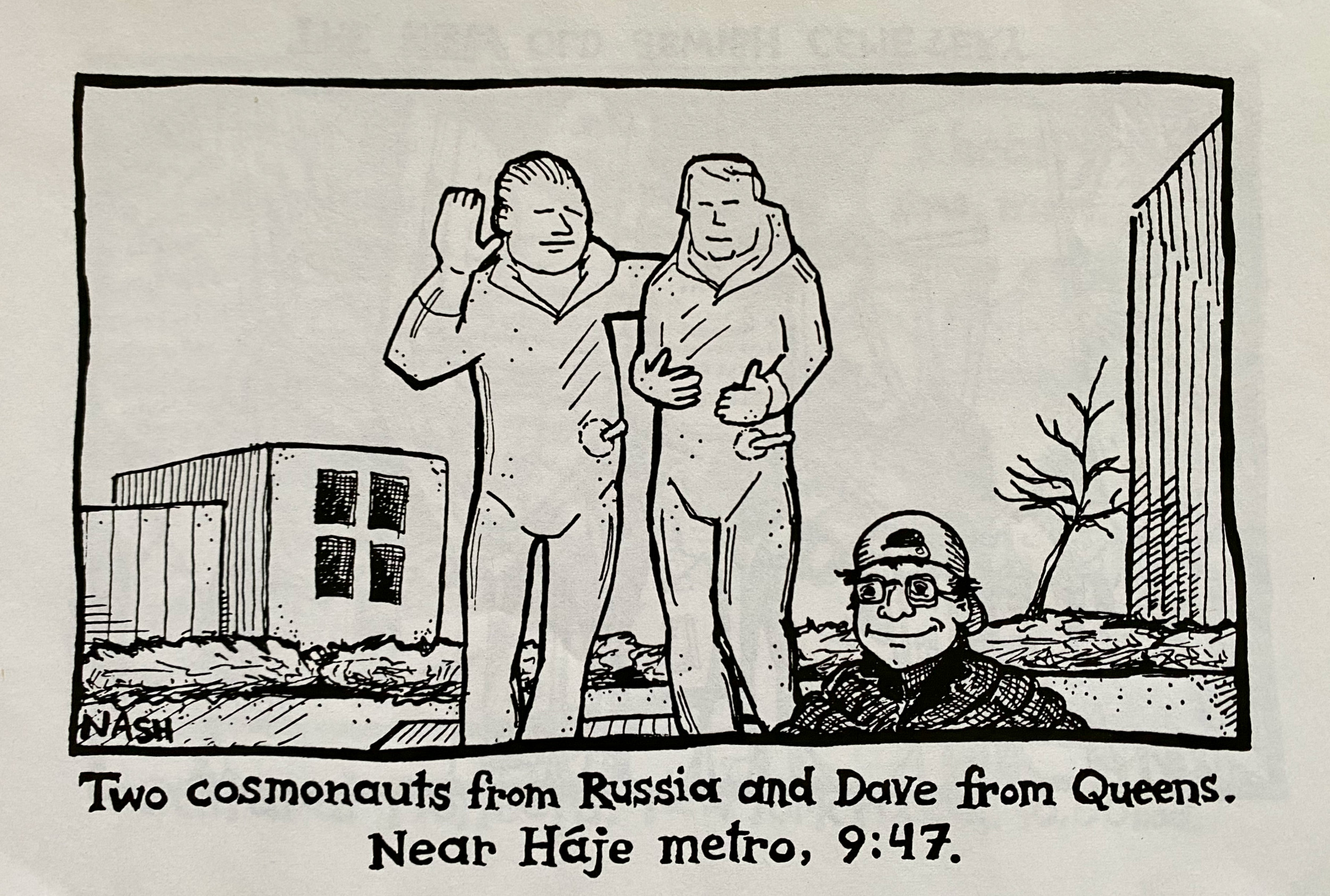
American expat artist and illustrator Ken Nash’s labor of love wasn’t strictly a ‘zine. (I don’t know if Nash ever planned a follow-up edition.) Prague on 13 Beers a Day was a small booklet of comic panels that he originally drew for The Prague Post. Each panel represents a slice of life taken from the early days of the Prague expat scene, circa 1993 -- with a keen eye for the underlying absurdity of the whole thing. I keep a copy in my office and still leaf through it for laughs.
Gristle Floss (1993–1995)
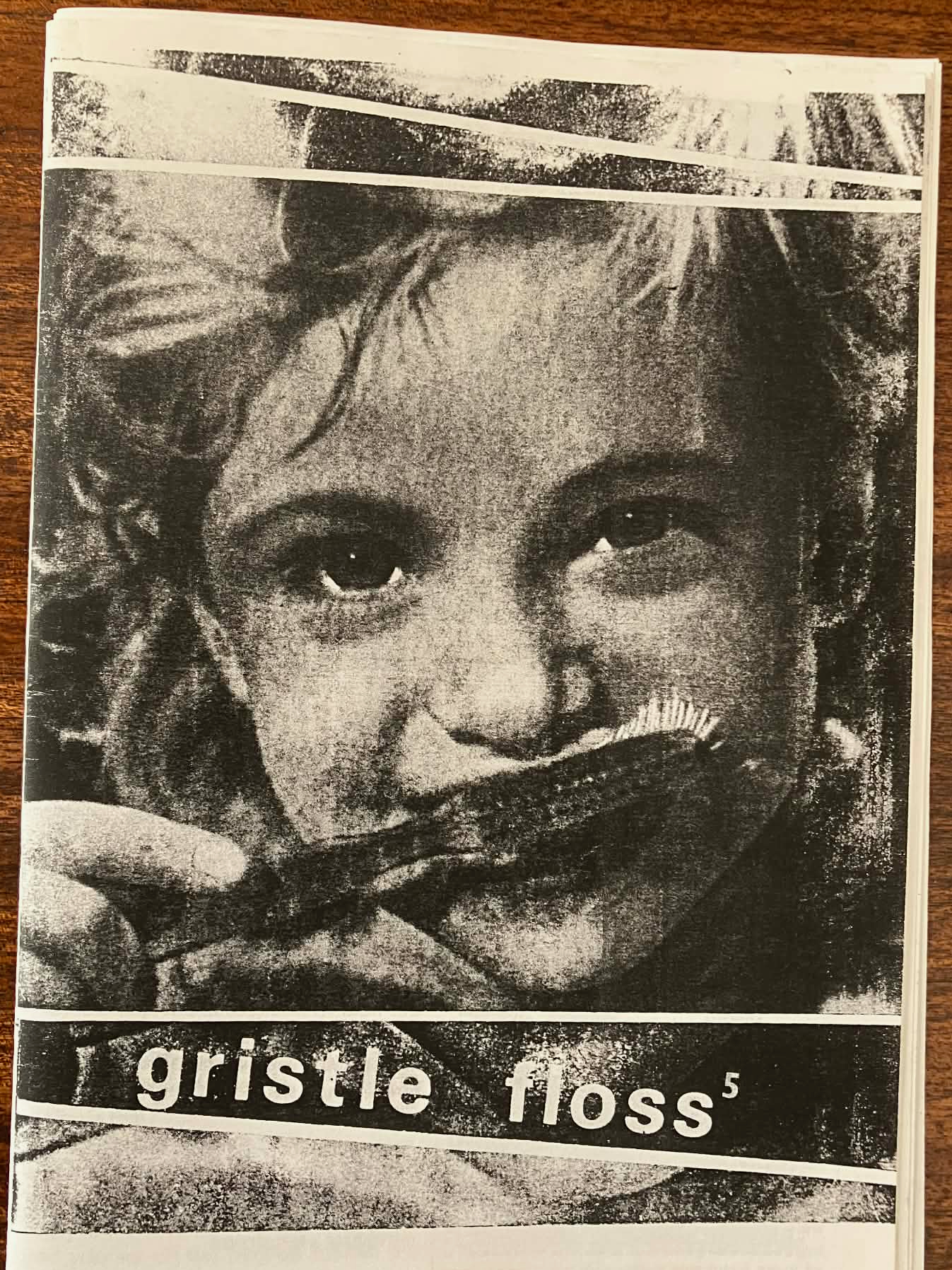
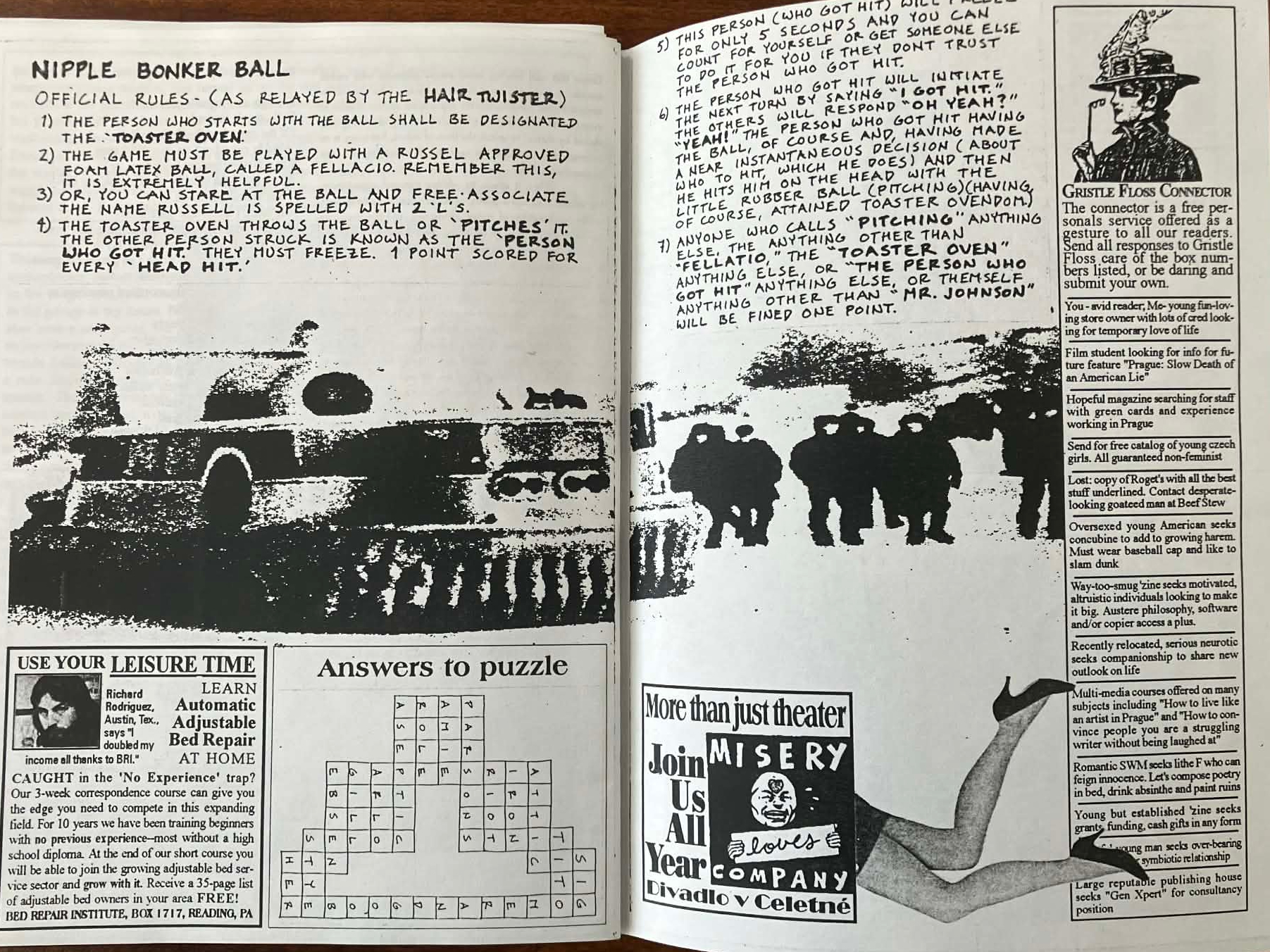
The creation of co-editors/publishers Ken Ganfield and Lacey Eckl, Gristle Floss was a classic ‘zine, fashioned out of cut-up text and found images that were then glued to A4 paper and photocopied. The average print run was somewhere between 50 and 100 copies. Ganfield wrote to me that “the impetus was to do something creative and publish work from our friends. It obviously never made any money.” Issues featured short fiction, poetry, illustrations and just general absurdity, from a talented line-up that included not just Ganfield and Eckl, but also familiar names like Ken Nash, Lawrence Wells, Anthony Tognazzini, David Freeling and Myla Goldberg, among others. It ran five issues.
Jejune: America Eats Its Young (1993-2000)
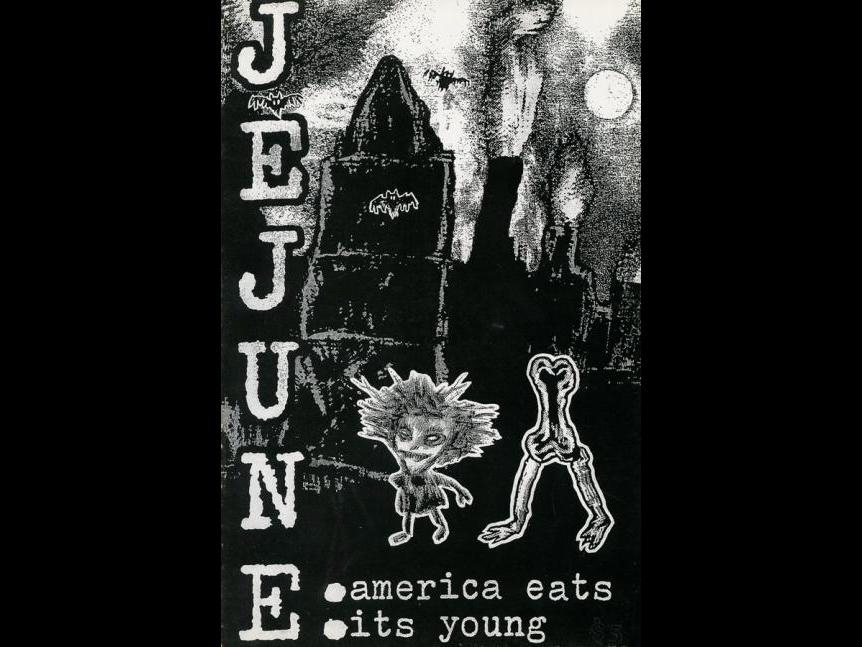
Jejune: America Eats Its Young, the creation of long-term American expats and poets Gwendolyn Albert and Vincent Farnsworth, began life in Oakland, California, in 1993, and reflected a particular Bay Area political and cultural sensibility and comic-book inspired aesthetic. Unlike its local peers, Jejune often looked outward beyond the immediate Prague scene to broader international and U.S. issues. Retrospectives on the web emphasize the popularity of its local readings and other happenings. It ceased publishing after nine issues in 2000.
Riding Black (1995)
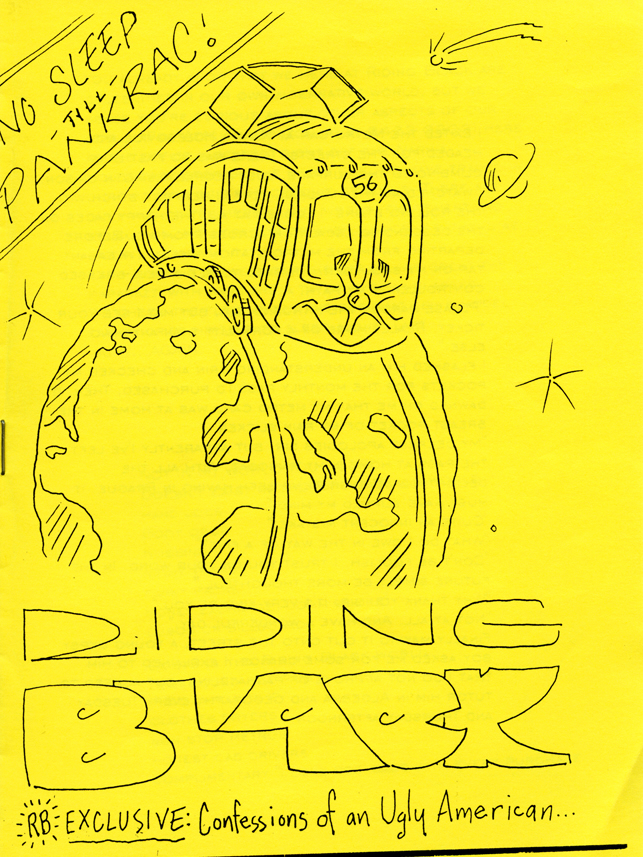
Another Prague ‘zine that has sadly disappeared from the web and out of the hivemind’s collective consciousness. Writing on the FB group “Prague Expats of the ‘90s,” Optimism’s Otis called Riding Black "another funny ‘zine, from Kevin Bisch, [the managing editor] of Pozor.” Think Magazine described it as “a one-staple, part-rag, part-party-invite, four-page little animal that pissed off the snobbies.” It apparently lasted only two issues.
Unpronounceable Symbol (1997)
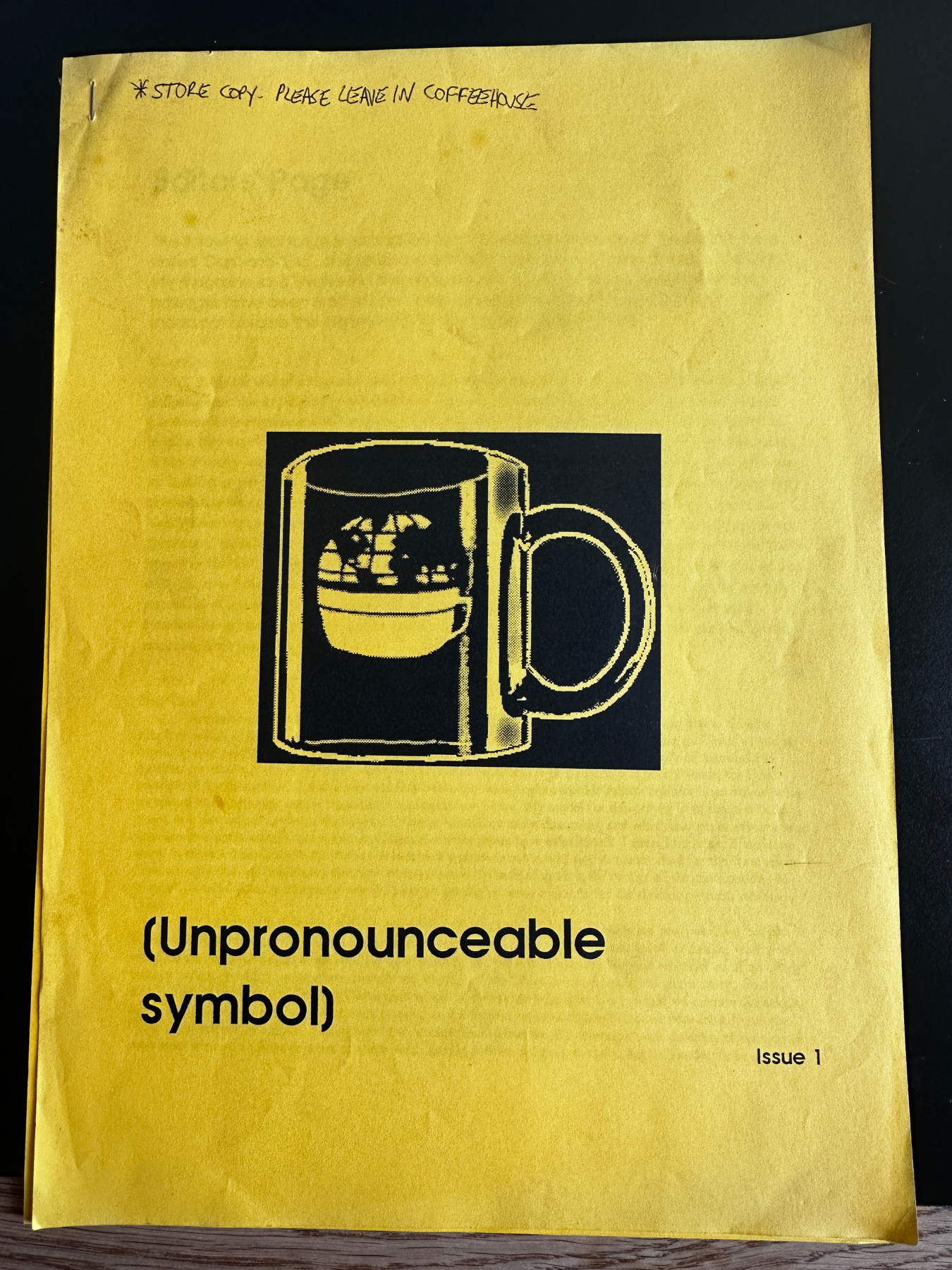
I have fond personal memories of this one too. It was created by two friends, Dan Kenney and Eric Wargo, who were closely associated with The Globe Bookstore & Coffeehouse (Wargo was the bookstore manager at the time), and functioned as the Globe’s de facto in-house ‘zine. Printed on colorful paper, it was always an enjoyable read – critical, gossipy and often pretty funny. One of the most popular features was a bullshit astrology column written by Paul Kail. It lasted around a year. As a follow-up to Unpronounceable Symbol, Kenney apparently hoped to launch something similar called The Hindenburg, but that never happened. Ghost titles, after all, were a big part of the media ecology as well.
(Keep scrolling below to see lots more photos.)
Did you like the story and want to add your own experiences? Or maybe help me to correct something I didn’t get right? Write me at bakermark@fastmail.fm.fd
*I’m also indebted to the good folks at Think Magazine, who wrote tirelessly over the years about Prague’s crazy expat press. Find a good overview here