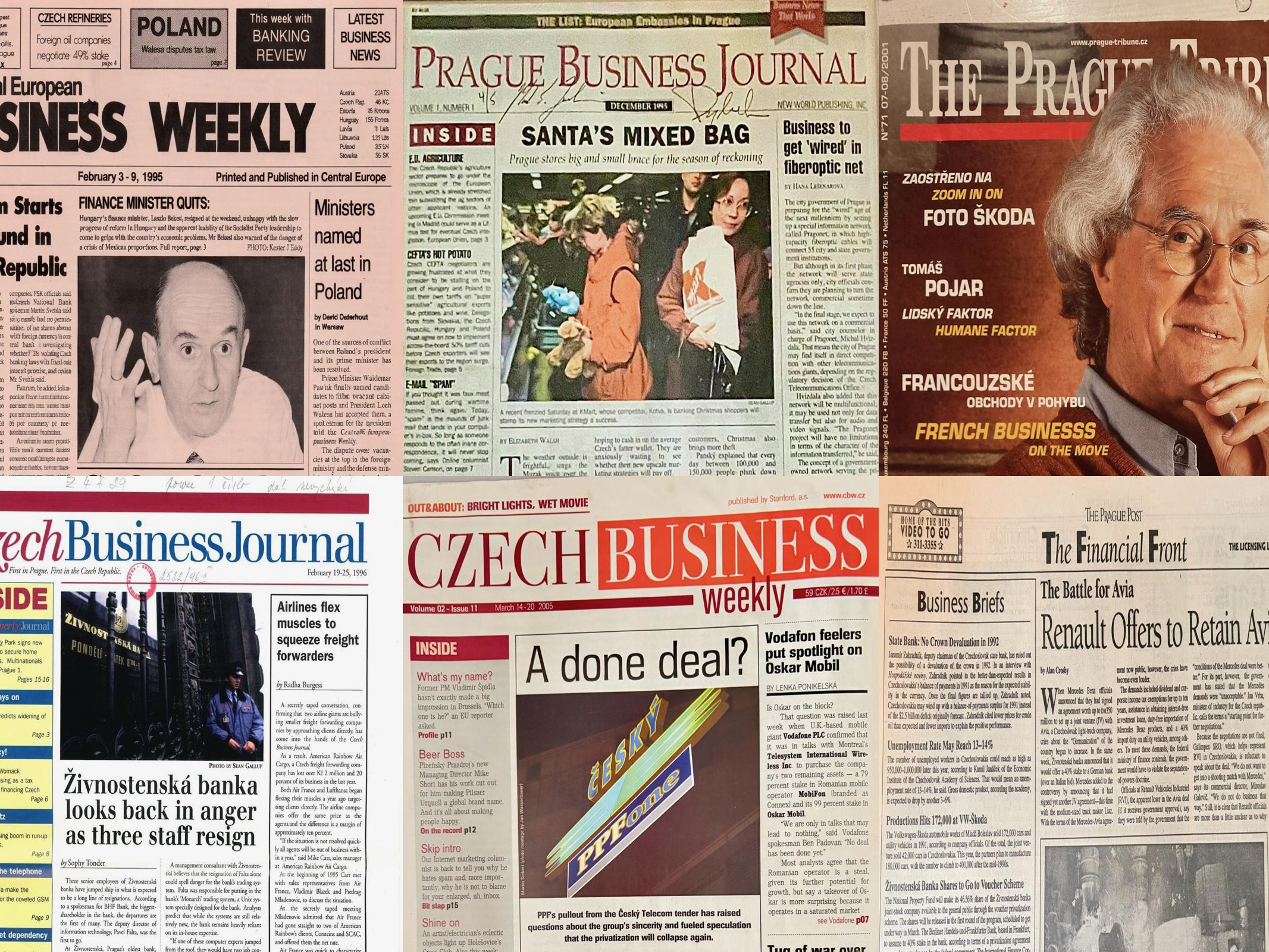
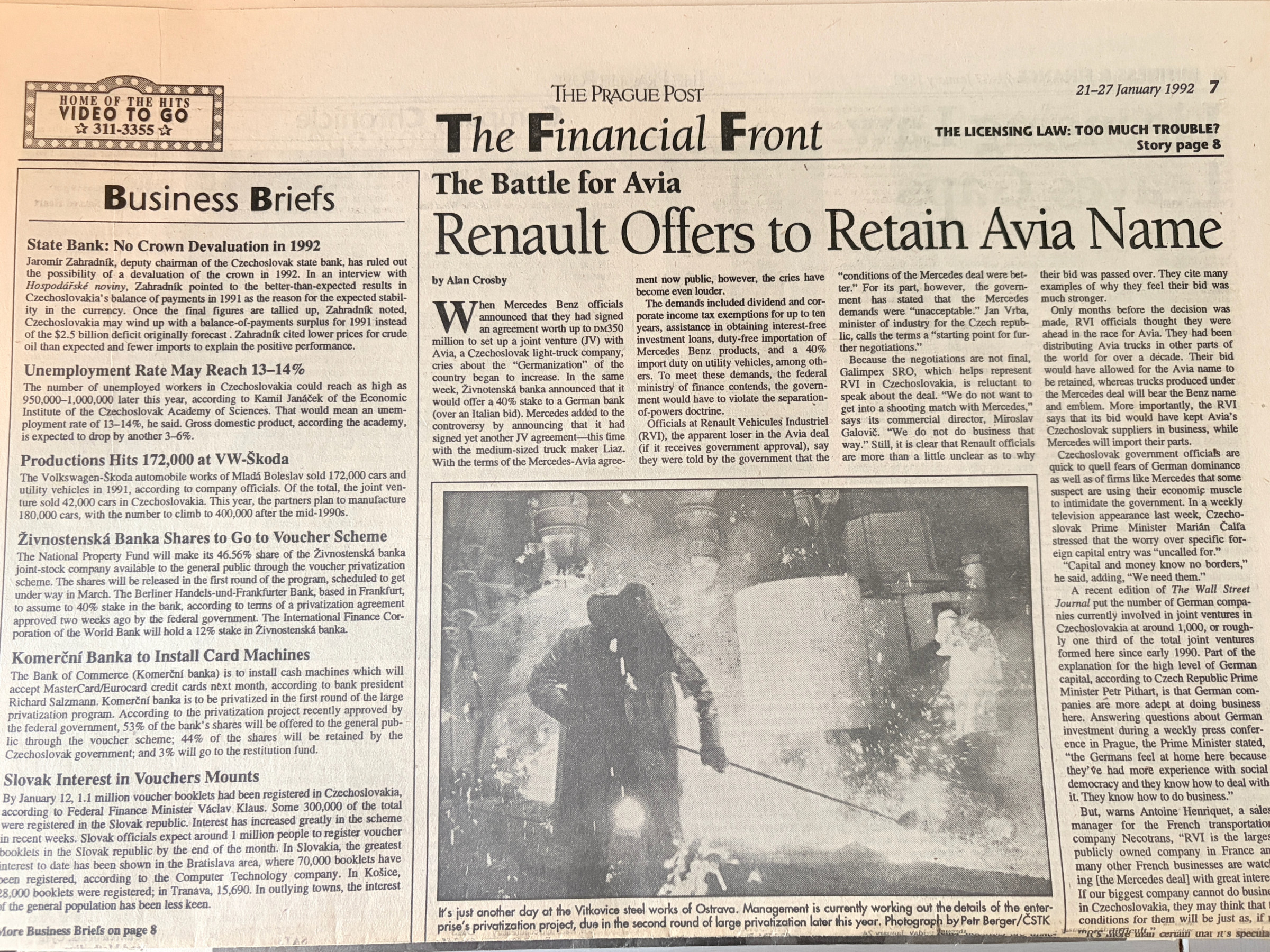
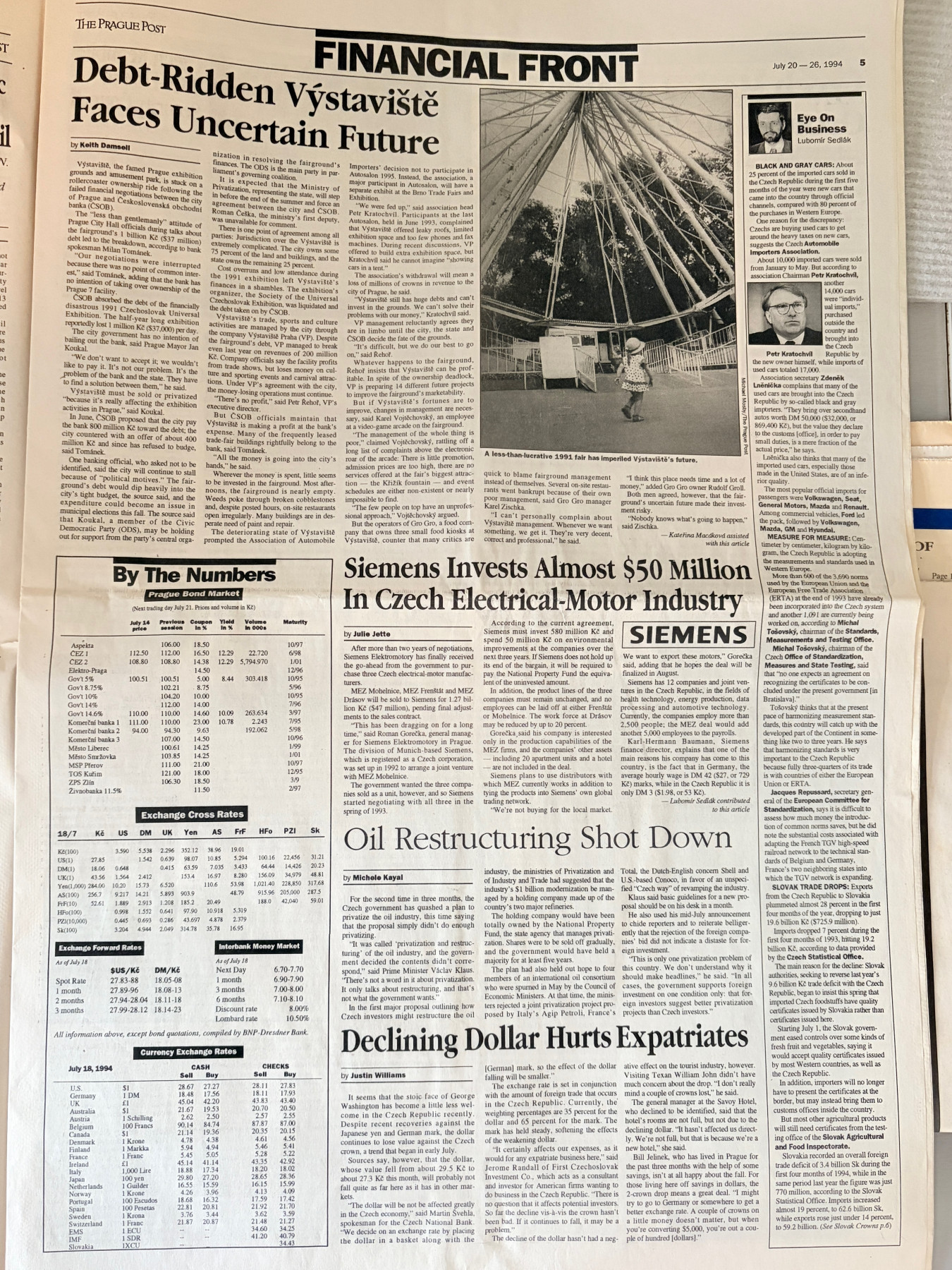
If anything, the market gap for business news—reporting that readers could use to make money as the Czech economy opened up to foreign investment—was even larger than for political or general news. In the first half of the 1990s, without much serious competition, The Prague Post’s business section, the Financial Front, dominated the field. Around 1995, a wave of business-oriented “journals”—publishing short, market-focused stories for bankers, traders, and investors—entered the scene. The rivalry between Prognosis and The Prague Post had drawn much of the early attention, but the battle among these new business publications for readers, advertisers, and reporters soon made that earlier competition look tame by comparison.
The business press flourished through the mid-'90s but eventually foundered. A series of external shocks—the Russian financial crisis of 1998, the collapse of the dot-com bubble soon after, and the 9/11 attacks in the United States—cooled investors’ enthusiasm for risk. At the same time, the rapidly expanding web continued to erode the economic foundations of print journalism.
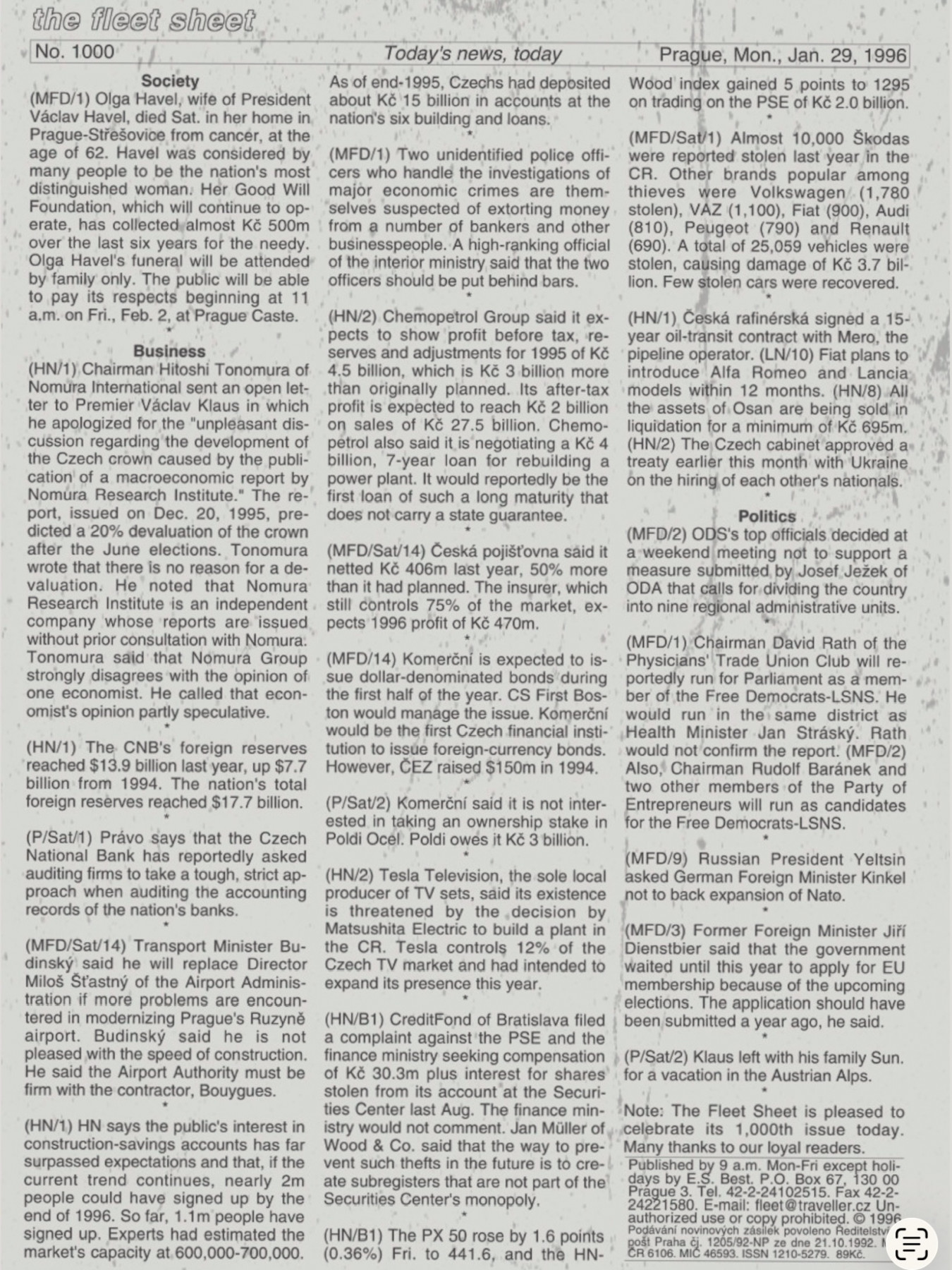
The Fleet Sheet (1992–still going)
The sheer endurance of The Fleet Sheet suggests the secret to success in expat publishing was simply to focus on one thing and do it well. The publication, still going strong, offered single-page summaries in English of important Czech political and business stories, originally delivered to subscribers by morning fax.
Long-time American expat Erik Best was the brains behind the operation. Not long after launching The Fleet Sheet, Best dabbled in newspaper publishing with The Bohemian Daily Standard, but wisely pulled the plug after just six weeks. Ironically, the signature one-page Fleet Sheet format that proved so successful may have been shaped by Czechoslovakia’s decrepit post-revolution telecommunications system. Best told Radio Prague International that the single-page format was almost self-determined, since a second page of a fax in those days almost never went through.
Central European Business Weekly (1992–2000)
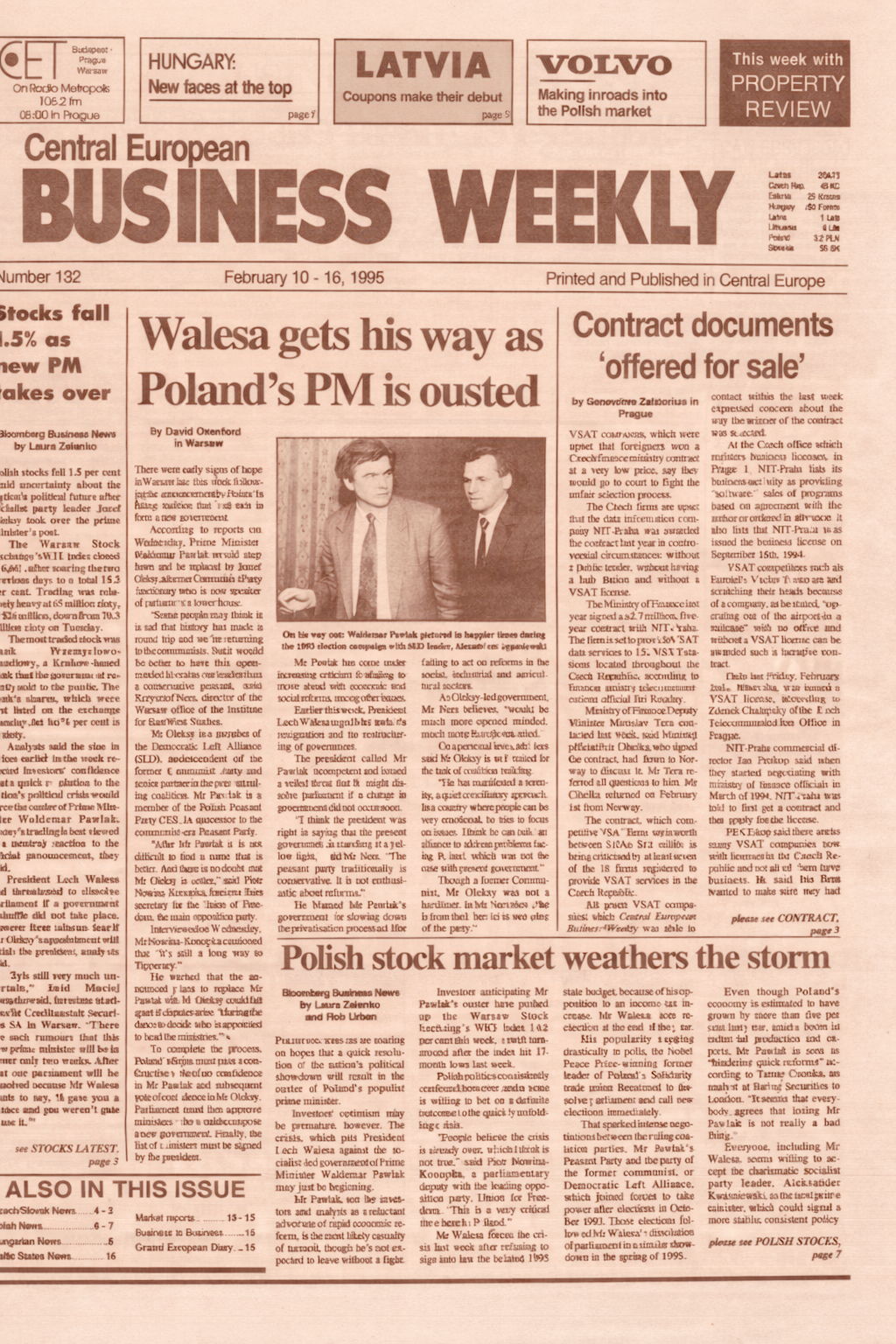
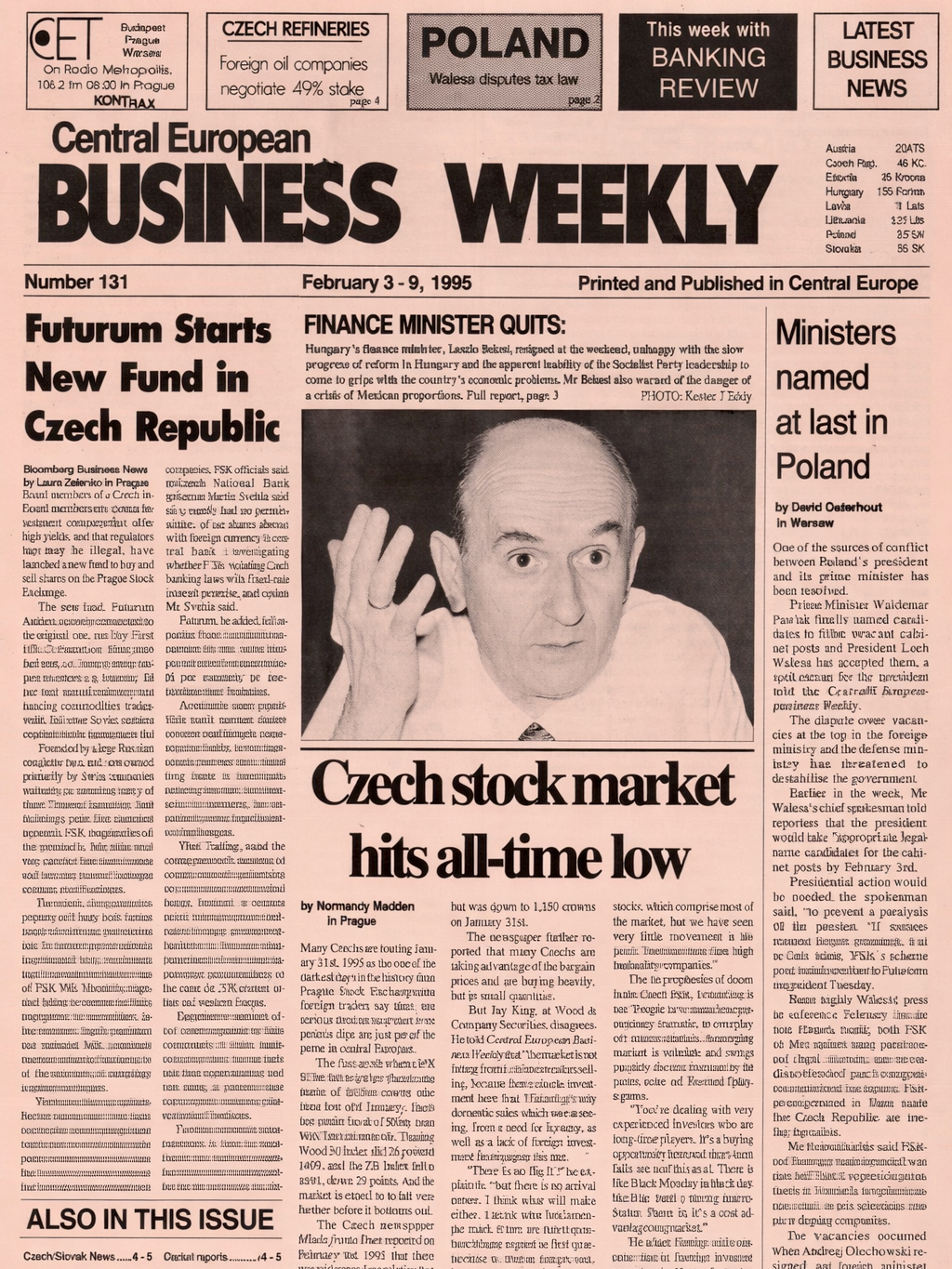
Central European Business Weekly (CEBW) was groundbreaking at the time—a Prague-based business paper with a broader Central European focus—and helped set the stage for all that came later. That said, reliable information about the publication is surprisingly difficult to find today. Scottish entrepreneur Ian Brodie founded CEBW in 1992 as a local competitor to the Financial Front, while also expanding coverage to neighboring Slovakia, Poland, and Hungary.
CEBW was printed on distinctive salmon-pink paper—not unlike the Financial Times—a design choice that hinted at the paper’s outsized ambitions. Its regional focus made thematic sense, as countries across Central Europe were undergoing similar post-communist transformations. But, as Brodie told Think Magazine in 1995, covering multiple markets ironically limited advertising interest. Advertisers, it turned out, were more focused on individual countries than the region as a whole. Always run on a shoestring, CEBW ceased publishing around 2000. Brodie, a familiar face in Prague’s Irish pubs in the 1990s, later moved to Monaco, where he founded and now runs the Monaco Daily News.
Czech Business Journal (1995–1996)
Here’s where it all gets interesting. By around 1995, the Central European media market had matured enough to attract serious outside investment. This was the heyday of the “business journal” format—tabloid-sized publications, printed on higher-quality paper, that focused almost exclusively on economic and financial developments. The target audience was not so much casual readers as companies, banks, and embassies. The mid-’90s also saw the rise, in the U.S. and elsewhere, of large pools of investor capital seeking bold new projects. This relatively easy money, which fueled a business-journal boom around the world, would later dry up with the bursting of the dot-com bubble.
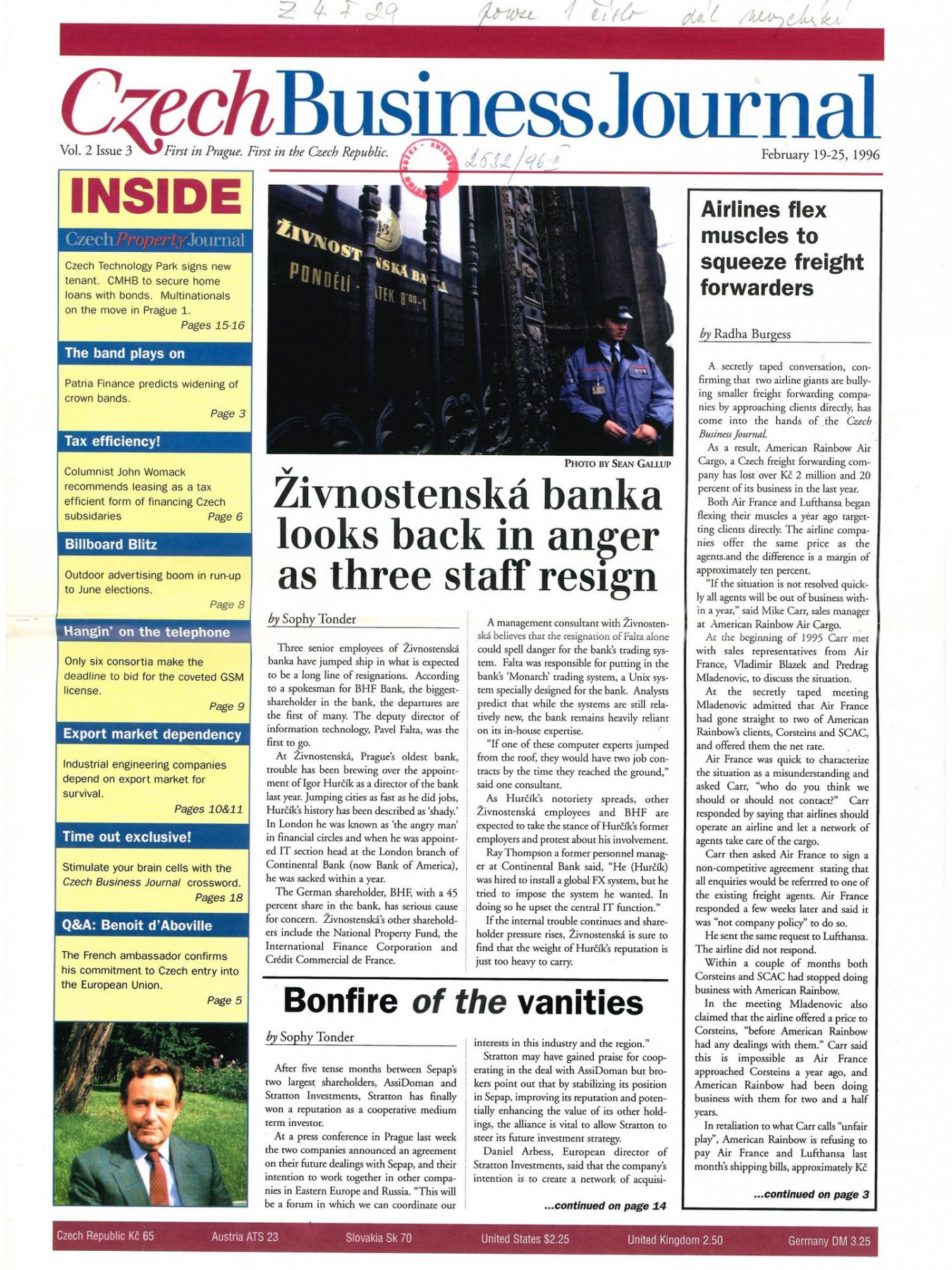
New World Publishing, a privately financed, U.S.-driven media venture, was first to move, establishing business journals in Budapest (1992) and Warsaw (1994). With Prague next in New World’s sights, CEBW publisher Ian Brodie moved quickly to launch his own Czech Business Journal. Whether this was a canny attempt to blunt New World’s expansion or simply, as Brodie told Think Magazine in 1995, a way to shore up advertising revenue by focusing on individual markets isn’t entirely clear. Whatever the motive, the timing was curious: CBJ launched just a month or so before New World’s own Prague Business Journal (see below) came to market at the end of 1995.
CBJ’s rollout was rocky from the start. An early editor who didn’t last long in the position, David Osterhout, told Think Magazine in 1996 that the publication would focus less on covering spot news and more on developing sources and breaking big stories, but that never really happened. In early 1996, Brodie restructured the company and folded CBJ into his broader CEBW operation. Later that year—though it’s not entirely clear when or why—CBJ ceased publication. Finding a surviving photo online (or, for that matter, any reliable information at all) about CBJ was no small feat. I have no personal memory of it, and when I began researching this blog post, I was convinced it was actually a phantom publication.
Prague Business Journal (1995–2003)
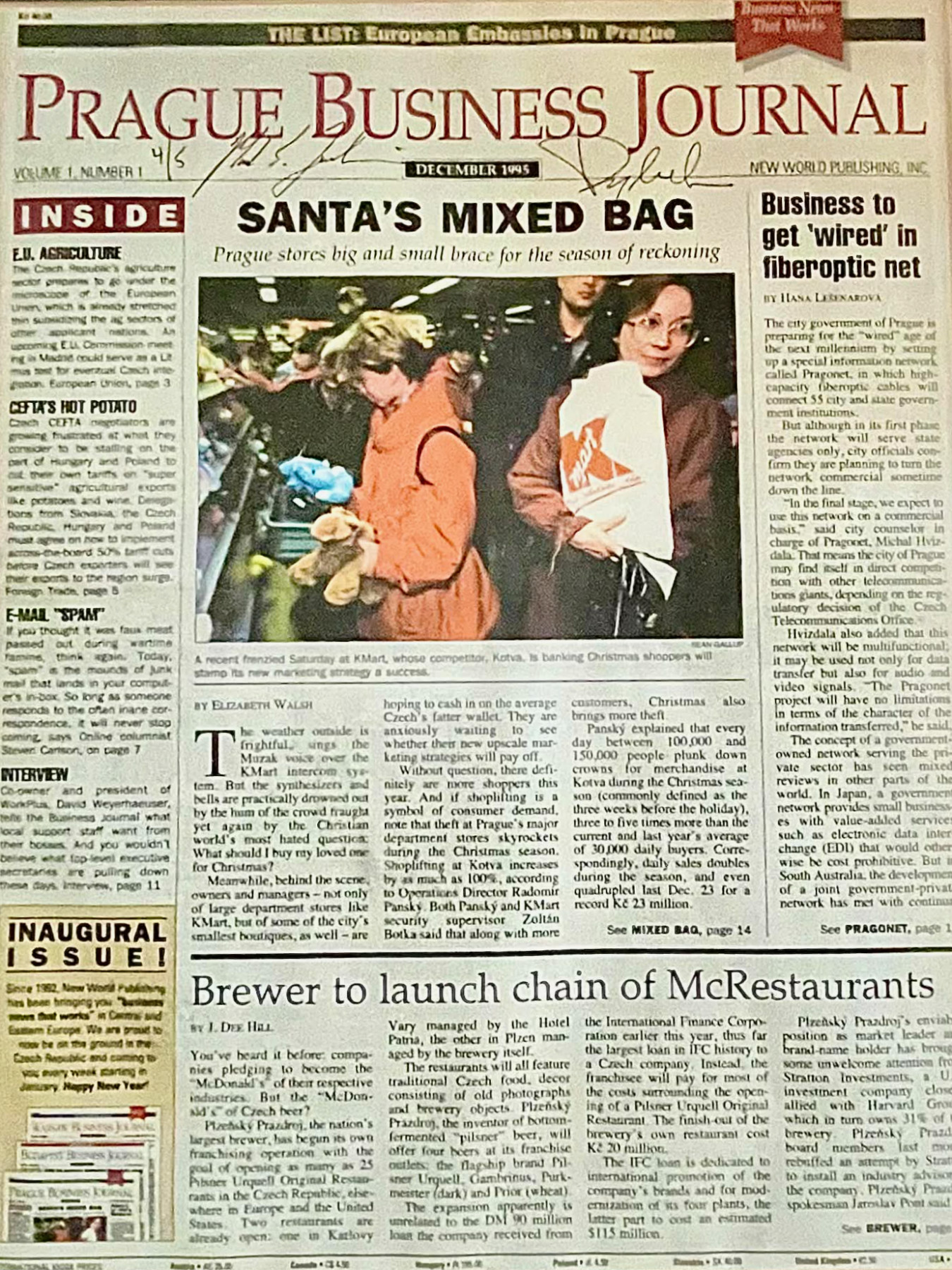
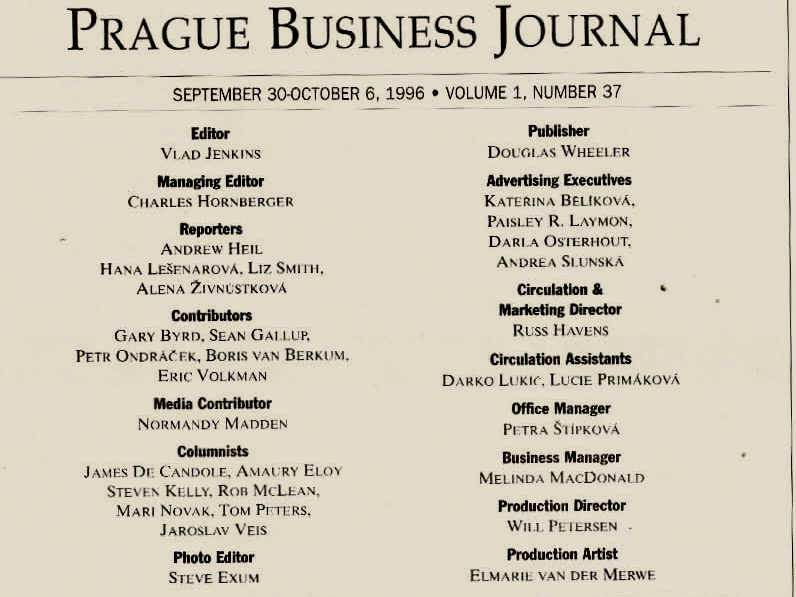
New World Publishing’s Prague Business Journal entered the local market around Christmas 1995. Buoyed by backing from high-profile angel investors such as Esther Dyson and fueled by revenue from full-color display advertising, PBJ assembled a highly qualified staff under editor Vlad Jenkins. One of its breakout stars was former Prognosis reporter Hana Lešenarová, whose investigative stories quickly became must-reads for anyone—Czech or expat—interested in the local market.
In its prime, PBJ developed a reputation as the most aggressive and hard-hitting of Prague’s English-language business publications. While competitors often leaned toward safer, service-oriented coverage, PBJ distinguished itself with investigative reporting that probed privatization deals, corporate governance, and market abuses. That approach won it a loyal readership but also made it enemies in both business and political circles.
PBJ’s ending—like that of nearly all Prague expat publishing ventures—wasn’t pretty. Mired in back taxes and ad-revenue disputes with the Czech government and enjoying only lukewarm support from Czech officials, who resented the publication’s investigative style, PBJ shut down in 2003. Publisher Stephen O’Connor later said part of the problem was that the journals expanded too quickly, leaving them vulnerable to external shocks. “The internet bubble bursting cut 50% of our display advertising… and then September 11 [came], a second huge hit. We had to cut staff by 50% across three markets.”
Despite the difficult ending, he said PBJ left a positive legacy: “Our [publication] helped to advance things like minority shareholder rights, intellectual property rights, and expose cartel-like behavior … and stock manipulation. We produced great journalists, often from scratch, who have gone around the world to do amazing things." The company’s operations in Hungary and Poland, by contrast, proved more durable. The Budapest Business Journal still appears in print every other week, while the Warsaw Business Journal maintains a substantial online presence and conference business.
La Tribune de Prague/The Prague Tribune (1993–2005)
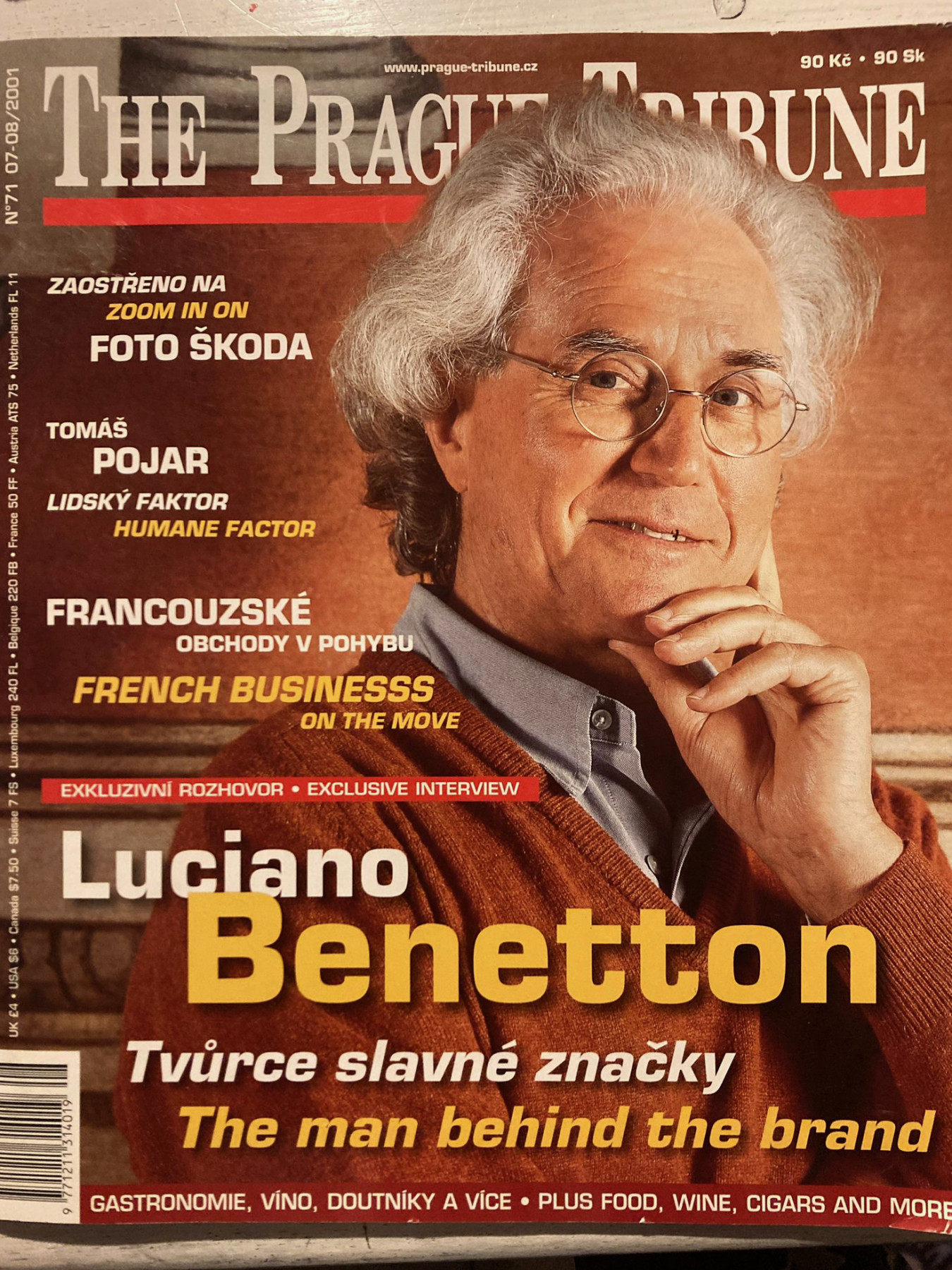
Every budding business scene in the 1990s needed a glossy, monthly lifestyle mag whose stars were not glamorous actors or models, but rather the more-ordinary movers and shakers about town—the bankers and businessmen riding high at that particular moment in time. For Prague, this was The Prague Tribune, the brainchild of French advertising executive Philippe Riboton.
The Tribune debuted in 1993 as a bilingual French-English publication before shifting to English-Czech. Riboton later said the language switch was a godsend, pushing the magazine into the black in 1995 for the first time. At its height, the Tribune was a staple in company waiting rooms and hotel lobbies. It was well done and a quick way to take stock of who was who about town. I would often pick up a copy and flip through it to see if anyone I knew was being profiled. Prague being a relatively small market, that happened more than a few times. The Tribune ceased publication in 2005.
Czech Business Weekly (2004–2010)
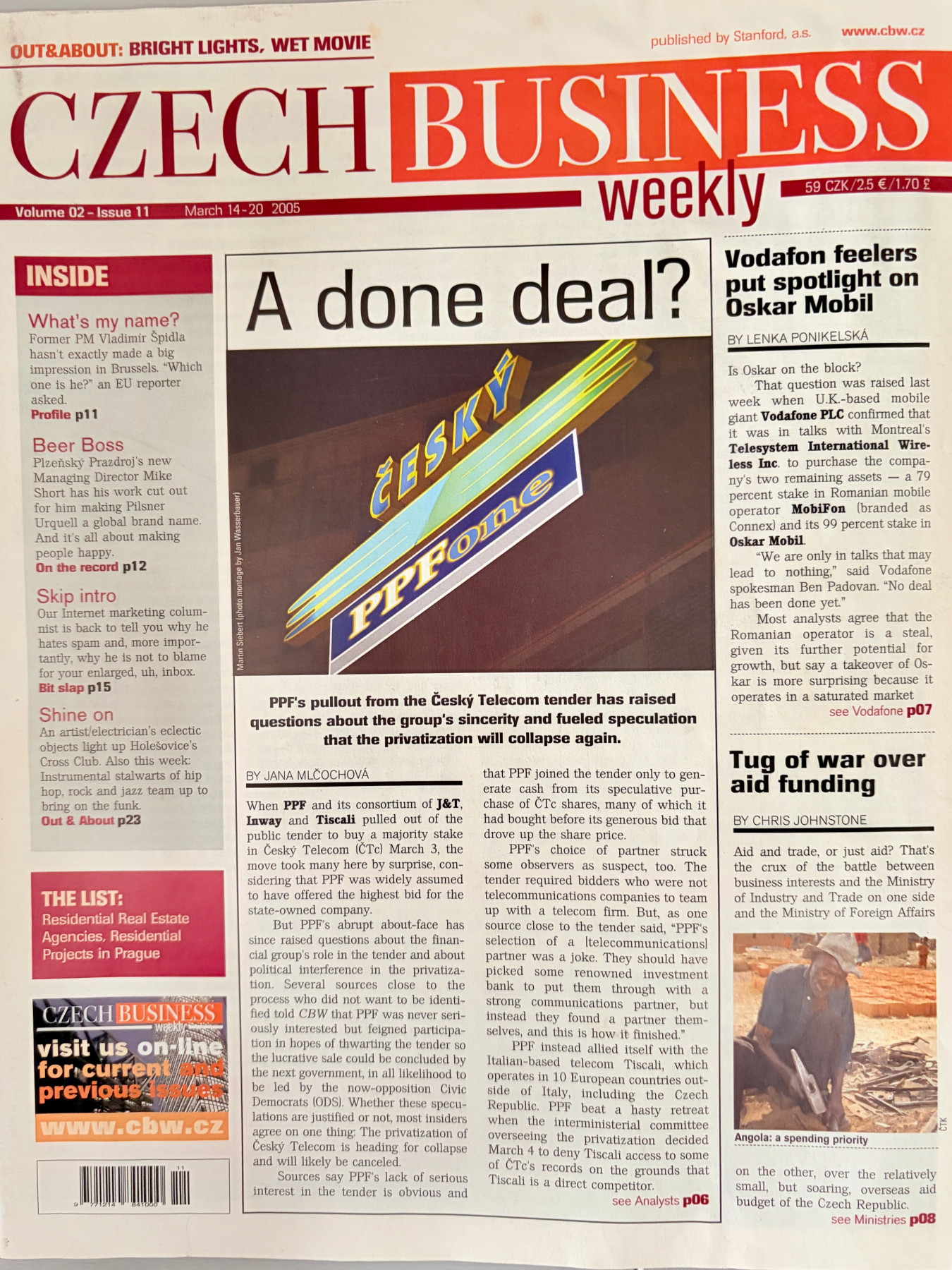
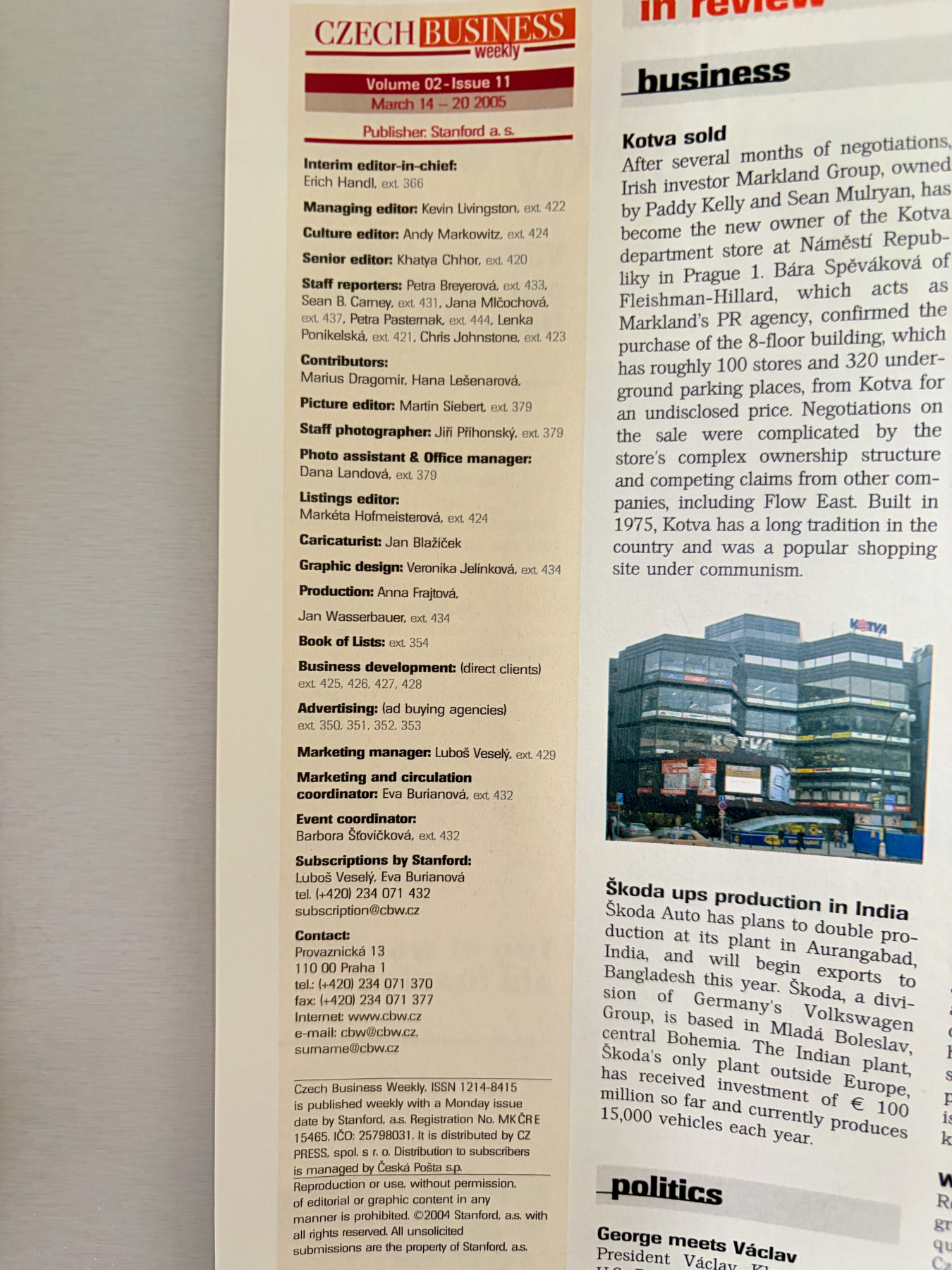
Czech Business Weekly, a multi-page glossy funded by the Czech company Stanfor a.s., is an outlier on this list of ’90s newspapers and magazines. I include it here only for the sake of completeness. The fall of the Prague Business Journal created a niche in the English-language business journal space, and Czech-owned and -financed CBW stepped in to fill the gap. I had many friends who worked there over the years (I’ve included a photo of an early masthead) and I remember it as being a step up in terms of production quality and professionalism.
(Click here to jump to Part 3, where I dive into the colorful world of cultural and literary journals and 'zines.)
Did you like the story and want to add your own experiences? Or maybe help me to correct something I didn’t get right? Write me at bakermark@fastmail.fm.
*I’m highly indebted to Think Magazine, which over the years chronicled the rise and fall of the expat publishing world. Find a link here.